
Quick Answer
Lion’s Mane (Hericium erinaceus) is a functional mushroom studied mainly for its potential effects on cognition, mood, and gut health, largely due to bioactive compounds called erinacines and hericenones. Human research remains at an early to moderate stage, with the clearest support currently around cognitive function and mood in ageing or mildly impaired populations, and typical study doses ranging from around 1 to 3g of standardised extract, up to considerably higher amounts of fresh fruiting body used culinarily. As with any supplement, product quality and form matter as much as the mushroom itself.
What Is Lion’s Mane Mushroom?
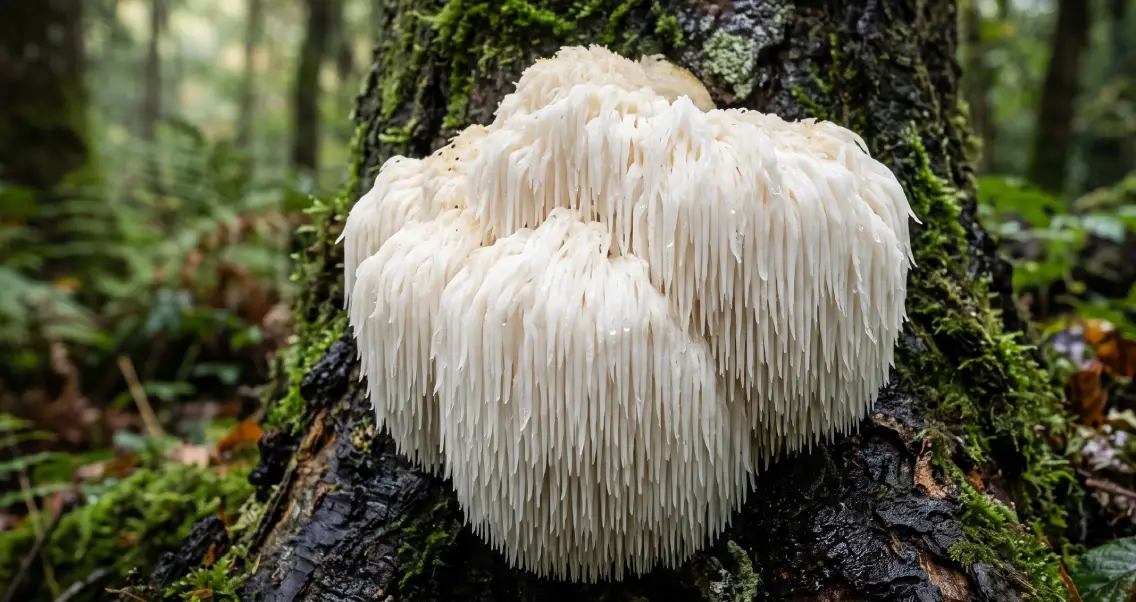
Lion’s Mane is an edible fungus known for its distinctive appearance: long, white, tooth-like spines cascading from a single mass rather than a typical cap and stem. It’s been used for centuries in East Asian culinary and traditional medicine practices, and has become one of the most widely discussed functional mushrooms in Western wellness circles over the past decade.
Its appeal comes down to a specific set of bioactive compounds, particularly erinacines and hericenones, which researchers believe may support nerve growth factor activity and contribute to the mushroom’s studied effects on brain health and mood.
For a broader look at where the current research stands across the wider functional mushroom category, our functional mushroom research roundup tracks studies across several species, including regular updates on Lion’s Mane specifically.
What Does the Research Say?
Cognitive function. A number of human trials have investigated Lion’s Mane’s effects on cognition, with mixed but generally encouraging results. One placebo-controlled pilot study found some acute and chronic cognitive and mood-related effects in healthy young adults following 28 days of supplementation with 1.8g of Hericium erinaceus per day. A separate acute study using a higher single dose (3g of a 10:1 extract) did not find significant overall cognitive improvement compared to placebo, suggesting that timing, dose, and study population all influence results.
Mood and stress. Some research has looked specifically at mood outcomes. A study involving menopausal women found reduced depression and anxiety scores after four weeks of Hericium erinaceus supplementation, and mood measures have appeared as secondary outcomes in several other cognitive trials.
Animal and preclinical research. A broader base of animal studies has explored Lion’s Mane’s effects on memory and neuroprotection, including improvements in spatial memory tasks in mice following dietary supplementation. This preclinical work has helped shape hypotheses that are now being tested more directly in human trials.
Gut health and other emerging areas. Beyond cognition and mood, some narrative reviews have pointed to Lion’s Mane’s potential as a functional food ingredient supporting gut health and immune modulation, alongside antioxidant activity linked to its polysaccharide and phenolic compound content. This research is generally earlier-stage than the cognitive work, but it’s a growing area of interest as functional mushroom research broadens beyond brain health alone.
Why This Matters: it’s worth being upfront that human research on Lion’s Mane, while growing steadily, is still at a relatively early stage compared to more heavily studied supplements. Results vary by study design, dose, extract type, and population, which is why responsible buying guidance leans on “may support” language rather than firm guarantees. Our Lion’s Mane research update goes into more depth on the current evidence base if you want the fuller picture.
Most clinical trials on Lion’s Mane have used standardised fruiting body extracts rather than mycelium-only preparations, which is why checking a product’s extraction source matters more than it might first appear.
Typical Dosage: What Studies Have Used
Dosage in published research varies considerably depending on the form and study design, generally falling into a few broad patterns:
- Standardised extract supplements in human trials have commonly used doses in the range of roughly 1 to 3g per day, often taken over several weeks rather than as a single dose.
- Fresh or dried whole fruiting body, when eaten culinarily, has been consumed in considerably larger quantities, sometimes cited at up to around 300g in a single meal in some research contexts, though this reflects food-level consumption rather than concentrated supplementation.
- Tinctures, including dual-extraction preparations that aim to capture both water-soluble and alcohol-soluble compounds, typically specify their own dosing based on concentration, which varies by manufacturer.
This is general information reflecting what’s been used in published research, not personalised medical advice. Always follow the dosing instructions on the specific product you’re using, and speak to a healthcare professional before starting any new supplement, particularly if you’re pregnant, breastfeeding, on medication, or managing an existing health condition.
Choosing a Lion’s Mane Product
Check the source material. Look for products made from the fruiting body rather than mycelium grown on grain, since most of the studied benefits come from fruiting body extracts specifically.
Consider the extraction method. Dual-extraction tinctures are designed to capture a broader range of bioactive compounds than water extraction or dried powder alone, which may matter depending on what you’re hoping to get from the product.
Decide on format based on your routine. Dried whole mushroom suits cooking, powder suits blending into drinks, and tinctures suit a quick, measured daily dose without needing to prepare anything.
SporeBuddies stocks dried Lion’s Mane mushroom, prepared from organically grown fruiting bodies, alongside dual-extraction tinctures, within our functional and gourmet mushroom range.
Pro Tip: if cognitive and mood support is your main interest, prioritise products that specify fruiting body extract on the label, since that’s the form most consistently used in the research showing these effects.
Pro Tip: give supplementation a fair trial period before judging results. Most of the human studies showing measurable effects ran for several weeks, not days, so a short trial may not reflect what longer, consistent use could show.
Common Mistakes
Expecting immediate, dramatic effects. Much of the supporting research involves weeks of consistent use, not a single dose. Treat Lion’s Mane as a longer-term addition to your routine rather than an instant fix.
Buying mycelium-only products expecting fruiting-body-level results. Mycelium grown on grain substrate can contain considerably lower concentrations of the compounds studied in most human trials.
Ignoring extraction method entirely. Not all preparations extract the same range of compounds. If a product doesn’t specify its extraction process, it’s worth asking the supplier directly.
Assuming more is automatically better. Higher doses haven’t consistently shown better results across studies, and following product-specific guidance is safer than assuming a bigger serving means a bigger benefit.
Overlooking interactions with medication. Anyone on blood-thinning medication or with a bleeding disorder should speak to a healthcare professional before starting Lion’s Mane, given some preclinical evidence around its effects on blood clotting.
Choosing based on price alone. Extraction quality and source material affect cost, and the cheapest product on the shelf isn’t always made from the fruiting body extract most studies actually used.
FAQ
Is Lion’s Mane mushroom legal in the UK? Yes. Lion’s Mane is a widely available culinary and supplement mushroom with no controlled status, sold as fresh, dried, powdered, or tincture products.
How long does it take to notice effects from Lion’s Mane? Most research showing measurable cognitive or mood effects involved several weeks of consistent supplementation, so it’s generally not something to expect noticeable results from after a single dose.
Can I take Lion’s Mane every day? Many people take it daily as part of a supplement routine, generally following the dosing guidance on their specific product. Speak to a healthcare professional if you’re taking other medications or have underlying health conditions.
What’s the difference between Lion’s Mane powder and tincture? Powder is typically dried whole mushroom or extract ground down, taken by mixing into food or drink, while a tincture is a liquid extract, often alcohol-based, designed for quick, measured dosing.
Does cooking Lion’s Mane reduce its benefits? Some heat-sensitive compounds may be affected by cooking, though Lion’s Mane is traditionally both eaten as food and taken as a standardised extract, and research has explored both culinary and supplement forms.
Is Lion’s Mane safe to combine with other functional mushrooms? Many people combine Lion’s Mane with mushrooms like Cordyceps or Turkey Tail as part of a broader functional mushroom routine. If you’re taking multiple supplements together, it’s worth checking in with a healthcare professional, particularly if you’re also on medication.
Should I choose fresh, dried, or extract forms of Lion’s Mane? It depends on your goal. Fresh or dried whole mushroom suits cooking and general wellness use, while standardised extracts or tinctures are better suited to matching the doses used in most published research.
Related Guides
- Functional Mushroom Research Roundup
- Functional Mushroom Research Update: Lion’s Mane, Cordyceps, Reishi & Turkey Tail
- Mushroom Nutrition Science Topics: 10 Key Findings
- The Role of Shiitake Mushrooms in Science
- Functional & Gourmet Mushrooms: Cultures, Tinctures & Dried Mushrooms
About This Guide
SporeBuddies stocks organically grown dried Lion’s Mane and dual-extraction tinctures as part of our functional mushroom range, and tracks published research on functional mushrooms on an ongoing basis. This guide draws on that research tracking to give a practical, UK-focused starting point for anyone considering Lion’s Mane, without overstating what the current evidence does or doesn’t show.
In Summary
Lion’s Mane remains one of the more actively researched functional mushrooms, with the most consistent early support around cognitive function and mood, alongside a growing body of preclinical work on neuroprotection. Dosage in studies typically falls between 1 and 3g of standardised extract daily, though product-specific guidance and professional advice should always take priority over general research figures. Choosing a fruiting-body-based product, understanding the extraction method, and giving supplementation a fair trial period all help set realistic expectations.
Browse our full range of Lion’s Mane products, or read our functional mushroom research update for the latest findings across the wider functional mushroom category.