
Quick Answer: What Is the Latest Research Showing?
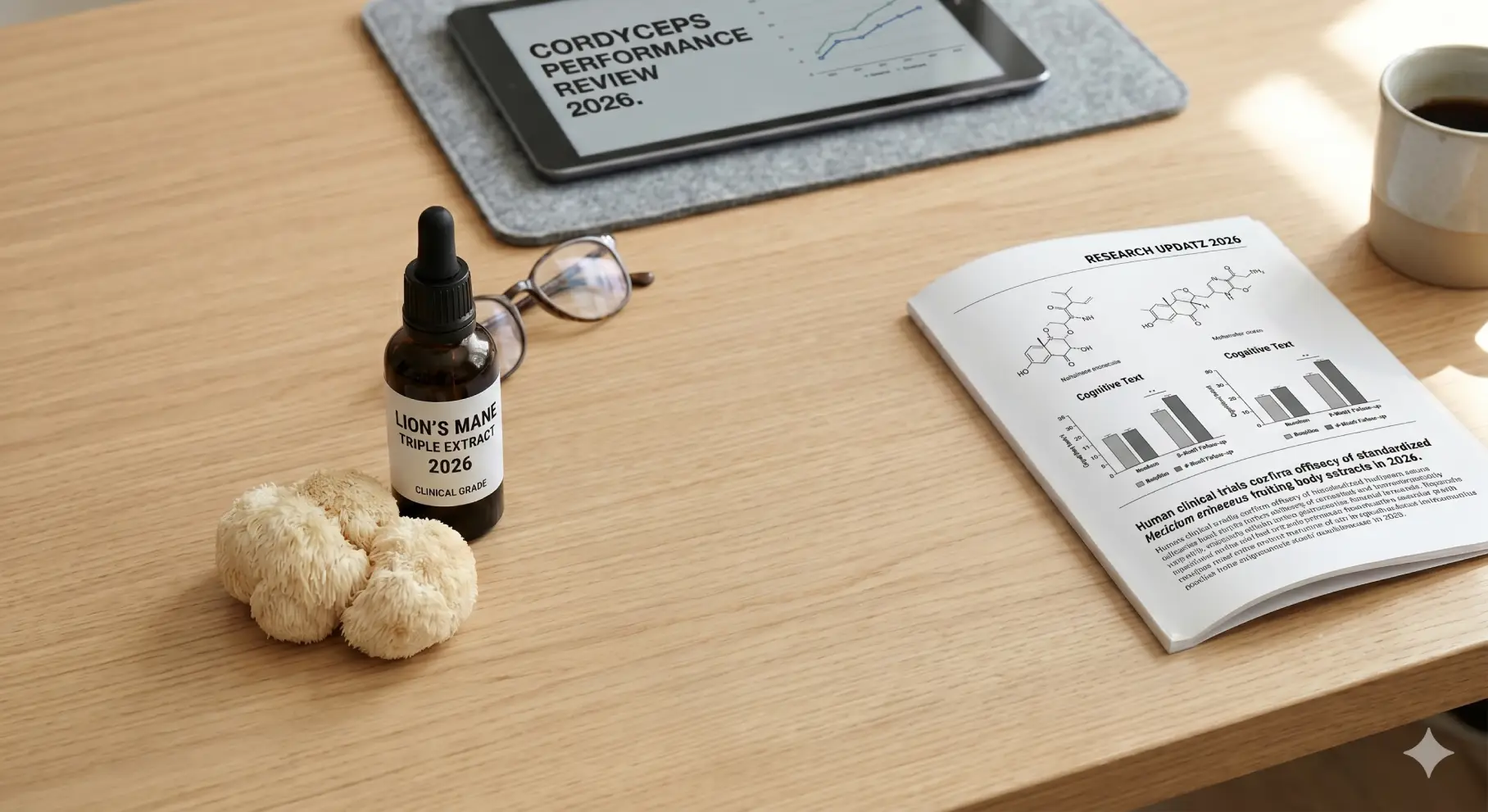
Peer-reviewed studies published in 2025 and 2026 are delivering some of the most clinically rigorous findings to date on functional mushrooms. Human randomised controlled trials on Lion’s Mane show measurable improvements in attention, working memory, and sleep quality. A 2026 narrative review on Cordyceps militaris has consolidated the exercise performance evidence. Reishi research is expanding its focus toward the gut-brain axis and immunological pathways. The direction across all four major species is consistent: the science is moving from animal models toward human clinical data, and it is building a more credible case.
Why This Matters for Anyone Using Functional Mushrooms in the UK
The UK functional mushroom market has grown significantly over the past two years, and consumer interest in understanding the evidence behind these products has grown alongside it.
For those already using Lion’s Mane tinctures or other functional mushroom supplements, knowing what the latest research actually says (and where it still has gaps) helps you use these products more thoughtfully.
This article draws on confirmed, peer-reviewed publications from PMC, Frontiers in Nutrition, MDPI, and ScienceDirect. All studies referenced are human trials or systematic reviews unless otherwise noted.

Lion’s Mane: The Strongest 2025-2026 Human Evidence
Lion’s Mane (Hericium erinaceus) has generated more high-quality human trial data in the past 18 months than in any comparable period before. Three key publications stand out.
A Major 2026 Randomised Controlled Trial
A double-blind, placebo-controlled trial published in April 2026 (medRxiv, DOI: 10.64898/2026.04.13.26350781v1) enrolled 109 adults aged 40 to 75 with self-reported cognitive difficulty. Participants completed one week of baseline assessment, then eight weeks of daily Lion’s Mane supplementation using 2g of fruiting body and mycelial biomass or placebo.
The Lion’s Mane group showed significantly greater improvement in visual attention and working memory on a computerised cognitive battery. They also reported better subjective sleep quality, improved morning restedness, and improved mood compared to the placebo group.
This matters because earlier trials often used older populations with existing impairment, or relied on self-report only. This study combined objective digital cognitive testing with daily subjective tracking, representing a step forward in trial methodology for this species.
Frontiers in Nutrition: Acute Effects in Healthy Younger Adults
A 2025 randomised, double-blind, placebo-controlled study published in Frontiers in Nutrition (PMC12018234, DOI: 10.3389/fnut.2025.1405796) investigated the immediate and short-term effects of a standardised Lion’s Mane extract on cognition and mood in healthy younger adults. This is significant because most earlier research focused on impaired or older populations.
The study explored the role of Lion’s Mane bioactives, erinacines and hericenones, in supporting cognitive and mood outcomes in people without pre-existing cognitive difficulty. The researchers noted growing interest in Lion’s Mane not only as a therapeutic intervention but as a daily supplement for healthy individuals seeking cognitive support.
Systematic Review: Benefits, Safety, and Supplementation Evidence
A systematic review published in Frontiers in Nutrition in September 2025 (DOI: 10.3389/fnut.2025.1641246) collated the available human and laboratory evidence on Lion’s Mane benefits, side effects, and supplementation uses. The review highlighted neuroprotective, antioxidant, and anti-inflammatory effects as the most consistently reported findings across studies. The bioactive erinacines derived from Lion’s Mane mycelia received particular attention for their neural-stimulating activity.
The review also reinforced the safety profile of Lion’s Mane at standard supplementation doses, reporting no significant adverse effects in healthy adults across the studies reviewed.
Pro Tip: Most clinical trials on Lion’s Mane use fruiting body extracts rather than mycelium-only preparations. When choosing a product, check whether it is made from fruiting bodies, as this is the form most commonly associated with the studied benefits.
If you want to understand the practical side of incorporating Lion’s Mane into your routine, the article on eating Lion’s Mane mushrooms and our dried Lion’s Mane product page both cover usage formats in plain terms.
Cordyceps: 2026 Review Advances the Athletic Performance Case
Cordyceps militaris has long been associated with endurance, energy metabolism, and exercise recovery. A significant 2026 publication has brought the current human evidence together for the first time using structured risk-of-bias methodology.
The 2026 Ergogenic Narrative Review
Published in MDPI Nutrients in February 2026 (PMC12986667, DOI: 10.3390/nu18050781), this review systematically searched PubMed, Scopus, and Web of Science for all available human evidence on the ergogenic and post-exercise recovery effects of Cordyceps militaris supplementation in healthy individuals.
The review described Cordyceps as an entomopathogenic fungus with a long history in Asian ethnomedicine, and increasingly studied for its potential immunomodulatory, anti-inflammatory, and sports nutrition applications. The authors critically evaluated existing human trials and applied domain-based risk-of-bias assessment to each.
The findings support interest in Cordyceps for exercise performance while acknowledging the limitations of existing studies: most trials remain small, and methodological variation makes direct comparison difficult. The review explicitly calls for more rigorous, larger-scale clinical trials to consolidate the evidence.
This positions Cordyceps as a species with credible scientific traction in the energy and performance space, even though definitive clinical conclusions are still being developed.
Why This Matters: The shift from anecdote and animal data toward structured human reviews is a significant step. The 2026 review is the most rigorous assessment of Cordyceps athletic performance evidence published to date.
UK regulatory note: Cordyceps militaris is classified within the UK’s novel food framework, meaning its sale for consumption as a food or supplement requires formal authorisation. Always verify the regulatory status of any Cordyceps product before purchasing in the UK.
Reishi: Immunology and Gut-Brain Axis Research Deepening
Reishi (Ganoderma lucidum) has one of the longest histories in traditional medicine of any functional mushroom, and the current research period is adding important new dimensions to our understanding of how it works.
Gut-Brain Axis and Mood Research
A January 2025 study published in the Journal of Ethnopharmacology (ScienceDirect, DOI: 10.1016/j.jep.2025.100765) examined the biotransformation of both Reishi and Lion’s Mane for gut-brain axis modulation and mood-related outcomes in humans. Using a dynamic simulator of the human intestinal microbial ecosystem, the study investigated CREB and BDNF signalling pathways alongside microbiota-driven synergies.
The findings contributed to a growing body of evidence suggesting that Reishi’s wellbeing-related effects may be partly mediated through the gut microbiome, rather than through direct neurological action alone. This aligns with the mushroom’s long-standing reputation as an adaptogen supporting the body’s stress response and sleep quality.
Immunomodulatory Properties and the Gut-Liver-Brain Axis
A review published in MDPI’s Current Issues in Molecular Biology in October 2025 (DOI: 10.3390/cimb47100842) focused specifically on how Ganoderma lucidum bioactive compounds modulate immune responses in the context of gut-liver-brain axis disorders.
The review highlighted Reishi polysaccharides as activating macrophages and natural killer cells to enhance immune function, while triterpenoids contributed anti-inflammatory and antioxidant effects. The authors noted that Reishi occupies a particularly well-researched position among medicinal mushrooms because evidence spans multiple biological pathways simultaneously.
Comprehensive Chemistry and Safety Review
An MDPI Antioxidants review published in April 2025 (PMC12108272, DOI: 10.3390/antiox14050513) examined the full bioactive profile of Ganoderma lucidum, covering polysaccharides, triterpenoids, phenolic compounds, fatty acids, vitamins, minerals, and sterols. The review reinforced Reishi’s potential relevance across several health areas, including immunomodulation, liver support, cardiovascular health, and antioxidant activity.
Reishi is one of the more accessible functional mushrooms from a UK legal standpoint. The fruiting body can be grown and consumed legally without novel food authorisation. To explore what we currently stock, visit our health mushroom tinctures range.
Turkey Tail: Established Science Continues to Build
Turkey Tail (Trametes versicolor) has one of the most extensive evidence bases of any medicinal mushroom, particularly in the area of immune modulation. While a major wave of new 2025-2026 publications specifically on Turkey Tail has not emerged to the same degree as Lion’s Mane, the existing research base remains strong and relevant.
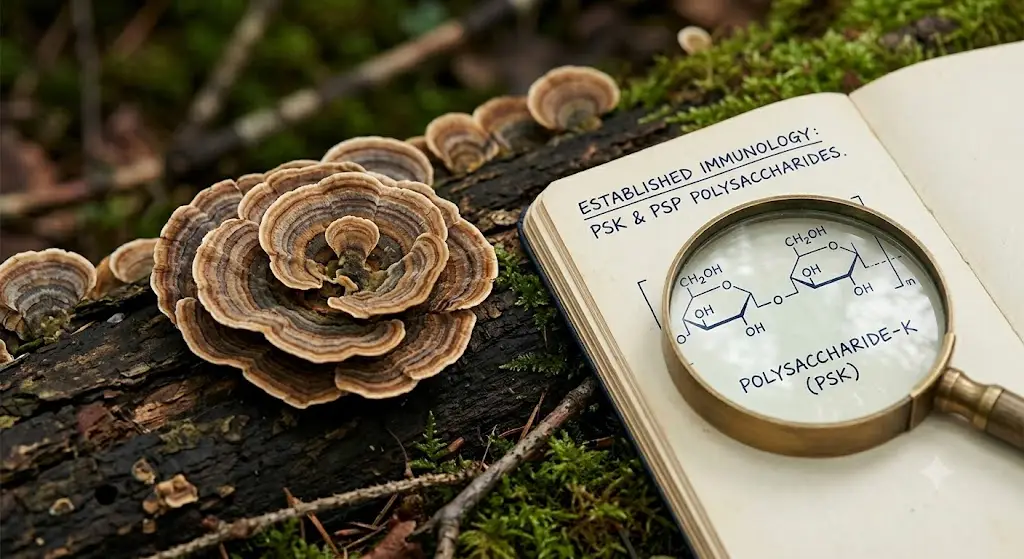
The primary focus of Turkey Tail research continues to be its polysaccharide content, specifically polysaccharopeptide (PSP) and polysaccharide-K (PSK). Studies have consistently shown interaction with T-lymphocytes, natural killer cells, and immune signalling cytokines. In oncology research, PSK has been investigated as an adjunct therapy, particularly in gastric and colorectal cancer contexts.
The immune-modulating mechanism of Turkey Tail is among the most well-characterised of any functional mushroom, and this forms the basis for its continued use in wellness contexts.
For a practical overview of Turkey Tail usage, doses, and what to expect, our Turkey Tail mushroom FAQ covers the key questions in plain terms.
UK regulatory note: Turkey Tail (Trametes versicolor) is currently classified as a novel food in the UK, meaning its sale for consumption as a supplement or food product requires formal novel food authorisation. Check the regulatory status of any Turkey Tail product before purchasing.
What the Research Is Not Yet Saying
Understanding the limits of the evidence is just as important as understanding what it supports.
Pro Tip: The most common mistake people make when following functional mushroom research is treating preliminary findings as established facts. Before citing a study to support a health claim, check the following: Was it a human trial? How large was the sample? Has it been replicated? Was it peer-reviewed?
Key gaps and cautions in the current research landscape:
- Lion’s Mane trials are growing in size and rigour, but most remain relatively small. The 2026 medRxiv trial at 109 participants is among the largest to date, but further replication in larger and more diverse populations is needed.
- Cordyceps human evidence is genuine but the 2026 review itself acknowledges methodological limitations across existing trials.
- Reishi’s strongest evidence base remains outside the UK, and UK-specific population data is sparse.
- Turkey Tail’s most robust human evidence is concentrated in oncological contexts, rather than general daily wellness use.
- Most studies use specific standardised extracts. Outcomes may not directly translate across all product formats, preparation methods, or dosage levels.
None of this makes the research uninteresting or the mushrooms without merit. It does mean the evidence should inform rather than determine your approach, and professional healthcare advice remains relevant for anyone with existing health conditions or those on medication.
Common Mistakes to Avoid When Following Mushroom Research
- Confusing in-vitro (cell culture) or animal model data with human clinical evidence
- Assuming tinctures, powders, and capsules are interchangeable with the extracts studied in trials
- Overlooking the fruiting body versus mycelium distinction, as many trials specify which was used
- Ignoring UK novel food regulations when sourcing Turkey Tail or Cordyceps supplements
- Applying findings from research on cognitively impaired populations to healthy individuals without adjustment
- Treating a single study as conclusive without checking for replication or systematic review support
FAQ
Q: Which functional mushroom has the strongest 2025-2026 human evidence? Lion’s Mane has seen the most active period of human clinical research in 2025-2026, with a 2026 randomised controlled trial and multiple Frontiers in Nutrition publications representing its most rigorous evidence to date. Reishi and Turkey Tail have deeper historical evidence bases but fewer new major human trials in this specific period.
Q: Do these studies use the same Lion’s Mane product I can buy in a shop? Not necessarily. Clinical trials use standardised extracts in defined doses, often specifying whether fruiting body, mycelium, or a combination was used. Consumer products vary widely in preparation method, concentration, and source material. When comparing trial results to a product, check the label carefully.
Q: Is Lion’s Mane legal and available in the UK? Yes. Lion’s Mane fruiting bodies are legal as a food and supplement in the UK without novel food authorisation. Mycelium-based Lion’s Mane products require authorisation under novel food regulations. Most reputable UK suppliers, including SporeBuddies, use fruiting body extracts.
Q: Can I combine multiple functional mushrooms? Some research is beginning to examine combinations, including the January 2025 study on Reishi and Lion’s Mane together for gut-brain axis modulation. Combination research is less developed than single-species trials at this stage, but traditional use of multi-mushroom blends is long-established and the safety profile of combining these species is generally well regarded.
Q: Should I consult a doctor before using functional mushroom supplements? If you are on any medication, pregnant, breastfeeding, or have an existing health condition, yes. For otherwise healthy adults, Lion’s Mane and Reishi have well-documented safety profiles, but professional advice is always the right starting point for any supplementation.
Related Guides
- Eating Lion’s Mane Mushrooms: Benefits and Personal Experience
- Lion’s Mane Tincture Benefits FAQ: Dosage, Uses, and What to Expect
- Turkey Tail Mushroom FAQ
- Health Mushroom Tinctures at SporeBuddies
- Mushroom Cultivation Trends 2026: UK Home Grower’s Guide
- Popular Mushroom Spore Types for UK Home Cultivation