

Shiitake mushrooms (Lentinula edodes) are defined in scientific literature as one of the most bioactively significant edible fungi studied today. The role of shiitake mushrooms in science spans immunology, pharmaceutical research, biotechnology, and environmental sustainability. Their key compounds, including β-glucans, ergosterol, and ergothioneine, appear across hundreds of peer-reviewed studies examining everything from immune cell activation to skin ageing. Whether you are a student beginning your mycology studies, a researcher reviewing clinical data, or a professional working in food science, understanding what the evidence actually says about shiitake gives you a sharper foundation than most introductory sources provide. This guide covers the human trial data, strain-specific biochemistry, extraction technologies, and circular economy applications that define shiitake’s place in modern science.
What scientific evidence supports the health benefits of shiitake mushrooms?
Human clinical data on shiitake is more specific than most popular health articles suggest. A 2026 dietary intervention confirms that consuming 5g–10g of dried shiitake daily for four weeks improves immune markers, including γδ-T cells and NK-T cells, and reduces C-reactive protein (CRP) in healthy adults. That result matters because CRP is a direct marker of systemic inflammation, and achieving measurable reduction through whole-food intake rather than isolated extracts is scientifically significant.
Animal studies add further depth. Rat models consistently show anti-inflammatory and lipid-lowering effects from shiitake compounds, particularly β-glucans. These findings support the human trial data, though translating animal results to clinical recommendations requires caution. The gap between animal and human evidence is where much of the current research debate sits.
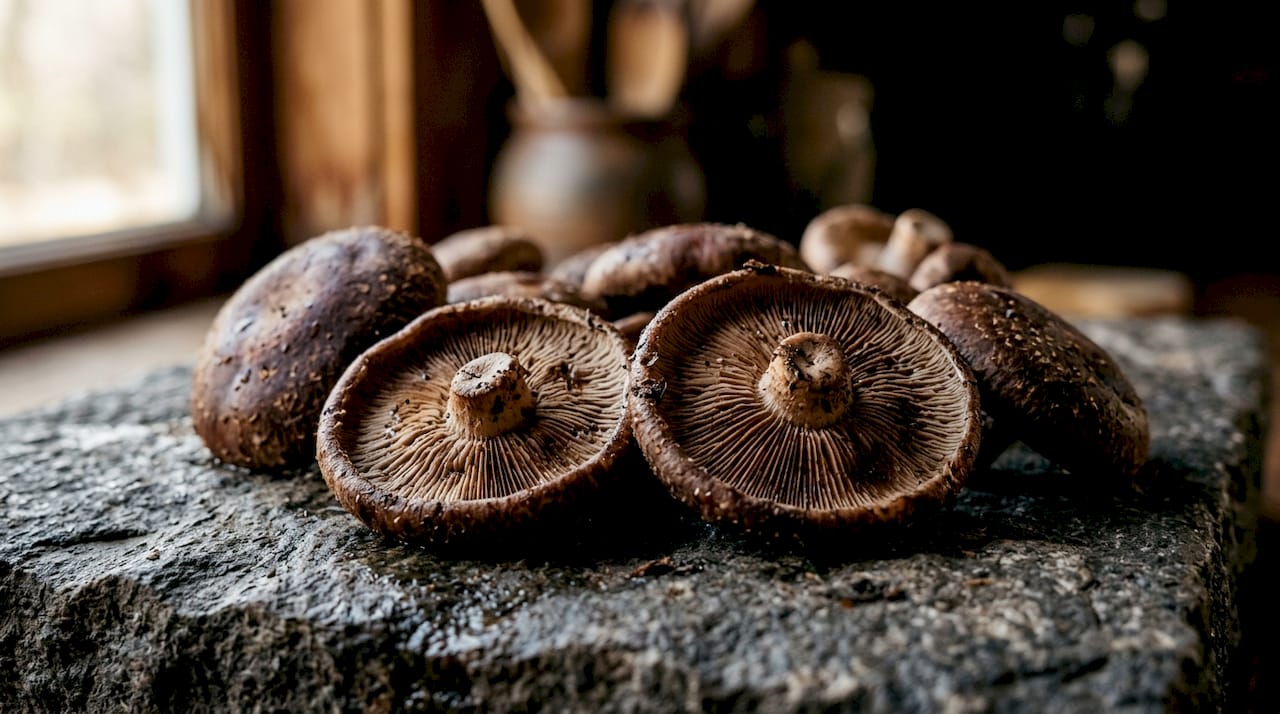
Nutritionally, shiitake contains ergosterol, which converts to vitamin D2 when exposed to UV light. This makes shiitake a notable vegan source of vitamin D, a nutrient directly linked to immune function and bone health. Researchers studying plant-based nutrition increasingly flag this property as clinically relevant.
One safety consideration deserves attention. Shiitake dermatitis is a rare but documented inflammatory skin reaction triggered by consuming raw or undercooked shiitake. It complicates clinical protocols that use whole mushrooms rather than processed extracts. Thorough cooking eliminates the risk, but researchers designing dietary trials must account for it in their protocols.
Key distinctions between whole-food and extract-level evidence include:
- Whole-food consumption produces measurable immune benefits in short-term human trials, particularly for γδ-T and NK-T cell activity.
- Standardised extracts show stronger and more consistent results in laboratory and pharmaceutical settings due to higher compound concentrations.
- Vitamin D potential depends on UV exposure during cultivation or post-harvest treatment, meaning nutritional content varies by production method.
- Clinical evidence for long-term effects, including prebiotic roles, remains limited by inconsistent preparation methods across studies.
Clinical evidence at extract level is stronger than at whole-food level. This distinction is critical for researchers designing trials, as conflating the two leads to overstated claims and poor reproducibility.
How do specific strains and compounds affect scientific applications?
Strain selection is not a minor variable in shiitake research. It is the difference between a study that produces reproducible results and one that cannot be replicated. Lentinula edodes strain DMRO-356 demonstrated 22.4% inhibition of carrageenan-induced paw oedema in rats, a result directly linked to its phytochemical profile: β-glucan content of 30.37%, ergosterol at 2.85 mg/g, and ergothioneine at 1.42 mg/g. Those concentrations are measurably higher than many commercial strains, which explains why DMRO-356 outperforms generic shiitake preparations in anti-inflammatory assays.
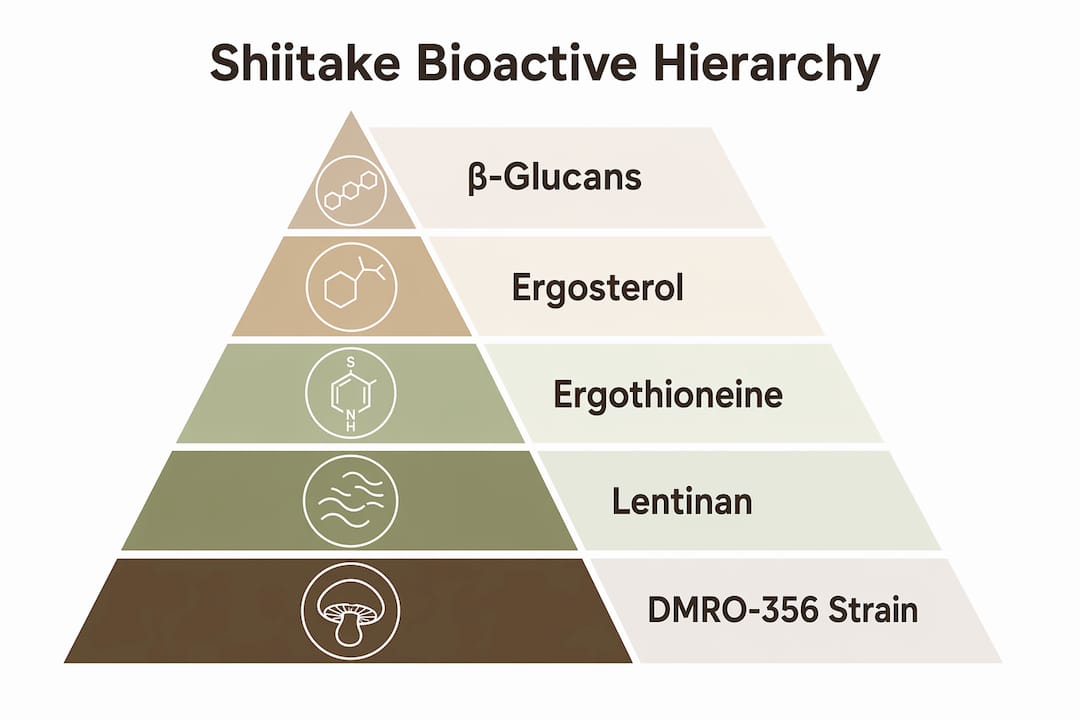
Molecular docking analysis of DMRO-356 identified multi-target interactions with inflammatory pathways. This approach, borrowed from pharmaceutical drug discovery, maps how individual compounds bind to specific molecular targets. Applying it to mushroom research is relatively recent and represents a meaningful methodological advance. It moves shiitake science away from broad bioactivity claims and towards mechanistic explanations that satisfy pharmaceutical-grade scrutiny.
The table below summarises the key bioactive compounds in shiitake and their primary scientific applications:
| Compound | Primary scientific application | Notes |
|---|---|---|
| β-glucans | Immune modulation, anti-inflammatory activity | Content varies significantly by strain |
| Ergosterol | Vitamin D2 precursor, membrane function | UV exposure required for D2 conversion |
| Ergothioneine | Antioxidant, cytoprotection | Stable compound; survives cooking |
| Lentinan (LNT) | Immunotherapy adjunct research | Polysaccharide derived from β-glucan fraction |
Pro Tip: When reviewing shiitake research papers, always check whether the study specifies the strain used. Results from uncharacterised or mixed strains carry significantly less scientific weight than those using documented, phytochemically profiled isolates like DMRO-356.
Strain standardisation is the single most pressing methodological challenge in shiitake science. Without it, variability in mushroom preparations makes long-term health effect confirmation nearly impossible. Researchers at Sporebuddies and in academic settings alike benefit from understanding that the mushroom you grow and the mushroom studied in a clinical paper may share a species name but differ substantially in compound profile. You can read more about functional mushroom research to see how this challenge applies across multiple species.
What biotechnological techniques enhance shiitake mushroom research?
Extraction technology directly determines how much bioactive value you recover from shiitake tissue. Intense pulsed light (IPL)-assisted water extraction, developed in 2026, optimises polysaccharide yield while preserving the triple-helical β-(1→3)-glucan structure that drives immune bioactivity. Conventional hot-water extraction degrades this structure partially, reducing the functional potency of the resulting fraction. IPL-assisted methods represent a genuine technical advance for both food science and pharmaceutical applications.
Shiitake extracts also show promise in dermatology and cosmetics. Polysaccharide extracts inhibit elastase and collagenase, two enzymes responsible for collagen breakdown and skin ageing. In vitro assays and topical cream formulation studies confirm this activity, placing shiitake alongside established cosmeceutical ingredients. The anti-ageing application is commercially significant and scientifically grounded, though in vitro results need further clinical validation before definitive claims can be made.
Current biotechnological research priorities in shiitake science include:
- Extraction standardisation: Developing protocols that produce consistent compound profiles across batches, which is a prerequisite for pharmaceutical-grade applications.
- Bioavailability studies: Understanding how β-glucans and ergothioneine are absorbed and metabolised in humans, not just detected in extracts.
- Cosmeceutical formulation: Translating enzyme-inhibition data from in vitro assays into stable, clinically tested topical products.
- Safety profiling: Accounting for rare reactions like shiitake dermatitis in processing protocols, particularly for products intended for sensitive populations.
The gap between laboratory findings and clinical application remains wide. Standardisation is urgently needed to confirm long-term health effects and support regulatory approval for shiitake-derived therapeutics. Researchers working in this space should treat current biotechnological results as strong preliminary evidence rather than established clinical fact.
In what ways are shiitake mushrooms used in sustainable science?
Shiitake cultivation produces a significant volume of spent substrate after fruiting bodies are harvested. Spent shiitake substrate (SSS) is the lignocellulosic material remaining after mushroom growth, and it is increasingly recognised as a resource rather than waste. SSS supports circular bioeconomy applications including bioremediation, energy recovery, biofertiliser production, and animal feed supplementation. Each application reduces the environmental cost of shiitake production and creates additional value from what would otherwise be discarded.
The environmental case for shiitake is strong relative to conventional crops. Shiitake grows on agricultural waste materials such as sawdust and straw, requires no soil, and produces a harvestable crop in weeks. Its low land and water footprint positions it well within sustainable food system research. Environmental biotechnologists studying low-impact protein and micronutrient sources consistently include shiitake in comparative analyses.
Practical sustainable applications of SSS in current research include:
- Bioremediation: SSS contains fungal enzymes, including laccases and peroxidases, that degrade environmental pollutants such as dyes and heavy metals in contaminated water.
- Biofertiliser production: Residual nutrients and microbial communities in SSS improve soil structure and plant growth when applied as an amendment.
- Energy recovery: SSS can be processed through anaerobic digestion or combustion to recover energy, reducing waste disposal costs for commercial growers.
- Bioactive compound extraction: Secondary compounds remaining in SSS after fruiting can be extracted for use in animal feed or nutraceutical applications.
- Animal feed supplementation: SSS retains protein and fibre content that supports livestock nutrition, reducing feed costs and waste simultaneously.
Pro Tip: If you are researching SSS applications, note that protocols vary widely between studies. Substrate composition, mushroom strain, and number of fruiting cycles all affect SSS nutrient content. Always document these variables when designing experiments to make your results comparable to published literature.
Research gaps remain significant. Standardised protocols for SSS processing do not yet exist, and sustainability metrics across different SSS applications are inconsistently reported. Modern science is working to bridge traditional ethnopharmacological knowledge with validated, reproducible methods. That work applies equally to SSS research, where the potential is clear but the evidence base is still maturing.
Key takeaways
Shiitake mushrooms (Lentinula edodes) deliver measurable scientific value across immunology, biotechnology, and environmental sustainability, but strain standardisation and preparation consistency remain the critical barriers to clinical and industrial application.
| Point | Details |
|---|---|
| Human clinical evidence exists | Daily intake of 5g–10g dried shiitake for four weeks improves immune markers and reduces CRP in healthy adults. |
| Strain identity matters | DMRO-356 shows 22.4% anti-inflammatory inhibition, linked to specific β-glucan, ergosterol, and ergothioneine concentrations. |
| Extraction method affects bioactivity | IPL-assisted water extraction preserves triple-helical β-(1→3)-glucan structure better than conventional methods. |
| SSS is a research resource | Spent shiitake substrate supports bioremediation, biofertiliser, and energy recovery in circular bioeconomy models. |
| Standardisation is the key gap | Variability in strain and preparation prevents consistent long-term health effect confirmation across studies. |
Sporebuddies: supporting shiitake research and cultivation
Sporebuddies supplies the UK’s mycology community with the materials needed to study and grow shiitake and other functional mushrooms at home or in a research setting. Whether you are setting up a cultivation experiment or studying spore morphology under a microscope, the mushroom spore range includes documented strains suitable for both hobbyist and educational use. For those building a more structured setup, the mushroom growing kits provide a reliable starting point with clear guidance on substrate preparation and contamination prevention. Sporebuddies also publishes educational content on mycology science and education to support researchers and students who want to go beyond cultivation and understand the science behind the fungus.
FAQ
What are the main bioactive compounds in shiitake mushrooms?
Shiitake contains β-glucans, ergosterol, ergothioneine, and lentinan (LNT). Each compound has distinct biological activity, from immune modulation to antioxidant protection.
Does eating shiitake mushrooms actually improve immune function?
A 2026 human trial confirmed that 5g–10g of dried shiitake daily for four weeks increases γδ-T and NK-T cell activity and reduces CRP. The effect is measurable but modest compared to standardised extract doses.
What is shiitake dermatitis and how is it avoided?
Shiitake dermatitis is a rare inflammatory skin reaction caused by consuming raw or undercooked shiitake. Thorough cooking eliminates the risk by denaturing the responsible compound, lentinan in its raw form.
Why does strain selection matter in shiitake research?
Bioactive compound concentrations vary significantly between strains. Strain DMRO-356, for example, contains 30.37% β-glucans, a concentration that directly drives its documented anti-inflammatory effects. Studies using uncharacterised strains produce results that are difficult to replicate.
What is spent shiitake substrate and why does it matter scientifically?
Spent shiitake substrate (SSS) is the lignocellulosic material remaining after mushroom harvest. It contains fungal enzymes and residual nutrients that support bioremediation, biofertiliser production, and animal feed applications within circular bioeconomy research.