
Growing mushrooms at home sounds like it belongs in a specialist laboratory, but the reality is far more accessible. Most people assume you need expensive equipment, years of experience, or a science degree to get started. You don’t. Mushroom cultivation follows three clear stages: introducing fungal spawn to a prepared substrate, allowing the mycelium to colonise, and triggering fruiting with simple environmental cues. This guide walks you through every stage in plain language, from choosing the right species for the UK climate to staying safe and avoiding the most common beginner mistakes. Whether you’re completely new or just looking to sharpen your knowledge, this is your starting point.
Table of Contents
- What is mushroom mycology? An overview for UK growers
- Choosing mushroom species to grow in the UK
- Step-by-step mushroom cultivation: the process simplified
- Safety, hygiene, and common pitfalls for UK home mycologists
- What most UK beginners get wrong in mycology – and how to get it right
- Ready to deepen your mycology journey?
- Frequently asked questions
Key Takeaways
| Point | Details |
|---|---|
| Start with easy species | Oyster and button mushrooms are ideal for UK beginners due to their fast growth and simple needs. |
| Prioritise hygiene | Clean tools, hands, and workspace are more important than specialist equipment in avoiding failures. |
| Native species outdoors | Stick to native mushrooms when cultivating outdoors to protect the local environment and maximise success. |
| Recognise and act on contamination | Green, black or foul-smelling growths mean you should discard the batch immediately. |
| Kits simplify the learning curve | Starter kits guide you through the process with fewer risks and faster results for new hobbyists. |
What is mushroom mycology? An overview for UK growers
Mycology is simply the study of fungi. For home growers, it’s the practical science behind why mushrooms grow, how they behave, and what you can do to encourage a healthy harvest. Understanding a handful of key terms makes the whole process feel far less daunting.
Mycelium is the thread-like network that fungi use to feed and grow. Think of it as the root system of the mushroom, spreading through a substrate and absorbing nutrients. The mushroom you eventually see and harvest is just the fruiting body, the reproductive structure that appears once the mycelium is ready. Learning about understanding mycelium helps you recognise healthy growth from the start.
Spawn is the material you use to introduce fungi to your substrate. It’s essentially mycelium that has already been cultivated and is ready to spread. Spawn is available on grain, dowels, or as liquid culture, and each format suits different growing methods. A substrate is the growing medium, the material the mycelium colonises. Common options include straw, hardwood sawdust, logs, coffee grounds, and manure, depending on the species you choose.
The fungal life cycle moves from spore to germination, then mycelium colonisation, and finally fruiting. In a home setting, you skip the spore stage by starting with spawn, which speeds things up considerably. Understanding mushroom genetics basics helps explain why some strains colonise faster or produce more abundantly than others.
Common substrates available to UK growers:
- Straw (widely available, suits oyster mushrooms)
- Hardwood sawdust or pellets (ideal for shiitake and lion’s mane)
- Logs (oak or beech work well for outdoor growing)
- Coffee grounds (a sustainable option for oyster varieties)
- Manure or compost (best suited to button mushrooms)
| Spawn type | Best for | Notes |
|---|---|---|
| Grain spawn | Indoor growing | Fast colonisation, widely available |
| Dowel spawn | Log inoculation | Simple to use outdoors |
| Liquid culture | Advanced growers | Faster than grain, needs syringe |
| Sawdust spawn | Hardwood substrates | Good for shiitake |
The RHS mycology guide is a reliable reference if you want to explore outdoor growing methods further.
Choosing mushroom species to grow in the UK
Once you understand the basics, the next decision is which species to grow. This choice shapes everything: your substrate, your environment, and how quickly you’ll see results.
For UK beginners, four species stand out as particularly forgiving and well-suited to the climate:
- Oyster mushrooms (Pleurotus ostreatus and variants including blue-grey, tarragon, and summer oyster) are widely recommended for UK growers due to their speed and adaptability
- Button mushrooms (Agaricus bisporus) are familiar, popular, and grow well on manure-based compost
- Lion’s mane (Hericium erinaceus) is gaining popularity and thrives on hardwood substrates
- Shiitake (Lentinula edodes) suits logs or sawdust and rewards patience with excellent flavour
The UK’s mild, damp climate is actually an advantage. Oyster mushrooms especially enjoy cooler temperatures and higher humidity, making an unheated spare room, shed, or garage a perfectly workable growing space for much of the year.
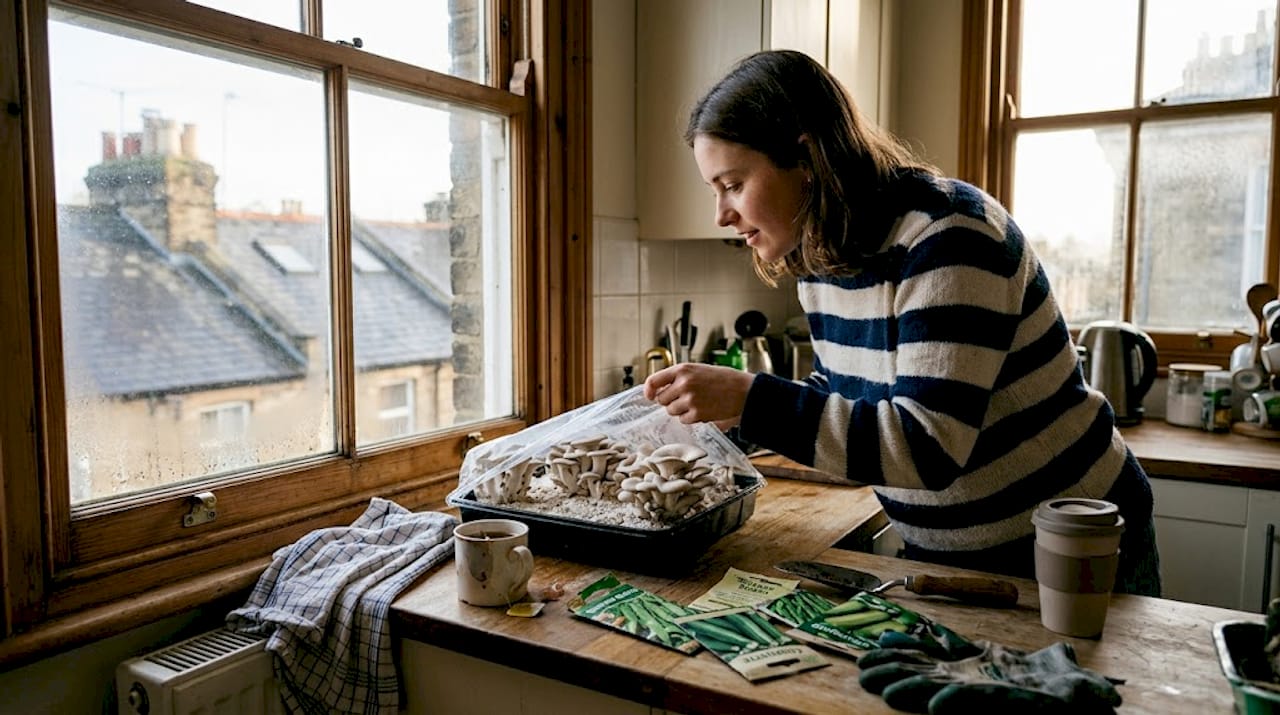
For outdoor growing, native or naturalised species are always the safer choice. Introducing non-native strains into open environments risks disrupting local fungal ecosystems. Exploring our guide to UK mushroom species will help you identify what grows naturally in your area and what’s appropriate to cultivate outside.
| Species | Substrate | Difficulty | Time to harvest |
|---|---|---|---|
| Oyster | Straw, coffee grounds | Easy | 3 to 5 weeks |
| Button | Manure/compost | Moderate | 4 to 8 weeks |
| Lion’s mane | Hardwood sawdust | Easy to moderate | 4 to 6 weeks |
| Shiitake | Logs, sawdust | Moderate | 6 to 12 weeks |
It’s also worth checking UK mushroom legality if you’re curious about which spores and species are legal to purchase and cultivate in the UK.
Pro Tip: Start with a ready-made kit before attempting a DIY setup. Kits remove most of the variables and let you focus on learning the process. BBC beginner mushroom advice echoes this approach for anyone new to home growing.
Step-by-step mushroom cultivation: the process simplified
Once you’ve chosen your species, the cultivation process follows a clear sequence. Here’s how it works at home.
1. Prepare your substrate. Choose the right growing medium for your species. Pasteurise straw by soaking it in hot water (around 70 to 80°C) for an hour. Hardwood sawdust typically needs sterilisation using a pressure cooker.
2. Inoculate with spawn. Once your substrate has cooled, mix in your spawn thoroughly. Work quickly and cleanly to reduce contamination risk. Introducing fungal spawn at this stage is the most critical step for a healthy grow.
3. Allow colonisation. Seal your growing container and keep it in a warm, dark space. Mycelium will spread through the substrate over one to three weeks, turning it white and fluffy.
4. Initiate fruiting. Once fully colonised, introduce fruiting conditions: lower the temperature slightly, increase humidity to 80 to 95%, and allow fresh air exchange. Light is less critical but signals the direction of growth.
5. Harvest. Pick mushrooms just before the caps fully flatten. Twist and pull gently to avoid damaging the mycelium for future flushes.
6. Rest and reflush. After harvesting, mist the substrate and allow it to rest for several days. Most kits produce two to four flushes.
Most home grow kits yield between 0.5 and 1.5 kg of fresh mushrooms across multiple flushes, with the first flush typically being the largest.
For UK growers, the biggest environmental challenge is maintaining humidity in centrally heated homes during winter. A simple humidity tent made from a clear bag works well. Our beginner’s growing guide covers this in more detail, and you can also follow our step-by-step UK cultivation walkthrough for species-specific advice.
Pro Tip: Keep a small notebook recording temperatures, humidity levels, and colonisation progress. Patterns become obvious quickly, and you’ll troubleshoot future grows much faster.
For a broader overview of the process, the USU cultivation basics guide is a solid reference. And as the RHS recommends, kits are the easiest entry point before moving to DIY for greater control and yield.
Safety, hygiene, and common pitfalls for UK home mycologists
Even with the right process, contamination and safety mistakes catch most beginners off guard. Getting these basics right separates a successful grow from a frustrating one.
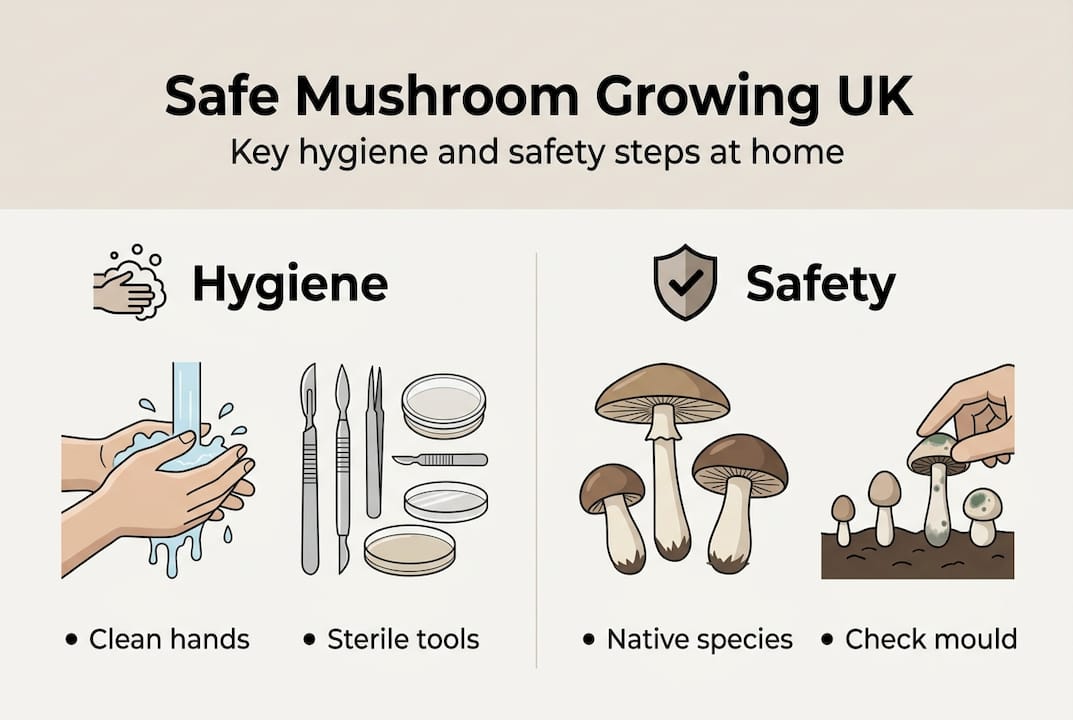
Hygiene is everything. Wash your hands thoroughly before handling any substrate or spawn. Wipe down your work surface with isopropyl alcohol. A still air box (a large clear container with arm holes cut in the side) dramatically reduces airborne contamination during inoculation. Clean hands and tools are your first line of defence, and contaminated grows should be discarded immediately without hesitation.
Common contamination signs to watch for:
- Green or black mould patches on the substrate
- Slimy or wet areas that smell foul
- Pink, orange, or red discolouration
- Mycelium that looks stringy or patchy rather than dense and white
Pro Tip: If you spot green or black mould, or notice a strong unpleasant odour, remove the grow immediately. Seal it in a bag before taking it out of your growing space to avoid spreading spores. You can read more about identifying and managing contamination risks on our dedicated guide.
“Never eat any mushroom you cannot identify with absolute certainty. Home-grown mushrooms from a labelled kit are safe; wild mushrooms require expert identification.”
For outdoor growing, keep non-native strains away from open soil or woodland. Spent substrate blocks and kits can be composted safely in a closed compost bin, which also returns nutrients to your garden. Our mushroom safety essentials page covers responsible disposal and ecological best practice.
If you’re ever unsure about a mushroom you’ve found growing in your garden or outdoors, check our mushroom safety identification guide before touching or tasting anything. The mycology contamination guide is also a thorough resource for understanding what goes wrong and why.
What most UK beginners get wrong in mycology – and how to get it right
Most beginner guides focus on equipment lists. In our experience, that’s the wrong place to start. The growers who succeed earliest are not those with the fanciest pressure cookers or the most elaborate lab setups. They’re the ones who obsess over cleanliness and pick the right species for their conditions.
Oyster mushrooms are the fastest from inoculation to harvest, typically ready in three to five weeks, and they tolerate beginner mistakes better than most. Starting with oysters on straw in a kit format removes almost every variable that causes early failure.
First grows often fail. That’s not a sign you’re doing it wrong; it’s part of the learning process. Discard contaminated grows quickly, clean your space, and start again with fresh inputs. Each failed grow teaches you something a guide can’t.
For outdoor cultivation, native species are not just ecologically responsible; they’re also more likely to thrive in UK soil and weather conditions. Choosing a species that belongs here reduces your risk considerably. Our beginner growing kits are a smart first step before you move on to building your own substrate and spawn setup from scratch.
Ready to deepen your mycology journey?
If this guide has sparked your interest, the best next step is getting your hands on a quality kit and experiencing the process yourself. At Spore Buddies, we stock a range of our mushroom growing kits designed specifically for UK conditions, covering oyster, shiitake, and lion’s mane varieties. Not sure where to begin? Our which kit suits you guide helps you match a kit to your space, experience level, and goals. For ongoing learning, our UK mushroom safety guides cover contamination prevention, identification, and responsible growing practices in one place. Growing mushrooms is genuinely rewarding, and with the right starting point, your first successful harvest is closer than you think.
Frequently asked questions
How long does it take to grow mushrooms at home in the UK?
Most oyster mushrooms are ready in 3 to 5 weeks from inoculation to harvest under good conditions. Other species like shiitake take longer, typically six to twelve weeks.
What are the main signs of contamination in mushroom growing?
Green or black mould, slimy patches, and strong foul odours mean you should discard the grow immediately. Speed matters; leaving contamination in place risks spreading it to other grows.
Can I grow non-native mushrooms outdoors in the UK?
It is safest and strongly recommended to grow only native species outdoors to protect local ecology. Non-native strains are best kept to indoor, contained environments.
Do I need specialist equipment to start mushroom cultivation?
Beginner-friendly kits require minimal equipment and are the easiest entry point for UK growers. For DIY setups, good hygiene and a pressure cooker cover most of what you need.
How much do home grow kits yield on average?
Most kits produce between 0.5 and 1.5 kg of fresh mushrooms over two to four flushes, with the first flush usually being the most productive.