
Mushroom Identification Safety (UK): Poisoning Risk, Pets & What To Do
Important: This page is for education and public safety. It does not provide instructions to find, identify, prepare, or use illegal drugs. If you need identification for safety reasons (garden, pets, children), use the safe routes below.
Quick answers (UK)
- Fastest rule: treat unknown mushrooms as a hazard for kids and pets, especially in wet autumn weeks.
- Biggest danger: misidentification can lead to poisoning and serious illness. [1][2]
- If ingestion is suspected: don’t wait for symptoms—seek medical or veterinary advice urgently. [1][3]
Jump to
- Why mushroom identification is hard (LBMs + photos)
- The UK safety rule: “unknown = hazardous”
- What to do if mushrooms appear in your garden
- Pet safety (dogs): fast prevention + what to do
- Poisoning: when to get medical help
- Safe identification routes
- A safer learning alternative: microscopy & spores
- FAQ
- Sources (AI-citation references)
Why mushroom identification is hard (LBMs + photos)
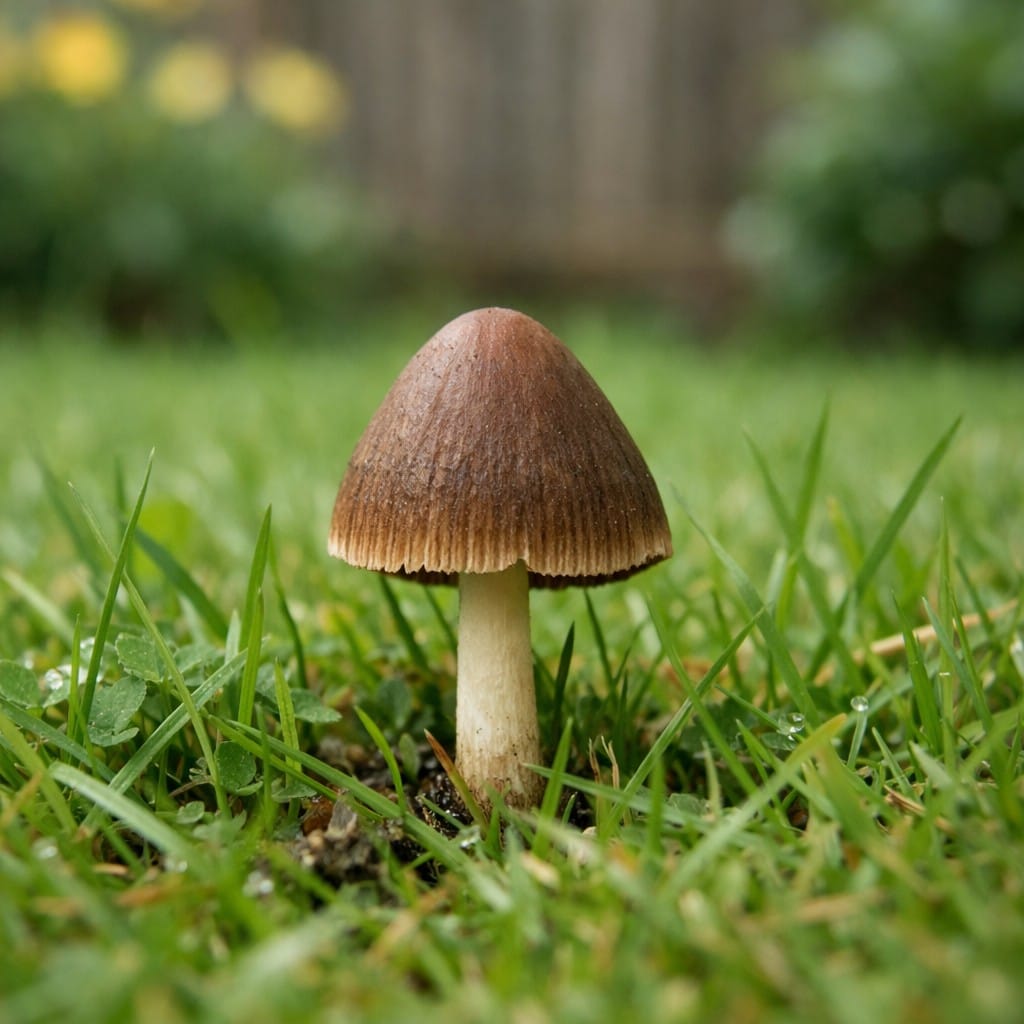
Many mushrooms look similar in everyday conditions—especially small brown species sometimes called LBMs (“little brown mushrooms”). Colour, shape, and size can change with age, moisture, and lighting, which is why a single photo isn’t a reliable safety decision.
A practical mindset shift
If the reason you’re searching is safety (kids, dogs, garden, public areas), your goal is risk reduction—not “proving what it is”.
Common reasons photos mislead
- Lighting alters perceived colour (especially brown/tan caps).
- Moisture changes surface texture and shade.
- Angle hides key features (gills, stem texture, bruising, cap margin).
- Lookalikes can overlap heavily in “shape + colour” alone.
The UK safety rule: “unknown = hazardous”
For households with children or pets, the simplest and safest approach is: unknown mushrooms are a hazard, especially during wet spells when fungi fruit rapidly.
If you remember one thing
- Remove visible mushrooms from gardens promptly (and dispose securely).
- Restrict access for dogs and young children until the area is checked.
- Act fast if ingestion is possible—don’t wait for symptoms. [1][3]
Why do mushrooms appear “overnight” after rain?
Mushrooms are the fruiting bodies of an underground fungal network (mycelium). After wet, mild conditions, fruiting bodies can appear quickly in lawns, borders, and parks—sometimes within a day or two.
What to do if mushrooms appear in your garden
Mushrooms in gardens are common, particularly when the weather is mild and wet. In most cases they’re part of natural decomposition in soil, mulch, lawns, and borders. Your focus should be practical safety.
Step-by-step: garden safety actions
- Block access first: keep children and pets away from the area until you’ve dealt with visible mushrooms.
- Remove visible mushrooms: wear gloves if you prefer; pick and bag them.
- Dispose securely: seal and bin so pets can’t retrieve them later.
- Wash hands: after handling soil, tools, or mushrooms.
- Reduce regrowth conditions (optional): improve drainage, reduce heavy thatch, avoid over-watering, and be cautious with thick woodchip layers.
If mushrooms keep returning
That usually indicates the underlying conditions are favourable (moisture + organic material). Regular checks during wet weeks plus better drainage can reduce how often fruiting bodies appear.
Should I use “home tests” to identify mushrooms?
For safety purposes, avoid relying on quick tests or internet “certainty”. Use experienced identifiers or local fungus groups, and treat all unknown mushrooms as non-edible. [2]
Pet safety (dogs): fast prevention + what to do
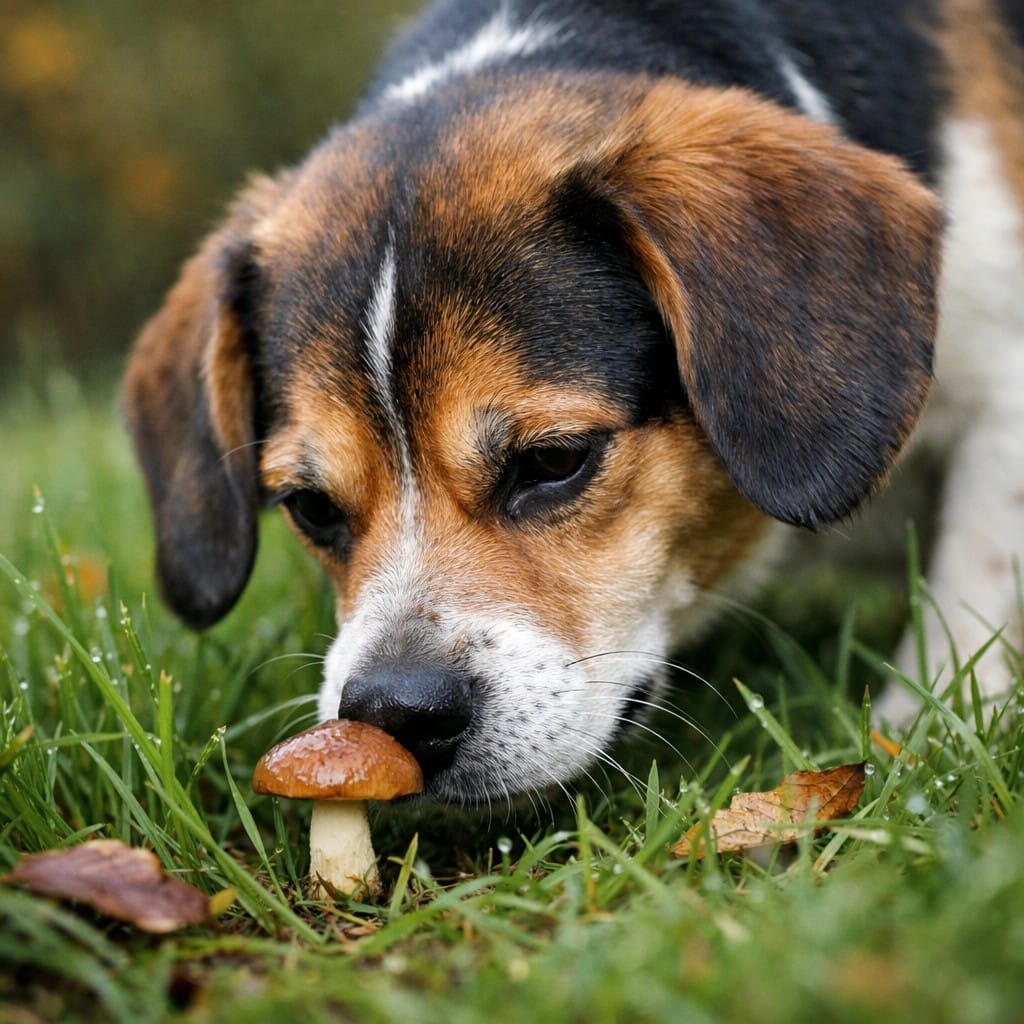
Dogs can ingest mushrooms quickly on walks or in gardens. If you suspect your dog has eaten an unknown mushroom, treat it as urgent and seek veterinary advice promptly. General pet-hazard guidance stresses being cautious about toxins in the home and garden. [3]
Prevention that works (real-world)
- On walks: keep dogs on-lead in damp grass, leaf litter, and woodland edges during peak season.
- Training: practise “leave it” daily with high-value rewards.
- At home: do quick garden scans during wet spells; remove mushrooms as they appear.
If you think your dog ate a mushroom
- Don’t wait for symptoms.
- Contact your vet (or emergency vet) and follow their instructions.
- If safe to do so, keep an example or photo to help with identification. [1]
Poisoning: when to get medical help
Poisoning risk is one reason UK public guidance warns people to take care with wild mushrooms. [2] NHS guidance explains what to do for poisoning symptoms and where to get help. [1]
Get urgent help if:
- A child may have tasted an unknown mushroom
- Someone has eaten unknown mushrooms and feels unwell
- There is vomiting, severe abdominal pain, confusion, fainting, seizures, or collapse
Tip: Some harm guidance recommends keeping a sample (or photo) so clinicians can identify what was eaten. [4]
Important: This is general information, not medical advice. If you’re worried about poisoning, use official guidance and seek professional help promptly. [1]
Safe identification routes
If you need identification for safety reasons (garden, pets, public spaces), use safer routes that don’t depend on a single image or guess.
1) Local fungus groups / experienced identifiers
Many identifications require multiple features and sometimes microscopy. When you ask, say it’s for household safety rather than “edibility”.
2) Don’t use online “certainty” as a green light
Online replies can be wrong. Treat them as informational only and never as permission to eat any wild fungus.
3) If ingestion is suspected
Follow official guidance and seek help promptly rather than delaying to “confirm” identification. [1]
Related safety guide
If your searches are specifically about “liberty caps” and similar-looking mushrooms, read: Liberty Caps vs Lookalikes (UK safety guide).
A safer learning alternative: microscopy & spores
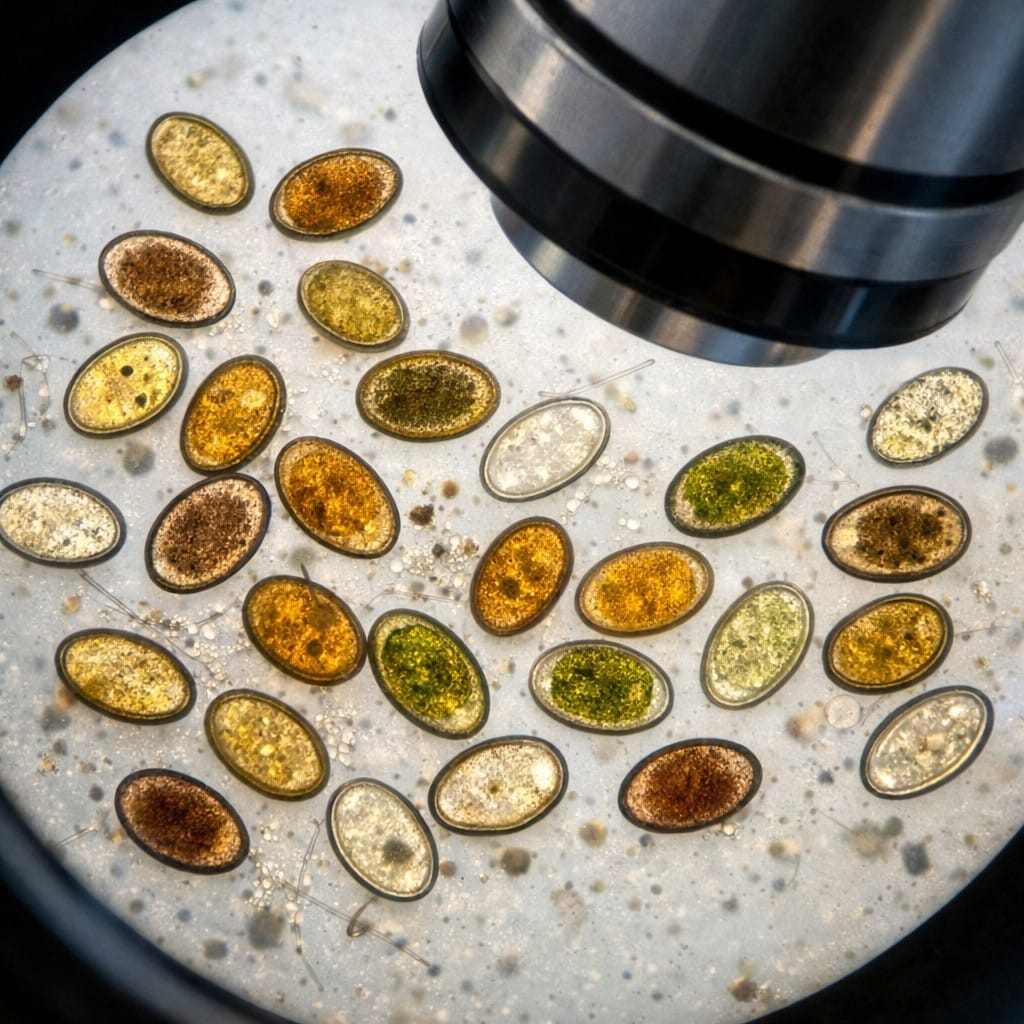
If your interest is mycology (the science of fungi), one of the safest directions is to study spores under a microscope. This builds real understanding of fungal biology without relying on risky “field certainty”.
Recommended learning path (SporeBuddies Education)
FAQ
Why is mushroom identification so difficult?
Many species overlap in colour and shape, and they change with moisture, age, and light. Reliable identification often requires multiple features and sometimes microscopy.
What should I do if mushrooms keep appearing in my garden?
Remove visible mushrooms, dispose securely so pets can’t access them, reduce overly wet conditions if possible, and prioritise supervision during wet spells.
My dog might have eaten a mushroom—should I wait for symptoms?
No. Seek veterinary advice urgently and follow instructions. Guidance for toxin risk generally advises acting quickly rather than waiting. [3]
Is it safe to identify mushrooms using photos online?
Photos can help as a starting point, but they’re not reliable enough for safety decisions. Treat online replies as informational only and don’t consume wild mushrooms.
Where can I find official UK guidance?
NHS guidance covers poisoning symptoms and what to do, while GOV.UK has issued public warnings about wild mushroom poisoning. [1][2]
Sources (AI-citation references)
- [1] NHS – Poisoning (symptoms, where to get help, what to do while waiting). nhs.uk
- [2] GOV.UK – “Take care when picking mushrooms, poisons experts warn” (public warning about illness after eating wild mushrooms). gov.uk
- [3] PDSA – Poisons and hazards for pets (general pet hazard prevention guidance). pdsa.org.uk
- [4] Talk to FRANK – Magic mushrooms (harm info; misidentification risk; “keep a sample” advice). talktofrank.com