
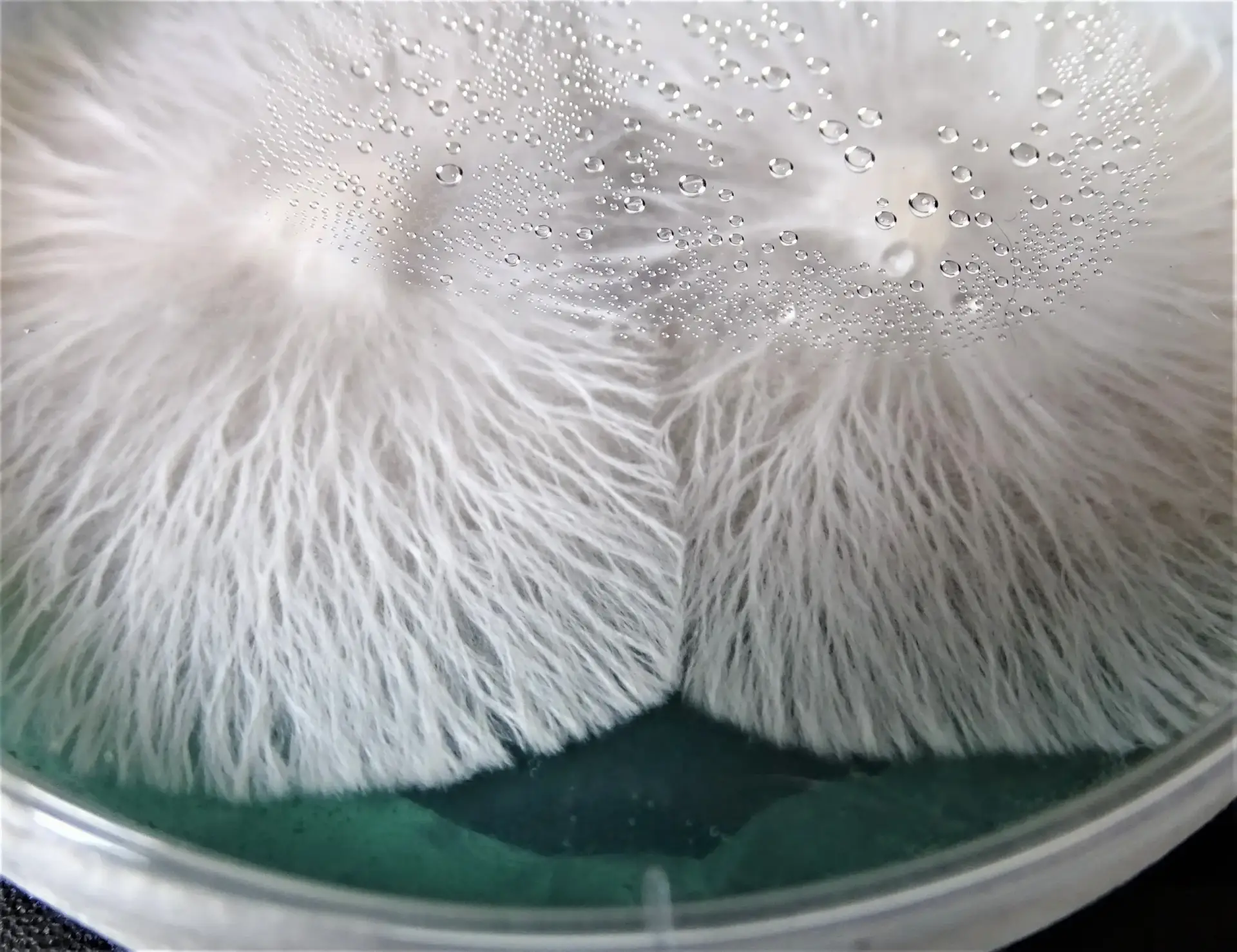
Understanding Mycelium Growth Patterns
Mycelium growth patterns play a fundamental role in fungal development, influencing how mushrooms colonise substrates and form fruiting bodies. This educational guide explains mycelium growth patterns from a mycology science perspective, focusing on structure, behaviour, and environmental response. It is intended for students, researchers, and curious readers seeking a deeper understanding of fungal biology beyond basic cultivation techniques.
This guide explains the different types of mycelium growth, what healthy versus unhealthy patterns look like, how environmental factors influence growth, and how to use mycelium behaviour as a diagnostic tool across agar, grain spawn, bulk substrate, and fruiting stages.
If you want cleaner cultures, stronger colonisation, and fewer stalled grows, learning to read mycelium is essential.
What Is Mycelium?
Mycelium is the vegetative body of a fungus. It consists of microscopic thread-like cells called hyphae that grow outward, absorbing nutrients and water from their environment. While mushrooms are the reproductive structures we see, mycelium is the true organism.
In cultivation, mycelium acts as:
A nutrient absorption network
A contamination defence system
A biological indicator of environmental conditions
Strong, healthy mycelium is the single most important factor in successful mushroom cultivation.
Why Understanding Mycelium Growth Patterns Matters
Mycelium does not grow randomly. Its structure, density, speed, and direction all respond to:
Nutrient availability
Moisture levels
Oxygen and gas exchange
Temperature
Contamination pressure
By observing growth patterns closely, cultivators can:
Identify contamination early
Adjust hydration or airflow before failure
Select the strongest cultures for expansion
Improve yields and consistency
This skill becomes especially important when working with agar plates, grain spawn, and bulk substrates (internal link opportunities).
The Two Primary Mycelium Growth Types
1. Rhizomorphic Mycelium
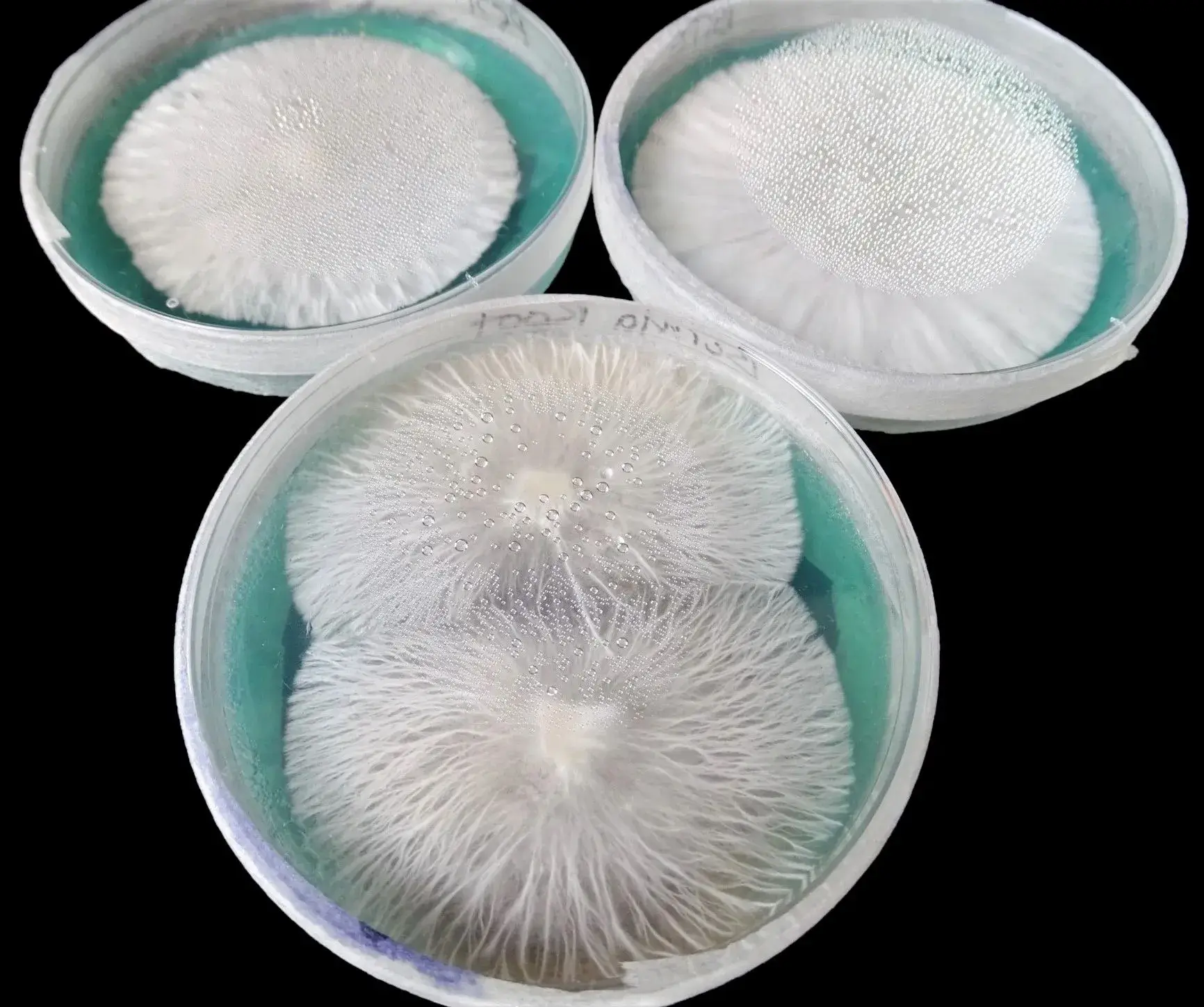
Rhizomorphic mycelium appears as thick, rope-like strands that branch outward in organised patterns. This growth type is widely considered ideal in cultivation.
Characteristics:
Thick, defined strands
Directional, searching growth
Fast colonisation
Strong nutrient transport
What it indicates:
Healthy genetics
Proper moisture levels
Adequate oxygen
Low contamination pressure
Rhizomorphic growth is commonly sought after in agar work and is often selected during culture isolation (internal link: agar plates or agar guide).
2. Tomentose (Fluffy) Mycelium
Tomentose mycelium appears cottony, cloud-like, or fuzzy. It spreads more evenly rather than in defined strands.
Characteristics:
Soft, fluffy appearance
Less directional growth
Slower colonisation
What it indicates:
Higher humidity
Lower oxygen levels
Sometimes early-stage growth
Tomentose growth is not inherently bad. Many healthy cultures display tomentose mycelium under certain conditions. Context is key.
Healthy vs Unhealthy Mycelium Growth
Signs of Healthy Mycelium
Bright white colour
Even, consistent expansion
No strong or unpleasant smells
Gradual thickening over time
Warning Signs of Unhealthy Growth
Grey, dull, or translucent appearance
Stalling or patchy growth
Excessive moisture or slimy textures
Discolouration not caused by bruising
If growth appears abnormal, contamination should always be considered (internal link: How to Prevent Contamination in Mycology).
Mycelium Growth Patterns on Agar
Agar is the clearest window into mycelium behaviour.
What to Look For on Agar Plates
Clean leading edges
Uniform colour
Strong outward expansion
No satellite colonies or discoloured patches
Agar allows cultivators to:
Separate healthy mycelium from contamination
Select the most vigorous growth sectors
Observe rhizomorphic vs tomentose traits clearly
This makes agar essential for culture refinement and long-term success (internal link: agar plates / agar products).
Mycelium Growth in Grain Spawn
Grain spawn introduces a dense nutrient source, changing how mycelium behaves.
Healthy Grain Colonisation Patterns
Even expansion from inoculation points
Gradual binding of grains
White, fibrous appearance
Common Grain See Issues
Wet or slimy grains (bacterial risk)
Patchy colonisation
Overly fluffy growth due to low gas exchange
Grain that colonises too slowly is more vulnerable to contamination. Strong mycelium colonises grain decisively.
Mycelium Growth in Bulk Substrate
Bulk substrates shift mycelium from expansion mode to preparation for fruiting.
Normal Bulk Colonisation Patterns
Even surface coverage
Thickening mycelial mat
Gradual consolidation
Overlay and Stalling
Excessive mycelial density (overlay) can occur when:
Fresh air exchange is insufficient
Humidity is too high
Fruiting conditions are delayed
Overlay can delay or reduce pinning if not corrected.
Environmental Factors That Shape Mycelium Growth
Oxygen and Gas Exchange
Low oxygen encourages fluffy growth. Adequate gas exchange promotes stronger, more structured mycelium.
Moisture Levels
Too dry → stalled growth
Too wet → bacterial risk and weak structure
Temperature
Most cultivated species prefer stable temperatures. Excessive heat stresses mycelium and slows growth.
Light
While not required for colonisation, indirect light can influence directionality and later fruiting behaviour.
Mycelium Growth vs Contamination
Understanding growth patterns helps differentiate mycelium from contaminants.
Key Differences
Mycelium is white and fibrous
Contamination often shows colour or rapid irregular growth
Mycelium smells earthy; contamination often smells sour or musty
Early detection prevents spread (internal link: contamination guide).
Genetic Influence on Growth Patterns
Not all mycelium grows the same—even under identical conditions.
Genetics influence:
Growth speed
Density
Rhizomorphic tendency
Resistance to contamination
This is why isolation and selection on agar are so powerful.
How to Encourage Strong Mycelium Growth
Best practices include:
Starting with clean cultures
Using agar to select strong sectors
Maintaining proper hydration
Ensuring adequate gas exchange
Avoiding rushed processes
Strong mycelium is built through process discipline, not shortcuts.
Mycelium Growth as a Diagnostic Tool
Experienced cultivators “read” mycelium the way mechanics read engines.
By observing:
Speed
Density
Direction
Texture
You can predict outcomes long before fruiting begins.
This skill reduces wasted time, materials, and frustration.
Common Misconceptions About Mycelium Growth
“Fluffy growth is always bad” → False
“Rhizomorphic growth guarantees success” → Not alone
“Fast growth means healthy growth” → Context matters
Healthy cultivation relies on balance, not extremes.
Long-Term Skill Development
Understanding mycelium growth patterns improves with:
Repetition
Careful observation
Comparing results across conditions
Learning from failed grows
Over time, patterns become obvious—and mistakes easier to avoid.
Final Thoughts: Mycelium Is the Message
Mycelium constantly communicates its condition through growth patterns. Learning to interpret these signals transforms mushroom cultivation from guesswork into informed decision-making.
By understanding how mycelium responds to its environment, you gain control over every stage of cultivation—from agar to harvest.
Healthy mycelium leads to healthy grows. Always watch the mycelium first.
More Reading:
How to Make a Spore Print | Beginner’s Guide to Spore Printing
Tools for Studying Mushroom Spores | Agar & Microscopy Essentials – Spore Buddies
Mushroom Substrate Recipes | Understanding Substrate Performance