
Quick Answer
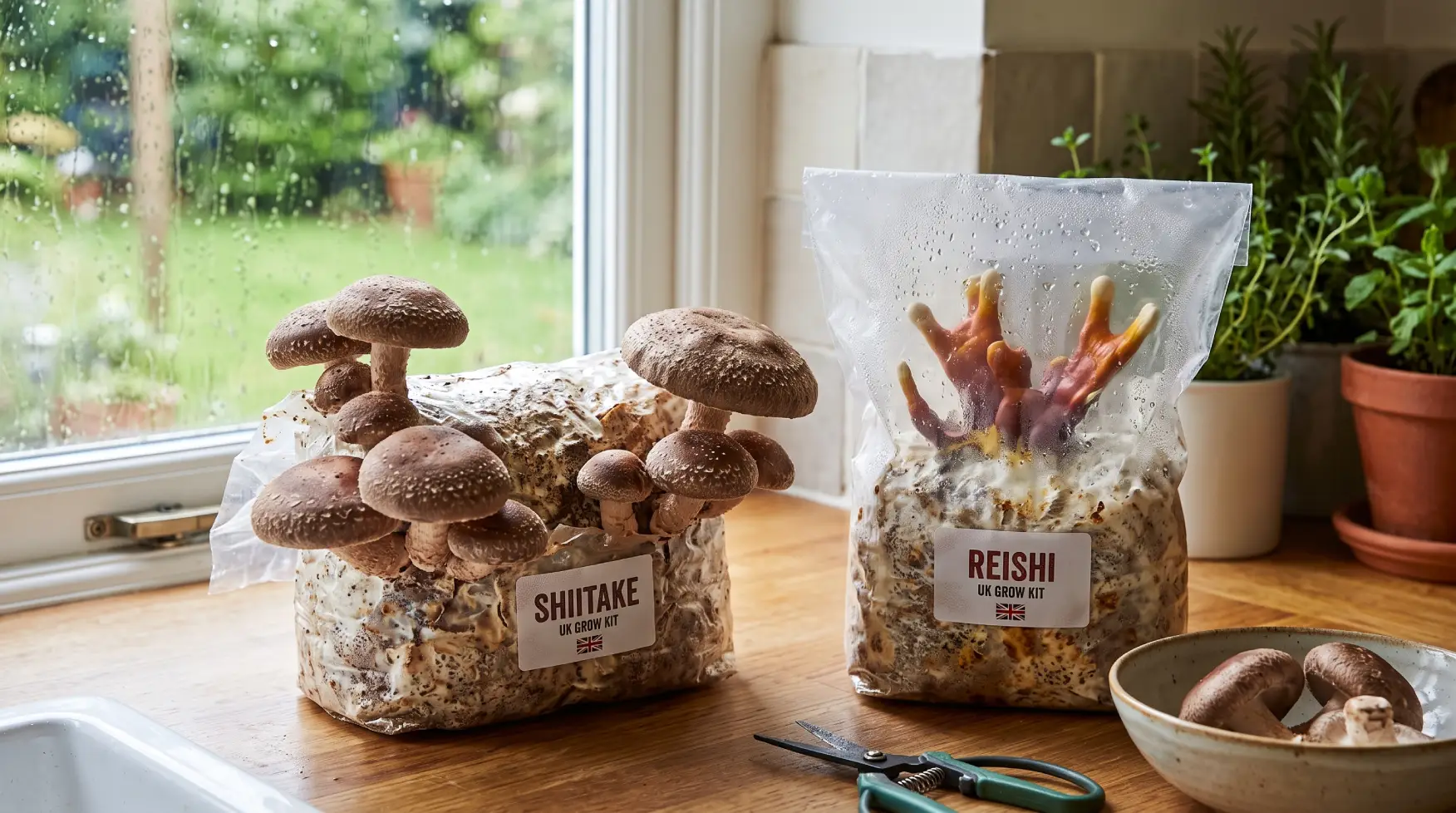
Shiitake and reishi are both popular UK grow kit choices, but they behave quite differently. Shiitake fruits relatively quickly, needs cooler temperatures, indirect light, and often a cold-water soak to trigger fruiting, typically producing a first harvest within one to two weeks, similar in speed to a well-run oyster mushroom kit. Reishi is a much slower grower, prefers warmer conditions, and is usually grown sealed inside its bag to build the high humidity and carbon dioxide environment it needs to form its distinctive antler-shaped growth, often taking two to four months from start to harvest.
Shiitake Mushroom Growing Kits
Shiitake (Lentinula edodes) is one of the most widely eaten cultivated mushrooms in the world, prized for its deep, savoury flavour, and it’s a popular choice for UK home growers looking to move beyond oyster mushrooms.
- Growing conditions. Shiitake prefers cooler conditions than many other cultivated species, generally fruiting well somewhere in the range of 12 to 21°C, with high humidity around 80 to 90%. Unlike some species, shiitake genuinely needs light to fruit properly, though indirect light rather than direct sun is what’s required.
- The cold shock step. One thing that sets shiitake apart from most other kits is the fruiting trigger. Many shiitake blocks and logs need a period of cold exposure, either a cold water soak for a few hours or brief refrigeration, to signal that it’s time to fruit. This mimics the natural seasonal trigger the fungus responds to in the wild, and it’s often needed again between flushes once the block has rested.
- Timeline and yield. After triggering, small pins typically appear within a week to ten days, developing into harvestable mushrooms shortly after. A single log or block commonly produces a kilogram or more on its first flush, with logs in particular capable of producing further flushes over an extended period, sometimes months, once given a fresh cold shock and rest cycle. If you end up with more than you can eat fresh, a dehydrator is a straightforward way to preserve a larger shiitake harvest.
- Handling once removed from the bag. Once a shiitake block is taken out of its grow bag to fruit, it’s prone to drying out considerably faster than while sealed. A humidity tent, a loose plastic covering with airflow allowed, helps maintain the moisture level it needs without letting the surface dry out between mistings.
Reishi Mushroom Growing Kits
Reishi (Ganoderma lucidum), known as Ling Zhi in Chinese tradition, is grown quite differently from most gourmet mushroom kits, reflecting its different role as a mushroom valued mainly for tea, powder, and extract use rather than direct culinary eating.
- Growing conditions. Reishi prefers considerably warmer conditions than shiitake, generally thriving somewhere between 21 and 27°C, alongside very high humidity in the 85 to 95% range.
- Grown sealed, not opened. This is the most distinctive part of growing reishi. Rather than cutting the bag open early like most other kits, reishi is generally left sealed inside its bag throughout much of its growth. The high humidity and elevated carbon dioxide level inside the closed bag encourages the fungus to form its characteristic antler-shaped growths before the bag is eventually opened to allow the caps to broaden and mature.
- Timeline. Reishi is a genuinely slow grower compared with shiitake or oyster mushrooms. The antler-forming stage alone can take several weeks, and a full growing cycle from start to harvest commonly runs two to four months. This is a kit for a patient grower rather than someone looking for a quick result.
- Harvesting. Reishi is typically harvested by cutting the mature growth away from the substrate at its base with a clean, sharp blade, rather than picked or twisted off the way softer gourmet mushrooms are.
Which Should You Choose?
If you want a relatively quick result and enjoy cooking with what you grow, shiitake is the better starting point. It fruits within a couple of weeks, produces a genuinely useful culinary harvest, and the cold-shock step is a manageable, one-time piece of extra care rather than an ongoing burden.
If you’re drawn more to the process itself, or you’re specifically interested in reishi for tea or extract use rather than as a cooking ingredient, it’s worth going in with clear expectations about the timeline. Reishi suits a grower who enjoys watching a slow transformation over months rather than someone looking for a fast, repeatable harvest.
Growing both side by side is also a reasonable option once you understand their different needs, since neither requires the other’s exact conditions to succeed, just separate attention to each.
Why This Matters
Buying a shiitake or reishi kit expecting the same fast, hands-off experience as an oyster mushroom kit is one of the most common sources of disappointment for UK home growers. These are genuinely different growing experiences, not just different flavours of the same process, and setting expectations correctly from the outset makes a real difference to how the experience feels.
Shiitake rewards a grower willing to manage a slightly more involved fruiting trigger and cooler conditions, while reishi rewards patience above almost anything else. Neither is difficult exactly, but both ask for a different kind of attention than the daily-misting simplicity of a standard oyster kit.
A single reishi kit can take longer from start to finish than several complete cycles of a fast-fruiting species like oyster or shiitake, which is worth factoring in if you’re choosing a kit as a timed gift or a quick first project.
Pro Tip: both species do well started in a fruiting chamber or monotub setup if you’re growing several kits at once, since it gives more consistent humidity control than an open room.
Common Mistakes
- Expecting shiitake and reishi to behave like oyster kits. Both species have meaningfully different temperature, timing, and handling needs compared with the faster, more forgiving oyster mushroom.
- Skipping the cold shock step for shiitake. Without it, a shiitake block can sit fully colonised without pinning for far longer than expected, leading growers to assume the kit has failed when it simply hasn’t been triggered yet.
- Opening a reishi bag too early. This is the single most common reishi mistake. The closed-bag stage is essential to how the mushroom forms, not an optional part of the process.
- Letting a shiitake block dry out after opening. Once removed from its bag, shiitake substrate loses moisture considerably faster than while sealed, and a humidity tent is usually necessary to prevent this.
- Giving up on reishi too soon. Given how slow reishi genuinely is, it’s easy to assume a kit has failed after a few weeks of apparently little visible change, when in reality it may simply need more time.
FAQ
Which is easier to grow, shiitake or reishi?
Shiitake is generally considered more approachable for a first grow beyond oyster mushrooms, mainly because it fruits faster and gives quicker feedback. Reishi isn’t difficult, but its slow pace demands more patience than technical skill.
Why does my shiitake kit need a cold soak?
Shiitake naturally fruits in response to a temperature drop in the wild, and many cultivated blocks and logs need that same trigger recreated at home to begin fruiting reliably.
Why is my reishi kit still sealed in its bag?
This is intentional. Reishi needs the humid, high-carbon-dioxide environment inside a closed bag to form its antler-shaped growth before the bag is opened for the caps to develop further.
How many flushes can I get from a shiitake log or block?
Multiple flushes are common with proper rest and a fresh cold shock between cycles, particularly with logs, which can continue producing over an extended period.
Can I eat reishi mushrooms the same way as shiitake?
Not typically. Reishi has a hard, woody, bitter texture and is generally prepared as a tea, powder, or extract rather than eaten directly the way shiitake is used in cooking.
How long should I expect a reishi kit to take overall?
A full cycle from starting the kit to a mature harvest commonly takes two to four months, considerably longer than most other home mushroom kits.
Can shiitake and reishi be grown in the same space?
Yes, provided you can accommodate their different temperature preferences reasonably well. Many growers manage both by giving each its own spot suited to its needs, such as a cooler shelf for shiitake and a slightly warmer spot for reishi.
Related Guides
- Growing Mushrooms at Home: A Beginner’s Guide
- Oyster Mushroom Growing Kits UK: Buyer’s Guide
- Monotub Grow Kits UK: Buyer’s Guide
- Substrate Recipes for Maximising Mushroom Yields
- Functional & Gourmet Mushrooms: Cultures, Tinctures & Dried Mushrooms
About This Guide
SporeBuddies has supplied UK home growers with grow kits and cultivation guidance for years, drawing on practical experience across gourmet and functional species with very different care requirements. This guide reflects that background, helping growers choose between shiitake and reishi with realistic expectations for each.
In Summary
Shiitake and reishi both make rewarding additions to a UK home grow-kit collection, but they ask for genuinely different things from the grower. Shiitake wants cooler temperatures, light, and often a cold-water trigger, rewarding you with a harvest within a couple of weeks. Reishi wants warmth, patience, and a sealed environment for months at a time, rewarding you eventually with a striking, slow-formed mushroom traditionally used as tea rather than a quick meal. Choosing between them comes down to how quickly you want results and what you’re planning to do with the harvest.
Browse our full range of shiitake and reishi growing kits, or check our beginner’s guide to growing mushrooms at home if you’re building out a wider collection of species.