
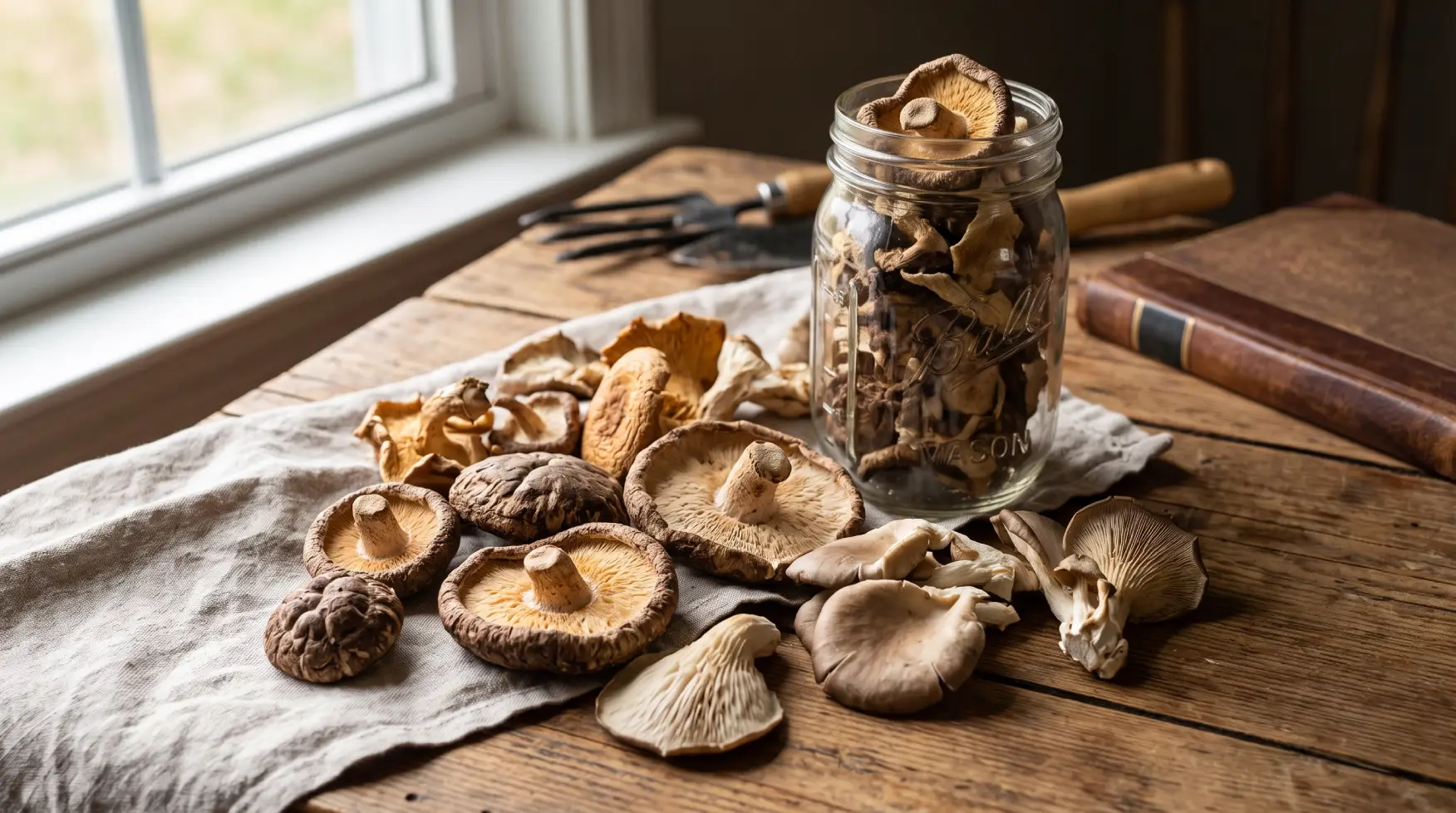
Quick Answer
The most reliable way to dry mushrooms at home is with a food dehydrator set around 50 to 55°C, taking roughly 4 to 8 hours until pieces snap rather than bend. An oven on its lowest setting, with the door propped slightly open, works as a good alternative. Air drying is the least reliable option in the UK’s typically humid climate. Once fully dry, store mushrooms in an airtight container in a cool, dark place, where they can keep well for a year or more.
Why Drying Matters for a Good Harvest
Fresh mushrooms are mostly water, which is exactly why they spoil so quickly if you can’t use them all within a few days of harvest. Whether you’ve had a strong flush from a monotub or a generous first crop from an oyster mushroom kit, drying is one of the simplest ways to turn a short-lived glut into a pantry staple that lasts months rather than days.
Beyond simple preservation, drying also concentrates flavour considerably, which is why dried shiitake and other dried mushrooms are prized in cooking well beyond their fresh equivalents.
Preparing Mushrooms Before Drying
- Don’t wash them under running water. Mushrooms absorb water readily, which works against you when you’re trying to remove moisture. Instead, wipe them clean with a damp cloth or a soft brush, only using a very light rinse for stubborn dirt.
- Slice for even drying. Most mushrooms need slicing to dry evenly and in a reasonable timeframe. Aim for roughly consistent pieces, somewhere around 3 to 5mm thick, so that everything finishes drying at a similar rate.
- Discard anything past its best. Only dry mushrooms that are fresh and free of soft spots, discolouration, or mould. Drying doesn’t improve a mushroom that’s already starting to spoil.
Drying Methods
Food dehydrator. This is the most consistent and reliable method for most home growers. Set the dehydrator to somewhere around 50 to 55°C, lay slices in a single layer without overlapping, and expect drying times of roughly 4 to 8 hours depending on thickness and your specific machine. Check periodically and rotate trays if your dehydrator doesn’t have even airflow throughout.
Oven drying. A reasonable alternative if you don’t have a dedicated dehydrator. Set your oven to its lowest possible temperature, ideally in the 60 to 65°C range, and prop the door open slightly to let moisture escape rather than trapping it inside. This generally takes longer than a dehydrator, often 6 to 10 hours, and needs closer attention to avoid overheating.
Air drying. The most low-tech option, using string or a mesh rack in a warm, well-ventilated spot. This works best in low humidity, generally below around 60%, which makes it considerably less reliable in the UK than in drier climates. If you do try air drying, a fan nearby helps keep air moving and speeds things along.
Why This Matters: UK ambient humidity is often high enough that air drying alone struggles to fully dry mushrooms before mould has a chance to set in, particularly for larger or thicker pieces. For most UK growers, a dehydrator or oven gives a far more dependable result than relying on air circulation alone.
Avoid pushing temperatures much above 70°C when drying mushrooms. Excessive heat can affect flavour and degrade some of the compounds that make dried mushrooms worth keeping in the first place, without meaningfully speeding up the process.
How to Tell When Mushrooms Are Fully Dry
Properly dried mushrooms should be brittle enough to snap cleanly rather than bend. If a piece still has any flexibility, it isn’t finished, and returning it to the dehydrator or oven for longer is the right move rather than risking early storage.
Pro Tip: let dried mushrooms cool completely to room temperature before packing them away. Sealing them while still warm traps residual moisture inside the container, which can lead to condensation and mould even after a seemingly successful dry.
Pro Tip: condition your batch before long-term storage. Once cooled, place dried mushrooms in a loosely sealed jar and check daily for a week for any condensation on the inside of the glass. If you see moisture without mould, return the batch to the dehydrator briefly and repeat the check. This step catches any pieces that seemed dry but weren’t quite there, before it becomes a problem in long-term storage.
Storing Dried Mushrooms
Once you’re confident everything is fully and evenly dry, transfer mushrooms to an airtight container. Glass jars work well and let you check on your stock visually, though vacuum-sealed bags extend shelf life further if you’re storing a larger batch.
Keep containers somewhere cool, dark, and dry, since light and warmth both degrade dried mushrooms over time. A pantry cupboard or a cool, dark drawer works better than an open shelf in a bright kitchen. If you live somewhere particularly humid, or you plan to open the container frequently, a food-safe desiccant packet helps absorb any moisture that gets in each time you open it.
Properly dried and stored mushrooms commonly keep well for a year or more, sometimes considerably longer in a cool, dark, well-sealed environment, though flavour and quality are generally best within the first year.
Using Dried Mushrooms
To bring dried mushrooms back to life for cooking, soak them in warm or hot water for 15 to 30 minutes until softened, then use as you would fresh mushrooms. The soaking liquid itself is worth keeping, since it carries a good deal of the concentrated flavour and works well as a base for stocks, gravies, or sauces.
Dried mushrooms can also be ground into a powder once fully dry, giving you a versatile seasoning to add umami depth to soups, stews, and sauces without needing to rehydrate first.
Common Mistakes
- Washing mushrooms under running water before drying. This adds moisture right at the start of a process designed to remove it, extending drying time considerably.
- Overcrowding trays or racks. Pieces touching or overlapping restrict airflow and dry unevenly, leaving some parts finished while others remain damp.
- Using too high a temperature. This risks “case hardening,” where the outside dries and hardens while moisture remains trapped inside, giving a false impression that the batch is ready.
- Sealing mushrooms before they’ve cooled. Warm mushrooms release moisture as they cool, and sealing them too soon traps that moisture inside the container.
- Skipping the conditioning step. A batch that looks dry can still harbour small pockets of moisture in thicker pieces. Conditioning catches this before it causes mould in long-term storage.
- Storing in a bright or warm spot. Both light and heat gradually degrade dried mushrooms, shortening how long they stay good even in an otherwise sealed container.
FAQ
Do I need a dehydrator to dry mushrooms properly?
No, though it’s the most reliable method, particularly in the UK’s often humid climate. An oven on a low setting is a solid alternative, and air drying can work in the right conditions, though it’s less dependable here.
How long do dried mushrooms last?
Properly dried and stored mushrooms commonly keep for a year or more in an airtight container kept cool, dark, and dry, though quality is generally best within the first year.
Can I dry any type of mushroom?
Most cultivated mushrooms dry well, though firmer, meatier varieties such as shiitake tend to hold their texture and flavour better than very high-moisture types.
Why did my dried mushrooms go mouldy in storage?
This usually means they weren’t fully dry before sealing, or condensation formed because they were packed away while still warm. The conditioning step is designed specifically to catch this before long-term storage.
Can I use my oven if it doesn’t go as low as recommended?
Using the lowest available setting with the door propped open is still workable, just expect drying to take longer and check more frequently to avoid overheating.
How do I rehydrate dried mushrooms for cooking?
Soak them in warm or hot water for around 15 to 30 minutes until softened, and consider keeping the soaking liquid to add flavour to whatever you’re cooking.
Related Guides
- Oyster Mushroom Growing Kits UK: Buyer’s Guide
- Shiitake & Reishi Mushroom Growing Kits UK
- Monotub Grow Kits UK: Buyer’s Guide
- Growing Mushrooms at Home: A Beginner’s Guide
- Functional & Gourmet Mushrooms: Cultures, Tinctures & Dried Mushrooms
About This Guide
SporeBuddies has supported UK home growers with cultivation guidance for years, and this guide extends that support to the post-harvest stage, drawing on practical experience with drying and storing gourmet mushrooms in typical UK home conditions.
In Summary
Drying is one of the simplest, most effective ways to make the most of a good mushroom harvest, turning a short-lived flush into a pantry ingredient that lasts for months. A dehydrator gives the most consistent results, particularly given the UK’s often humid climate, though a low oven works well as an alternative. Proper preparation, patient drying until pieces are genuinely brittle, and careful storage in a cool, dark, airtight container are what separate a batch that lasts a year from one that spoils within weeks.
Browse our full range of mushroom dehydrators, or check our beginner’s guide to growing mushrooms at home to keep your harvest coming.