
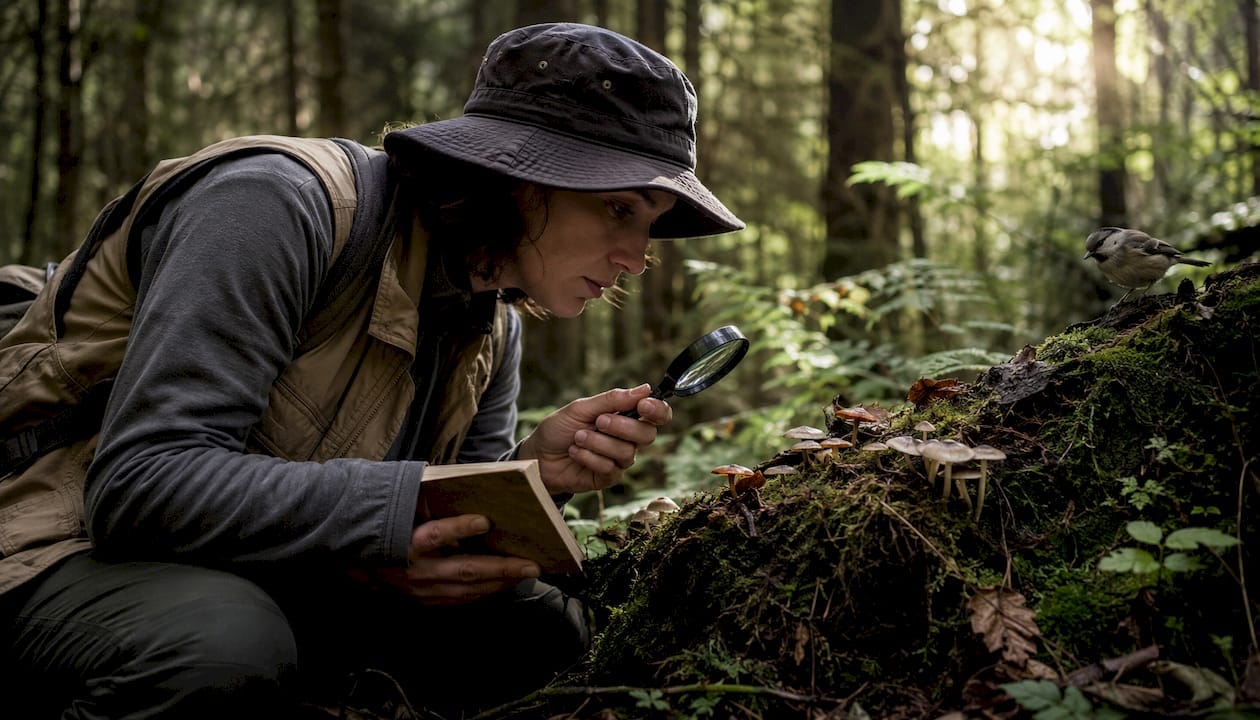
Fruiting body morphology primarily mediates spore production, protection, and dispersal, and in doing so shapes fungal fitness and macroevolutionary diversification. The strongest evidence for this comes from a megaphylogeny of ~8,400 species representing approximately 23% of Agaricomycetes, where pileate-stipitate forms are consistently associated with elevated diversification rates compared with resupinate or gasteroid alternatives. Halbwachs et al. (2016) independently showed that cap geometry, tissue architecture, and surface properties each contribute to microclimate regulation and convective spore dispersal, framing morphological traits as an integrated adaptive toolkit rather than passive taxonomic characters.
The principal functional categories that morphology serves are:
- Dispersal enhancement: elevation of the hymenium above the boundary layer, cap-driven convective airflows, and hymenophore geometry that maximises spore release efficiency
- Protection and longevity: pileus as a physical shield against precipitation, UV radiation, and invertebrate predation; mitic hyphal systems conferring tissue toughness
- Microclimate regulation: hygroscopic tissues and cap geometry that buffer humidity and temperature around the spore-bearing surface
- Reproductive allocation: trade-offs between fruit body size, number, and lifespan that determine total spore output per unit of mycelial investment
The sections that follow move from anatomy and developmental regulation through biomechanics and ecology to phylogenetic patterns, methods, and open research questions.
Table of Contents
- What are the major morphotypes and anatomical structures researchers measure?
- How do genetic programmes and environmental signals shape fruiting body development?
- How does morphology accomplish protection, dispersal, and microclimate control?
- What does the megaphylogeny evidence tell us about morphology and diversification?
- How does tissue architecture determine mechanical properties and longevity?
- How does morphology relate to ecological strategy and life history trade-offs?
- What methods best connect morphology to function and evolution?
- Connecting megaphylogeny results to functional mechanisms: a synthesis
- What are the most tractable open questions in fruiting body morphology research?
- Key takeaways
- Selected primary sources and further reading
- FAQ
What are the major morphotypes and anatomical structures researchers measure?
Shared vocabulary is the foundation of comparative work, so it is worth being precise about what each term actually refers to before discussing function or evolution.
Major morphotypes
- Pileate-stipitate: a cap (pileus) supported by a stalk (stipe), the archetypal mushroom form; includes most Agaricales and Boletales
- Pileate-sessile (bracket or shelf): a cap attached directly to the substrate without a stipe; common in Polyporales and Hymenochaetales on woody substrates
- Resupinate (crust): entirely appressed to the substrate, no differentiated cap or stipe; considered plesiomorphic in Agaricomycetes
- Gasteroid: spores mature internally and are released passively; includes puffballs (Calvatia, Lycoperdon), earthstars (Geastrum), stinkhorns (Phallus), and truffles (Tuber)
- Clavarioid and coral: erect, unbranched or branched clubs; hymenium covers the outer surface
- Secotioid: intermediate forms with a partially enclosed hymenium; often interpreted as evolutionary transitions between pileate and gasteroid states
Key anatomical parts
The pileus (cap) carries the spore-bearing surface and acts as a microclimate shield. The stipe elevates the pileus and, in many species, contains vascular-like hyphal bundles that transport water and nutrients. The hymenium is the fertile layer where basidia or asci produce spores; its surface area is a direct determinant of spore output. Lamellae (gills), pores, and teeth are the three principal hymenophore architectures, each with distinct surface-area-to-volume ratios and spore release dynamics. The peridium encloses the gleba in gasteroid forms, controlling the timing and mechanism of spore release. The annulus (ring) and volva (cup) are remnants of protective veils in many Agaricales.
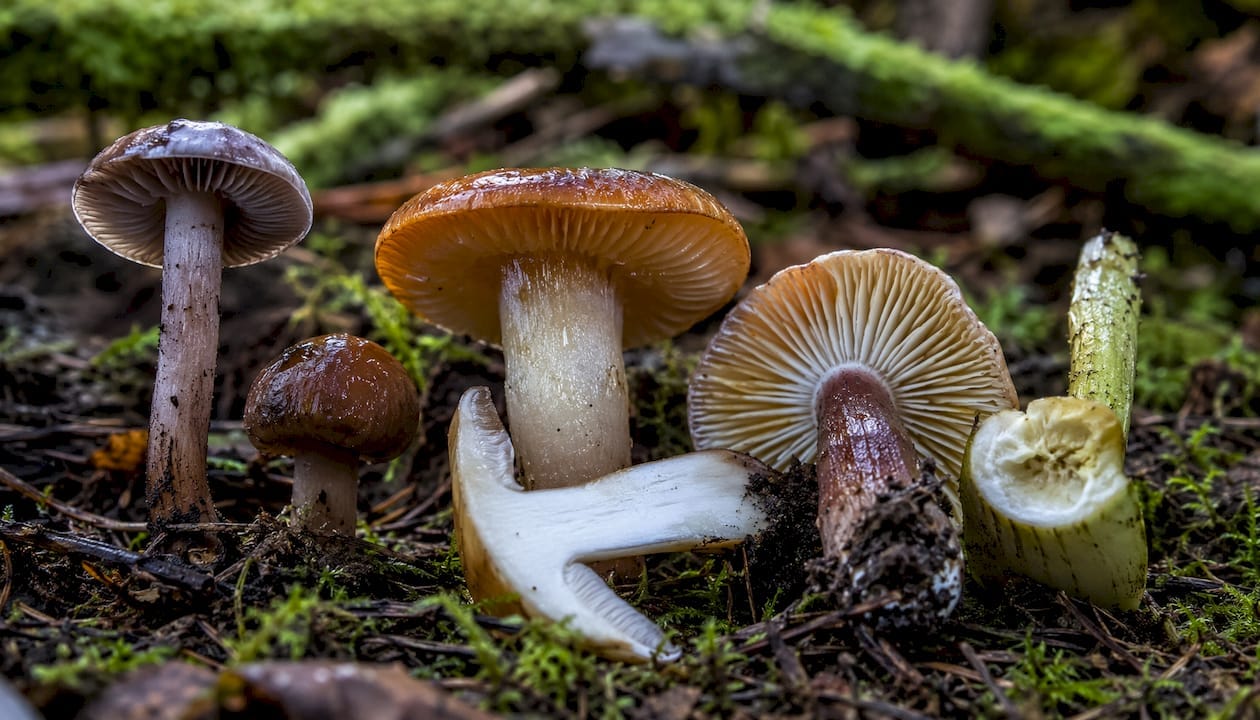
At the microscale, plectenchyma describes the interwoven hyphal tissue of the context (flesh), and the mitic system (monomitic, dimitic, or trimitic) describes the types of hyphae present. These microstructural features are among the most functionally informative metrics a researcher can record.
Common quantitative metrics in published studies include cap diameter, stipe length-to-diameter ratio, hymenial surface area, fruit body density per unit substrate area, and lifespan in days. Tissue mitic system is coded categorically.
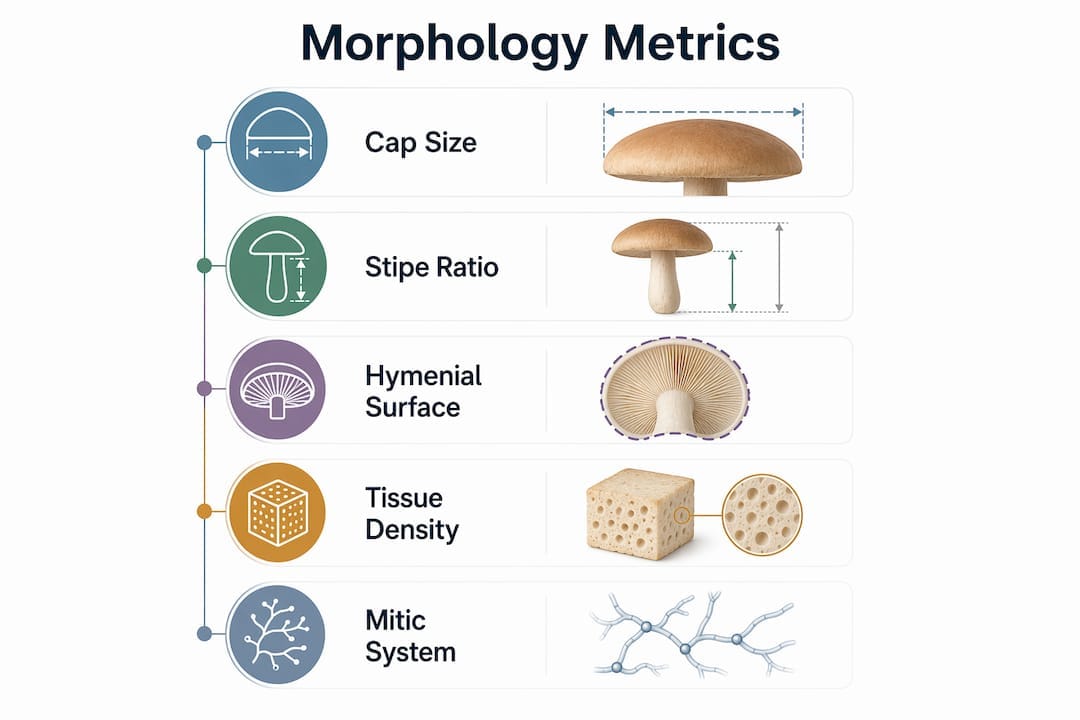
A note on plasticity and caveats: macroscopic descriptors are subject to considerable phenotypic plasticity driven by temperature, humidity, and substrate quality. Ephemeral agarics may complete development in under 24 hours, while perennial polypores persist for decades. This range means that lifespan and size measurements are only comparable within tightly controlled conditions or when corrected for environmental covariates. Morphology-based taxonomy has repeatedly been overturned by molecular data, particularly in groups with convergent forms.
Pro Tip: When coding morphological traits for comparative analyses, always record the mitic system from sectioned, dried voucher material rather than from field photographs alone. Cap colour and surface texture are notoriously plastic; hyphal architecture is far more stable and functionally informative.
How do genetic programmes and environmental signals shape fruiting body development?
Fruiting body shape is not a fixed genetic output. It emerges from specific developmental programmes that are continuously modulated by external signals including light direction and intensity, temperature gradients, CO₂ concentration, relative humidity, and gravity.
Model systems and key contributors
The best-characterised model organisms for fruiting body development are Coprinopsis cinerea and Schizophyllum commune, both of which are tractable in the laboratory and have well-annotated genomes. Agaricus bisporus (the cultivated button mushroom) and Auricularia auricula-judae have contributed important data on cap expansion and hymenium differentiation. Reviews by Kües and Liu, and by Nowrousian, have synthesised the molecular genetics of these systems, while Virágh et al. (2021) placed developmental findings in a broader evolutionary context.
Developmental subroutines
One of the most productive conceptual frameworks in fungal evo-devo is the idea that fruiting body development can be partitioned into parallel or sequential subroutines: stipe elongation, cap expansion, hymenium differentiation, and veil rupture each proceed semi-independently. Inhibiting one subroutine while others continue can produce dramatically altered morphologies under an otherwise unchanged genetic background. Secotioid forms, for instance, appear to result from arrested stipe elongation combined with continued gleba development, producing a partially enclosed structure that sits morphologically between a typical agaric and a puffball.
Molecular and cellular processes
Key processes include:
- Cell differentiation within plectenchyma, producing specialised hyphal types (generative, binding, skeletal) in a spatially regulated sequence
- Hyphal tropisms responding to gravity (negative gravitropism in stipes) and light (phototropism in cap orientation)
- Gene expression waves that coordinate tissue-specific programmes; RNAseq studies in C. cinerea have identified hundreds of genes with stage-specific expression patterns
- Putative morphogen or organiser signals, though the molecular identity of these remains an active research question in most species
Environmental perturbation experiments are particularly informative. Elevated CO₂ suppresses cap expansion and promotes stipe elongation in several species, mimicking the conditions of a buried or enclosed substrate. Reducing humidity at the primordium stage can arrest development entirely or produce miniaturised, malformed caps. Single-locus mutations in C. cinerea have produced phenotypes ranging from flat, resupinate-like forms to elongated, coral-like structures, demonstrating that major morphological transitions can have a small mutational target size.
Pro Tip: For gene expression studies, the most informative sampling points are the transition from hyphal knot to primordium, and the onset of rapid stipe elongation. These stages capture the highest transcriptional diversity. Fix tissue in RNAlater immediately in the field to avoid RNA degradation, and record the exact developmental stage using a standardised photographic scale.
How does morphology accomplish protection, dispersal, and microclimate control?
Morphology functions chiefly through three mechanisms: physical protection of the developing hymenium, enhancement of spore dispersal distance and efficiency, and modulation of the microclimate immediately surrounding the spore-bearing surface.
Dispersal mechanisms
The pileate-stipitate architecture solves a specific fluid-dynamics problem. Spores released at ground level are trapped in the viscous sublayer of the atmospheric boundary layer, where air movement is minimal. Elevating the hymenium on a stipe lifts spores into faster-moving air, increasing dispersal distance. Beyond simple elevation, cap evaporation generates convective airflows that actively transport spores away from the cap surface, a mechanism that operates even in still air. This is not a trivial effect: theoretical and empirical accounts suggest that cap geometry and evaporation rate together determine the strength of these convective plumes.
Hymenophore architecture also matters. Gill spacing in agarics is tuned so that spores can be ballistically discharged from basidia without immediately colliding with the opposing gill surface. Pore geometry in polypores similarly constrains spore trajectories. Tooth-bearing forms (hydnoid fungi) expose basidia on pendant teeth, maximising downward discharge into open air. Each architecture represents a different solution to the same problem of getting spores from the basidium into the airstream.
Protection and longevity
The pileus acts as a physical shield, intercepting rain droplets that would otherwise displace spores prematurely or damage delicate basidia. In perennial polypores, the thick, woody context provides resistance to invertebrate grazing and mechanical damage over years or decades. Pigmentation in the cuticle of many species absorbs or reflects UV radiation, protecting the underlying tissue.
Biotic interactions add another layer. Predation by fungivorous invertebrates (collembolans, dipteran larvae, nematodes) selects for chemical defences, tough textures, and rapid development. Parasitism by mycoparasitic fungi can be resisted by dense, compact tissue. Mutualistic relationships, such as those with spore-dispersing insects in stinkhorns (Phallus impudicus), have driven the evolution of elaborate morphologies that attract specific vectors.
Microclimate modulation and trade-offs
Hygroscopic tissues in the cap and stipe retain moisture during dry periods, extending the window for spore maturation and release. Cap geometry influences the local humidity gradient above the hymenium. Convex caps shed water rapidly; funnel-shaped caps can channel water towards the stipe and substrate.
The key trade-off is between investment per fruit body and frequency of fruiting. A large, long-lived bracket fungus commits substantial carbon to a single structure that may produce spores for years; an ephemeral agaric produces many small fruit bodies in rapid succession, each with a shorter productive window. Morphology mediates this trade-off directly through tissue investment, mitic system, and developmental rate.
Pro Tip: To test dispersal performance experimentally, use a smoke or fine-particle aerosol source at the cap surface and photograph particle trajectories with a high-speed camera or laser sheet. Spore traps placed at graded heights (2 cm, 10 cm, 50 cm, 1 m) above the substrate give a simple dispersal profile. Always run controls with artificial caps of matched geometry but no evaporation to isolate the convective contribution.
What does the megaphylogeny evidence tell us about morphology and diversification?
The core finding from large-scale phylogenetic analysis is unambiguous: across Agaricomycetes, pileate-stipitate fruiting body form is associated with elevated diversification rates compared with resupinate, gasteroid, or other forms. Nutritional mode, including ectomycorrhizal symbiosis, shows no equivalent relationship at the scale of the whole class.
Statistic callout: The PNAS megaphylogeny assembled by Virágh et al. (2021) included ~8,400 species representing approximately 23% of Agaricomycetes, recorded 462 morphological transitions, and identified 123 independent origins of gasteroid forms. MuSSE and BiSSE analyses consistently identified pileate-stipitate clades as having the highest diversification rates across this dataset.
Ancestral states and transition patterns
Ancestral state reconstruction places a resupinate, saprotrophic organism at the root of Agaricomycetes. Pileate forms have arisen multiple times independently from resupinate ancestors, and the transition appears to be relatively easy in one direction: reversals from gasteroid back to pileate are highly unlikely, though they cannot be entirely rejected statistically. This asymmetry suggests that gasteroid forms represent a derived, specialised strategy from which escape is difficult, whereas pileate forms retain developmental flexibility.
Convergence and its taxonomic implications
Morphological convergence is pervasive. Similar cap-and-stipe architectures have evolved independently in distantly related lineages, and coral, bracket, and crust forms have each arisen multiple times. This has two practical consequences. First, morphology alone is an unreliable guide to phylogenetic relationships, a lesson that molecular systematics has reinforced repeatedly. Second, the frequency of convergence implies that the developmental pathway to a pileate form is accessible from many starting points, consistent with a small mutational target size and high developmental plasticity.
| Morphotype | Estimated independent origins | Reversibility | Diversification rate |
|---|---|---|---|
| Pileate-stipitate | Multiple (from resupinate) | Possible | Highest in Agaricomycetes |
| Gasteroid | 123 recorded origins | Highly unlikely | Lower than pileate-stipitate |
| Resupinate | Plesiomorphic (ancestral) | N/A (ancestral state) | Baseline |
| Pileate-sessile (bracket) | Multiple | Possible | Intermediate |
Evolutionary hypotheses
Three non-exclusive hypotheses explain why pileate-stipitate forms diversify faster:
- Dispersal advantage: convective and elevation-based dispersal mechanisms increase colonisation of new substrates and habitats, expanding the ecological opportunity available to each lineage
- Developmental accessibility: the large mutational target size of the pileate developmental programme means that variation is readily generated, fuelling speciation
- Exaptation: the pileate architecture pre-adapts lineages to exploit a wide range of substrates and microhabitats, increasing niche breadth and reducing extinction risk
The evo-devo synthesis by Virágh et al. argues that the ‘body plan’ concept from animal development does not map cleanly onto mushroom morphogenesis. Fungal fruiting bodies show remarkable plasticity and repeated convergence precisely because their developmental programmes are modular and individually accessible to selection.
How does tissue architecture determine mechanical properties and longevity?
Microstructure and mitic system are the primary determinants of tissue toughness, longevity, and resistance to desiccation or mechanical damage.
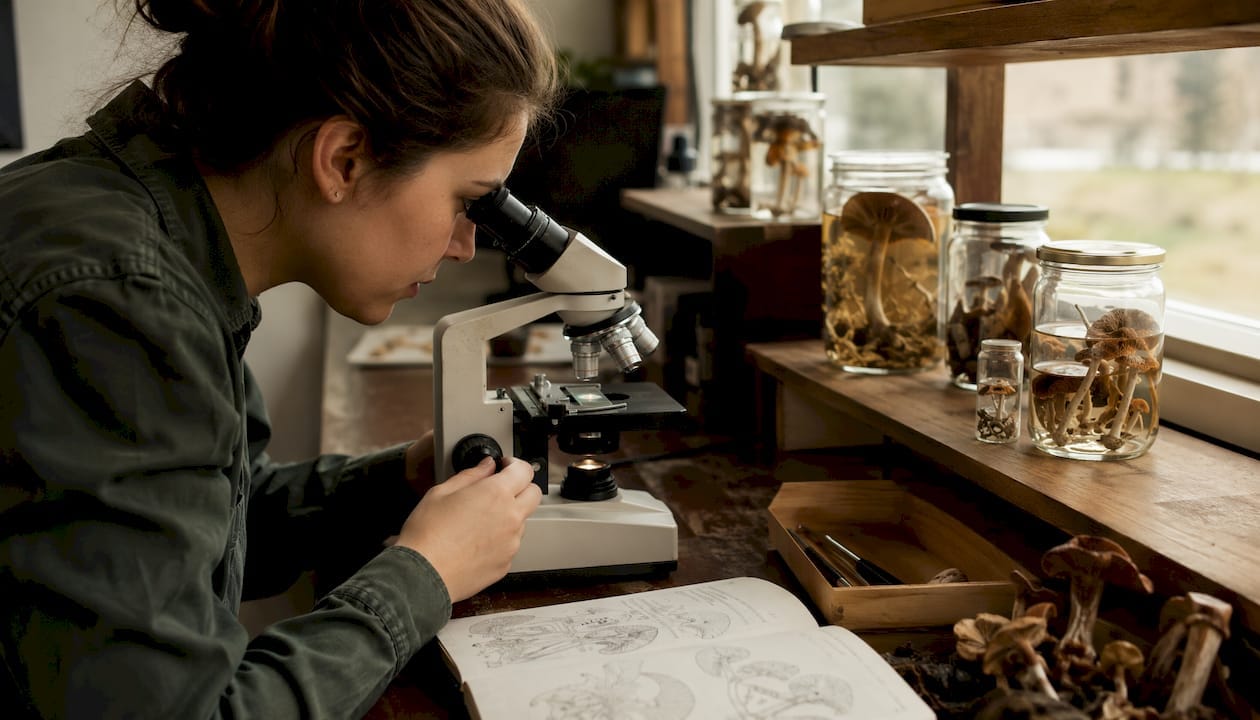
Mitic systems and their functional consequences
The three mitic systems represent a gradient of structural investment:
- Monomitic: only generative hyphae present; tissue is soft, flexible, and typically ephemeral. Common in most agarics (Agaricus, Coprinus).
- Dimitic: generative hyphae plus skeletal or binding hyphae; tissue is tougher and more resistant to decay. Characteristic of many bracket fungi (Trametes, Ganoderma).
- Trimitic: all three hyphal types present; tissue is woody, very tough, and extremely long-lived. Found in perennial polypores such as Ganoderma and Fomitopsis.
Perennial shelf fungi commonly have dimitic or trimitic systems, and this microstructural investment directly explains their multi-year persistence. An ephemeral agaric with a monomitic context has no need for skeletal hyphae because its entire reproductive strategy depends on rapid development and spore release within hours to days.
Mechanical roles of tissue arrangement
Context density, the ratio of hyphal volume to air space within the plectenchyma, determines compressive strength. Binding hyphae weave between generative hyphae, increasing tensile strength and resistance to tearing. Skeletal hyphae provide a rigid scaffold. Together, these elements produce the woody texture of bracket fungi that allows them to support their own weight on vertical surfaces for years.
| Microstructural feature | Longevity | Toughness | Water retention |
|---|---|---|---|
| Monomitic context | Short (hours to days) | Low | Moderate |
| Dimitic context | Medium (weeks to months) | High | Low to moderate |
| Trimitic context | Long (years to decades) | Very high | Low |
| Dense plectenchyma | Extended | Increased | Higher |
| Hygroscopic surface layer | Variable | Unaffected | High |
Methods for measuring material properties
Tensile and compressive testing on standardised tissue samples gives quantitative toughness values. MicroCT imaging reveals three-dimensional hyphal architecture without destructive sectioning, and is particularly useful for perennial species where internal zonation records annual growth. Confocal microscopy of stained sections resolves individual hyphal types and their spatial arrangement. Correlating these anatomical metrics with measured lifespan and decay resistance across species provides the comparative dataset needed to test functional hypotheses.
Experimental considerations for reproducible assays:
- Standardise sample age: use tissue from a defined growth stage, not mixed-age material
- Control hydration state: test at both field-fresh and equilibrium moisture content
- Orient samples consistently relative to the hyphal growth direction, as mechanical properties are anisotropic
- Record substrate type and temperature during growth, as these affect context density
How does morphology relate to ecological strategy and life history trade-offs?
Morphology covaries with substrate type, trophic mode, lifespan, and fruiting density in patterns that are consistent enough to be predictive, though not without exceptions.
Pileate-stipitate forms are disproportionately represented in environments where long-distance dispersal is advantageous: open woodland, grassland, and disturbed habitats where suitable substrate patches are spatially separated. Pileate-sessile bracket fungi dominate on standing deadwood and fallen logs, where the substrate itself is large and persistent enough to support a perennial strategy. Resupinate forms are most common on sheltered, humid substrates such as the undersides of logs and bark, where the absence of a cap is less costly because precipitation and UV exposure are already reduced by the substrate geometry.
Life history trade-offs are visible at multiple scales. A single large bracket of Ganoderma applanatum may release billions of spores per day over several years, representing an enormous cumulative investment from a single mycelial network. By contrast, a flush of Coprinus comatus (shaggy ink cap) produces dozens of ephemeral fruit bodies over a few days, each autodigesting within hours of spore maturation. Neither strategy is universally superior; the optimal choice depends on substrate predictability, competitor pressure, and the spatial distribution of suitable habitats.
Predation and parasitism interact with morphology in ways that are only beginning to be quantified. Fungivorous invertebrates preferentially attack soft, monomitic tissue; tough, dimitic brackets are largely avoided. Mycoparasites such as Hypomyces species attack specific host genera, and host morphology may influence susceptibility by determining tissue accessibility. Mutualistic spore dispersal by insects, as in stinkhorns, has driven some of the most elaborate morphological specialisations in the class.
Decay stage filters reproductive traits in ways that are ecologically significant. Early-stage decayed wood retains structural integrity and supports species with large, perennial fruit bodies; late-stage decay, with its lower carbon content, tends to support smaller, more ephemeral forms. This means that the successional stage of a log or stump is a meaningful predictor of the morphological traits you are likely to encounter.
Pro Tip: When recording ecological data for morphological studies, capture at minimum: substrate species and decay stage (using a standardised 1–5 scale), canopy cover (densiometer reading), microclimate (temperature and relative humidity at cap height), fruiting density (number of fruit bodies per m² of substrate), and fruit body lifespan (days from primordium to senescence). These variables allow post-hoc correction for environmental covariates in comparative analyses.
Standard ecological variables to record in the field:
- Substrate species and decay stage
- Canopy cover and aspect
- Temperature and relative humidity at cap height
- Fruit body density per unit substrate area
- Lifespan from primordium to senescence
- Presence of invertebrate damage or mycoparasites
What methods best connect morphology to function and evolution?
Robust studies combine phylogenomics, comparative trait mapping, controlled experiments, and biomechanical assays. No single approach is sufficient on its own.
- Sampling design for comparative studies: aim for broad taxonomic coverage across the morphotype of interest, with at least one outgroup per major clade. Voucher specimens must be deposited in a recognised herbarium (e.g. Royal Botanic Gardens Kew or the Natural History Museum, London) with associated sequence data in GenBank or EMBL-EBI.
- Trait coding and morphometric pipelines: define traits operationally before data collection. Use geometric morphometrics (landmark-based or outline-based) for cap and stipe shape; use categorical coding for mitic system, hymenophore type, and volva/annulus presence. Software such as MorphoJ or the R package geomorph handles landmark data; IQTREE2 and RAxML-NG are standard for phylogenetic inference.
- Megaphylogeny assembly: combine published sequence matrices with new data using supermatrix or supertree approaches. The PNAS megaphylogeny used a supermatrix of multiple loci across 8,400 taxa; replicating this scale requires access to public sequence repositories (NCBI, EMBL-EBI) and automated alignment pipelines such as MAFFT or MUSCLE.
- Phylogenetic comparative methods: MuSSE (Multiple State Speciation and Extinction) and BiSSE (Binary State Speciation and Extinction) test whether a trait is associated with elevated diversification. Ancestral state reconstruction uses maximum likelihood or Bayesian approaches (BayesTraits, phytools in R). Always run sensitivity analyses varying the model and the trait coding.
- Experimental manipulations: environmental cue tests (varying CO₂, humidity, light, temperature) in controlled growth chambers allow direct tests of developmental hypotheses. Spore dispersal assays using particle counters or spore traps at graded heights quantify dispersal performance. Biomechanical assays (tensile testing, microCT) link anatomy to function.
- Imaging and expression methods: microCT provides non-destructive three-dimensional anatomy. Confocal microscopy with calcofluor staining resolves hyphal architecture. RNAseq at defined developmental stages (primordium, young fruit body, mature, senescent) captures gene expression dynamics. In situ hybridisation localises transcript expression to specific tissues. Single-cell RNA approaches are feasible in some model systems and are beginning to be applied to C. cinerea.
- Best practices for reproducibility: standardise trait definitions in a published protocol before data collection; deposit all raw sequence and morphometric data in open repositories (Dryad, Zenodo, Figshare); record microclimate metadata for every field collection; use the same developmental stage for all tissue samples within a study.
Pro Tip: For low-cost dispersal experiments, a simple spore trap array (Vaseline-coated microscope slides at 2 cm, 20 cm, and 100 cm above the substrate) combined with a light microscope for spore counts gives a dispersal gradient that is directly comparable across species. Pair this with a handheld anemometer to record ambient air movement, and you can distinguish convective from wind-driven dispersal.
Connecting megaphylogeny results to functional mechanisms: a synthesis
The PNAS megaphylogeny result, that pileate-stipitate form predicts diversification better than nutritional mode across ~8,400 species, is most convincingly explained when you connect it to the functional and developmental mechanisms described above.
Statistic callout: The Virágh et al. (2021) megaphylogeny covered ~8,400 species representing approximately 23% of Agaricomycetes, recorded 462 morphological transitions, and identified 123 independent origins of gasteroid forms. At this scale, the association between pileate-stipitate form and elevated diversification is robust to model choice and taxon sampling variation.
The mechanistic chain runs as follows. Pileate-stipitate architecture enhances dispersal through two complementary routes: boundary layer escape via stipe elevation, and cap-driven convective airflows that actively transport spores even in still air. Greater dispersal range translates to higher colonisation probability of new substrates, expanding the ecological opportunity available to each lineage. More ecological opportunity means more speciation events and lower extinction risk, producing the elevated net diversification rates that the megaphylogeny detects.
Developmental plasticity reinforces this picture. The evo-devo synthesis shows that small genetic changes can produce major morphological shifts, meaning that variation in pileate form is readily generated and accessible to selection. Convergent evolution of similar cap-and-stipe architectures in distantly related lineages is the expected outcome of a developmental programme with a large mutational target size and strong selective pressure from dispersal efficiency.
For UK field researchers and conservationists, these findings have a practical implication. Morphological dominance by pileate-stipitate forms in temperate woodland means that survey methods calibrated to detect capped mushrooms will systematically undercount resupinate and gasteroid species, which are often cryptic and substrate-bound. Biodiversity estimates based on morphological surveys alone will therefore overrepresent the most diversified lineages and underrepresent the ancestral forms that carry disproportionate evolutionary information. Integrating eDNA metabarcoding with morphological surveys is now the recommended approach for comprehensive biodiversity assessment in UK woodland contexts.
The key gap in the current synthesis is experimental. The megaphylogeny establishes correlation between form and diversification; it does not prove that dispersal enhancement is the causal mechanism. Direct experimental tests, comparing colonisation rates and genetic diversity of pileate versus resupinate forms on standardised substrate arrays in field conditions, remain to be done at sufficient scale.
What are the most tractable open questions in fruiting body morphology research?
- Mechanistic basis of convective dispersal: the theoretical framework exists, but direct experimental measurement of convective plume velocities and spore trajectories under controlled conditions is limited. Microfluidic flow visualisation combined with high-speed imaging would resolve this. A well-designed PhD project could address this within three years using existing model species.
- Genetic architecture of major morphological transitions: which loci, and how many, underlie the transition from resupinate to pileate form? CRISPR-Cas9 knockouts in C. cinerea or S. commune targeting candidate transcription factors identified from comparative transcriptomics are the most direct approach. This is a lab-scale project with a realistic two-to-four-year timeframe.
- Ecological drivers of perenniality: why do some lineages invest in long-lived, dimitic or trimitic fruit bodies while closely related species remain ephemeral? Comparative analyses linking mitic system to substrate predictability, competitor community, and climate variables across large occurrence datasets (GBIF, UK National Biodiversity Network) could test ecological hypotheses without new fieldwork.
- Functional tests of hymenophore shape: gill, pore, and tooth architectures are assumed to differ in dispersal efficiency, but direct comparative measurements of spore output per unit hymenial area under matched conditions are scarce. Controlled chamber experiments with species representing each hymenophore type, combined with spore trap arrays, would provide the first rigorous dataset.
- Resolving cause versus correlation in diversification studies: the megaphylogeny shows association, not causation. Experimental mesocosm studies tracking colonisation success and genetic diversity of pileate versus non-pileate forms on replicated substrate arrays over multiple seasons would begin to test the causal claim. This is a larger, multi-year project requiring collaboration between mycologists, ecologists, and population geneticists.
Across all these questions, interdisciplinary approaches are likely to yield the fastest progress. Fluid dynamics expertise is needed for dispersal mechanism work; materials science methods are needed for biomechanical assays; genomics and bioinformatics are central to genetic architecture questions. Mycology departments that build these collaborations will be best positioned to move the field forward.
Key takeaways
Fruiting body morphology is the primary driver of diversification in Agaricomycetes, operating through dispersal enhancement, developmental plasticity, and ecological specialisation rather than through nutritional mode.
| Point | Details |
|---|---|
| Morphology drives diversification | Pileate-stipitate form is associated with the highest diversification rates across ~8,400 Agaricomycetes species in the PNAS megaphylogeny. |
| Dispersal is the key mechanism | Stipe elevation and cap-driven convective airflows lift spores above the boundary layer, increasing colonisation range and ecological opportunity. |
| Developmental plasticity enables convergence | Small genetic changes can produce major morphological shifts, explaining the 462 morphological transitions and 123 independent origins of gasteroid forms in the megaphylogeny. |
| Mitic system determines longevity | Dimitic and trimitic hyphal systems confer the toughness and decay resistance that allow perennial bracket fungi to persist for years to decades. |
| Combine methods for robust inference | Phylogenomics, comparative morphometrics, controlled dispersal experiments, and biomechanical assays together provide the evidence needed to move from correlation to mechanism. |
Selected primary sources and further reading
The papers below represent the core literature for anyone working on fruiting body morphology, function, or evolution. Each entry is annotated with a brief note on what makes it worth reading.
| Paper | Why it matters |
|---|---|
| Virágh et al. (2021), PNAS | The megaphylogeny study; provides the largest-scale test of morphology-diversification hypotheses and the primary source for transition counts and diversification rate analyses. |
| Halbwachs et al. (2016), Fungal Biology Reviews | The most thorough functional review of pileate morphology; covers dispersal, protection, microclimate, and phenology with extensive literature synthesis. |
| PMC evo-devo synthesis (Virágh et al., 2021, PMC8612260) | Integrates developmental biology with evolutionary patterns; essential for understanding why convergence is so frequent and what ‘body plan’ means in fungi. |
| Kües & Liu / Nowrousian reviews | Foundational molecular genetics of fruiting body development in C. cinerea and S. commune; the starting point for any gene expression or developmental study. |
| Moore et al. fruit bodies and environment reprint | Accessible synthesis of developmental subroutines and environmental modulation; useful for experimental design and for explaining plasticity to students. |
Key data repositories and resources for this literature:
- NCBI GenBank / EMBL-EBI: primary sequence repositories for phylogenomic supermatrix assembly
- GBIF and UK National Biodiversity Network (NBN Atlas): occurrence data for ecological correlate analyses
- Dryad and Zenodo: morphometric and trait datasets from published comparative studies
- Royal Botanic Gardens Kew Fungarium and Natural History Museum London: voucher specimens and associated metadata for UK collections
If you are setting up experimental work on fruiting body development or dispersal, Sporebuddies supplies mushroom spores for research and a range of mycology equipment suited to controlled laboratory and classroom studies in the UK.
FAQ
What is the primary function of fruiting bodies in fungi?
Fruiting bodies exist to produce and disperse spores, thereby enabling sexual reproduction and colonisation of new substrates. Morphology directly determines how efficiently each of these functions is accomplished, with pileate-stipitate forms showing the highest diversification rates in Agaricomycetes.
What does “100% fruiting body” mean in a supplement context?
In commercial mushroom supplements, “100% fruiting body” indicates that the product is derived entirely from the mature fruiting structure rather than from mycelium grown on grain. The fruiting body contains the full complement of secondary metabolites, including beta-glucans, that are associated with the species’ functional properties.
What is the difference between a sporangium and a fruiting body?
A sporangium is a single-celled or few-celled spore-producing structure found in earlier-diverging fungi (such as Mucor or Rhizopus), whereas a fruiting body is a complex, multicellular reproductive structure characteristic of Ascomycetes and Basidiomycetes. Fruiting bodies integrate multiple tissue types and developmental programmes; sporangia do not.
How do fruiting body structure and hyphae relate to each other functionally?
The fruiting body is built entirely from hyphae organised into specialised tissues (plectenchyma), and the mitic system of those hyphae determines the mechanical properties of the whole structure. Generative hyphae carry the reproductive function; skeletal and binding hyphae provide structural support, with dimitic and trimitic systems producing the toughness characteristic of perennial polypores.
Why does pileate-stipitate morphology promote diversification?
The pileate-stipitate form enhances spore dispersal through stipe elevation above the boundary layer and cap-driven convective airflows, increasing colonisation range and ecological opportunity. Across a megaphylogeny of ~8,400 species representing approximately 23% of Agaricomycetes, this morphotype is consistently associated with elevated diversification rates compared with resupinate or gasteroid alternatives.