
Quick Answer
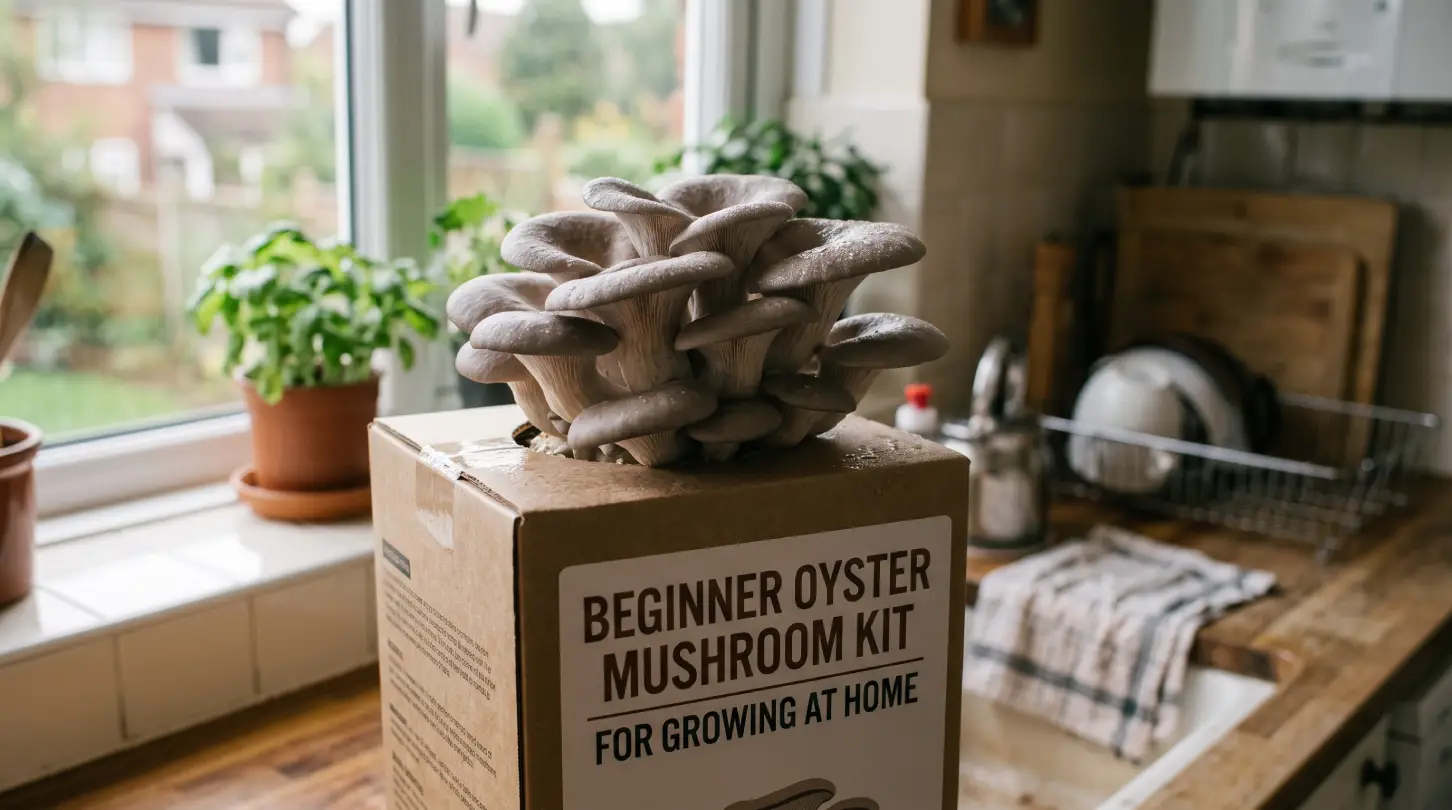
For a first attempt at growing mushrooms in the UK, a ready-to-fruit oyster mushroom kit is the sensible choice. Oyster mushrooms tolerate typical UK room temperatures, resist contamination well, and produce a harvest within about two weeks with minimal equipment beyond a spray bottle. Other popular species like shiitake and reishi are entirely approachable too, but they ask for more from a first-time grower in terms of triggering technique or patience.
What Actually Makes a Kit Beginner-Friendly?
It’s easy to assume any kit labelled “beginner” or “easy” is genuinely straightforward, but a few concrete factors separate a kit that’s actually forgiving from one that just markets itself that way.
- Pre-colonised substrate. A kit where the hard, contamination-prone early stage is already done for you removes the single biggest risk factor in home cultivation. This is a bigger factor in ease than species choice alone.
- Tolerance for typical room conditions. A kit that fruits well across a wide temperature range forgives an imperfect spot in your home, rather than demanding a precisely controlled environment.
- Minimal extra equipment. The best beginner kits need little beyond a spray bottle and a reasonably bright, indirect-light spot. Kits requiring specialist triggers or equipment add complexity that’s better suited to a second or third grow.
- Forgiving timeline expectations. A species that fruits within one to two weeks gives you feedback quickly, which matters for staying motivated and learning from a first attempt.
Why Oyster Mushrooms Lead the Beginner List
Oyster mushrooms tick every one of the boxes above more consistently than most other cultivated species. They colonise substrate quickly, resist contamination better than many alternatives, tolerate a genuinely wide temperature range, and don’t need any special triggering step to begin fruiting.
Our oyster mushroom growing kit guide covers the full details, but the short version is that a ready-to-fruit oyster bag or box is about as close to a guaranteed successful first grow as home mushroom cultivation gets.
Why This Matters: starting with the most forgiving option isn’t about avoiding a challenge, it’s about building the fundamental skills, reading humidity signs, understanding fresh air exchange, learning to harvest at the right time, on a species that gives you room to make small mistakes without ending the grow. Those skills transfer directly to less forgiving species once you’re ready for them.
Other Reasonably Beginner-Friendly Options
Lion’s mane is a solid second choice for a beginner interested specifically in this species, offering a genuinely rewarding culinary and functional mushroom without demanding much more than oyster mushrooms in terms of care.
Shiitake is approachable too, though it introduces one extra concept: many shiitake blocks need a cold-water soak to trigger fruiting. This isn’t difficult, but it’s a step that can confuse a first-time grower who doesn’t know to expect it. Our shiitake and reishi guide explains this clearly if you’re drawn to shiitake specifically.
Reishi is not a good first choice for anyone wanting a quick result. It’s not technically difficult, but a two-to-four month growing cycle tests patience more than skill, and it’s better suited to a second or third grow once you already understand the basics.
Species choice affects difficulty less than most beginners expect. The bigger factor is almost always kit format: a ready-to-fruit bag is forgiving regardless of species, while a DIY spawn-and-substrate kit adds real complexity even for an otherwise easy species like oyster mushroom.
Setting Realistic Expectations for Your First Harvest
It’s worth going in with a genuine sense of what a first grow typically produces, rather than expecting a restaurant-scale harvest from a single starter kit. Most beginner-friendly oyster kits yield somewhere in the region of a few hundred grams to just over a kilogram across their flushes, which is a satisfying amount for home cooking but not something to plan a large gathering around on your first attempt.
It’s also worth expecting some imperfection. Caps might not all be the same size, a flush might be smaller than the one before it, or timing might run a few days off what the packaging suggested. None of this indicates failure. Home cultivation, even with the most forgiving species and kit format, involves natural variation that experienced growers learn to expect rather than worry about.
What to Avoid for a First Kit
- DIY spawn and substrate kits. These are genuinely rewarding once you understand the process, but they introduce sterile technique and colonisation management that’s unnecessary complexity for a first attempt.
- Species with demanding or unusual triggers. Anything requiring precise cold shocks, extended sealed-bag periods, or specialist equipment adds friction that’s better tackled once you’ve had one successful, straightforward grow under your belt.
- Kits without any grow guarantee or support. A supplier willing to stand behind their product gives you a safety net if something does go wrong, which matters more for a first attempt than for an experienced grower troubleshooting independently.
Pro Tips for Your First Grow
Pro Tip: read your specific kit’s instructions fully before starting, even if you’ve read general guides like this one. Small differences between suppliers, particularly around substrate type and exact humidity guidance, are worth knowing before you begin rather than discovering partway through.
Pro Tip: don’t judge your first grow against an idealised photo on a kit’s packaging. Real harvests vary, and a modest but genuine crop from your first attempt is a solid result worth building on.
Common Mistakes First-Time Growers Make
- Letting the kit dry out. This is the single most common reason a first grow underperforms. Consistent misting matters more than almost any other factor.
- Choosing a species based on appearance rather than ease. An unusual or striking-looking species might be tempting, but starting with something forgiving gives you a better foundation to grow more ambitious species later. Save the more visually dramatic or slower species for once you’ve had a confidence-building first success.
- Opening or disturbing the kit too early or too often. Patience during colonisation, and restraint once pins begin forming, both matter more than active intervention.
- Giving up after one imperfect result. A modest first harvest, or even a partially failed one, still teaches genuinely useful lessons that improve your next attempt considerably.
FAQ
What’s the single best mushroom to start growing with in the UK? Oyster mushroom, specifically a ready-to-fruit kit, is widely considered the most forgiving starting point for UK home growers.
Is a cheaper or more expensive kit better for a beginner? Price matters less than freshness, format, and supplier support. A moderately priced, fresh, ready-to-fruit kit from a supplier with a grow guarantee generally beats a cheaper kit with none of those things.
Do I need any special equipment for my first mushroom kit? A spray bottle for misting is generally all that’s needed beyond the kit itself and a suitable spot with indirect light and reasonably stable temperature.
How long will my first mushroom kit take to produce a harvest? For a ready-to-fruit oyster kit, expect a first harvest within about two weeks of starting, with further smaller flushes following over the next few weeks.
Should I start with more than one kit at once? For a genuine first attempt, one kit is plenty. It’s easier to learn the fundamentals with a single kit to focus on before managing several simultaneously.
What should I do if my first kit doesn’t seem to be growing? Check humidity and temperature first, since these are the most common causes of stalled growth. If you’re still unsure, most established suppliers offer support for exactly this kind of troubleshooting.
Related Guides
- Oyster Mushroom Growing Kits UK: Buyer’s Guide
- Mushroom Growing Kits UK: Complete Buyer’s Guide
- Growing Mushrooms at Home: A Beginner’s Guide
- Shiitake & Reishi Mushroom Growing Kits UK
- Mushroom Grow Bags Explained: Types & Buying Guide
About This Guide
SporeBuddies has supported UK home growers through their first mushroom kit for years, and this guide reflects what we consistently see separate a smooth, successful first grow from a frustrating one. It’s written specifically to help a genuine beginner choose confidently rather than getting lost among the many species and formats available.
In Summary
The best mushroom growing kit for a UK beginner is a ready-to-fruit oyster mushroom kit, chosen specifically for its tolerance, speed, and minimal equipment needs. Other species like lion’s mane and shiitake are entirely approachable too, while reishi and DIY setups are better saved for once you’ve built confidence with an easier first grow. Matching your first kit to genuine beginner-friendliness, rather than an appealing species or an ambitious DIY setup, gives you the best chance of a successful, encouraging first harvest.
Browse our range of beginner-friendly oyster mushroom kits, or read our complete buyer’s guide to compare every kit type and species we offer.