
Reviewed by: SporeBuddies Research Team
Last Reviewed: June 2026
Psilocybe Azurescens Alkaloid Profile: Psilocybin, Psilocin, Baeocystin & Norbaeocystin
Psilocybe azurescens, commonly known as the Flying Saucer Mushroom, is one of the most chemically fascinating wood-loving species in the genus Psilocybe. While many readers first encounter Azurescens through its Astoria history, coastal habitat or distinctive cap shape, researchers are often drawn to its reported alkaloid profile.
This guide explores the main compounds discussed in relation to Psilocybe azurescens: psilocybin, psilocin, baeocystin and norbaeocystin. It explains why these molecules matter, how they relate to one another, why they attract attention in neuroscience and therapeutic research, and where the science remains unresolved.
Quick definition: The alkaloid profile of Psilocybe azurescens refers to the naturally occurring tryptamine compounds reported from the species, especially psilocybin, psilocin, baeocystin and norbaeocystin. These compounds are studied for fungal chemistry, biosynthesis, neuroscience and emerging therapeutic research.
This page is educational and does not provide medical advice, dosage advice, treatment recommendations, consumption guidance or cultivation instructions. Psilocybin and psilocin are controlled substances in many countries, including the UK. Research into therapeutic applications is conducted in controlled scientific and clinical settings. Always follow current local law and seek qualified medical or legal advice where appropriate.
Quick Answer: What Alkaloids Are Found in Psilocybe Azurescens?
Psilocybe azurescens is most often discussed for four naturally occurring tryptamine alkaloids: psilocybin, psilocin, baeocystin and norbaeocystin. Published summaries commonly describe Azurescens as one of the more alkaloid-rich species within the genus Psilocybe, although actual concentrations vary between samples, habitats, maturity stages and analytical methods.
Researchers are interested in these compounds because they connect fungal biology with neuroscience, receptor pharmacology, therapeutic research and natural product chemistry. Psilocybin and psilocin are the most studied. Baeocystin and norbaeocystin are less understood but increasingly important in discussions of alkaloid diversity and biosynthesis.
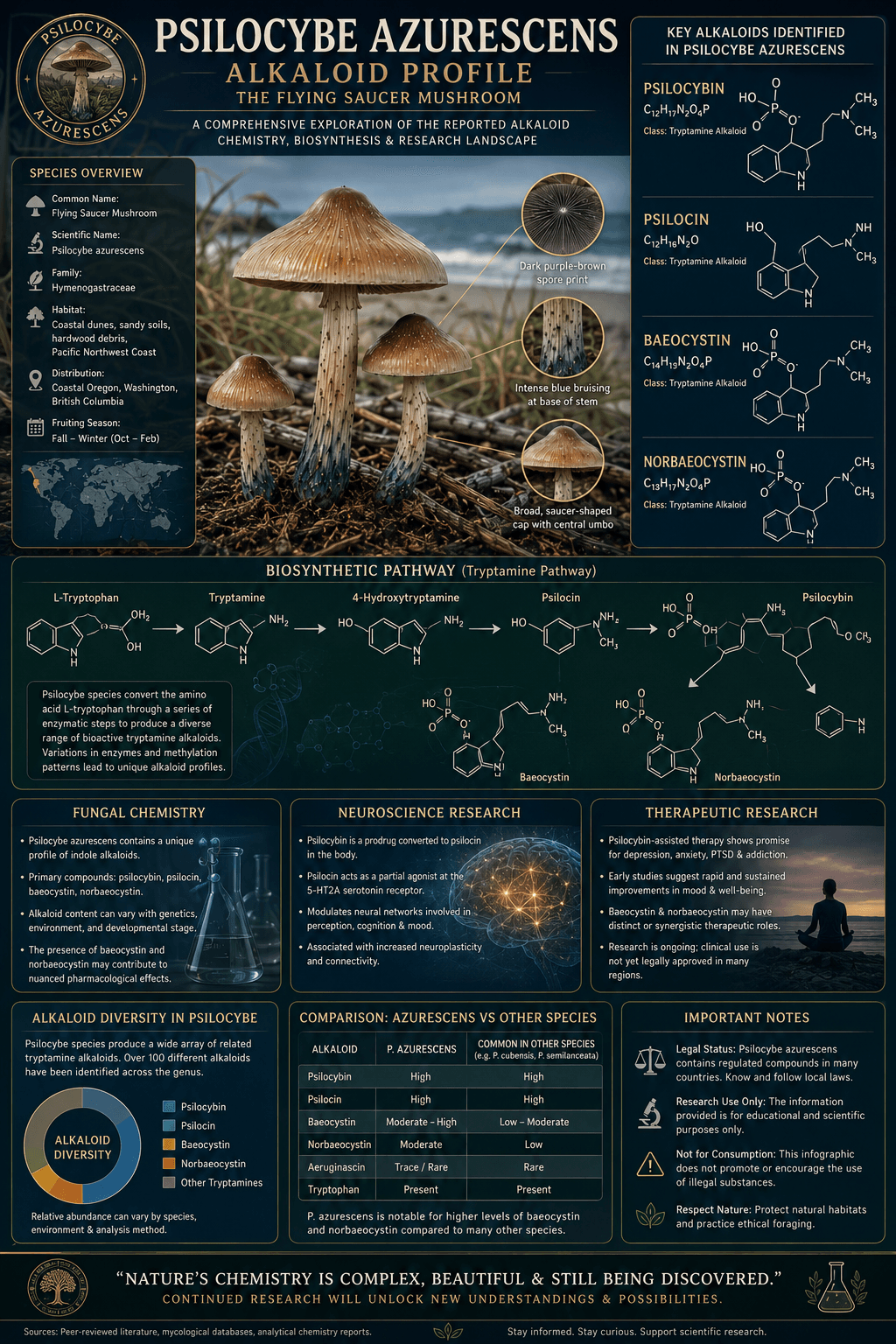
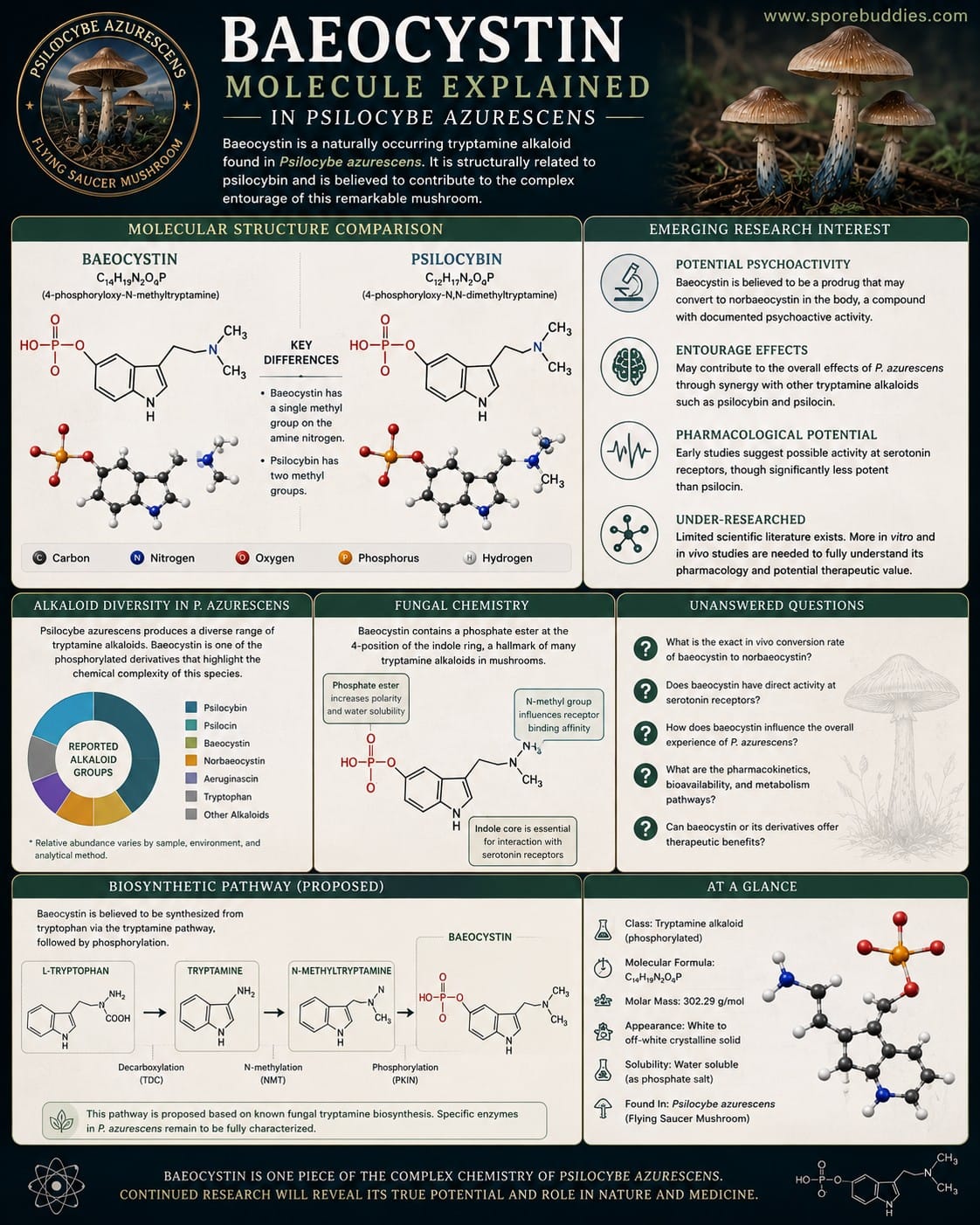
Psilocybe Azurescens Alkaloid Profile Infographic
This infographic summarises the major alkaloids discussed in relation to Psilocybe azurescens, including psilocybin, psilocin, baeocystin, norbaeocystin, biosynthetic pathways and comparative fungal chemistry.
Why Alkaloids Matter in Psilocybe Azurescens Research
Most readers do not search for Azurescens alkaloids because they simply enjoy chemistry. They search because these compounds sit at the centre of some of the most active questions in mycology, neuroscience and therapeutic research. Why do certain fungi produce these molecules? How do they relate to one another? Why do researchers continue studying them? And what can fungal chemistry teach us about the brain, ecology and biological evolution?
Alkaloids are a broad group of naturally occurring compounds that often have biological activity. In fungi, they can be understood as part of the wider world of secondary metabolites: compounds that are not always required for basic growth, but may play roles in ecology, chemical defence, signalling, competition or species adaptation.
For Psilocybe azurescens, the alkaloid story is especially important because it helps explain why the species is more than a famous name. Its chemistry connects the coastal wood-loving ecology of the Flying Saucer Mushroom with modern questions in receptor science, mental health research, natural product chemistry and unresolved safety topics such as Wood Lover's Paralysis.
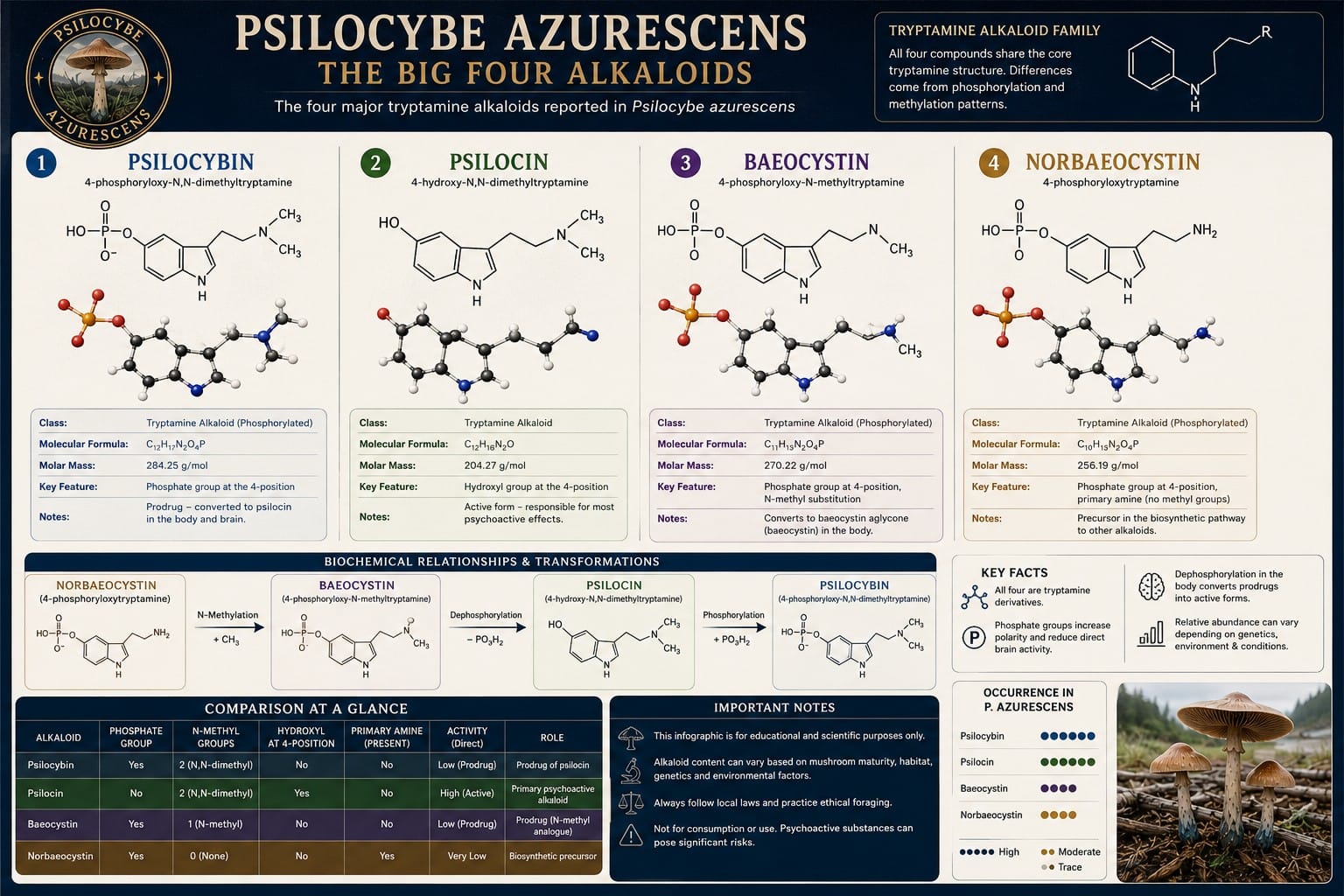
The Big Four Compounds in the Azurescens Alkaloid Profile
The four compounds below form the core of most educational discussions about Psilocybe azurescens chemistry.
| Compound | Basic Role | Why Researchers Care |
|---|---|---|
| Psilocybin | Primary phosphorylated tryptamine | Most studied compound in clinical psychedelic research, especially depression, anxiety and addiction studies |
| Psilocin | Active dephosphorylated metabolite | Important for serotonin receptor activity, brain network research and neuroplasticity discussions |
| Baeocystin | Structurally related analogue | Emerging research interest; less understood than psilocybin and psilocin |
| Norbaeocystin | Biosynthetic precursor / related compound | Important for understanding fungal metabolism, biosynthesis and alkaloid pathway evolution |
Psilocybin: The Most Studied Alkaloid
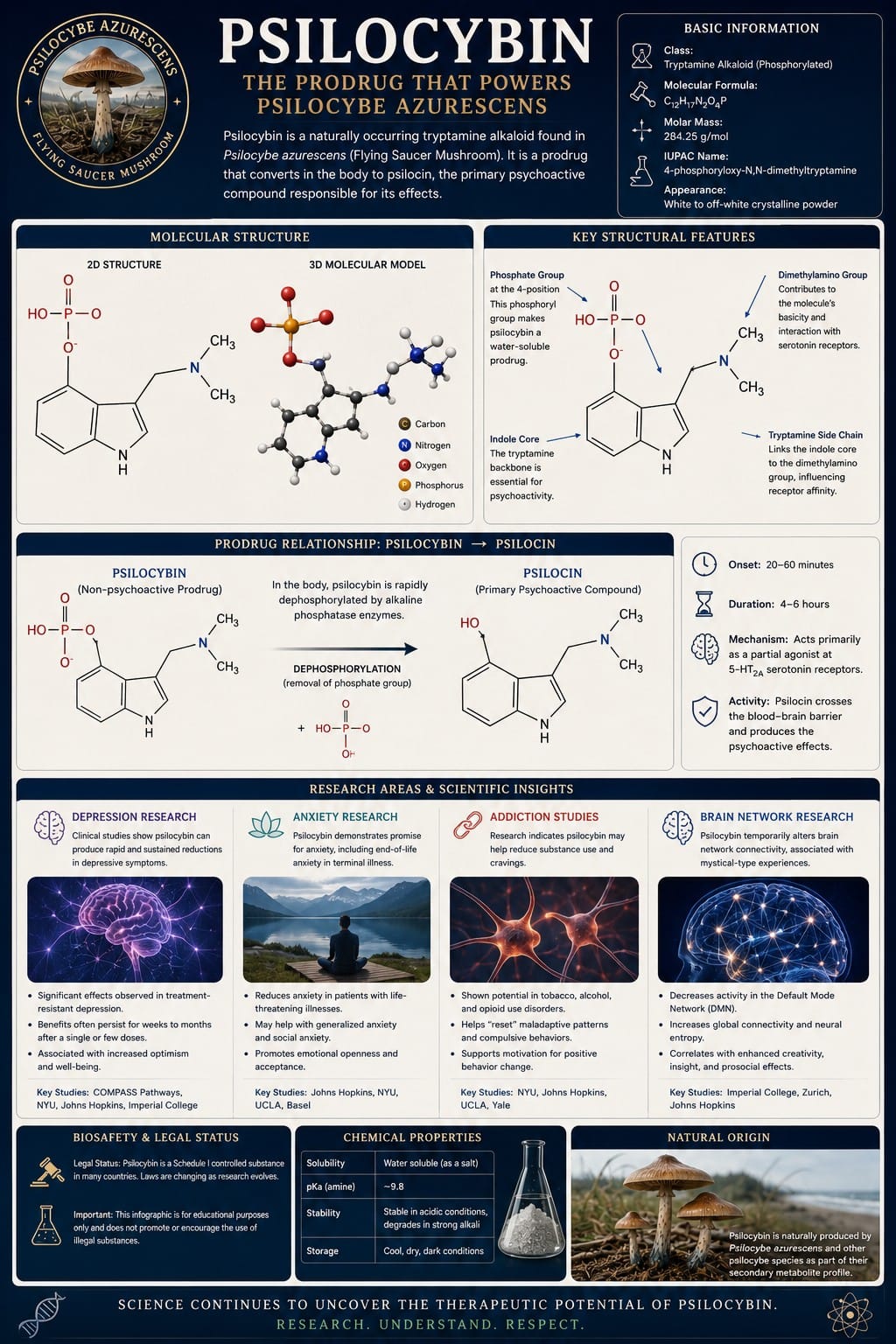
Psilocybin is the compound most people associate with Psilocybe mushrooms. It is a phosphorylated tryptamine and is often described as a prodrug because, in biological systems, it can be converted into psilocin. This relationship between psilocybin and psilocin is central to modern psychedelic science.
In therapeutic research, psilocybin has attracted attention because controlled clinical studies have investigated its potential role in conditions such as depression, treatment-resistant depression, anxiety related to serious illness, addiction and emotional distress. These studies are conducted under strict supervision and should not be confused with unsupervised use.
Why Psilocybin Attracts Research Interest
Researchers are interested in psilocybin because it appears to influence perception, cognition, emotional processing and brain network behaviour in controlled settings. Its effects are often studied alongside psychotherapy, preparation and clinical support.
Important Limitation
Psilocybin is not a casual wellness supplement and this article does not claim that it treats or cures disease. Research findings depend on dose, setting, screening, supervision, psychological support and study design.
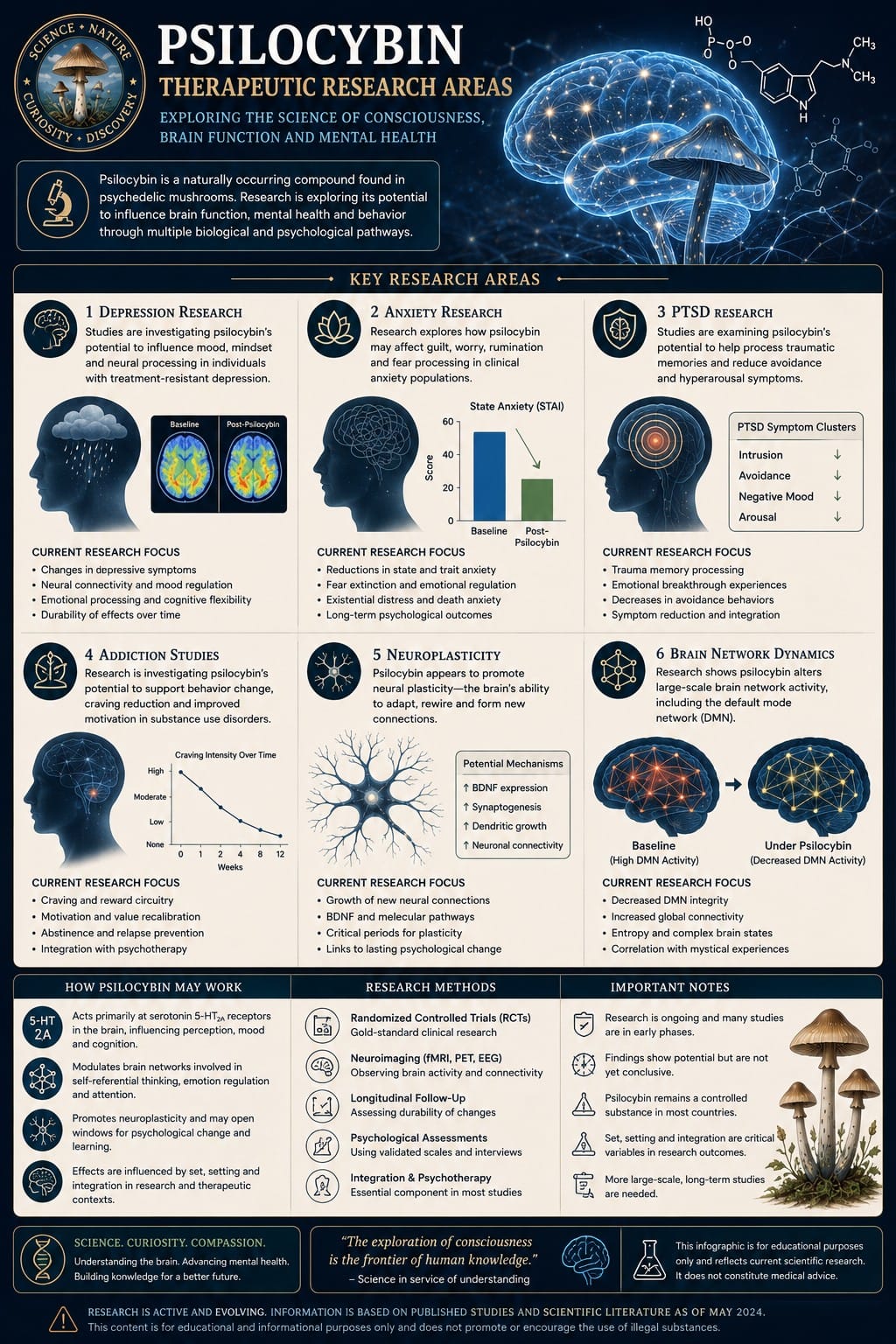
Therapeutic Research Areas Involving Psilocybin
Modern studies and reviews have explored psilocybin in relation to several areas, including:
- Major depression and treatment-resistant depression research
- Anxiety and distress in serious illness contexts
- Alcohol use disorder research
- Smoking cessation research
- Emotional processing and psychological flexibility
- Brain network and default mode network studies
Psilocin: The Active Metabolite
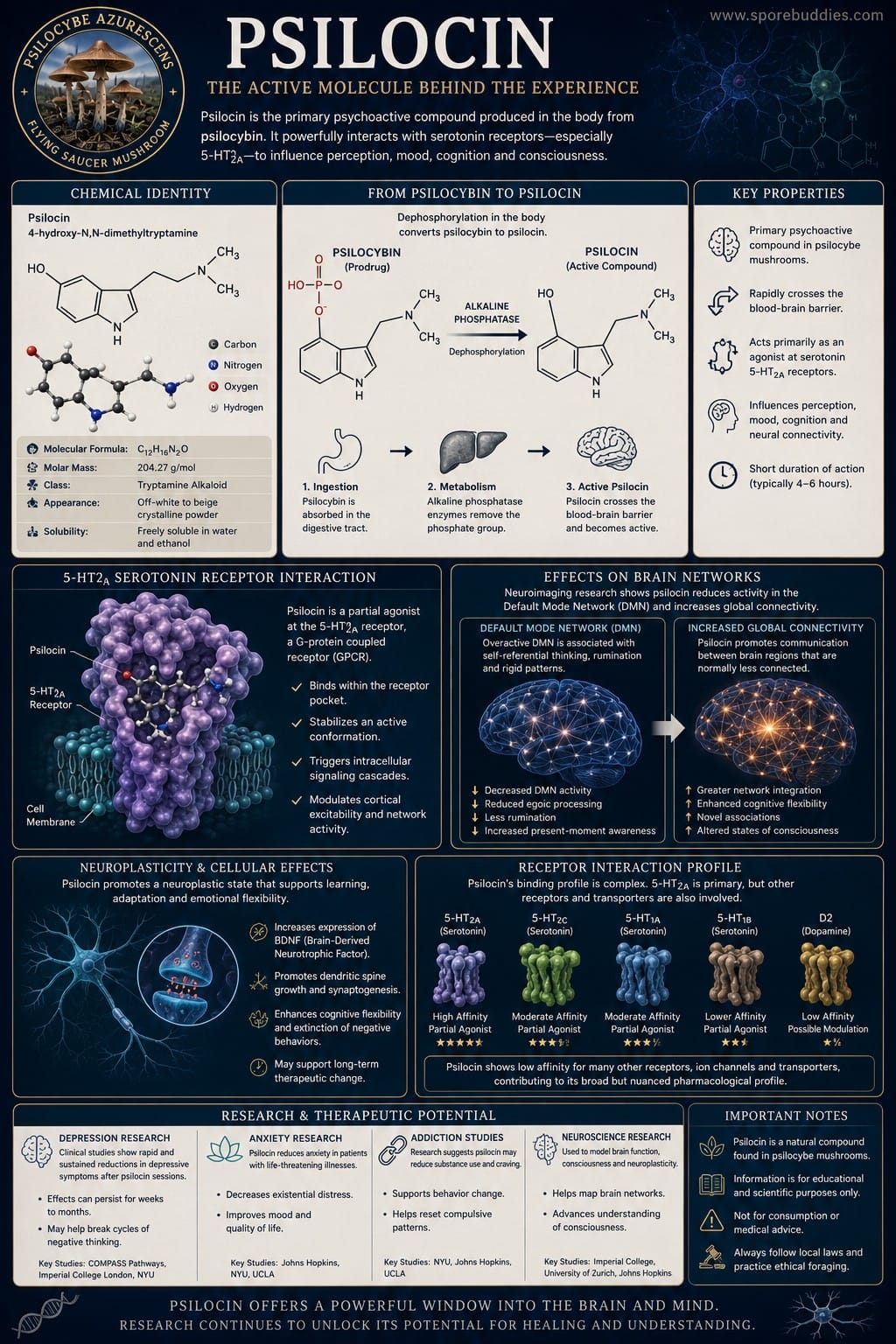
Psilocin is closely related to psilocybin and is often described as the active dephosphorylated form. In simplified educational terms, psilocybin can be converted into psilocin, and psilocin is the molecule most directly discussed in relation to serotonin receptor interactions.
This does not mean psilocin is simple. Researchers study it because of its relationship with 5-HT2A serotonin receptors, brain network activity, emotional processing and neuroplasticity-related hypotheses. These topics are part of why psychedelic science has become a major field of modern neuroscience research.
Serotonin Receptors
Psilocin is studied in relation to serotonin receptor systems, especially 5-HT2A receptor activity, which is central to many discussions of psychedelic pharmacology.
Neuroplasticity Research
Researchers are investigating how psychedelics may influence plasticity-related processes, though translating these findings into clinical outcomes requires careful study.
Brain Network Studies
Imaging studies have explored how psychedelics may alter communication patterns between brain networks in controlled research settings.
Baeocystin: The Emerging Compound of Interest
Baeocystin is one of the reasons Psilocybe azurescens is so interesting to readers who want more than a simple potency ranking. Baeocystin is structurally related to psilocybin and has been reported in several Psilocybe species, yet it remains far less understood.
That uncertainty is exactly what makes it scientifically compelling. While psilocybin and psilocin dominate clinical and pharmacological research, baeocystin raises questions about alkaloid diversity, minor tryptamine chemistry, species-specific profiles and whether related compounds may contribute to the overall biological fingerprint of a mushroom sample.
Baeocystin should not be treated as a proven therapeutic compound or as the confirmed cause of any particular effect. Its role remains under investigation, and claims should be framed carefully.
Why Researchers Care About Baeocystin
- It is structurally related to psilocybin.
- It is part of the broader tryptamine profile of several Psilocybe species.
- It may help explain why species differ chemically.
- It is relevant to biosynthesis and secondary metabolite research.
- Its pharmacology remains less understood than psilocybin and psilocin.
For Azurescens specifically, baeocystin is important because published summaries often discuss notable levels compared with many ordinary cubensis-focused conversations. That makes the Flying Saucer Mushroom valuable for articles about alkaloid diversity rather than simple "strongest mushroom" lists.
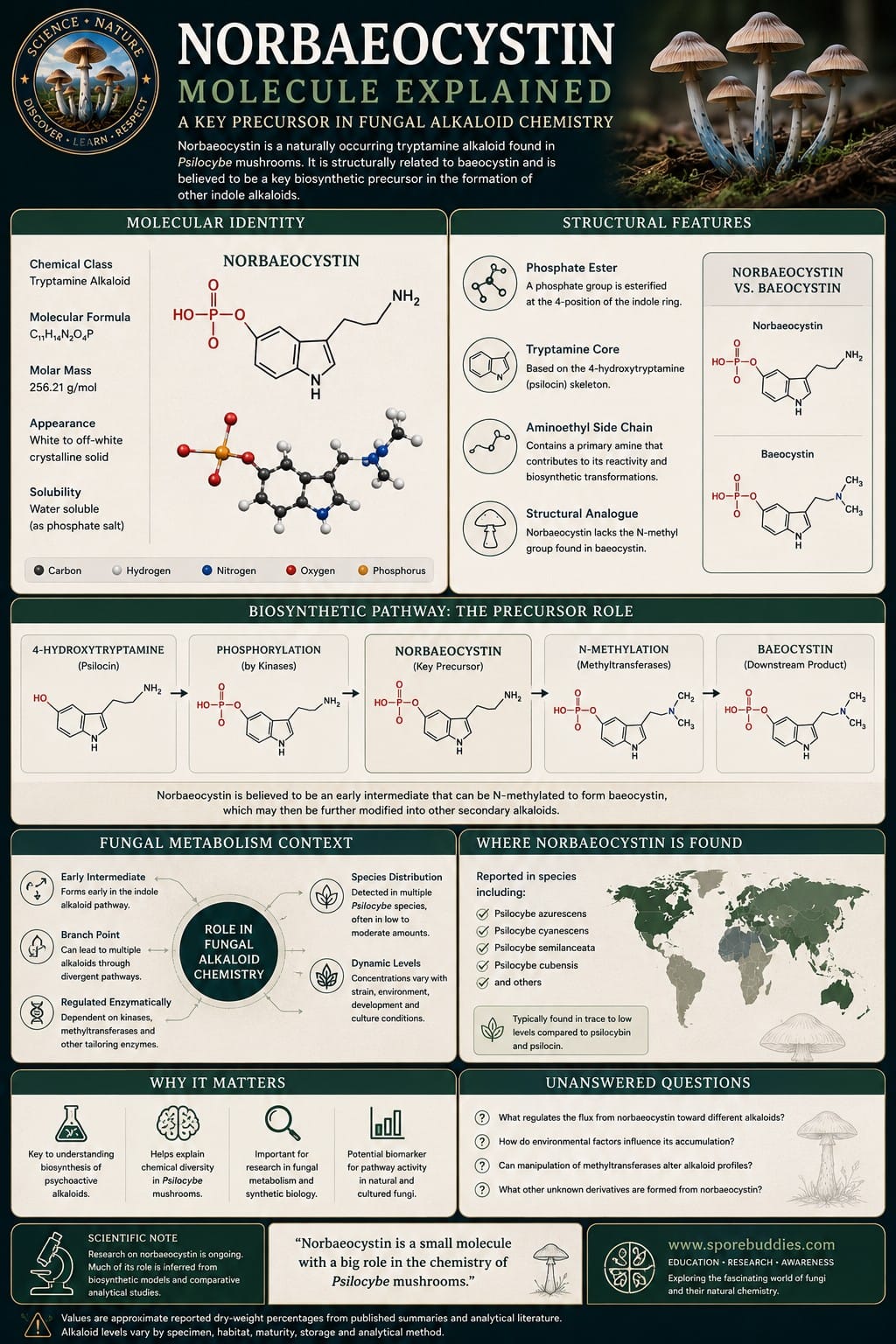
Norbaeocystin: The Biosynthetic Building Block
Norbaeocystin is less famous than psilocybin, psilocin or baeocystin, but it is extremely useful for understanding fungal chemistry. It is often discussed as part of the biosynthetic pathway that helps explain how fungi produce a family of related tryptamine alkaloids.
Rather than being important mainly because of therapeutic research, norbaeocystin matters because it helps researchers map the chemical logic of the fungus. It gives insight into how molecules are assembled, modified and connected inside living fungal systems.
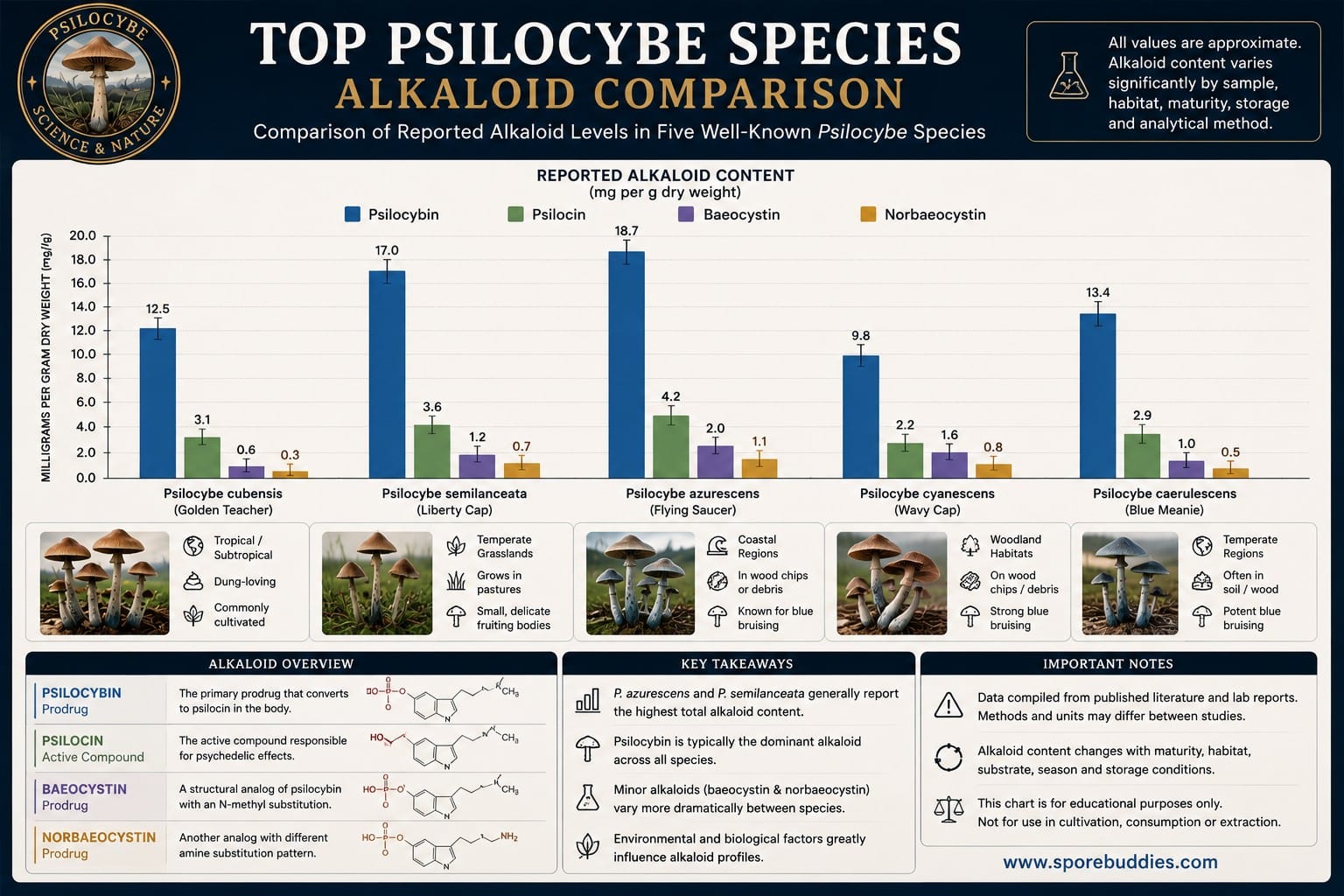
Top Psilocybe Species Alkaloid Comparison
One useful way to understand why Psilocybe azurescens attracts so much scientific attention is to compare its reported alkaloid profile with other well-known Psilocybe species. The comparison below is designed as an educational summary for readers, not as a fixed chemical ranking.
Alkaloid levels vary significantly between specimens, habitats, genetics, maturity stages, drying methods, storage conditions and analytical techniques. Published values should be treated as reference points rather than guaranteed characteristics of any species, specimen, product, lineage or sample.
| Species | Common Name / Context | Psilocybin % | Psilocin % | Baeocystin % | Norbaeocystin % | Best Graph Note |
|---|---|---|---|---|---|---|
| Psilocybe azurescens | Flying Saucer Mushroom | Up to ~1.78 | Up to ~0.38 | Up to ~0.35 | Trace / low | Use as the high-alkaloid wood-loving reference species. |
| Psilocybe cyanescens | Wavy Cap Mushroom | Up to ~0.85 | Up to ~0.36 | ~0.03 | Trace / low | Use as a high-interest wood-loving comparison species. |
| Psilocybe semilanceata | Liberty Cap | Up to ~0.98 | Low / variable | Up to ~0.36 | Trace / low | Useful for showing high psilocybin and notable baeocystin reports. |
| Psilocybe cubensis | Common cultivated species / many named strains | Up to ~0.63 | Up to ~0.60 | Low, often ~0.02 | Trace / low | Useful as the familiar benchmark species for readers. |
| Psilocybe subaeruginosa | Wood-loving Southern Hemisphere species | ~0.60 to ~1.93 reported range | ~0.00 to ~0.17 reported range | Low / variable | Trace / low | Use a range bar or note that reported values vary strongly. |
Reported Alkaloid Profile Comparison
Approximate published-summary values. Not a guarantee for any individual sample.
Values vary by sample, habitat, maturity, drying, storage and analytical method.
Individual samples vary as do the testing methods.
Why This Comparison Matters
This comparison helps readers understand why Psilocybe azurescens is often described as chemically remarkable without reducing the article to a simple potency ranking. The more useful scientific point is that different species show different alkaloid patterns, and those patterns may reflect genetics, ecology, development, habitat and analytical method.
For the Azurescens article, the comparison also reinforces an important idea: the Flying Saucer Mushroom is not only famous because of psilocybin. It is scientifically interesting because its wider alkaloid profile includes psilocin, notable baeocystin discussion, trace/low related compounds and unresolved questions connected to wood-loving species chemistry.
Why Precursors Matter
Precursor compounds help researchers understand how a biosynthetic pathway works. They show the stepwise logic that connects simple biological building blocks to more complex secondary metabolites.
Why This Matters for Azurescens
Studying compounds such as norbaeocystin helps place Azurescens within a larger story of fungal evolution, alkaloid diversity and natural product chemistry.
Therapeutic Research Areas: What Scientists Are Investigating
The therapeutic research conversation around psilocybin and related compounds is one of the reasons mushroom alkaloids receive so much public attention. It is important, however, to describe this carefully. Research interest does not mean a compound is approved for self-treatment, and clinical studies are very different from unsupervised use.
Current scientific interest focuses on controlled studies, trained professionals, screened participants, defined protocols and careful follow-up. The areas below are research topics, not medical recommendations.
Depression Research
Psilocybin-assisted therapy has been investigated in relation to major depression and treatment-resistant depression. Researchers are studying outcomes, safety, durability and mechanisms.
Anxiety & Serious Illness
Clinical studies have explored psilocybin in contexts involving anxiety, existential distress and end-of-life psychological suffering.
PTSD Research
Researchers are interested in how psychedelic-assisted models may influence emotional processing, memory reconsolidation and trauma-related symptoms, though evidence continues to develop.
Addiction Studies
Psilocybin has been studied in relation to alcohol use disorder and smoking cessation, often within structured therapeutic frameworks.
Neuroplasticity
Laboratory and clinical researchers are investigating how psychedelic compounds may affect plasticity-related processes, learning and brain flexibility.
Brain Network Dynamics
Imaging studies explore how compounds such as psilocin may influence communication between large-scale brain networks.
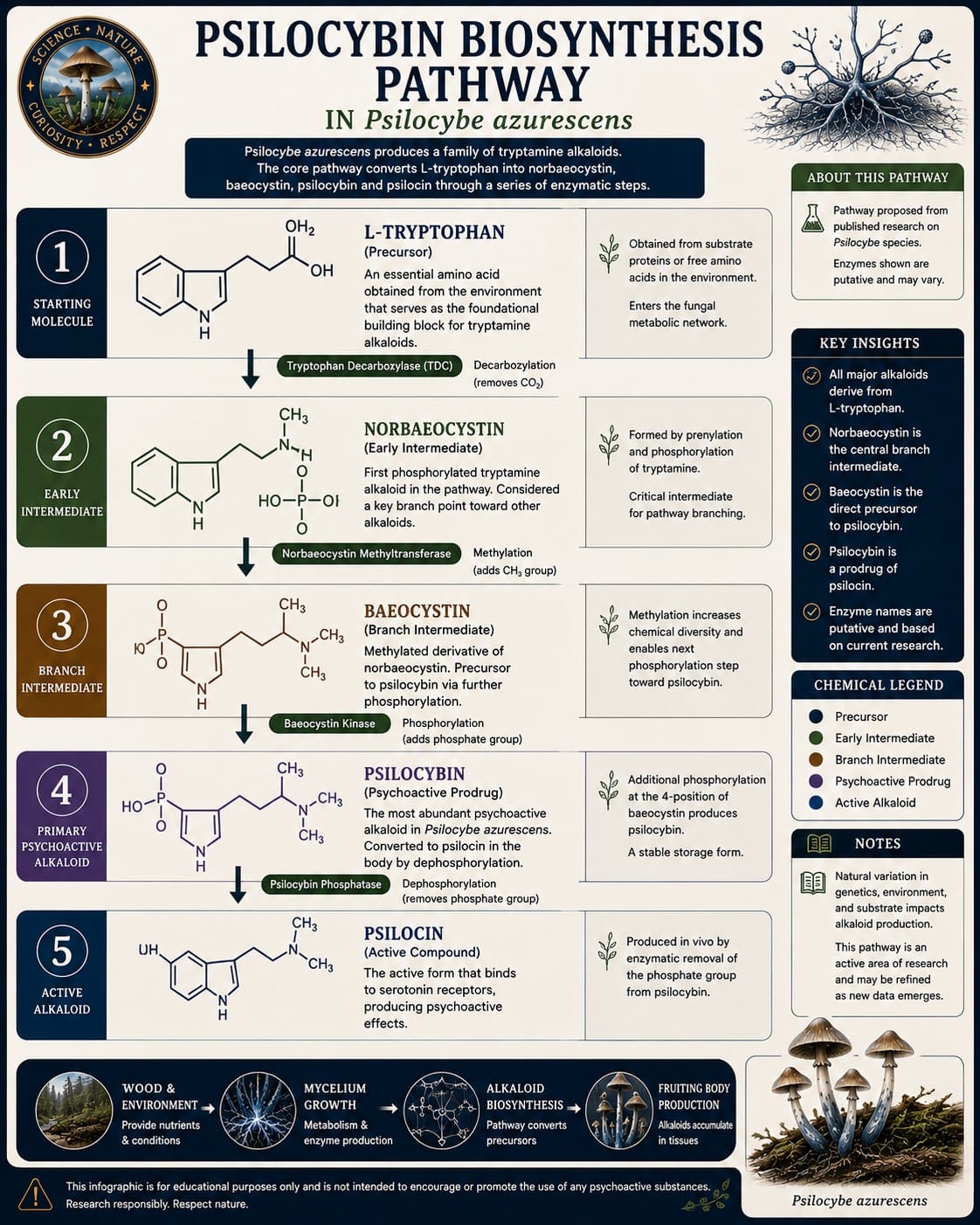
Biosynthesis Pathway: How These Alkaloids Connect
One of the most useful ways to understand the Azurescens alkaloid profile is to see the compounds as related steps in a biosynthetic story. Fungi do not simply contain isolated chemicals; they use enzyme-driven pathways that convert biological building blocks into complex secondary metabolites.
A simplified educational pathway can be represented as:
L-Tryptophan → Tryptamine-related intermediates → Norbaeocystin → Baeocystin → Psilocybin → Psilocin
This pathway helps explain why baeocystin and norbaeocystin matter. They are not merely obscure names. They are part of the chemical architecture that makes Psilocybe species so important to natural product chemistry.
Why Alkaloid Levels Vary Between Samples
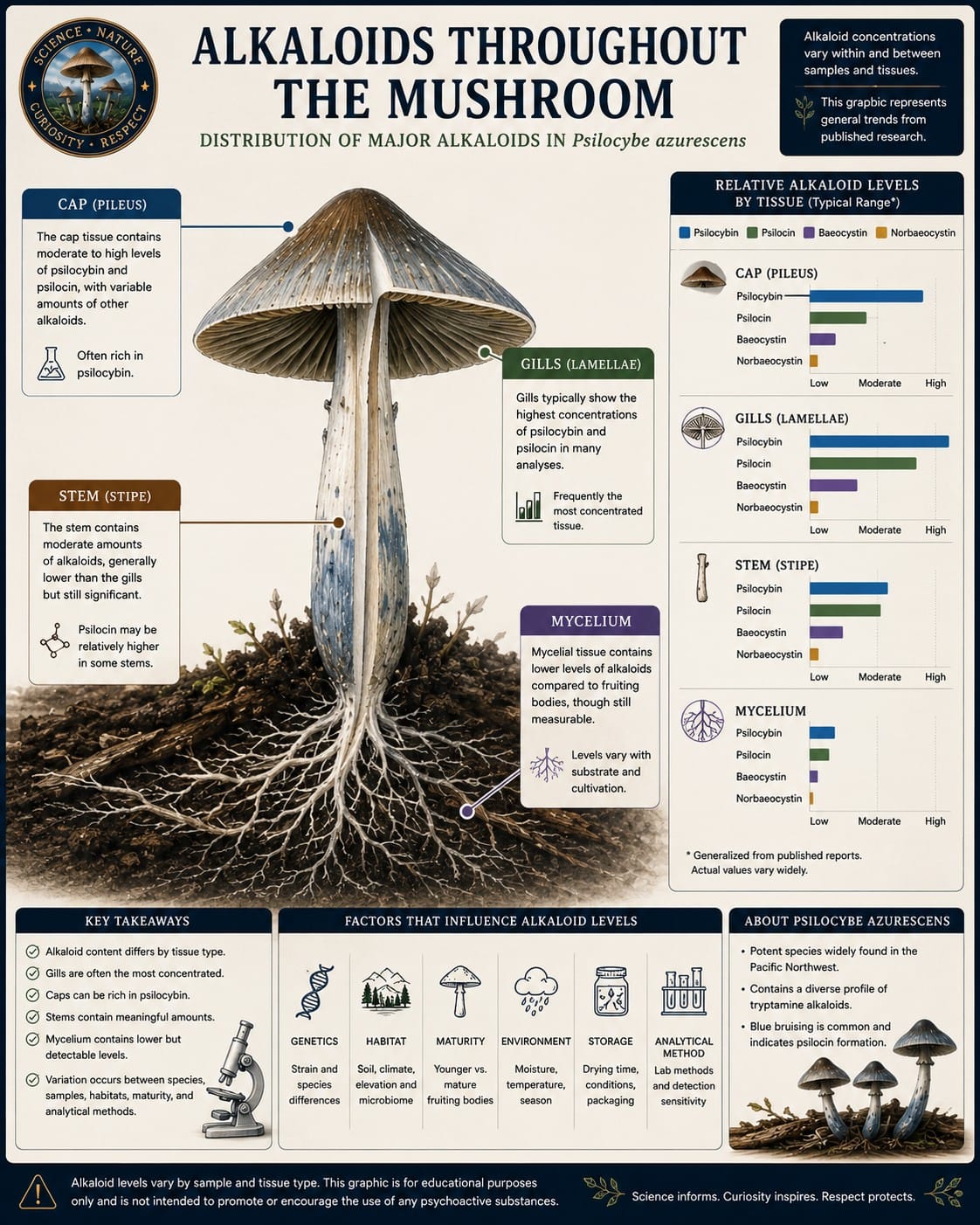
Alkaloid content should always be discussed as variable. Published values are not guarantees, and no individual specimen, product, print, swab, culture or lineage should be assumed to match a published analysis without laboratory testing.
Alkaloid levels can vary based on genetics, locality, substrate, fruiting conditions, maturity, drying, storage, analytical method and individual sample. Responsible educational content should use phrases such as "reported values", "published summaries" and "sample-dependent" rather than making absolute claims.
| Variable | Why It Matters |
|---|---|
| Genetics | Different lineages and populations may show chemical variation. |
| Habitat and substrate | Wood-loving ecology may influence growth conditions and sample chemistry. |
| Maturity | Alkaloid profiles may differ between developmental stages. |
| Drying and storage | Handling after collection can influence measured compounds. |
| Analytical method | Different laboratory methods may produce different reported values. |
Why Psilocybe Azurescens Became Famous for Chemistry
Psilocybe azurescens became famous partly because published summaries placed it among the more alkaloid-rich species in the genus Psilocybe. That reputation is important, but it should not be reduced to a simple "strongest mushroom" claim.
The better scientific framing is that Azurescens is a notable wood-loving species with a distinctive chemical profile, strong Astoria/Oregon association, important ecology, reported high psilocybin levels and notable discussion around baeocystin. This makes it a valuable species for comparing fungal chemistry, taxonomy and ecology.
For a full species overview, see the main SporeBuddies guide to Psilocybe azurescens.
Wood Lover's Paralysis and Unanswered Alkaloid Questions
One of the most important unresolved topics surrounding Psilocybe azurescens is Wood Lover's Paralysis, often abbreviated as WLP. WLP is a reported transient weakness syndrome associated with some wood-loving Psilocybe species, including Azurescens and Cyanescens.
Because WLP is associated with wood-loving species, readers often wonder whether alkaloids such as baeocystin or other secondary metabolites could be involved. At present, the mechanism remains unresolved. Baeocystin is sometimes discussed in community speculation, but there is no definitive evidence proving that baeocystin causes WLP.
The most responsible position is that the chemistry of wood-loving Psilocybe species provides important context for ongoing research, but the exact cause of WLP remains unknown.
If any person experiences breathing difficulty, airway obstruction, chest pain, loss of consciousness, severe confusion, severe weakness or rapidly worsening symptoms after exposure to any wild mushroom, seek emergency medical help immediately.
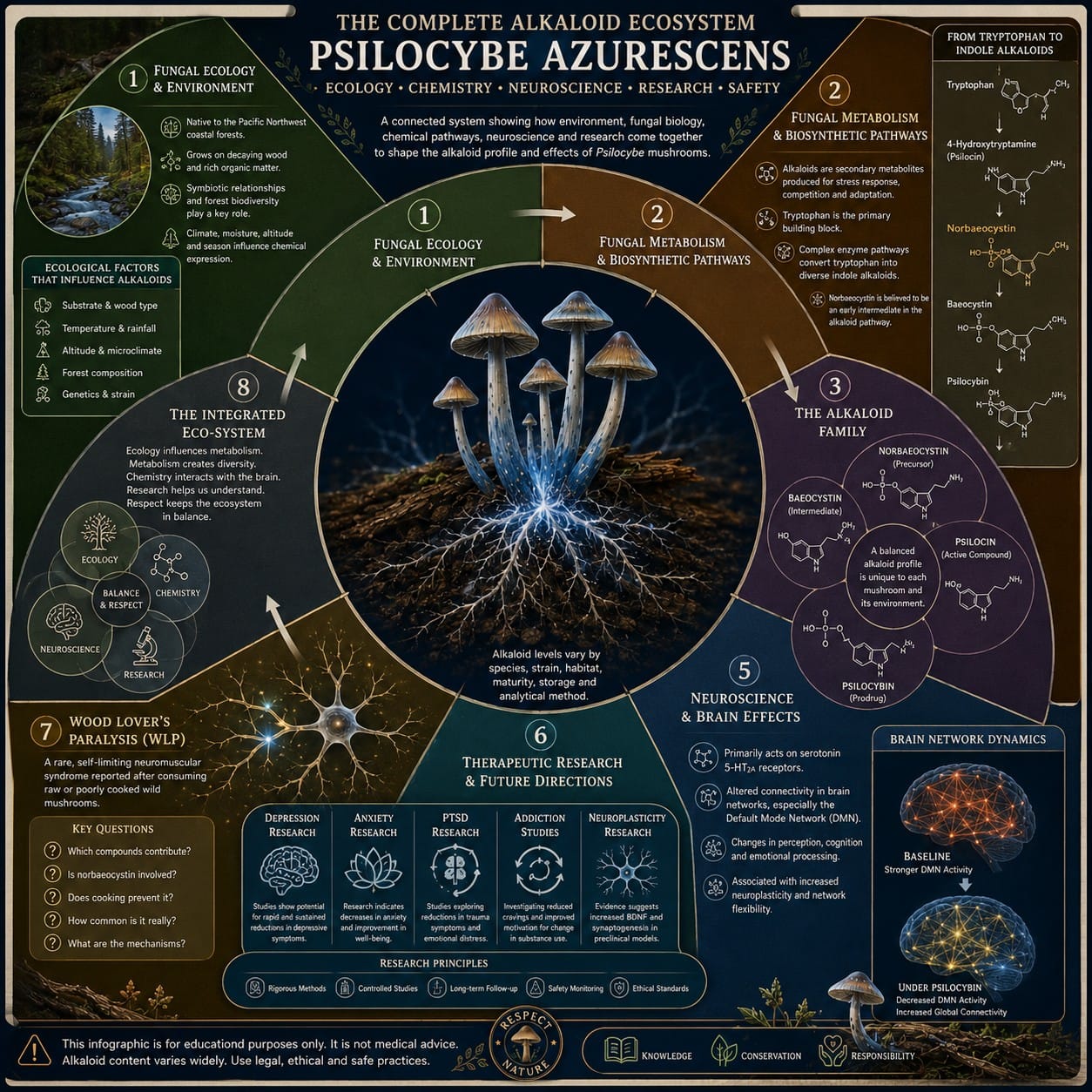
The Complete Psilocybe Azurescens Alkaloid Ecosystem
The chemistry of Psilocybe azurescens is best understood as part of a larger ecosystem of ideas. This species connects wood-loving fungal ecology, secondary metabolite production, biosynthetic pathways, neuroscience, clinical research and unresolved safety questions.
| Layer | What It Means |
|---|---|
| Wood-loving ecology | The species lives in lignin-rich habitats and participates in decomposition. |
| Fungal metabolism | The fungus produces secondary metabolites as part of its biological chemistry. |
| Norbaeocystin and baeocystin | Related compounds that help explain alkaloid diversity and biosynthesis. |
| Psilocybin and psilocin | The best-known compounds in modern psychedelic research. |
| Neuroscience | Researchers study receptor activity, brain networks and neuroplasticity-related mechanisms. |
| Clinical research | Controlled studies investigate carefully defined mental health and addiction-related research questions. |
| Unanswered questions | WLP, minor alkaloids, ecological function and long-term mechanisms remain active topics. |
Future Research Directions
The future of Azurescens alkaloid research is not just about measuring potency. The more interesting questions involve how the species produces its compounds, why wood-loving fungi show certain chemical profiles, how minor alkaloids interact, and how psychedelic compounds can be studied responsibly in neuroscience and clinical settings.
Potential research directions include:
- More detailed chemical profiling across different samples and habitats
- Better understanding of baeocystin and norbaeocystin pharmacology
- Comparative studies between Azurescens, Cyanescens and other wood-loving species
- Investigation of Wood Lover's Paralysis mechanisms
- Improved understanding of psychedelic-assisted therapy protocols
- Natural product chemistry and fungal biosynthesis research
- Genomics and enzyme pathway studies
Final Summary: Why the Azurescens Alkaloid Profile Matters
The Psilocybe azurescens alkaloid profile matters because it brings together several important fields: fungal ecology, natural product chemistry, neuroscience, therapeutic research and unresolved safety science. Psilocybin and psilocin are the best-known compounds, while baeocystin and norbaeocystin add depth to the chemical story.
For researchers and mycology enthusiasts, the Flying Saucer Mushroom is not interesting only because of its reputation. It is interesting because it demonstrates how one wood-loving species can connect coastal ecology, Astoria history, biosynthetic pathways, therapeutic research and unanswered questions such as Wood Lover's Paralysis.
Psilocybe Azurescens Alkaloid Profile FAQs
What alkaloids are found in Psilocybe azurescens?
The main alkaloids discussed in relation to Psilocybe azurescens are psilocybin, psilocin, baeocystin and norbaeocystin.
Why is Psilocybe azurescens considered chemically interesting?
It is considered chemically interesting because published summaries often describe notable alkaloid levels, including psilocybin and baeocystin, alongside its unusual wood-loving ecology and Astoria/Oregon identity.
What is psilocybin?
Psilocybin is a phosphorylated tryptamine and the most studied compound associated with Psilocybe mushrooms. It is investigated in controlled clinical research settings.
What is psilocin?
Psilocin is the active dephosphorylated form related to psilocybin. It is often discussed in relation to serotonin receptor activity and neuroscience research.
What is baeocystin?
Baeocystin is a tryptamine compound structurally related to psilocybin. It is less studied and remains an emerging topic in fungal chemistry.
What is norbaeocystin?
Norbaeocystin is a related compound often discussed in biosynthesis and fungal metabolism contexts.
Is baeocystin responsible for Wood Lover's Paralysis?
No definitive evidence proves that baeocystin causes Wood Lover's Paralysis. The mechanism of WLP remains unresolved.
Does this article claim therapeutic benefits?
No. This article discusses areas of scientific investigation. It does not claim that any compound treats, cures or prevents disease.
What therapeutic areas are researchers studying?
Researchers have investigated psilocybin in relation to depression, anxiety, addiction, end-of-life distress, neuroplasticity and brain network dynamics, usually in controlled clinical or research settings.
Can alkaloid levels vary between Azurescens samples?
Yes. Alkaloid levels can vary based on genetics, locality, substrate, maturity, storage, drying and analytical method.
Is Psilocybe azurescens stronger than cubensis?
Published summaries often place Azurescens in a higher reported alkaloid category than many common cubensis varieties, but values vary and should not be treated as guarantees.
Why do researchers study minor alkaloids?
Minor alkaloids help researchers understand fungal biosynthesis, species-level chemical diversity and how related compounds may contribute to the overall biological profile.
Is this medical advice?
No. This page is educational and should not be interpreted as medical advice, treatment advice, legal advice or consumption guidance.
Article Version: 1.0
First Published: June 2026
Last Reviewed: June 2026
This guide is reviewed periodically by the SporeBuddies Research Team to maintain accuracy and reflect current scientific understanding. Content is intended for educational, microscopy, chemistry and taxonomic reference purposes only.
References & Further Reading
The information in this alkaloid profile is informed by published taxonomy, psychedelic research, pharmacology, neuroscience and toxicology resources relating to Psilocybe azurescens, psilocybin, psilocin and related tryptamine compounds.
Taxonomy & Species Description
Stamets, P. & Gartz, J. (1995).
A New Caerulescent Psilocybe from the Pacific Coast of Northwestern America.
View Reference
NCBI Taxonomy Database
National Center for Biotechnology Information (NCBI).
Psilocybe azurescens Taxonomy Browser.
View Reference
Fungal Taxonomy & Ecology Review
Bradshaw, M. et al. (2022).
An Overview on the Taxonomy, Phylogenetics and Ecology of the Psychedelic Fungi.
View Reference
Psilocybin Therapy for Depression
Davis, A. K. et al. (2021).
Effects of Psilocybin-Assisted Therapy on Major Depressive Disorder.
View Reference
Psilocybin and Treatment-Resistant Depression
Carhart-Harris, R. L. et al. (2016).
Psilocybin with psychological support for treatment-resistant depression.
View Reference
Psilocybin and End-of-Life Distress
Griffiths, R. R. et al. (2016).
Psilocybin produces substantial and sustained decreases in depression and anxiety in patients with life-threatening cancer.
View Reference
Psychedelics and Neuroplasticity Review
Ly, C. et al. (2018).
Psychedelics Promote Structural and Functional Neural Plasticity.
View Reference
Psilocybin Biosynthesis
Fricke, J., Blei, F. & Hoffmeister, D. (2017).
Enzymatic Synthesis of Psilocybin.
View Reference
Wood Lover's Paralysis Research
Beck, S.A., Barlow, C., Engel, L. & Barratt, M.J. (2025).
"Wood-lover paralysis": describing a toxidrome with symptoms of weakness caused by some lignicolous "wood-loving" Psilocybe mushrooms.
View Reference
Oregon Health Authority WLP Review
Present, S. (2024).
Wood Lover's Paralysis Review.
View Reference
Explore More Psilocybe Azurescens Resources
This guide is part of the SporeBuddies Psilocybe azurescens knowledge hub. Continue your research with our related educational guides: