
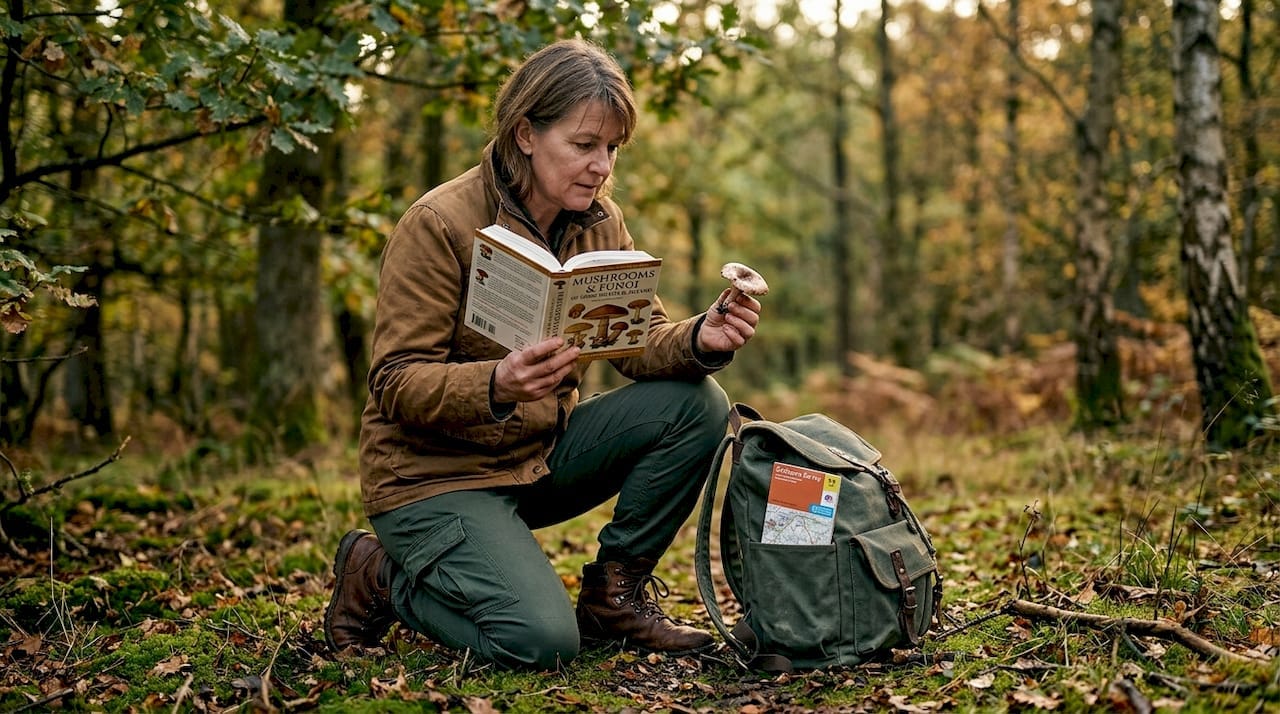
Picking mushrooms without a guide is one of the most common mistakes beginners make, and it carries genuine consequences. Knowing why use a mushroom guide matters before you head out is not just sensible, it could save your life. The UK has dozens of toxic species that closely resemble edible ones, and even experienced foragers can be caught out by subtle differences in colour, gill structure, or spore print. A reliable mushroom guide cuts through that uncertainty with structured identification keys, clear photography, and species-specific warnings that no memory or app can fully replace.
Table of Contents
- Key takeaways
- Why use a mushroom guide for safe identification
- Benefits of mushroom guides beyond identification
- How to choose the right mushroom guide
- Using a mushroom guide effectively in the field
- My honest take on guides after years in mycology
- Start your foraging journey with Sporebuddies
- FAQ
Key takeaways
| Point | Details |
|---|---|
| Safety is non-negotiable | Mushroom guides help you rule out deadly lookalikes before consuming any wild find. |
| Regional guides work best | Choose a guide specific to the UK or your local habitat for accurate, relevant species coverage. |
| Multiple sources reduce risk | Cross-referencing at least three reputable guides greatly lowers the chance of misidentification. |
| Guides support cultivation too | In home growing, guides help you recognise species traits, contamination signs, and harvest timing. |
| Functional mushrooms need proper ID | Guides match species like Lion’s Mane and Reishi to specific wellness goals with accuracy. |
Why use a mushroom guide for safe identification
The single most important reason to use a mushroom guide is straightforward. Getting the identification wrong can kill you. USDA 2026 guidance confirms that the picker bears sole legal and personal responsibility for identification, and that toxic species can cause fatal liver or kidney failure. That responsibility does not sit with the landowner, the foraging group, or the app on your phone. It sits with you.
Guides carry the weight of accumulated expert knowledge. A good field guide will describe not just what an edible species looks like, but what its dangerous lookalikes look like too, and precisely where the differences lie. The Death Cap (Amanita phalloides) and the Destroying Angel (Amanita virosa) have caused fatalities in the UK because they superficially resemble edible species, particularly to untrained eyes in low light or at an immature growth stage.
Here is what a quality mushroom guide will give you that memory or word-of-mouth cannot:
- Detailed written descriptions of cap shape, colour, gill attachment, and stem structure
- High-quality photographs across multiple growth stages and lighting conditions
- Spore print colour charts, which are often critical for distinguishing similar species
- Explicit lookalike warnings with side-by-side comparisons
- Habitat and seasonality notes that add context to any find
Pro Tip: Never rely on a single source when you are new to foraging. The three-source rule is widely recommended by experts: cross-reference your find with at least three reputable guides before considering any mushroom safe to eat.
The guidance is simple and worth repeating:
“When in doubt, throw it out.”
That phrase carries more weight in mycology than almost any other field of natural science. A mushroom guide teaches you not just when to say yes, but confidently when to say no, and that second skill matters more.
Benefits of mushroom guides beyond identification
Once you move past the safety fundamentals, you will find that the benefits of mushroom guides extend well into education, trip planning, and sustainable foraging practice. Good guides are teaching tools. They explain mushroom anatomy, spore dispersal, mycorrhizal relationships, and the seasonal patterns that determine where and when specific species fruit. Reading a guide before a foray means you arrive knowing what to look for and where, rather than wandering and guessing.
Planning a foraging trip well takes more than checking the weather. Foraging safety guidance recommends carrying a map, compass, and whistle alongside your mushroom guide, and sharing your foraging plan with a contact before you leave. Your guide fits naturally into that kit. It tells you which woodland habitats are most productive for the species you are targeting, which time of year to visit, and which micro-environments (mossy slopes, chalky soils, ancient oak stands) to prioritise.
Sustainable harvesting is another area where guides make a genuine difference. Forest Service guidance advises cutting stems just above the ground to preserve the mycelium network beneath, and carrying mushrooms in mesh bags rather than sealed containers so that spores spread naturally as you walk. Many quality field guides include these techniques directly, which means you learn conservation practice alongside identification. You are not just taking from a habitat. You are participating in it responsibly.
Building local knowledge is where guides really pay off over time. A regional UK guide will include species you will never find in a general European handbook, and it will describe the specific habitats, soil types, and seasonal triggers that apply to British woodland. That specificity is what turns a generic interest into real expertise.
Pro Tip: Use your guide alongside GPS tracking. Mark productive patches on a mapping app and note which species you found, the date, and the conditions. Over two or three seasons, you will start to predict fruiting windows with genuine accuracy.
How to choose the right mushroom guide
With dozens of guides available in print and digital formats, knowing how to choose a mushroom guide is itself a worthwhile skill. The wrong choice will leave you with a book full of species you will never encounter, or photographs so generic that confident identification is impossible.
Start with scope. A regional guide will almost always serve you better than a continental one. If you are foraging in the UK, a guide written specifically for British fungi will include the species you are most likely to encounter, describe local habitats accurately, and flag the particular lookalikes that grow here. Beginners are best served by focusing on three or four distinctive, foolproof species such as chanterelles, giant puffballs, and chicken of the woods before expanding their range.
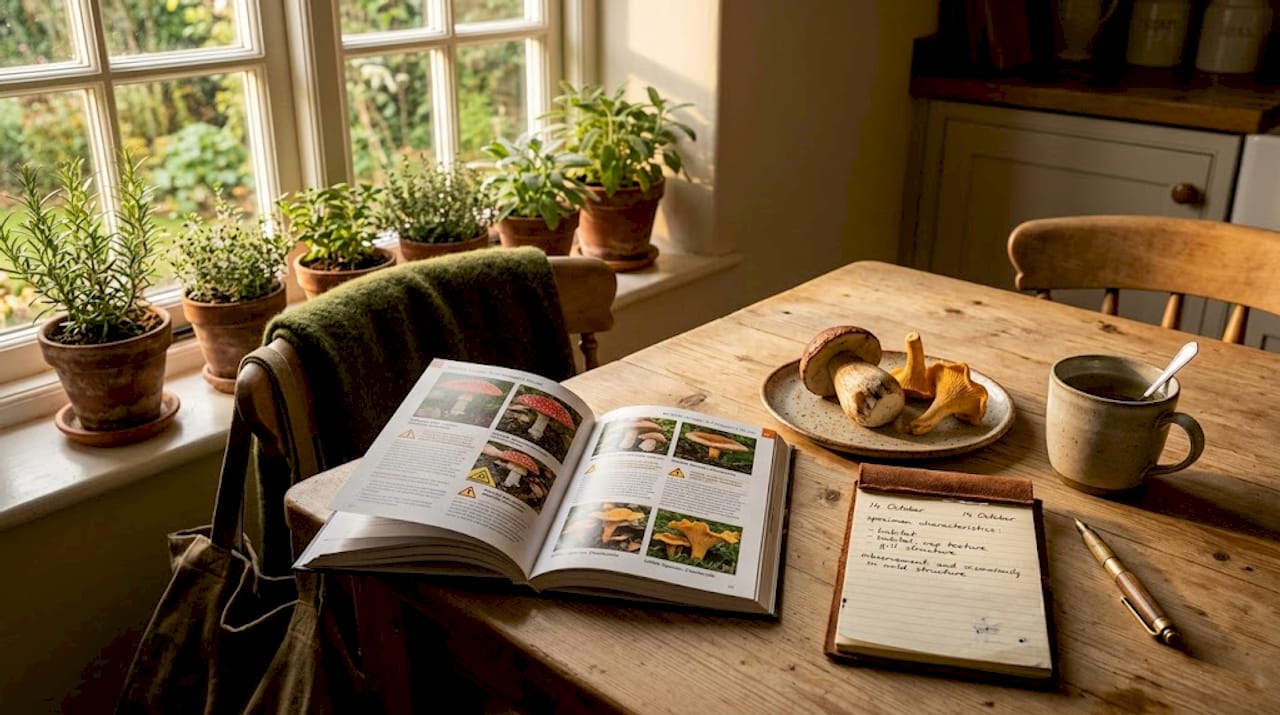
Here is a quick comparison of the main guide formats available:
| Format | Best for | Limitations |
|---|---|---|
| Printed field guide | In-field reference, no battery needed | Bulk, weather damage, fixed content |
| Illustrated handbook | Home study and in-depth learning | Less practical to carry outdoors |
| Mobile app | Quick reference and photo logging | Apps can misidentify due to lighting or age |
| Online course supplement | Structured learning with expert input | Requires connectivity, varies in quality |
When assessing any guide, look for these features:
- Multiple photographs per species across growth stages
- Clear spore print colour information
- Explicit lookalike warnings with explanatory text
- Habitat and seasonal information relevant to your region
- A glossary of anatomical terms for quick reference
Cross-referencing remains critical regardless of format. Reducing misidentification risk comes from comparing multiple well-regarded sources, not from trusting any single volume completely. Build a small library of two or three complementary guides and treat them as a system rather than individual references.
Using a mushroom guide effectively in the field
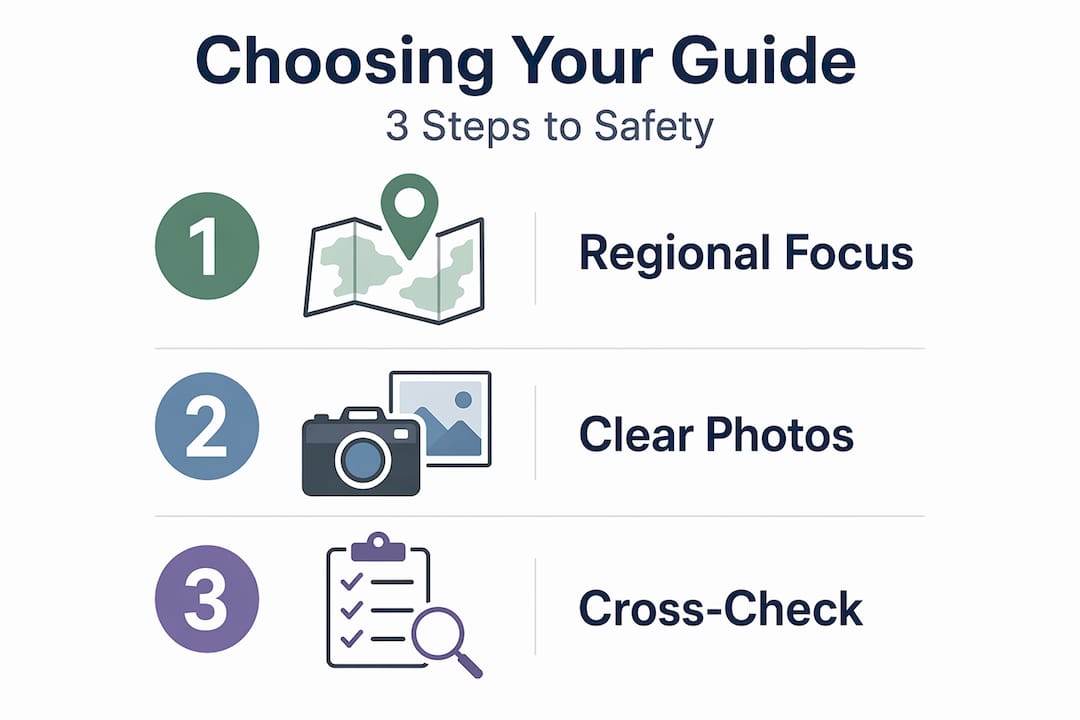
Owning a guide is only the beginning. Using it systematically is where the real value lies. Whether you are out foraging or working through a cultivation project at home, a structured approach to your guide will make every session more productive.
When you find a specimen in the field, work through these steps methodically:
- Note the habitat: what trees are nearby, what the soil looks and feels like, whether you are in open ground or dense canopy
- Observe the cap: shape, colour, surface texture, diameter, and any change from centre to edge
- Check the underside: are there gills, pores, or teeth? What colour, and how do they attach to the stem?
- Examine the stem: solid or hollow, any ring or volva at the base, surface texture and colour
- Take a spore print by placing the cap gill-side down on white paper for a few hours and recording the colour
- Cross-check all observations against your guide, then repeat with a second source
This systematic observation approach turns identification from a guessing game into a repeatable process. Photograph each feature separately and keep notes. Your records will become reference material for future forays.
Pro Tip: Even after a confident positive identification, start with a small cooked portion and wait 24 hours before eating more. Individual sensitivity to even edible species varies, and this first-time protocol catches reactions before they escalate.
For home cultivators, guides serve a different but equally important function. When you are growing Lion’s Mane at home, a guide helps you recognise normal growth stages, identify early signs of contamination, and understand the ideal fruiting conditions for that particular species. Functional mushrooms like Lion’s Mane and Reishi have specific anatomical features that guides describe clearly, making it easier to confirm a healthy flush and understand when something has gone wrong. The mushroom guide importance in cultivation is often underestimated by beginners who assume growing kits remove the need for species knowledge entirely.
Start your foraging journey with Sporebuddies
If you are ready to put good guidance into practice, Sporebuddies has everything you need. Browse the UK mycology guides collection for trusted identification resources built for British foragers and cultivators. When you are ready to grow at home, explore the full range of mushroom growing kits covering popular varieties from oyster to Lion’s Mane, or choose from a carefully curated selection of quality spore syringes for your next cultivation project. At Sporebuddies, the goal is to make sure you have the knowledge and the materials to grow and forage with confidence, every step of the way.
FAQ
Why is a mushroom guide important for beginners?
A mushroom guide provides structured identification keys, lookalike warnings, and habitat information that beginners cannot reliably retain from memory alone. Without one, the risk of mistaking a toxic species for an edible one is significantly higher.
Can I use an app instead of a printed mushroom guide?
Apps are a useful supplement but not a replacement. Image recognition tools can misidentify specimens due to lighting conditions or the age of the mushroom, and they often miss key anatomical details like stem base features that are critical for safe identification.
How many guides should I use for mushroom identification?
Experts recommend cross-referencing at least three reputable guides before consuming any wild mushroom. Using multiple sources reduces the chance of misidentification caused by errors or gaps in any single reference.
What should I look for when choosing a mushroom guide?
Prioritise regional guides specific to the UK, clear multi-stage photography, explicit lookalike warnings, spore print colour information, and habitat and seasonality notes. Beginner guides that focus on a handful of distinctive species are the safest starting point.
Do mushroom guides help with home cultivation as well as foraging?
Yes. Guides help cultivators recognise healthy growth stages, identify contamination early, and understand the specific fruiting conditions each species requires. Species like Lion’s Mane and Reishi have distinct anatomical features that guides describe clearly for growers at every level.