
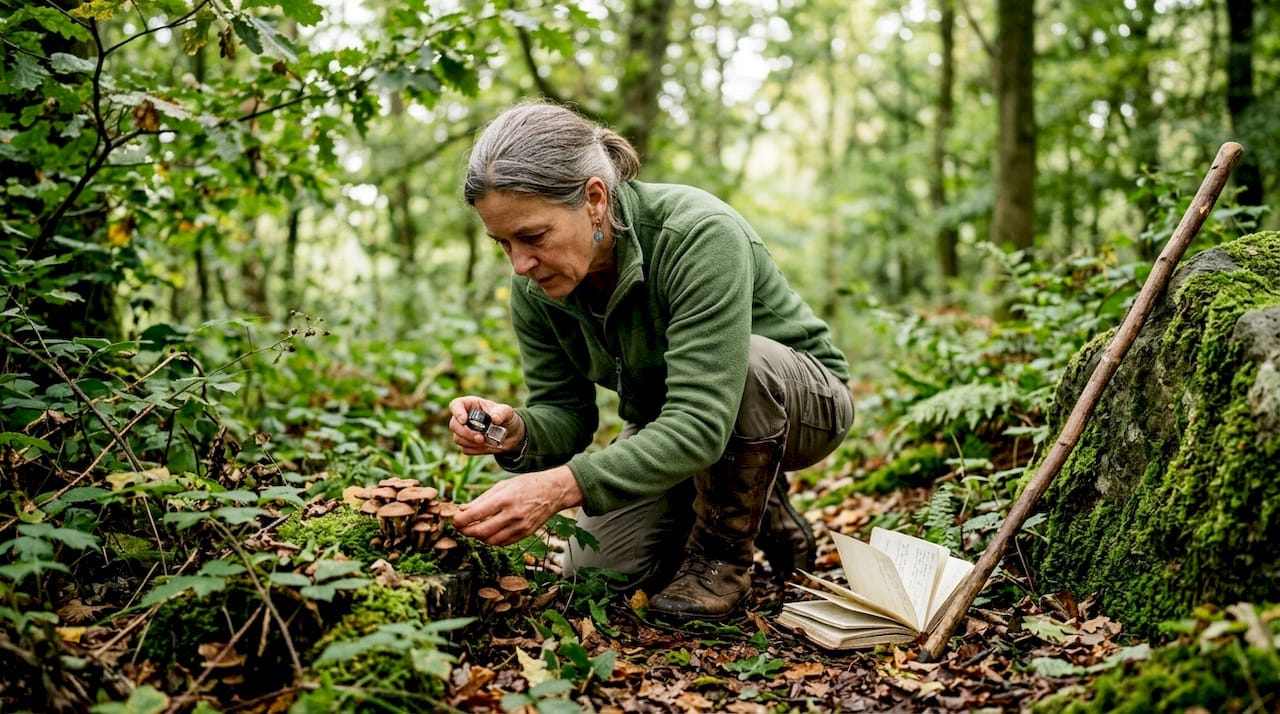
Documenting fungal observations is one of the most consequential things you can do for UK biodiversity. Every record you submit, whether from a woodland walk or a garden survey, contributes to the baseline data that conservation bodies rely on to track species, assess ecological health, and prioritise protection efforts. The British Mycological Society and the National Biodiversity Network Atlas UK depend directly on these records to build Red Data Lists and Biodiversity Action Plans. Yet over 95% of fungal species remain undescribed, which means the gap between what exists and what science knows is vast. Citizen science is the most practical way to close it.
Here is why fungal documentation matters at a glance: matters at a glance:
- Fungi underpin nutrient cycling, carbon sequestration, and plant health across virtually every terrestrial ecosystem.
- Mycorrhizal fungi colonise over 90% of land plants and sequester carbon equivalent to roughly 36% of annual fossil fuel CO2 emissions.
- Fungal records feed directly into Red List assessments and national conservation priorities.
- High-quality observations, even without a confirmed species name, advance taxonomy and biodiversity monitoring.
- Citizen science platforms make it possible for anyone to contribute data that professional mycologists can use.
How citizen science is transforming fungal data in the UK
Citizen science has shifted from a supplementary activity to a primary engine of fungal biodiversity knowledge. Platforms such as iNaturalist UK and the British Mycological Society’s volunteer recording network now aggregate observations at a scale no professional survey team could match alone. Hundreds of thousands of contributors have submitted millions of fungal observations globally on citizen science platforms, and UK contributors form a significant part of that effort.
The critical insight from mycologists reviewing this data is that volume alone is not enough. The real bottleneck is quality. Clear photographs, precise GPS locations, and substrate information are what transform an observation from a casual snapshot into a scientifically usable record. Expert triagers on platforms like iNaturalist UK review submissions and give contributors direct feedback, which raises the standard of future records from the same observer.
Community-generated data also enable something that professional surveys rarely achieve: long-term monitoring of the same sites across seasons and years. That temporal depth is what allows researchers to detect shifts in fungal populations, changes in fruiting phenology, and habitat degradation before it becomes irreversible.
Key figure: Citizen science platforms consistently show that observations accompanied by quality images and habitat metadata are exponentially more useful to researchers than those submitted without supporting detail.
The educational dimension matters too. When you engage with a recording platform and receive feedback from an expert identifier, you build genuine mycological knowledge. That knowledge feeds back into better future observations, creating a cycle that benefits both the contributor and the scientific community.
Benefits of community fungal recording:
- Generates large-scale distributional data across habitats and seasons
- Enables detection of rare, threatened, or undescribed species
- Supports long-term phenological monitoring tied to climate research
- Builds public awareness of fungal conservation needs
- Creates a feedback loop between amateur observers and professional mycologists
Practical protocols for recording and submitting fungal observations
Getting your observations into a usable format does not require a laboratory or a formal mycology qualification. What it does require is attention to detail at the point of collection and submission. The following protocols reflect expert consensus on what makes a fungal record genuinely valuable.
Best practices for field documentation:
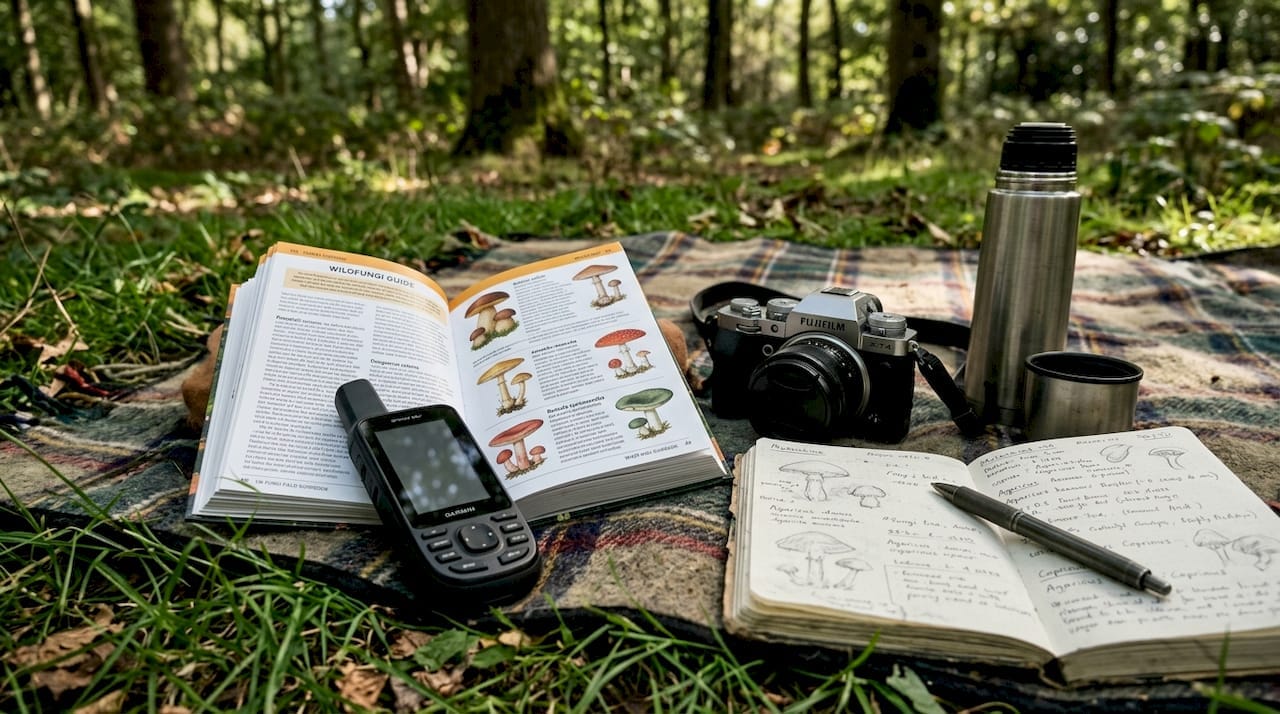
- Always photograph the specimen in situ before disturbing it, capturing the habitat context and any associated substrate or host plant.
- Take multiple photographs: cap surface, gills or pores, stem base, cross-section, and any colour changes when cut.
- Include a scale reference such as a coin or ruler in at least one image.
- Record the substrate precisely: dead wood, living tree root, leaf litter, dung, or soil, and note the host species where identifiable.
- Note any fluid that oozes from cut flesh, including its colour and whether it changes within a few minutes, as these subtle details are critical for species identification and phenology studies.
- Record the date, precise location (grid reference or GPS coordinates), and habitat type.
- Collect a small specimen in a paper bag if permitted on the land you are surveying, for later microscopic examination.
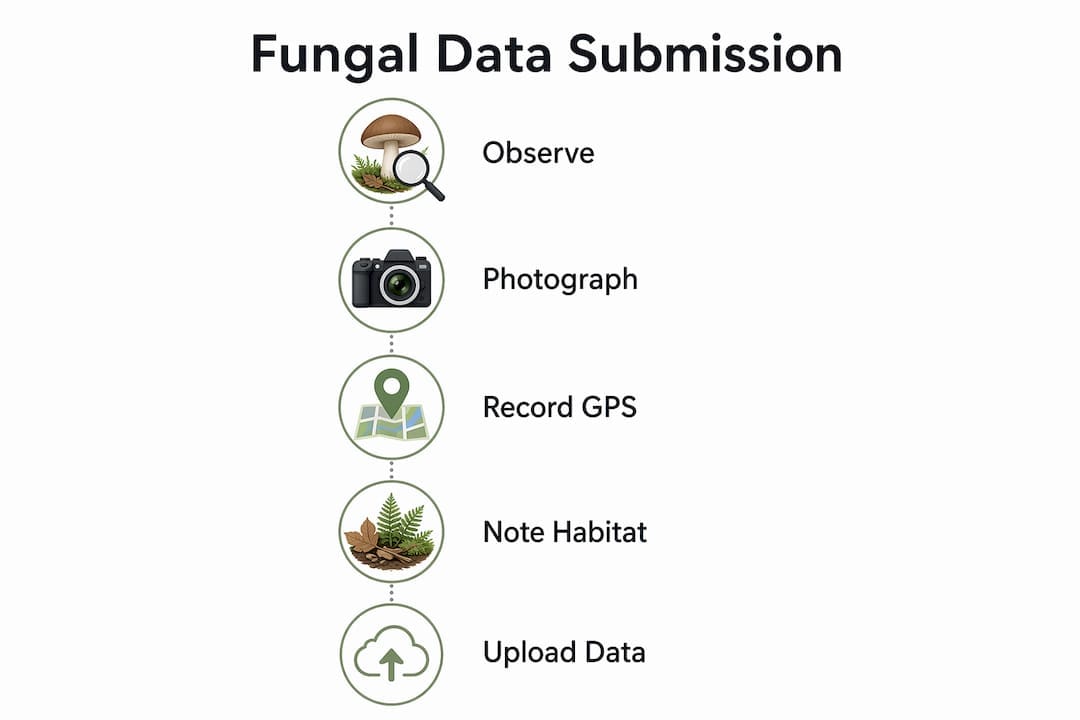
Step-by-step submission process:
- Upload your photographs and field notes to iNaturalist UK or the British Mycological Society’s recording portal.
- Enter the location using GPS coordinates or a precise grid reference, not a place name alone.
- Select the most accurate taxonomic identification you can honestly make. If you are uncertain at species level, submit at genus or family level rather than guessing.
- Add substrate, habitat, and host plant data in the notes field.
- Tag the observation to any relevant recording project, such as a BMS county group survey.
- Submit and engage with any feedback from expert identifiers.
Pro Tip: Honest identifications at genus level, supported by good photographs and complete metadata, are more valuable to researchers than a confident but incorrect species name. Never inflate your certainty.
Submitting to the NBN Atlas UK ensures your records are aggregated into the national biodiversity database, where they become accessible to conservation planners, ecologists, and policy makers. That single submission step connects your field observation to decisions made at a national level.
Why data quality determines the scientific value of your records
Poor-quality fungal data does not just sit unused. It actively distorts biodiversity analyses. Misidentifications inflate apparent species ranges; incomplete location data makes distribution modelling unreliable; low-resolution photographs prevent expert verification. These are not minor inconveniences. They undermine the conservation assessments that determine which habitats receive legal protection.
The most common problems in citizen-submitted fungal records are:
- Blurred or single-angle photographs that prevent identification
- GPS coordinates entered as a town or county rather than a precise point
- Missing substrate or host information
- Species-level identifications made without supporting morphological evidence
- No record of collection date or fruiting season
Accurate mapping is particularly consequential. Tracking climate-driven range shifts in fungi, such as species appearing earlier in the season or at higher altitudes, depends entirely on records that carry both precise location data and reliable dates. Fungarium specimens and records have already enabled retrospective studies on how fungal distributions have shifted over decades. Your current observations could serve the same purpose for researchers working fifty years from now.
Expert verification systems on platforms like iNaturalist UK help filter and improve data quality, but they work best when the original submission is already detailed. The more ancillary data you provide, including odour, spore print colour, and habitat microclimate, the more confidently an expert can confirm or correct your identification. Proper documentation also links field observations to DNA sequence databases, which is increasingly how new species are formally described.
How fungal records shape UK conservation policy and biodiversity planning
Fungal documentation does not stop at the database. It feeds directly into the policy decisions that determine which species are protected and which habitats are designated as Sites of Special Scientific Interest. The British Mycological Society has coordinated national Red List assessments for fungi since the late 1980s, and fungal conservation progress in the UK has advanced substantially through targeted surveys and recording initiatives over that period.
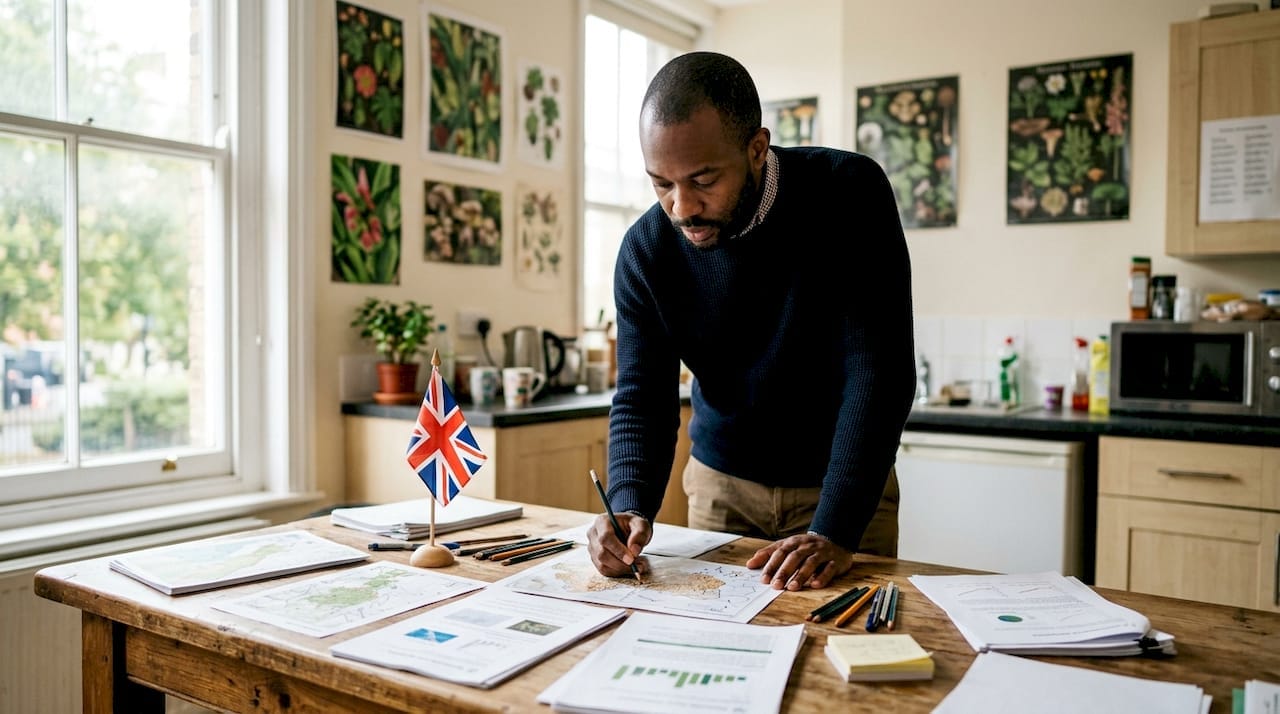
Red List assessments require population trend data, geographic range information, and evidence of habitat loss. All of that comes from observation records. Without a sufficient volume of high-quality records, a species cannot be assessed at all, which means it receives no formal protection regardless of how threatened it actually is.
Key ways fungal records influence conservation outcomes:
- Provide the evidence base for Red List assessments and IUCN threat categorisations
- Identify habitats supporting rare or indicator species that warrant protected status
- Track responses to habitat management interventions over time
- Detect invasive fungal species before they establish across a wider range
- Inform agri-environment scheme design by identifying fungal communities in priority habitats
The role of fungi in ecosystems extends well beyond the visible sporocarp. As decomposers, mycorrhizal partners, and pathogen controllers, fungi regulate processes that underpin agricultural productivity and ecosystem resilience. When fungal populations shift because of climate change, land use change, or pollution, the effects ripple through plant communities, soil health, and ultimately food systems. Observation records are the early warning system for those shifts.
Conservation impact: Fungal records are critical evidence for conservation programmes and protected site designations across the UK, underpinning Red Data Lists and Biodiversity Action Plans.
Collaboration between the British Mycological Society, the National Biodiversity Network, and local recording groups has created a national infrastructure for fungal data that did not exist a generation ago. Your observations slot directly into that infrastructure, contributing to a shared scientific resource that grows more powerful with every record added.
How Sporebuddies and UK resources support better fungal observation
Building the skills to document fungi well takes time, but the UK has a strong network of resources to help you get there. Sporebuddies supports the mycology community through educational content covering everything from spore microscopy to cultivation biology, giving you the technical grounding to observe and record fungi with greater accuracy. Understanding what you are looking at under a microscope, for example, makes your field identifications sharper and your submitted records more reliable.
UK resources and tools for fungal observers:
- British Mycological Society: Offers recording portals, county group networks, forays, and identification workshops across the UK.
- NBN Atlas UK: The national aggregator for biodiversity records, including fungi, with open data access for researchers and conservationists.
- iNaturalist UK: A free platform for submitting observations with built-in expert identification support and community feedback.
- Sporebuddies educational guides: Covers spore microscopy workflows, fungal spore identification, and mycology terminology, supporting accurate field and laboratory observation.
- Environmental DNA methods: Combining traditional sporocarp surveys with eDNA sampling yields the most comprehensive biodiversity data, and several UK university groups now offer citizen science eDNA projects.
Collaboration is where the real gains happen. When citizen scientists work alongside professional mycologists through BMS forays or targeted recording projects, data quality rises and rare species are more likely to be found and correctly identified. If you are new to fungal recording, joining a local BMS group is the fastest way to develop the observational skills that make your submissions genuinely useful.
Sporebuddies also stocks the mycology equipment you need for serious observation work, from microscopes and agar plates to sterilised substrates, supporting both hobbyist growers and those contributing to formal research programmes.
Key takeaways
Documenting fungal observations with precision and honesty is the single most effective contribution any individual can make to UK fungal conservation and biodiversity science.
| Point | Details |
|---|---|
| Vast undescribed diversity | Over 95% of fungal species remain undescribed, making every quality observation part of essential baseline data. |
| Ecological stakes | Mycorrhizal fungi colonise over 90% of land plants and sequester carbon equivalent to roughly 36% of annual fossil fuel CO2 emissions. |
| Quality over quantity | Clear photographs, precise GPS data, and substrate information transform a casual record into a scientifically usable observation. |
| Policy connection | Fungal records underpin Red Data Lists, Biodiversity Action Plans, and protected site designations across the UK. |
| Integrated methods | Combining field surveys with environmental DNA approaches yields the most comprehensive fungal biodiversity data. |
FAQ
Why is fungal identification important for conservation?
Accurate fungal identification allows species to be assessed for Red List status and informs which habitats receive legal protection. Without reliable records, threatened species cannot be formally recognised or prioritised for conservation action.
What makes a fungal observation scientifically useful?
A useful observation includes clear multi-angle photographs, a precise GPS location, substrate and habitat notes, and an honest taxonomic identification, even if only to genus level. Researchers consistently prefer a well-documented genus-level record over an unsupported species-level guess.
How do I submit fungal records in the UK?
Upload your photographs and field data to iNaturalist UK or the British Mycological Society’s recording portal, then ensure your records flow through to the NBN Atlas UK, which aggregates national biodiversity data for research and policy use.
Can fungi tell us about climate change?
Yes. Long-term fungal phenology records show shifts in fruiting seasons linked to rising temperatures, providing early indicators of broader ecosystem disruption. Historic fungarium collections have already been used to model how fungal distributions have changed over decades.
Do I need expert knowledge to contribute fungal observations?
No. Platforms like iNaturalist UK include expert identifiers who review and improve submissions. Starting with good photographs and honest identifications at whatever level you can manage is enough to contribute data that has genuine scientific value.