
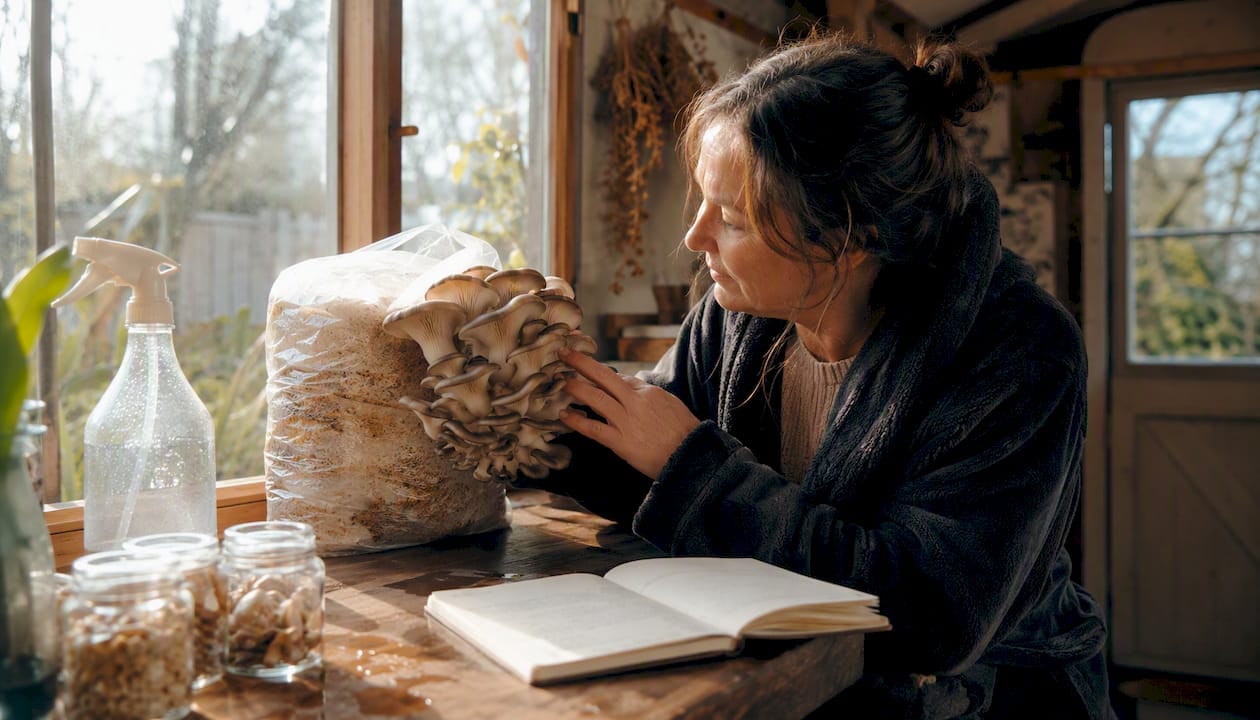
Six species dominate the functional mushroom shelf for UK hobbyists: Lion’s mane (Hericium erinaceus), Reishi (Ganoderma lucidum / G. lingzhi), Shiitake (Lentinula edodes), Oyster (Pleurotus spp.), Turkey tail (Trametes versicolor), and Cordyceps (cultivated species). Each suits a different grower profile.
- Oyster or Pearl oyster — beginner; fast-fruiting, forgiving, great for learning humidity control
- Lion’s mane — intermediate; the most popular functional choice for tincture-makers
- Shiitake — patient grower; logs take months but reward you for years
- Reishi — patient grower or extractor; slow, woody, grown for compounds not the kitchen
- Turkey tail — researcher or extractor; thin brackets, long colonisation, low culinary appeal
- Cordyceps — advanced; requires specific substrates and a steady hand
The simplest starting plan: pick one fast-fruiting species (Oyster) to learn the basics, then add one functional species (Lion’s mane or Reishi) once you are comfortable with humidity and contamination control. Sporebuddies stocks the spores, grow kits, and mycology supplies to take you from this shortlist straight to your first harvest.
Pro Tip: Start with a ready-made Oyster kit for your first two flushes. The experience you gain managing moisture and spotting early contamination is worth more than any guide you can read.
Table of Contents
- How do the main functional species compare at a glance?
- Practical profiles for each functional species
- What cultivation basics apply across all these species?
- UK legal and ecological guidance for outdoor cultivation
- What do you need to buy for your first functional mushroom project?
- Quick troubleshooting for common problems
- Key takeaways
- Where to get UK-sourced spores, kits, and supplies
- Useful sources
- FAQ
How do the main functional species compare at a glance?
| Species | Ease of grow | Preferred substrate | Best setting | Fruiting time | Primary use | Common contamination risks |
|---|---|---|---|---|---|---|
| Oyster | Beginner | Pasteurised straw / cardboard | Indoor kit or tent | Fast (7–14 days) | Culinary | Cobweb mould, bacterial blotch |
| Lion’s mane | Intermediate | Supplemented hardwood sawdust | Indoor tent | Medium (14–21 days) | Functional / extract | Green mould (Trichoderma) |
| Shiitake | Intermediate | Hardwood logs / sawdust blocks | Outdoor logs or shed | Slow (6–12 months on logs) | Culinary / functional | Trichoderma, pin mould |
| Reishi | Advanced | Supplemented hardwood sawdust | Indoor tent | Slow (antler stage: 4–8 weeks) | Functional / extract | Trichoderma, bacterial wet rot |
| Turkey tail | Intermediate | Hardwood logs or chips | Outdoor logs | Slow (months on logs) | Functional / research | Competing bracket fungi |
| Cordyceps | Advanced | Brown rice flour / grain | Indoor chamber | Slow (8–12 weeks) | Functional / research | Bacterial contamination |
UK homes sit comfortably in the 15–20°C range that suits most of these species, making an unheated spare room or a shed a practical fruiting space for Oyster, Lion’s mane, and even Shiitake blocks. Reishi and Cordyceps benefit from a dedicated grow tent where temperature and CO₂ are easier to manage.
Ready-made mushroom kits typically produce 500–800 g across two to three flushes for £15–£25 each, making them the lowest-risk entry point. Shiitake on oak logs takes longer to start, but a single log can produce roughly 300–500 g per year for four to six years.
Practical profiles for each functional species
Lion’s mane (Hericium erinaceus)
Lion’s mane is the species most UK growers choose when they want a functional mushroom for tinctures and extracts. It grows best on supplemented hardwood sawdust, typically an 80% hardwood sawdust to 20% wheat bran mix hydrated to 60–65% moisture and pressure-sterilised. Expect your first pins in 14–21 days after colonisation. Yield per block is moderate, and the distinctive white pom-pom fruiting body makes contamination easy to spot early.
Reishi (Ganoderma lucidum / G. lingzhi)
Reishi is a patience project. The antler stage, where CO₂ is kept high, can last several weeks before the characteristic fan-shaped fruiting body develops. Most growers cultivate it for functional mushroom uses such as dual-extraction tinctures rather than cooking. Substrate is supplemented hardwood sawdust, sterilised. Contamination with Trichoderma is the main risk; clean technique matters more here than with Oyster.
Shiitake (Lentinula edodes)
On logs, Shiitake colonises over 6–12 months and then produces two flushes per year for four to six years. On supplemented sawdust blocks indoors, colonisation drops to 8–12 weeks. It sits between culinary and functional: the fruiting bodies are excellent in the kitchen, and the mycelium is used in extracts. Use freshly cut hardwood logs (oak, beech, or chestnut) and insert dowels within six weeks of cutting.
Oyster (Pleurotus spp.)
Oyster mushrooms tolerate 10–24°C, colonise in 7–14 days from a ready kit, and resist contamination better than most species. Pasteurised straw is the standard substrate; no pressure canner required. This is the species that teaches you fruiting cues and humidity management without punishing every small mistake.
Turkey tail (Trametes versicolor)
Turkey tail is primarily a researcher’s species. The thin, colourful brackets grow slowly on hardwood logs or chips outdoors and are rarely harvested for the kitchen. Colonisation on logs mirrors Shiitake timelines. The main cultivation challenge is competing bracket fungi outdoors; keeping logs off the ground and in partial shade helps. Most growers dry and powder the brackets for extraction.
Cordyceps (cultivated species)
Cultivated Cordyceps (typically Cordyceps militaris) grows on brown rice flour or grain substrates in a sealed chamber with high humidity and indirect light. Colonisation takes 8–12 weeks. It is the most technically demanding species on this list and suits growers who have already completed several successful Oyster or Lion’s Mane projects. The reward is a species with strong research interest and a distinctive orange fruiting body.
Pro Tip: If your goal is a functional tincture shelf, start Lion’s mane alongside your first Oyster kit. By the time you have mastered humidity on the Oyster, your Lion’s mane block will be ready to fruit.
What cultivation basics apply across all these species?
Moisture and contamination control determine success more than any other factor. The two are linked: substrate that is too wet invites bacteria; substrate that is too dry stalls colonisation.
| Species | Incubation temp (°C) | Fruiting temp (°C) | Humidity target (%) |
|---|---|---|---|
| Oyster | 20–24 | 15–20 | — |
| Lion’s mane | 21–24 | 15–20 | — |
| Shiitake | 15–20 | 8–12 | 80–90 |
| Reishi | 14–21 | 14–21 | — |
| Turkey tail | 15–20 | 15–20 | 80–90 |
| Cordyceps | 20–24 | 15–20 | 80–90 |
Sterilisation versus pasteurisation is a key decision. Straw for Oyster can be pasteurised (soaked in hot water at 65–80°C for 60–90 minutes). Supplemented sawdust for Lion’s mane or Reishi must be pressure-sterilised at 15 psi for 2.5 hours. Adding wheat bran can boost yields by 30–50% but also feeds unwanted moulds, so stricter sterile technique is non-negotiable on supplemented blocks.
For fruiting, a temperature drop of 5–10°C often triggers pinning. Soaking logs overnight in cold water achieves the same shock for Shiitake. CO₂ levels matter too: high CO₂ during Reishi’s antler stage is intentional, but for most species, fresh air exchanges (two to four per hour) keep pins forming and prevent leggy growth.
Pro Tip: A still-air box made from a clear storage tote costs under £10 and dramatically reduces contamination during inoculation. Pair it with a pressure canner for supplemented substrates and you have the core of a reliable DIY setup.
UK legal and ecological guidance for outdoor cultivation
Growing functional mushrooms indoors is straightforward and carries no significant legal complexity. Outdoor cultivation requires more care, particularly around strain selection and disposal.
The RHS advises growers to use only native or well-established Western European strains when cultivating mushrooms outdoors, to reduce the risk of non-native spores spreading into natural landscapes. Releasing non-native fungi into the wild can disrupt local ecosystems in ways that are difficult to reverse. Always check local bylaws and consult Natural England or NatureScot guidance if you plan to grow near protected habitats.
Practical steps to stay on the right side of this guidance:
- Choose strains with documented Western European provenance for any outdoor log work.
- Use sporeless or low-spore strains where available to limit environmental spread.
- Kill spent substrate and cultures before composting: soak in boiling water or bag and bin rather than scattering outdoors.
- For log inoculation, insert dowels within six weeks of cutting and seal holes with wax to prevent contamination and moisture loss.
Indoor cultivation in a tent or spare room sidesteps most of these concerns, which is another reason kits and indoor setups are the sensible starting point for UK hobbyists.
What do you need to buy for your first functional mushroom project?
Two routes get you growing. Choose the one that matches your current confidence level.
Route 1: Plug-and-play kit
- A ready-made grow kit (Oyster or Lion’s mane) from Sporebuddies
- A spray bottle for misting
- A hygrometer to monitor humidity
- A clear plastic bag or humidity tent (often included with the kit)
Route 2: DIY substrate build
- Spore syringe or grain spawn for your chosen species
- Hardwood sawdust and wheat bran (for Lion’s mane, Reishi, or Shiitake blocks)
- A pressure canner (15 psi capable) for sterilisation
- Filter patch grow bags
- A still-air box or flow hood for inoculation
- A hygrometer and spray bottle
- A mushroom grow tent with a small fan and humidifier for fruiting
Spend your first budget on quality spawn and substrate. A contaminated block from poor spawn wastes every other item on the list. Sporebuddies carries mushroom substrate and spore syringes suited to UK growers, along with a contamination FAQ that covers the most common first-run problems.
Pro Tip: Buy your kit first, your pressure canner second. The kit teaches you what healthy colonisation and pinning look like. That visual reference is what makes your first DIY block easier to read.
Quick troubleshooting for common problems
Most first-run failures fall into four categories. Diagnose quickly and act early.
If you see green or black mould on your block, remove it from your growing space immediately. Trichoderma (green) and Aspergillus (black) spread rapidly and will contaminate other blocks. Do not open the bag indoors. Bag it, seal it, and bin it. Cobweb mould (grey, wispy) is different: it is often the mushroom mycelium itself and can be misted back.
Slow colonisation: Check temperature first (too cold stalls growth), then inspect for contamination at the inoculation point. Dry substrate is also a common culprit; the block should feel like a wrung-out sponge.
Poor pinset: Increase fresh air exchanges and reduce CO₂. Add indirect light (a 12-hour cycle). For Shiitake blocks, a cold-water soak overnight often triggers a flush that stalled blocks need.
Low yield on second or third flush: Rehydrate the block by soaking in cold water for 4–6 hours. If the substrate has turned dark and smells sour, it is spent; compost it (indoors, in a sealed bin) rather than attempting a fourth flush.
When to scrap versus salvage: green or black mould means scrap. Slow but clean colonisation means wait. A spent but uncontaminated block can go straight to a sealed compost bin.
Key takeaways
Oyster is the best first species for UK hobbyists; Lion’s mane or Reishi is the logical second choice for growers building a functional cultivation shelf.
| Point | Details |
|---|---|
| Start with Oyster | Fast-fruiting, tolerates 10–24°C, and teaches humidity control before you tackle harder species. |
| Pair with a functional species | Add Lion’s mane or Reishi once your first kit succeeds; both suit UK indoor conditions. |
| Kit yields are predictable | Ready-made kits typically yield 500–800 g across two to three flushes for £15–£25 each. |
| Sterilise supplemented substrates | Wheat bran boosts yields by 30–50% but demands pressure sterilisation to control Trichoderma. |
| Sporebuddies for UK supplies | Sporebuddies stocks spore syringes, grow kits, and substrate for all six species covered here. |
Where to get UK-sourced spores, kits, and supplies
Sporebuddies is a practical first stop for UK hobbyists moving from species shortlist to actual growing. The range covers mushroom spores for research and cultivation, ready-made grow kits for Oyster and Lion’s mane, prepared substrate, and mycology equipment including pressure canners and grow tents. UK shipping, educational guides, and a contamination-prevention resource are all part of the offer. Browse the strain listings to check which species and substrates are currently in stock, and use the functional mushroom dosage guide for safe-use context once you reach the extraction stage.
Useful sources
- RHS: Grow your own mushrooms outdoors — authoritative UK guidance on strain selection, log timing, and ecological caution for outdoor cultivation.
- Garden UK: How to grow mushrooms at home — practical kit and log guidance with yield figures for UK conditions.
- BBC Gardeners’ World: How to grow mushrooms — beginner-friendly overview with Oyster-specific advice.
- Kitchen Garden Magazine: Everything you need to know to grow your own mushrooms — covers kit basics and indoor fruiting temperatures relevant to UK homes.
- Sporebuddies: Contamination FAQ — practical troubleshooting for grow kit and DIY substrate problems.
- Sporebuddies: Functional mushroom benefits guide — species-specific benefit summaries for Lion’s mane, Reishi, Cordyceps, and more.
FAQ
Which functional mushroom species is easiest for UK beginners?
Oyster (Pleurotus spp.) is the most forgiving choice: it tolerates 10–24°C, colonises in 7–14 days from a ready kit, and resists contamination better than most species.
How long does Lion’s mane take to fruit indoors?
Lion’s mane typically pins 14–21 days after full colonisation of a supplemented hardwood sawdust block, making it a medium-speed project compared to Oyster.
Do I need to sterilise substrate for all functional mushrooms?
Not always. Pasteurised straw suits Oyster mushrooms. Supplemented sawdust substrates for Lion’s mane, Reishi, and Cordyceps require pressure sterilisation at 15 psi to control Trichoderma and bacterial contamination.
Is it legal to grow functional mushrooms outdoors in the UK?
Growing edible and medicinal species such as Shiitake, Oyster, and Lion’s mane outdoors is legal, but the RHS advises using only native or well-established Western European strains to avoid spreading non-native fungi into natural habitats.
Where can I buy functional mushroom spores and kits in the UK?
Sporebuddies stocks spore syringes, grow kits, and prepared substrate for the main functional species, with UK shipping and cultivation guides available on the site.