
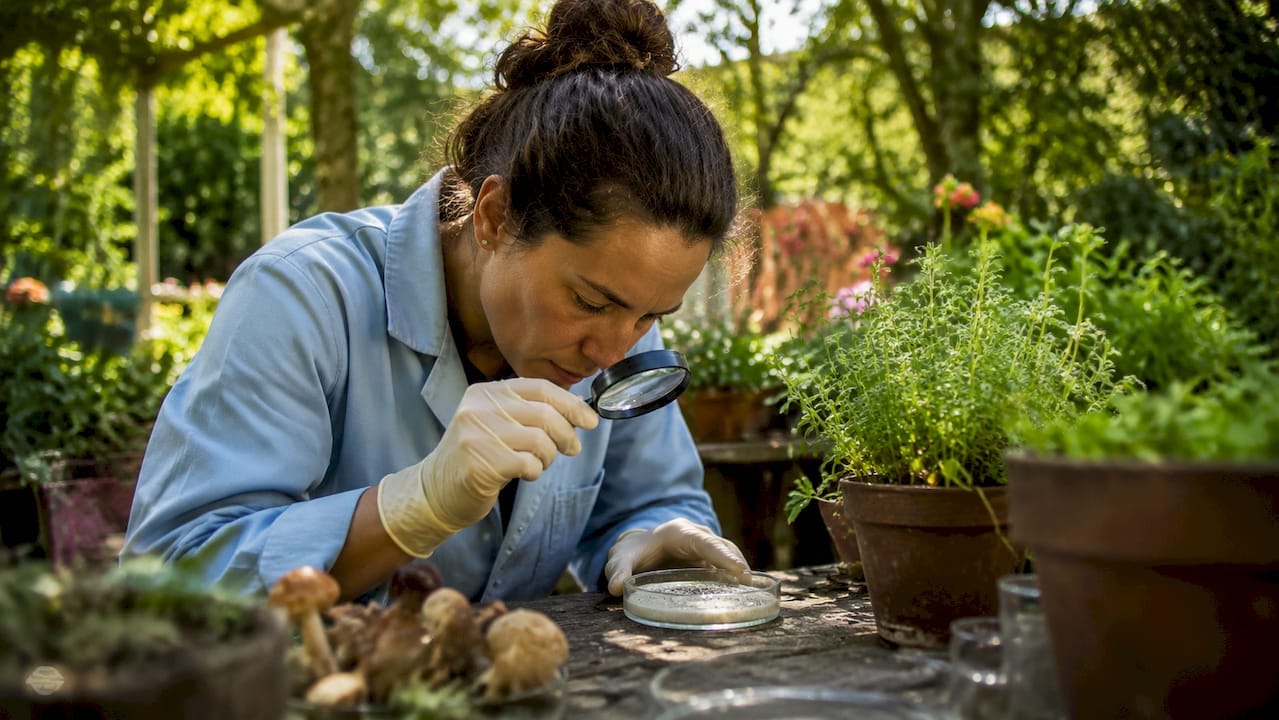
Spore viability is defined as a spore’s capacity to germinate and produce healthy, active mycelium. Without it, even the most carefully prepared substrate, sterilised equipment, and ideal growing conditions will produce nothing. For home mushroom growers working with strains like Golden Teacher, oyster, or lion’s mane, spore viability is the single factor that determines whether a grow succeeds or fails before you even begin. Understanding what affects viability, how to test it, and how to preserve it gives you a genuine advantage over growers who treat all spores as equally capable.
What is the role of spore viability in mushroom growing?
Spore viability is the foundation of every successful mushroom cultivation project. A spore that cannot germinate is biologically inert. It occupies your substrate, consumes your time, and produces no mycelium. The role of spore viability extends beyond simple germination counts. It determines colonisation speed, contamination resistance, and ultimately your harvest weight.
Sporulation is an energy-intensive biological process, consuming roughly 10% of a cell’s total energy budget. That upfront metabolic investment is fixed. Once a spore is produced, it cannot recharge or recover lost viability. This explains why spore batches vary so widely in performance and why storage conditions matter so much from the moment a spore print or syringe leaves the fruiting body.
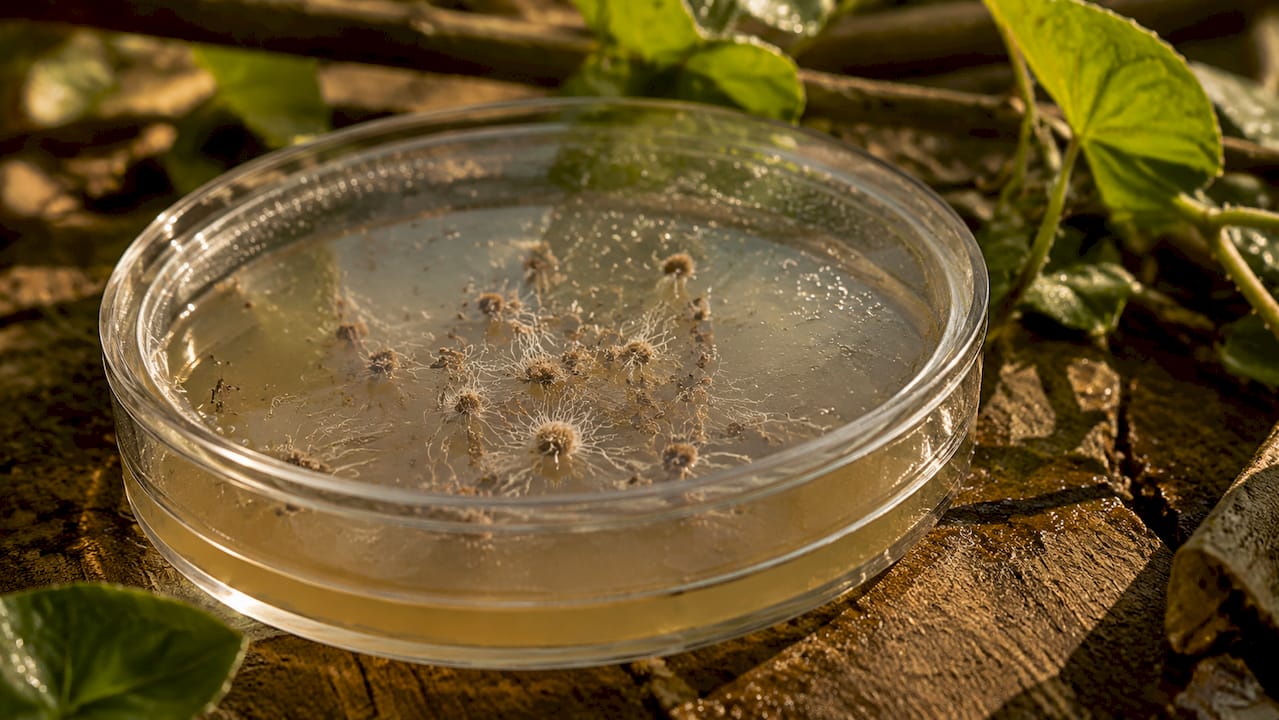
Viability is also more than just spore presence. Metabolic activity is critical for fungal propagation. A spore can appear intact under a microscope yet lack the internal biochemical activity needed to colonise substrate. Professional assessments use metabolic activity assays such as MTT staining to confirm true viability. For home growers, this distinction matters because it explains why visual inspection alone is never enough.
Low viability leads to slow or failed colonisation, which opens the door to contamination from competing moulds like Trichoderma or Penicillium. Wasted substrate, lost time, and disappointing yields are the direct consequences. Learning to understand spore biology from the start saves you from these avoidable failures.
What factors affect spore viability?
Several biological and environmental factors determine whether your spores remain viable from collection through to inoculation. Knowing these helps you make better decisions at every stage.
Biological factors:
- Age. Spores degrade over time regardless of storage conditions. Older spore prints and syringes carry a higher risk of reduced germination rates.
- Oxidative damage. Protein carbonylation increases significantly during storage, particularly at temperatures above 20°C. This irreversible molecular damage is the primary driver of viability loss in stored spores.
- Lipid peroxidation. Fats within the spore membrane oxidise over time, disrupting cellular integrity and reducing germination capacity.
- Sporulation quality. Spores produced under stress or from weakened fruiting bodies start with lower metabolic reserves, making them more vulnerable to storage degradation.
Environmental and storage factors:
- Temperature. Elevated storage temperatures accelerate oxidative damage. Viability declined approximately three orders of magnitude during 90-day storage at 28°C. That is a dramatic loss that most home growers do not anticipate.
- Humidity. Excessive moisture promotes microbial contamination. However, extreme dryness is equally damaging. Molecular damage accelerates below a water activity level of 0.3, making balanced humidity more important than simply keeping spores as dry as possible.
- Oxygen exposure. Oxygen drives oxidative reactions inside the spore. Airtight, sealed packaging reduces this risk considerably.
- Light. UV light degrades spore membranes. Dark storage is non-negotiable for long-term preservation.
Pro Tip: Do not assume that drier is always better. Excessive dehydration accelerates oxidative damage and undermines the very longevity you are trying to protect. Aim for cool, moderately dry, and dark rather than bone dry.
Emerging research points toward antioxidant-enriched storage matrices as a future solution for extending shelf life. These formulations protect against lipid peroxidation and protein oxidation, potentially transforming how spores are stored commercially and at home.
How can home growers test spore viability?
Testing spore viability before inoculation is one of the most practical habits you can build as a home grower. Boreal Genetics recommends a combination of methods to build a complete picture of spore health. No single test tells the whole story.
Here is a practical sequence to follow:
- Visual inspection. Examine your spore syringe or print for unusual colours, cloudiness, or visible contamination. Green, black, or pink discolouration signals mould. This test catches gross problems but misses subtle viability loss entirely.
- Smell assessment. Healthy spores and mycelium have a clean, earthy, mushroom-like scent. A sour, ammonia-like, or otherwise off smell suggests bacterial contamination or advanced degradation. Like visual inspection, this only detects extreme states.
- Shake test. Disrupt a small sample of mycelium or spores and observe recovery over 3–7 days. Vigorous, fast-recovering growth indicates strong viability. Slow or absent recovery signals weakness. This test requires no specialist equipment and gives you a practical read on spore vigour before committing to a full grow.
- Agar transfer test. Transfer a small spore sample onto a prepared agar plate, such as malt extract agar or potato dextrose agar, and observe germination over 5–14 days. This is the gold standard for confirming spore vigour and detecting dormant but viable spores that visual methods would miss entirely. It is the only method that confirms actual germination capacity.
- Shelf-life evaluation. Check the age and storage history of your spores. Spores stored beyond their recommended period, or under unknown conditions, should be tested before use regardless of appearance.
Pro Tip: Always run the agar transfer test before investing in a large substrate batch. Visual and smell tests are useful filters, but only agar confirms whether your spores will actually germinate. You can find agar plates and spore prints at Sporebuddies to set this up at home without a full laboratory.
Combining at least three of these methods gives you a reliable assessment. Relying on smell or appearance alone is the most common mistake home growers make, and it is entirely avoidable.
How does spore viability impact germination and growth?
Germination is the transition from dormant spore to active mycelium. It is the most critical stage in mushroom cultivation, and spore viability directly controls whether this transition happens at all. Understanding spore germination helps you set realistic expectations for each grow.
The table below compares cultivation outcomes between high-viability and low-viability spores across key growth stages.
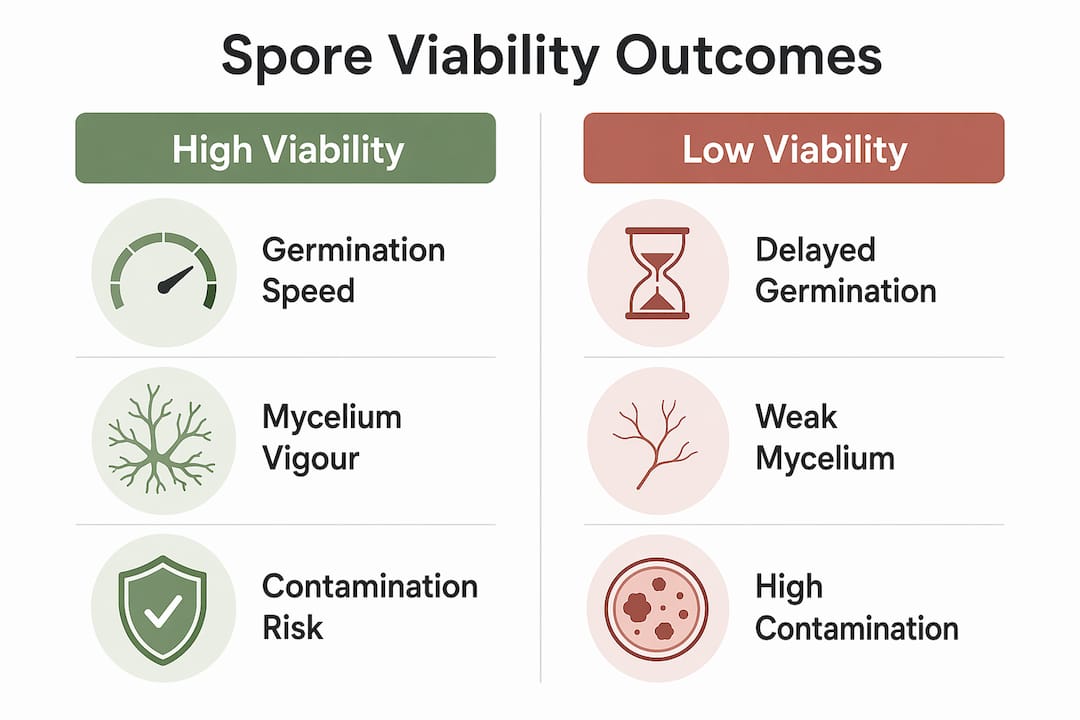
| Growth Stage | High-Viability Spores | Low-Viability Spores |
|---|---|---|
| Germination speed | Rapid, within 3–7 days on agar | Slow or absent, 14+ days or no growth |
| Colonisation rate | Fast, dense mycelial spread | Patchy, uneven, or stalled colonisation |
| Contamination resistance | Strong competitive growth outpaces contaminants | Weak growth allows Trichoderma and bacteria to establish |
| Yield | Full, consistent flushes | Reduced yields or complete crop failure |
| Substrate efficiency | Full substrate colonised and utilised | Partial colonisation, wasted substrate |
Slow germination is not merely an inconvenience. Every extra day your substrate sits uncolonised is a day contaminants have to establish. Fast, vigorous colonisation from high-viability spores is your best natural defence against mould and bacterial contamination.
Reduced viability also affects mycelium density and vigour. Weak mycelium produces fewer and smaller fruiting bodies, even when environmental conditions are ideal. The metabolic energy invested during sporulation sets a ceiling on what the resulting mycelium can achieve. Spores that begin with low reserves simply cannot sustain the growth needed for a productive harvest.
Best practices for spore selection, storage, and handling
Protecting spore viability from the point of purchase through to inoculation requires consistent habits. These are the practices that make the most difference.
Selecting quality spores:
- Source from suppliers who store spores correctly and can confirm freshness. Sporebuddies provides spore syringes and prints with clear sourcing and quality standards for UK growers.
- Choose spores in sterile, sealed syringes where possible. Syringes protect against contamination and oxidative exposure better than loosely packaged prints.
- Check the production or collection date. Fresher spores carry higher baseline viability.
Storage conditions:
- Store spore syringes in a refrigerator at 2–8°C. This temperature range slows oxidative reactions without causing freeze damage.
- Keep spores in their original sealed packaging until use. Avoid opening and resealing repeatedly.
- Store in a dark location. Light, particularly UV, degrades spore membranes over time.
- Avoid storing near strong-smelling chemicals or cleaning products. Spores can absorb volatile compounds that affect germination.
Handling spores safely:
- Work in a still-air box or near a flow hood when transferring spores. Airborne contamination is the fastest route to a failed grow.
- Flame-sterilise needles between uses and allow them to cool before contact with spores or agar.
- Rotate your spore stock. Use older batches first and replace them with fresh stock regularly rather than accumulating large reserves.
Pro Tip: Test a small sample from any new spore batch before committing it to a full substrate run. A quick shake test assessment over 3–7 days costs you almost nothing and could save an entire grow from failure.
Research into antioxidant storage matrices suggests that future commercial spore products may include built-in protective compounds. For now, cool, dark, moderately dry, and sealed storage remains the most reliable approach available to home growers.
Spore viability is not a static property. It declines from the moment of sporulation. Treating your spores as a perishable resource, rather than an indefinitely stable one, is the mindset shift that separates consistent growers from frustrated ones.
Key takeaways
Spore viability determines germination success, colonisation speed, and yield, making it the most important variable a home grower can actively manage.
| Point | Details |
|---|---|
| Viability is metabolic, not just physical | A spore can look intact yet lack the biochemical activity needed to germinate and colonise. |
| Oxidative damage is the main threat | Protein carbonylation and lipid peroxidation degrade spores during storage, especially above 20°C. |
| Agar testing is the gold standard | Visual and smell tests catch gross problems only; agar transfer confirms actual germination capacity. |
| Balanced humidity beats extreme dryness | Excessive dehydration accelerates molecular damage; aim for cool, moderately dry, and dark storage. |
| Test before every large grow | A shake test or agar transfer before inoculation prevents wasted substrate and failed harvests. |
Start every grow with spores you can trust
Sporebuddies supplies home growers and mycology enthusiasts across the UK with fresh, quality-checked spore syringes, spore prints, and agar plates designed to support strong germination from the start. Whether you are growing oyster, shiitake, lion’s mane, or working with research strains, the quality of your starting material sets the ceiling for everything that follows. Browse the full range of mushroom spores and syringes at Sporebuddies, or explore the mycology tools and agar supplies to set up your own viability testing at home. Fresh spores, tested and stored correctly, are the most reliable investment you can make in your cultivation practice.
FAQ
What does spore viability actually mean?
Spore viability is a spore’s capacity to germinate and produce active mycelium. A viable spore has sufficient metabolic energy and intact cellular structures to complete germination when conditions are right.
How quickly do mushroom spores lose viability?
Viability can decline dramatically within weeks under poor storage conditions. Research shows viability dropped approximately three orders of magnitude over 90 days at 28°C, making temperature control critical from the moment of storage.
What is the most reliable spore viability testing method?
The agar transfer test is the most reliable method. It directly observes germination on a nutrient medium and detects dormant but viable spores that visual or smell tests would miss entirely.
Can i store spore syringes in the freezer to extend viability?
Refrigeration at 2–8°C is recommended for most spore syringes. Freezing can cause ice crystal damage to spore membranes and is generally not advised unless the product is specifically formulated for freeze storage.
Why do some spore batches perform better than others?
Sporulation quality varies based on the health of the source fruiting body and growing conditions. Spores produced under stress begin with lower metabolic reserves, making them more vulnerable to viability loss during storage and less capable of vigorous germination.