

A spore solution is defined as a sterile suspension of dormant mushroom spores in distilled water, used as the primary inoculant in mushroom cultivation. Think of it as the liquid starting point for growing species like Golden Teacher, oyster, or lion’s mane. The spores themselves are the fungal equivalent of seeds, carrying the full genetic blueprint for a future mycelium network. When you draw this suspension into a sterile syringe, you get what most growers call a spore syringe, the most common delivery format for spore solution preparation. Understanding what this liquid contains, how it is made, and when to use it separates growers who succeed from those who waste substrate after substrate.
What is spore solution and how does it work?
A spore solution, also called a spore suspension, consists of millions of dormant fungal spores distributed evenly through sterilised distilled water. The spores themselves do not contain living mycelium. They are inert reproductive units that carry genetic material and only activate when they encounter the right conditions: warmth, moisture, and a suitable nutrient source.
This distinction matters practically. Because the spores are dormant, a spore solution does not colonise a substrate immediately. Germination must occur first, which adds time to the cultivation process compared to other inoculants. The upside is that spore solutions are stable, easy to store, and represent a wide range of genetic variation within a single syringe.
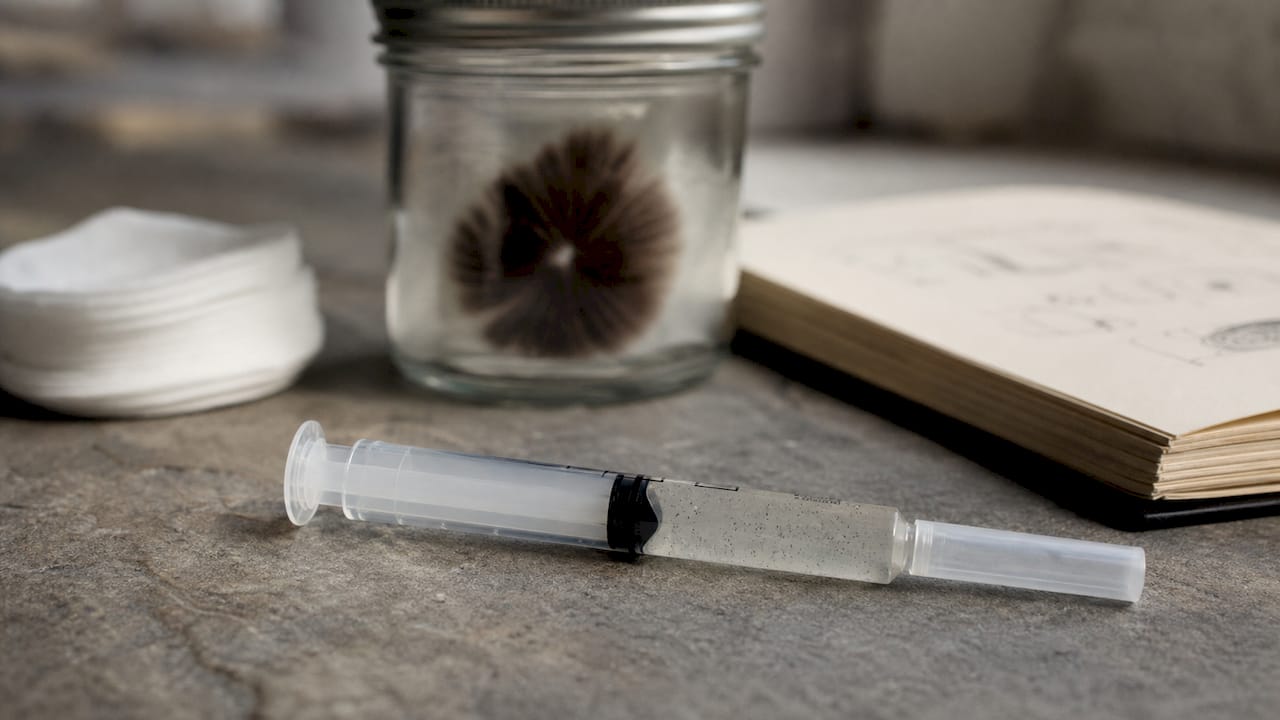
Spore solutions are used across the full spectrum of mushroom cultivation, from hobbyist home growing to formal mycology research. Sporebuddies supplies spore syringes for research and microscopy purposes, reflecting how broadly this format is applied. Whether you are studying spore morphology under a microscope or inoculating a grain jar, the spore solution is your starting material.
How is a spore solution prepared from a spore print?
The spore solution preparation process begins with a spore print, the dark deposit of spores left behind when a mature mushroom cap rests on paper or foil. Learning how to make a spore print is the essential first step before any solution preparation begins.
Once you have a print, follow these steps to create a clean, viable suspension:
- Set up your sterile workspace. Wipe all surfaces with 70% isopropyl alcohol. Work inside a laminar flow hood or a still air box to minimise airborne contamination. Wear gloves and a face mask throughout.
- Prepare your water. Use only sterilised distilled water. Tap water and even filtered water carry competing microorganisms that will destroy your culture. Sterile water prevents contamination from rival microbes that would otherwise outcompete your spores.
- Rehydrate the spore print. Draw 1–5 mL of sterile water into a syringe and apply it directly onto the spore print. The water rehydrates the dried spores and begins lifting them from the surface.
- Scrape and suspend the spores. Using a sterile scalpel or inoculation loop, gently scrape the spores into the water. The solution will turn slightly cloudy or grey. That cloudiness confirms spores are present in suspension.
- Draw the suspension into syringes. Pull the spore suspension into sterile syringes for storage or immediate use. Seal each syringe with a sterile cap or flame-sterilised needle cover.
- Label and store immediately. Write the strain name and preparation date on each syringe. Refrigerate at 2–8°C until use.
Pro Tip: After sealing the syringe, gently shake it for 10–15 seconds before each use. Uneven spore distribution causes patchy germination and raises contamination risk during incubation, so consistent mixing is not optional.
Spore solution vs liquid culture: what is the difference?
Spore solution and liquid culture are fundamentally different products, and confusing the two leads to mismatched expectations about colonisation timelines and outcomes.
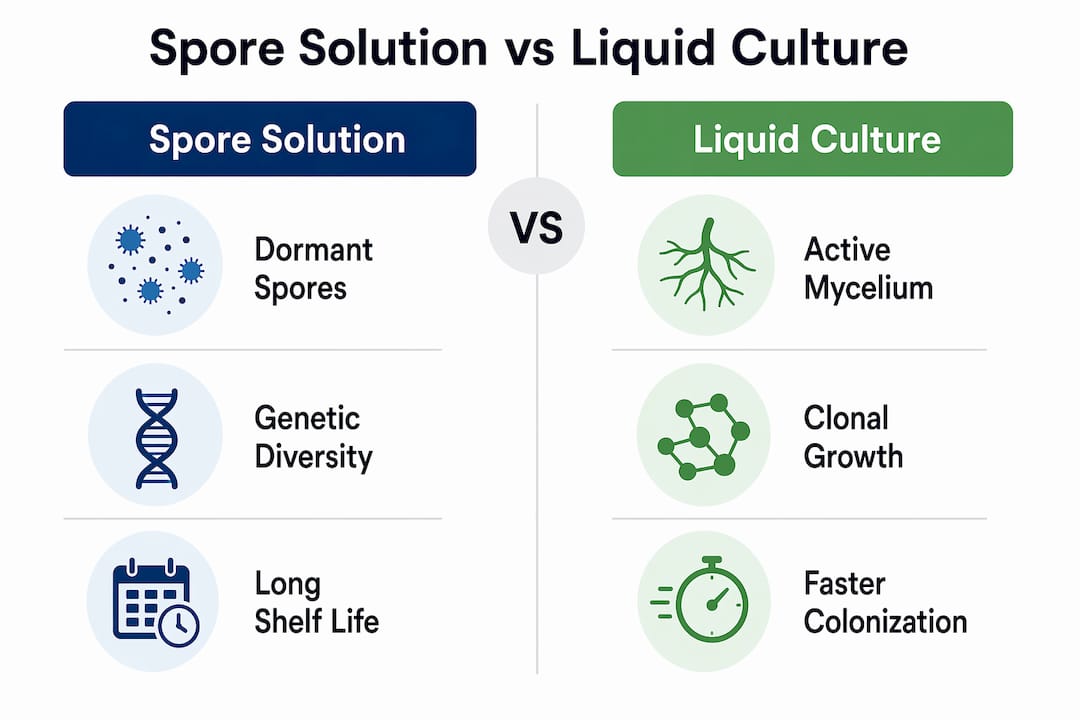
A spore solution suspends dormant spores in sterile water. A liquid culture contains living, actively growing mycelium suspended in a nutrient broth, typically made from honey water, malt extract, or a similar sugar medium. The mycelium in a liquid culture is already germinated and ready to colonise the moment it contacts a substrate.
| Characteristic | Spore Solution | Liquid Culture |
|---|---|---|
| Contents | Dormant spores in sterile water | Active mycelium in nutrient broth |
| Colonisation speed | Slower (germination required first) | Faster (mycelium colonises immediately) |
| Genetic diversity | High (many spores, varied genetics) | Low (cloned from a single strain) |
| Contamination risk | Moderate | Higher (nutrient broth feeds bacteria too) |
| Best use | Research, strain discovery, microscopy | Production grows, consistent results |
| Shelf life | Up to one year refrigerated | Weeks to a few months |
Spore syringes offer greater genetic diversity than liquid cultures, making them the preferred choice for strain discovery and research. That diversity is a feature, not a flaw. When you inoculate agar with a spore solution, you can observe multiple genetic expressions and select the strongest, fastest-growing mycelium for future cultures.
Liquid cultures, by contrast, clone a specific mycelium strain. This reduces variability and speeds up colonisation, which suits growers focused on consistent production of oyster or shiitake mushrooms. Liquid cultures colonise rapidly because the mycelium is already active, whereas spore solutions require a germination phase that adds days or weeks to the process.
Pro Tip: Use a spore solution to inoculate agar first, isolate a strong mycelial sector, then transfer that isolate into liquid culture. This two-step method gives you both genetic selection and fast colonisation speed.
How to use spore solution in mushroom cultivation
Spore solutions are applied at several stages of a cultivation workflow. Knowing where and how to use them prevents wasted materials and failed grows.
- Grain jar inoculation. Inject 1–2 mL of spore solution through the self-healing injection port of a sterilised grain jar. Rye, wheat berries, and oats are common grain substrates. Expect to see mycelial growth emerging within 1–4 weeks, depending on species and incubation temperature.
- Agar plate inoculation. Inoculate agar plates with a small drop of spore solution to observe germination and isolate clean mycelium. This is the most controlled method for identifying contamination early. Mushroom cultivators often use agar plates as an intermediate step to isolate uncontaminated mycelium before transferring to liquid culture or spawn.
- Bulk substrate inoculation. Some growers inject spore solution directly into sterilised bulk substrates such as straw or coco coir. This skips the grain spawn stage but increases contamination risk and extends colonisation time.
- Microscopy and research. Spore solutions are applied to microscope slides for morphological study. This is a legal and widely practised use in the UK, particularly for species like Psilocybe cubensis strains including B+ and Penis Envy.
Spore syringes stored refrigerated remain viable for up to one year. Fresher syringes consistently produce better germination results, so use them within six months where possible. Always warm a refrigerated syringe to room temperature before injection to avoid thermal shock to the substrate.
When inoculating grain jars, avoid oversaturation. More than 2–3 mL per jar introduces excess moisture, which creates conditions that favour bacterial contamination over mycelial growth. Precision matters more than volume here.
What are the common challenges when using spore solutions?
Contamination is the single biggest threat to a spore solution workflow. Strict aseptic technique at every stage guarantees spore solution integrity and reduces the risk of mould or bacterial contamination during incubation. Cutting corners at any point compounds the risk.
The most common sources of contamination and how to address them:
- Airborne spores and bacteria. Always work in a laminar flow hood or still air box. Open syringes and agar plates only within this controlled environment. Review the contamination in cultivation guide for a full breakdown of airborne risks.
- Unsterilised tools. Flame-sterilise all metal tools until they glow red, then allow them to cool before contact with spores. Wipe plastic surfaces with 70% isopropyl alcohol. Sterilising tools pre-use is non-negotiable for maintaining viability.
- Non-sterile water. Using tap water or bottled mineral water introduces bacteria and minerals that compete with spores. Distilled water that has been pressure-cooked or autoclaved is the only safe option.
- Clumping during storage. Spores settle and clump in the syringe over time. Shake the syringe gently but thoroughly before each use to redistribute spores evenly through the solution.
- Contaminated cultures. If you see green, black, or pink patches in a grain jar or on agar within the first week, discard the culture immediately. Do not open it indoors. Seal it in a bag before disposal to prevent spreading contamination.
Monitoring incubation conditions is equally important. Most species colonise best between 21–27°C. Temperatures above 30°C stress mycelium and create conditions that favour bacterial competitors.
Key takeaways
A spore solution is the foundational inoculant in mushroom cultivation, offering genetic diversity and long shelf life when prepared and stored correctly under strict aseptic conditions.
| Point | Details |
|---|---|
| Definition of spore solution | Dormant mushroom spores suspended in sterilised distilled water, used as a cultivation inoculant. |
| Preparation requires sterile technique | Work in a laminar flow hood or still air box and use only sterilised distilled water throughout. |
| Spore solution vs liquid culture | Spore solutions offer genetic diversity; liquid cultures colonise faster with cloned strains. |
| Best practical application | Inoculate agar plates first to isolate clean mycelium before moving to grain or bulk substrate. |
| Storage and shelf life | Refrigerate syringes at 2–8°C and use within one year for reliable germination results. |
Where to find quality spore syringes and mycology supplies
If you are ready to put this knowledge into practice, Sporebuddies stocks a full range of sterile, ready-to-use spore syringes covering popular strains including Golden Teacher, B+, and Penis Envy, all prepared for research and microscopy use in the UK. Each syringe is produced under strict sterile conditions so you start with a clean, viable suspension every time.
Sporebuddies also supplies the mycology equipment you need to work safely, from laminar flow hoods to agar plates and sterilised substrates. For growers buying in volume, the wholesale mycology supplies range offers bulk options suited to enthusiasts and researchers alike. Everything you need to go from spore solution to fruiting body is available in one place.
FAQ
What is a spore solution made of?
A spore solution is made of dormant mushroom spores suspended in sterilised distilled water. No nutrients are added, which distinguishes it from liquid culture.
How long does a spore solution last?
Spore syringes stored refrigerated at 2–8°C remain viable for up to one year. Using them within six months produces the most reliable germination results.
Is spore solution the same as liquid culture?
No. A spore solution contains dormant spores in sterile water, while liquid culture contains active, living mycelium in a nutrient broth. They behave differently and suit different stages of cultivation.
How much spore solution do you need to inoculate a grain jar?
1–2 mL per grain jar is sufficient for most species. Exceeding 3 mL introduces excess moisture and raises the risk of bacterial contamination.
Can you make a spore solution at home?
Yes. You need a spore print, sterilised distilled water, sterile syringes, and a clean working environment such as a still air box. Strict aseptic technique throughout the process is what determines success or failure.