
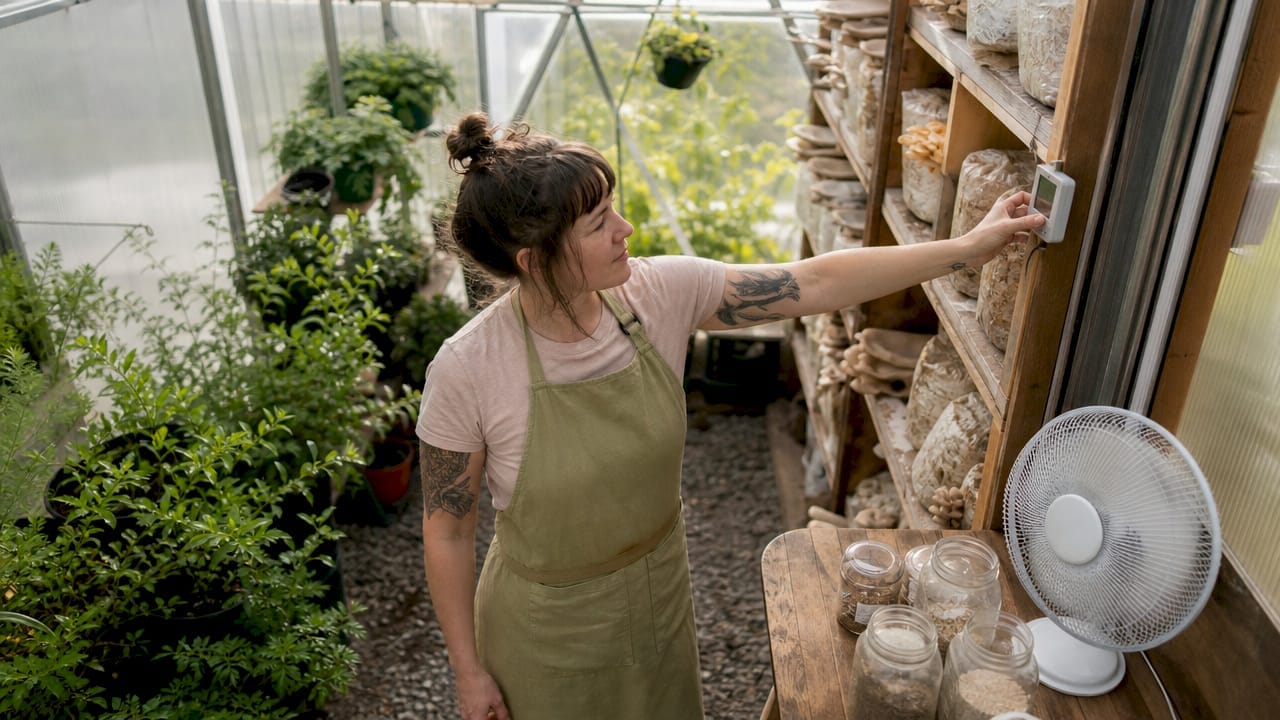
Temperature is the single most influential environmental factor in mushroom cultivation, controlling the speed, quality, and success of every growth stage from mycelial colonisation to fruiting. Get it right and your mushrooms develop on schedule with dense, healthy caps. Get it wrong and you face stalled growth, contamination, or no pins at all. This guide gives you the species-specific temperature data and practical methods you need to manage your growing environment with confidence, whether you are working with a spare bedroom, a basement, or a dedicated fruiting tent.
What are the optimal temperature ranges for mushroom incubation and fruiting?
Temperature management in mushroom cultivation splits into two distinct phases: incubation and fruiting. Each phase demands a different temperature range, and confusing the two is one of the most common beginner mistakes.
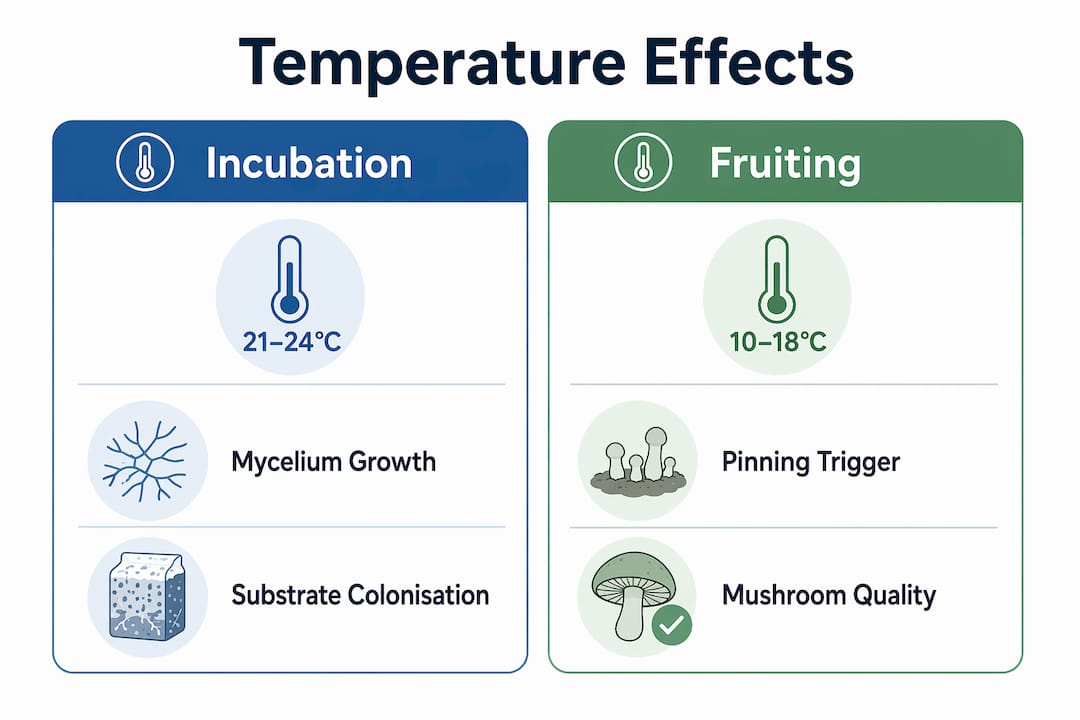
During incubation, mycelium colonises the substrate and needs warmth to grow efficiently. Most gourmet species incubate best at 21–24°C (70–75°F) for two to four weeks. This range applies broadly to oyster varieties, Lion’s Mane, and Shiitake, making it a reliable baseline for home growers.
Fruiting temperatures are typically cooler and vary considerably by species. Here is a quick reference for the most popular home cultivation species:
| Species | Incubation temperature | Fruiting temperature |
|---|---|---|
| Blue Oyster | 21–24°C | 10–18°C |
| Pink Oyster | 21–24°C | 18–30°C |
| Lion’s Mane | 21–24°C | 16–20°C |
| Shiitake (cool strain) | 21–24°C | 10–22°C |
| King Oyster | 21–24°C | 10–18°C |
The gap between incubation and fruiting temperatures is not just a detail. It is a biological trigger. Blue Oyster fruits best at 10–18°C, which means you actively need to cool your growing space after colonisation is complete. Pink Oyster sits at the opposite end, requiring a consistent 18–30°C to fruit at all.
Some species need an even more deliberate temperature shift to begin pinning. Shiitake and King Oyster require a cold shock, a temperature drop of 5–15°C below incubation temperature held for 12–24 hours, to trigger fruiting. For Shiitake, that means dropping to 7–13°C for at least half a day. Without this signal, fully colonised blocks can sit dormant for weeks.
Pro Tip: If you are growing Shiitake, place your colonised block in the fridge overnight at around 8°C, then move it to your fruiting space the following morning. That single step often triggers pinning within 48–72 hours.
How do temperature fluctuations impact mushroom growth and quality?
Stability matters more than perfection. Rapid temperature swings of 10°C within a single day can stall mycelium growth entirely, even when the average temperature sits within the ideal range. A steady environment at 19°C will outperform one that swings between 14°C and 24°C every few hours.
The reasons are biological. Mycelium responds to temperature stress by redirecting energy away from growth and into self-protection. The result is slower colonisation, weaker pins, and reduced yield. In severe cases, stress-weakened mycelium becomes vulnerable to contamination from competing moulds and bacteria.
Species vary in their sensitivity to swings. Blue Oyster tolerates cold well but dislikes rapid fluctuations. Pink Oyster is more sensitive overall, and even brief cold spells during fruiting can abort developing pins. Lion’s Mane is particularly unforgiving of erratic conditions, often producing misshapen, browning fruiting bodies when temperatures shift unpredictably.
Consistent temperature, even if slightly outside the ideal range, produces better mycelial health and fruiting success than an environment with frequent or rapid swings.
- Avoid placing fruiting tents near exterior walls in winter, where temperatures drop overnight.
- Keep growing spaces away from south-facing windows that heat rapidly in afternoon sun.
- Use a digital min/max thermometer to track the full daily temperature range, not just the current reading.
- Check your growing space at different times of day before committing a colonised block to fruiting conditions.
How does temperature interact with humidity, fresh air exchange, and CO2?
Temperature does not operate in isolation. It sits at the centre of a three-way relationship with humidity and fresh air exchange, and changes in one factor force adjustments in the others. Understanding this relationship is what separates growers who get consistent results from those who cannot work out why their pins keep aborting.
Higher temperatures increase respiration in the mushroom crop, producing metabolic heat and CO2. A dense fruiting block can raise the internal temperature of a small grow tent by 2–5°C above the ambient room temperature. That means your thermometer reading outside the tent is not the temperature your mushrooms are actually experiencing.
CO2 buildup linked to temperature rises reduces mushroom morphology quality, producing elongated stems and small, underdeveloped caps. Maintaining CO2 below 1,000 ppm alongside correct temperature is critical for well-formed fruiting bodies. Fresh air exchange is the primary tool for managing both CO2 and heat simultaneously.
Here is how to manage the three factors together as temperatures rise:
- Increase fresh air exchange first. More frequent fanning or a higher fan speed removes CO2 and dissipates metabolic heat before it compounds.
- Monitor humidity after increasing airflow. Higher air exchange rates accelerate moisture evaporation, so you will need to mist more frequently or increase your humidifier output.
- Check substrate surface moisture. Warmer, drier air pulls moisture from the substrate surface faster, which can crack caps and reduce yield.
- Measure temperature inside the fruiting space, not outside it. Place your thermometer at canopy level, where the mushrooms are actually growing.
Pro Tip: A small USB fan on a timer set to run for two minutes every hour is often enough to manage CO2 and heat in a standard home fruiting tent. Pair it with a humidity and temperature monitor to catch problems before they affect your crop.
What equipment helps home cultivators manage temperature effectively?
You do not need a commercial climate control system to grow well at home. A small set of affordable tools covers the majority of temperature management needs across both growth phases.
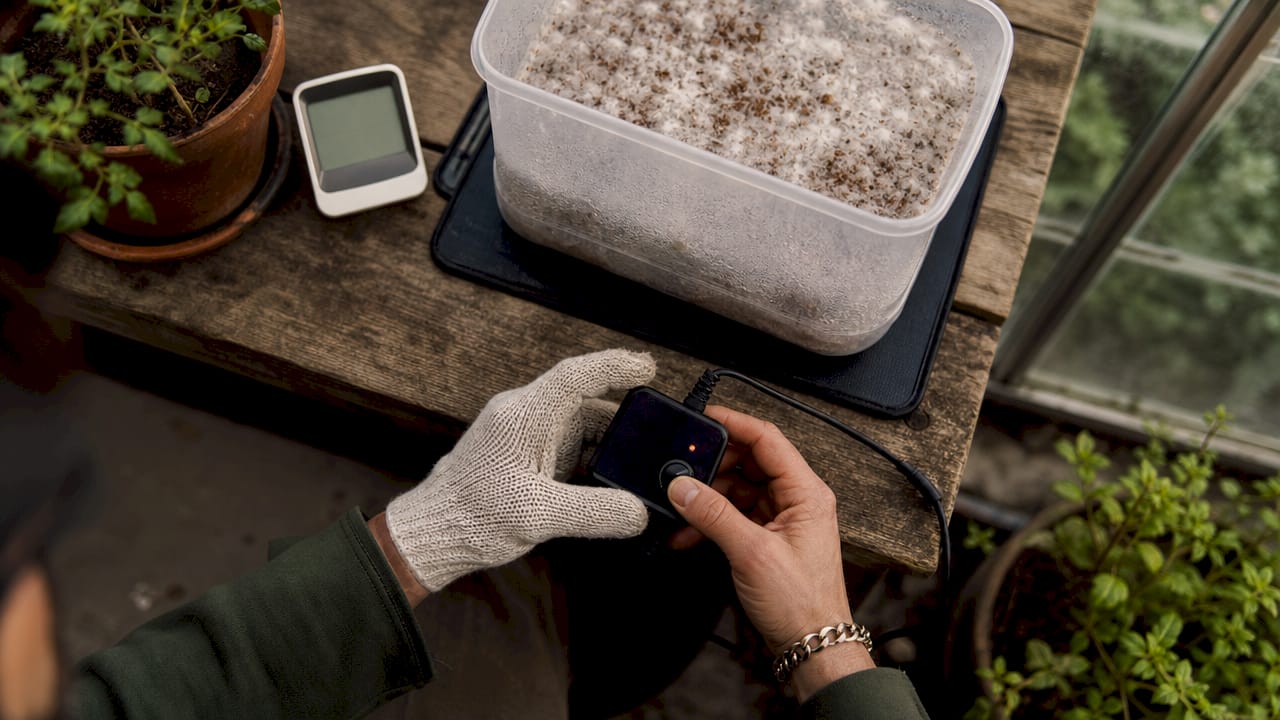
For incubation in cooler spaces, seedling heat mats are the most practical solution. Affordable heat mats in the £15–£25 range raise substrate temperature by 5–10°C above ambient, which is enough to bring a cold spare room or basement into the 21–24°C incubation range. Pair a heat mat with a plug-in thermostat controller and you can hold temperature within 1°C of your target without any manual adjustment.
For fruiting, a thermostat-controlled small space heater works well in a dedicated room or large tent. Set the thermostat to your target fruiting temperature and let it cycle on and off automatically. For species like Blue Oyster that fruit in cooler conditions, a UK winter room without additional heating is often sufficient, particularly between november and march.
Useful equipment for home temperature management:
- Digital min/max thermometer: Records the highest and lowest temperatures over a set period, revealing overnight drops or afternoon spikes you would otherwise miss.
- Seedling heat mat with thermostat: Maintains incubation temperature in cold basements or unheated rooms without heating the whole space.
- Plug-in thermostat controller: Turns any heater or heat mat on and off automatically based on a probe reading inside your growing space.
- Infrared thermometer: Lets you check substrate surface temperature quickly without disturbing your growing environment.
Pro Tip: Place your heat mat under the substrate container rather than beside it. Heat rises, so bottom heat distributes more evenly through the block and reduces cold spots that slow colonisation.
For a full list of temperature control tools suited to home cultivation, Sporebuddies stocks a range of options matched to different growing setups.
Species-specific temperature needs: choosing the right mushroom for your home
Matching your species to your home environment is the most underrated decision in home cultivation. Choosing a species whose temperature requirements align with your natural room conditions removes most of the climate control challenge before you even start.
- Blue Oyster is the best choice for temperate UK homes. It fruits best at 10–18°C, which matches a typical unheated UK room in autumn and winter. No additional cooling equipment is needed in most cases.
- Pink Oyster suits growers with consistently warm spaces. It requires 18–30°C to fruit and will not produce properly in cooler conditions. A heated room or summer growing window is necessary in the UK.
- Shiitake comes in cool and warm strains. Cool strains fruit at 10–22°C and need a cold shock trigger. Warm strains fruit at 16–27°C without cold shock, making them more forgiving for growers without refrigeration access.
- Lion’s Mane fruits at 16–20°C, a narrow range that suits a temperature-controlled room or fruiting tent rather than an unmanaged space.
- King Oyster behaves similarly to Blue Oyster in its cool fruiting preference and cold shock requirement, making it another strong choice for UK autumn and winter growing.
If you are new to home cultivation, Blue Oyster is the most forgiving starting point in the UK climate. As your confidence grows, you can move to species with narrower or warmer requirements. Sporebuddies offers species-specific grow kits matched to different temperature environments, which takes the guesswork out of your first few grows.
Key takeaways
Temperature controls every stage of mushroom cultivation, and stable conditions within the correct species-specific range consistently outperform fluctuating environments, even when those fluctuations average out to the right number.
| Point | Details |
|---|---|
| Incubation temperature | Most gourmet species colonise best at 21–24°C for two to four weeks. |
| Fruiting temperature varies by species | Blue Oyster fruits at 10–18°C; Pink Oyster needs 18–30°C; Lion’s Mane at 16–20°C. |
| Cold shock triggers pinning | Shiitake and King Oyster need a 5–15°C drop held for 12–24 hours to initiate fruiting. |
| Stability beats perfection | Rapid swings of 10°C stall growth more than a steady temperature slightly outside the ideal range. |
| Temperature affects CO2 and humidity | Rising temperatures increase metabolic heat and CO2, requiring more ventilation and humidity adjustment. |
Getting set up with the right equipment from Sporebuddies
Knowing your target temperatures is only half the work. Having the right tools to hit and hold them is what turns that knowledge into a reliable harvest. Sporebuddies stocks a full range of mushroom growing equipment including heat mats, thermostat controllers, and digital thermometers suited to home cultivation at every level. Whether you are setting up your first incubation space or building a dedicated fruiting room, the right temperature control tools make a measurable difference to your results. Browse the range and match your equipment to the species and growing environment you have in mind.
FAQ
What is the best temperature for growing mushrooms at home?
Most gourmet mushroom species incubate best at 21–24°C and fruit at cooler temperatures, typically 10–22°C depending on species. Blue Oyster is the most forgiving choice for UK home growers, fruiting well at 10–18°C.
How do temperature fluctuations affect mushroom yield?
Rapid swings of 10°C within a day can stall mycelium growth and reduce yield significantly. Stable temperatures, even if slightly outside the ideal range, consistently produce better results than fluctuating conditions.
Do all mushroom species need a cold shock to fruit?
No. Cold shock is required by species like Shiitake and King Oyster, which need a 5–15°C temperature drop held for 12–24 hours to trigger pinning. Blue Oyster and Pink Oyster do not require a cold shock.
How does temperature affect CO2 levels in a fruiting space?
Higher temperatures increase mushroom crop respiration, raising CO2 and metabolic heat. A dense fruiting block can raise internal tent temperature by 2–5°C above ambient, making ventilation and active monitoring necessary.
What is the cheapest way to control temperature for home mushroom cultivation?
A seedling heat mat paired with a plug-in thermostat controller covers most incubation needs for under £40. For fruiting, choosing a species whose temperature range matches your natural room conditions removes the need for additional heating equipment entirely.