
Growing your own mushrooms at home is one of the most satisfying hobbies a UK grower can take up, but the legal landscape around it confuses a lot of people. Some worry they’re crossing a line simply by picking up a grow kit; others assume all mushrooms are fair game outdoors. Neither is true. Getting clarity on what you can and cannot grow protects you from serious legal consequences, and once you understand the boundaries, the whole process becomes surprisingly straightforward. This guide walks you through UK law, practical setup, growing techniques, and how to harvest successfully so you can enjoy legal, home-grown mushrooms with confidence.
Table of Contents
- Understanding the law: What mushrooms can you legally grow?
- Preparation: Tools, materials, and setting up your growing space
- Step-by-step: Cultivating legal mushrooms at home
- Harvest, troubleshoot, and stay safe
- Why legal mushroom cultivation is more rewarding than you think
- Get started with trusted tools and support
- Frequently asked questions
Key Takeaways
| Point | Details |
|---|---|
| Know the law | Only certain native and culinary mushrooms are legal to grow at home in the UK. |
| Easy for beginners | Pre-inoculated kits and native strains make home mushroom cultivation straightforward and safe. |
| Prioritise cleanliness | Sterile techniques and regular monitoring prevent contamination and failed grows. |
| Support biodiversity | Growing legal mushrooms at home supports local ecology and reduces reliance on imports. |
| Get the right tools | Using proper equipment and reputable suppliers greatly improves your harvest success. |
Understanding the law: What mushrooms can you legally grow?
Before you buy a single piece of kit, you need to know exactly where the law stands. This isn’t a grey area for psilocybin species. Psilocybin-containing mushrooms are illegal to cultivate, possess, or produce in the UK under the Misuse of Drugs Act 1971, classified as Class A substances. Penalties include up to seven years in prison for possession and life imprisonment for production or supply. There is no ambiguity here, and no beginner mistake excuses the offence.
The good news is that the UK has a rich variety of legal edible mushrooms you can cultivate entirely without risk. Legal varieties for home cultivation include native edible species such as oyster mushrooms, shiitake, lion’s mane (indoors), chicken of the woods, and shaggy inkcap. Each of these is genuinely rewarding to grow, highly prized in the kitchen, and increasingly popular with UK home cultivators.
There is one important edge case worth noting. Lion’s mane (Hericium erinaceus) is a protected species in the UK wild, meaning you cannot forage it outdoors or introduce it into natural habitats. However, lion’s mane is safe to grow indoors using commercially sourced spawn, making it a perfectly legal and popular choice for home cultivation. The same logic applies to any species where ecological impact is a concern. If you’re thinking about outdoor cultivation, stick to native edibles on garden logs or raised beds, and avoid releasing non-native strains into the environment.
For a quick overview of where each common species stands, the table below lays it out clearly.
| Species | Indoor growing | Outdoor growing | Legal status |
|---|---|---|---|
| Oyster mushrooms | Yes | Yes (native strains) | Fully legal |
| Shiitake | Yes | Yes (on logs) | Fully legal |
| Lion’s mane | Yes | Not recommended | Legal indoors only |
| Chicken of the woods | Yes | Yes (native habitat) | Legal with care |
| Shaggy inkcap | Yes | Yes | Fully legal |
| Psilocybin species | No | No | Illegal (Class A) |
Important: Always source your spawn or grow kits from reputable UK suppliers. Using trusted sources ensures you know exactly what species you’re working with, giving you peace of mind from day one. Check UK mushroom mycology basics if you’re new to identifying species and understanding their characteristics.
Understanding these boundaries is not just about legal protection. It’s also about responsible practice within the UK’s ecosystem. Non-native fungal species introduced outdoors can disrupt native soil microbiomes and compete with wild fungi, so staying within the law also keeps you on the right side of ecological responsibility.
Preparation: Tools, materials, and setting up your growing space
Once you know which mushrooms you can cultivate legally, it’s time to gather your tools and prepare the growing area. The good news is that you don’t need specialist laboratory equipment to get started. Most successful UK home growers begin with a basic kit and a corner of their kitchen or airing cupboard.
Here’s a straightforward list of what you’ll need before your first grow:
- Grow kit or spawn bags (pre-inoculated kits are easiest for beginners)
- Substrate (straw, hardwood sawdust, or coffee grounds depending on species)
- Spray bottle for misting
- Digital thermometer and hygrometer (measures temperature and humidity together)
- Disposable gloves and a face mask for sterile work
- Polypropylene bags or containers if you’re making your own substrate blocks
- Pressure cooker for sterilising substrate (DIY method only)
- Isopropyl alcohol (70%) for surface sterilisation
Prioritise native UK strains and source your grow kits or spawn from reputable suppliers to ensure success and minimise ecological risk. For beginners especially, using pre-inoculated kits removes much of the guesswork and dramatically improves first-grow success rates.
The easiest beginner method uses pre-inoculated grow kits or bags with native strains. You mist daily, keep conditions consistent, and harvest without needing any specialist sterile technique. It truly is that accessible.
When it comes to choosing a location, you have more flexibility than most people expect.
- Kitchen: Consistent warmth and easy access to water make this ideal for oyster mushrooms
- Airing cupboard: Warm and dark, great for the incubation phase of shiitake blocks
- Garage or shed: Cooler temperatures suit certain species during fruiting, especially in spring and autumn
- Spare room: Any well-ventilated room works well with a small humidity tent
The step-by-step mushroom guide from Spore Buddies covers location setup in more detail, but the key environmental parameters are:
| Parameter | Ideal range |
|---|---|
| Fruiting temperature | 10 to 24°C (varies by species) |
| Relative humidity | 85 to 95% |
| Fresh air exchanges | 4 to 6 times per hour |
| Light | Indirect, 12 hours per day |
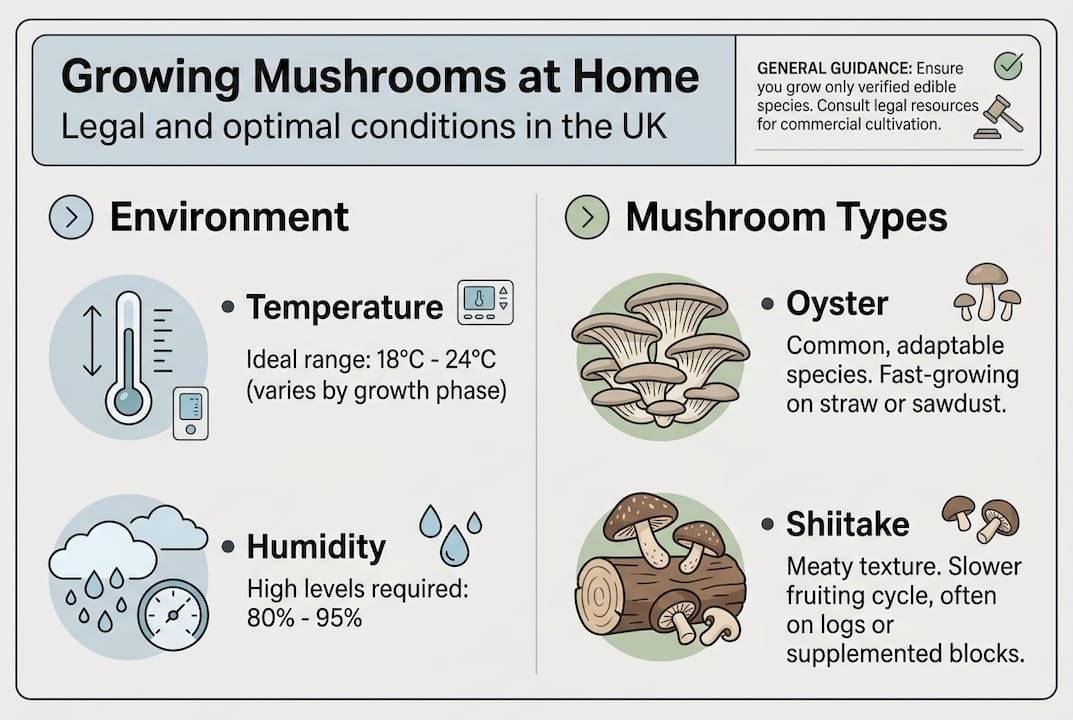
Pro Tip: A cheap bathroom hygrometer placed inside your growing tent gives you instant, accurate readings without spending money on specialist mycology equipment. You can pick one up for under £5 and it makes a genuine difference to your results.
For those looking at mushroom growing kits as their starting point, pre-prepared kits take care of the substrate and inoculation stages entirely. All you do is manage the environment and wait.
Step-by-step: Cultivating legal mushrooms at home
With your tools assembled and space set up, the real fun begins: growing your first legal mushrooms. There are two main methods available to you depending on your experience and ambition.
Method 1: Using a pre-inoculated grow kit
This is the go-to starting point for most UK beginners. The kit arrives with fully colonised mycelium ready to fruit. Your job is environmental management only.
- Remove the kit from its packaging and place it in your chosen growing location
- Cut or remove the bag flap to expose the colonised block to fresh air
- Mist the exposed surface lightly two to three times per day using clean water
- Maintain humidity between 85 and 95% and temperature within the species-specific range
- Watch for pin formation, which typically appears within 5 to 10 days
- Allow mushrooms to develop fully before harvesting (see Section 5 for timing)
- After the first harvest, soak the block in cold water for 12 hours to trigger a second flush
Method 2: DIY substrate inoculation
For growers who want more control and higher yields, making your own substrate blocks is a natural next step.
- Pasteurise straw or hardwood sawdust by heating it to 70 to 80°C for one to one and a half hours; this kills competing bacteria without destroying beneficial microorganisms
- Allow the substrate to cool to room temperature in a clean environment before inoculating
- Inoculate with grain spawn or liquid culture in sterile conditions, using gloves and alcohol-sprayed surfaces
- Fill polypropylene bags, seal them, and incubate in a warm dark location
- Incubate for 7 to 14 days until the substrate is fully colonised with white mycelium
- Transfer to your fruiting environment and begin misting
- Monitor daily for signs of contamination (green, black, or pink patches signal mould)
Statistic to note: Key fruiting conditions include 85 to 95% humidity, good airflow, indirect light, and fruiting temperatures between 10 and 24°C. Staying within these parameters is the single biggest factor in a successful harvest.
Understanding mushroom fruiting helps you anticipate what’s happening inside your block at each stage, so you can respond quickly if something looks wrong. The beginner’s home mushroom guide also has detailed visual walkthroughs for each fruiting stage.
Pro Tip: Never let your growing block dry out entirely between flushes. A quick 12-hour cold water soak between flushes rehydrates the mycelium and dramatically boosts your second and third harvest weights.
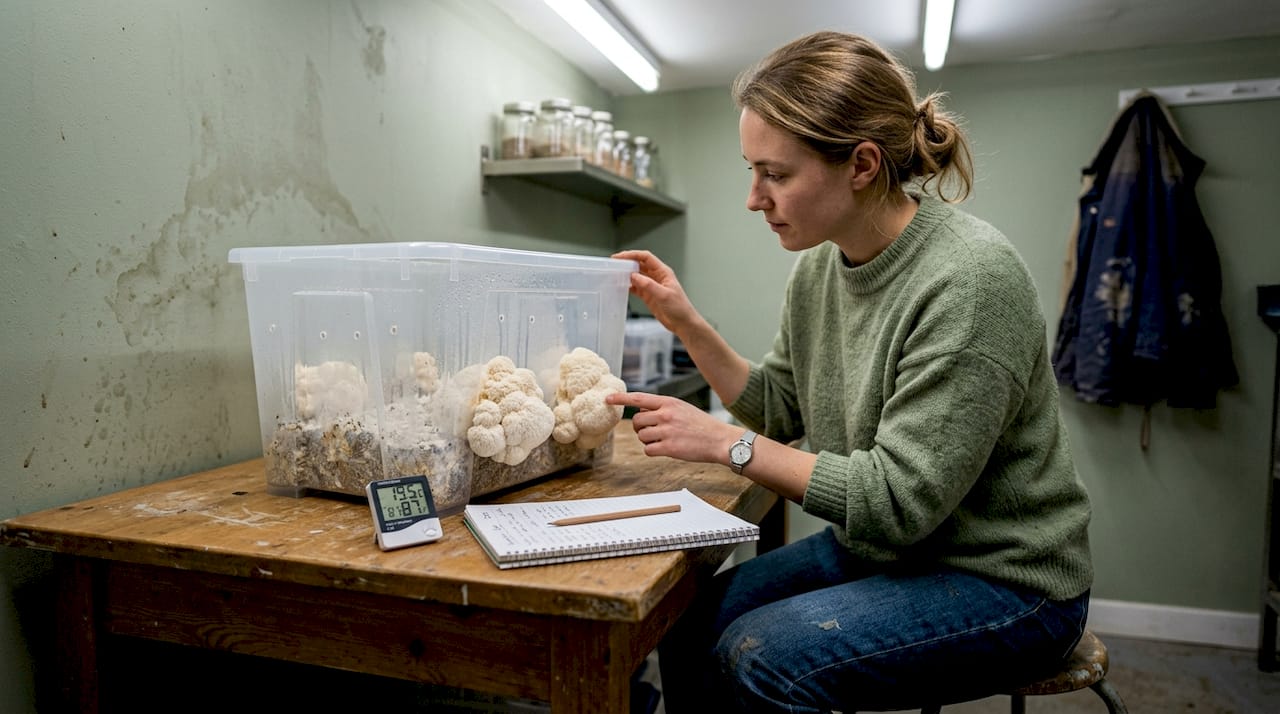
If you’re interested in a specific species, growing lion’s mane at home is particularly rewarding. It has distinctive flavour and remarkable nutritional properties, and indoor cultivation is fully legal and straightforward with the right substrate.
Harvest, troubleshoot, and stay safe
Once your crops are coming in, you’ll want to get the most from your harvest and sidestep common pitfalls. Timing your harvest correctly makes the difference between firm, flavourful mushrooms and ones that drop spores and become harder to handle.
When to harvest:
- Oyster mushrooms: Harvest when the cap edges begin to curl under slightly but have not yet turned fully flat or wavy
- Shiitake: Pick just before the veil beneath the cap fully tears; this preserves freshness and prevents spore release
- Lion’s mane: Harvest when the white pom-pom shape is fully formed but before any yellowing appears at the tips
Harvest when caps’ edges curl under. Yields from larger kits can reach 600g or more over one to two flushes, making home growing genuinely productive and cost-effective compared to shop prices.
To maximise yield across multiple flushes, follow these habits:
- Twist and pull mushrooms cleanly from the base rather than cutting, which reduces contamination risk at the growth point
- Remove any pinheads that haven’t developed alongside the main flush to keep the block clean
- Rest and rehydrate the block fully between flushes
- Compost spent substrate after two to three flushes; it makes excellent garden material
Common problems and solutions:
- Green or black mould (Trichoderma or Aspergillus): Remove affected areas immediately and improve airflow; if spread is significant, discard the block to protect other grows
- Yellowing or slimy patches: Usually bacterial, caused by over-misting or poor air circulation; reduce humidity and increase fresh air exchanges
- No pinning after two weeks: Try a cold shock (move block to fridge overnight) and ensure adequate fresh air; CO2 build-up is a frequent cause of stalled fruiting
- Tiny, leggy mushrooms: Almost always a sign of too much CO2 and not enough fresh air; increase ventilation immediately
Sterile technique is critical to prevent contamination throughout every stage. Enforcement in the UK focuses on psilocybin species, but legal gourmet growing also carries a responsibility to practise safely, especially when composting or disposing of spent substrate outdoors. Spent substrate from legal species is safe to compost or use as garden mulch, and it actively supports soil biodiversity.
A note on biodiversity: Legal home growing of native species like oyster mushrooms and shiitake, when done responsibly, supports rather than harms the UK ecosystem. Fungi are critical to healthy soil networks, and composting spent substrate returns beneficial organisms to your garden. Check mycology cultivation tips for more on sustainable practice throughout the growing cycle.
Why legal mushroom cultivation is more rewarding than you think
Stepping back from the practical detail, it’s worth reflecting on what makes legal home mushroom cultivation genuinely special. There’s a persistent myth that growing mushrooms is complicated, fiddly, and only for dedicated hobbyists with a dedicated lab setup. That couldn’t be further from the truth. A basic oyster kit on a kitchen worktop can produce a substantial harvest in under two weeks with almost no prior knowledge.
What surprises most first-time growers isn’t just the yield. It’s the sense of connection. Watching mycelium colonise a block and then seeing those first pins emerge feels unlike any other gardening experience. Mushrooms don’t behave like plants. They respond to your environment in real time, giving you a dynamic, almost interactive growing experience.
There’s also a genuine ecological argument for legal cultivation. Home-grown shiitake and oyster mushrooms reduce reliance on imported produce, lower food miles, and return nutrient-rich organic matter to your garden. When you compost spent substrate, you’re actively contributing to soil health.
UK mushroom safety guides can help you build responsible habits from the very start, making your growing practice sustainable for both your household and the wider environment. The most responsible cultivators we speak to aren’t those with the fanciest setups. They’re the ones who take the time to understand what they’re growing and why it matters.
Get started with trusted tools and support
Ready to start your legal mushroom-growing journey? Having the right equipment from the beginning makes a real difference, especially for your first couple of grows. At Spore Buddies, we stock a full range of mushroom growing equipment suited to beginners and experienced cultivators alike, from spray bottles and hygrometers through to more advanced inoculation tools. You’ll also find a wide selection of mushroom substrate supplies to support both kit-based and DIY growing methods. If you want the simplest possible start, browse our range of mushroom grow kits designed for popular legal UK species. Everything is sourced with quality and reliability in mind so your first harvest is a success.
Frequently asked questions
Is it legal to grow psilocybin (magic) mushrooms at home in the UK?
No. Cultivating psilocybin mushrooms is illegal in the UK under the Misuse of Drugs Act 1971 and carries severe penalties including imprisonment.
Which mushrooms are legal and safe to grow at home?
Legal varieties for home cultivation include native edible mushrooms such as oyster, shiitake, lion’s mane (indoors), chicken of the woods, and shaggy inkcap, all of which are safe and rewarding to grow.
What’s the easiest method for beginners?
Pre-inoculated grow kits with native strains are the simplest and most reliable starting point, requiring no sterile inoculation technique and minimal equipment.
Can I grow lion’s mane mushrooms outdoors?
No. Lion’s mane is protected in the UK wild, so you should only cultivate it indoors using commercially sourced spawn to stay within the law.
How do I avoid contamination problems?
Always work in clean conditions and use sterile technique throughout; daily monitoring and good airflow are the most effective defences against mould and bacterial contamination.