

Most common misconceptions about microdosing fall into three categories: claims that are simply false, claims that are partly true but heavily overstated, and claims that remain genuinely unresolved by current science. Under UK law, psilocybin-containing mushrooms are Class A substances under the Misuse of Drugs Act 1971, as amended by the Drugs Act 2005. Here is a quick orientation before the full breakdown:
- “Microdosing will make you trip” — False. By definition, a microdose is sub-perceptual, though some users do report subtle effects.
- “It’s just placebo” — Partly true. Expectancy plays a measurable role; the pharmacology may also contribute, but separating the two is difficult.
- “It’s harmless because the dose is tiny” — False. Short-term side effects are documented, and long-term risks are unknown.
- “It’s a proven productivity hack” — False. Controlled trials show null or inconsistent results on cognition and mood.
- “It’s legal everywhere” — False. In the UK, possession of psilocybin mushrooms is a serious criminal offence.
- “All benefits are proven” — False. Evidence is mixed, methodologically limited, and largely based on self-report.
Sporebuddies publishes this guide to help you read the evidence clearly, understand UK law accurately, and make informed decisions.
Key takeaways
Most common microdosing beliefs are either false or significantly overstated; the strongest evidence to date points to expectancy and placebo as major drivers of reported benefits, while UK law treats psilocybin mushrooms as Class A substances with no personal-use exemption.
| Point | Details |
|---|---|
| Evidence is mixed | Controlled trials show null or inconsistent effects; placebo and blinding problems limit confident conclusions. |
| Placebo matters significantly | The Szigeti et al. self-blinding study found improvements tracked closely with placebo responses. |
| Not risk-free | Short-term side effects are documented; long-term cardiovascular risks from 5-HT2B activation remain unknown. |
| UK law is strict | Psilocybin mushrooms are Class A under the Drugs Act 2005; possession carries up to seven years’ imprisonment. |
| Evaluate claims carefully | Look for placebo controls, blinding assessment, sample size, and conflict of interest disclosures before trusting any claim. |
For further reading on safe practice and UK legal context, Sporebuddies’ microdosing guides bring together the most relevant resources in one place.
Table of Contents
- What does ‘microdosing’ actually mean?
- Common misconceptions about microdosing, addressed one by one
- What the research actually shows about placebo and blinding
- Short-term side effects, long-term unknowns, and who should avoid microdosing
- What UK law actually says about psilocybin and mushrooms
- How to tell whether a microdosing claim is worth trusting
- Sources
- FAQ
What does ‘microdosing’ actually mean?
Microdosing refers to taking a sub-perceptual dose of a psychedelic substance, typically around one-tenth to one-twentieth of a standard recreational dose. The goal is to avoid any overt psychedelic experience while potentially gaining subtler effects on mood, focus, or creativity. In practice, that translates to roughly 0.1–0.3 g of dried psilocybin mushrooms or 5–20 micrograms of LSD, though systematic reviews confirm that no single definition is agreed upon across researchers.
That lack of consensus matters more than it might seem. Studies use different dose thresholds, different schedules (every other day, every third day, or ad hoc), and different outcome measures. Community practice diverges further still, shaped by unregulated supply, varying mushroom potency, individual sensitivity, and whether someone is measuring acute effects or cumulative changes over weeks.
Key sources of dosing variability include:
- Unregulated supply: Potency in dried mushrooms varies considerably between batches and strains.
- Individual sensitivity: Body weight, prior psychedelic experience, and genetic factors all influence response.
- Differing endpoints: Some protocols target mood; others target cognition, creativity, or symptom relief.
- Subjective perception: What feels sub-perceptual to one person may produce noticeable effects in another.
Pro Tip: If you are researching microdosing for academic or personal understanding, consistency in dose measurement is the single most important variable. Inconsistent dosing makes it impossible to distinguish a drug effect from day-to-day mood fluctuation.
Common misconceptions about microdosing, addressed one by one
1. Microdosing will make you trip
Verdict: False in principle, nuanced in practice.
A microdose is defined precisely to avoid perceptual alteration. In most protocols, users report no visual distortion, no dissociation, and no impairment. However, lab and qualitative studies document subtle subjective changes in a notable fraction of participants, including mild shifts in mood, energy, or perception. This matters because it also complicates blinding in clinical trials: if participants can tell they took an active dose, their expectations shape the results.

2. Any benefits are purely placebo
Verdict: Partly true, and the distinction is harder to make than it sounds.
The Szigeti et al. self-blinding citizen science study, conducted with support from Imperial College London, found that improvements reported by microdosing participants were broadly similar in those who had unknowingly taken a placebo. That is a significant finding. It does not prove zero pharmacological effect, but it does show that expectancy alone can generate the improvements people attribute to the drug.
3. Microdosing is harmless because the dose is small
Verdict: False. Small dose does not mean no risk. Psychology Today’s clinical overview notes that microdosing is still a form of psychedelic use, and people with conditions such as bipolar disorder or schizophrenia, or those on certain medications, may experience adverse effects. Short-term side effects including anxiety, elevated heart rate, and disrupted sleep are reported across multiple studies.
4. Psilocybin and LSD are addictive in the conventional sense
Verdict: Mostly false, but not risk-free.
Neither psilocybin nor LSD produces the physical dependence or compulsive drug-seeking behaviour associated with opioids or alcohol. Tolerance to psilocybin builds rapidly with repeated use, which itself limits escalating consumption. That said, psychological dependence on any substance used as a coping mechanism is possible, and the absence of classical addiction does not mean the practice is without psychological risk.
5. Microdosing is a proven productivity hack
Verdict: False. This is perhaps the most widely repeated myth, fuelled by Silicon Valley anecdotes and social media testimonials. Double-blind longitudinal trials have found no compelling evidence that psilocybin microdosing reliably enhances cognitive or emotional functioning once appropriate statistical controls are applied. A rapid PMC review of low-dose LSD and psilocybin reached the same conclusion: many positive findings come from non-controlled or open-label designs where expectancy is uncontrolled.
6. Microdosing is legal everywhere, or at least in the UK
Verdict: False. Psilocybin and psilocin-containing mushrooms are Class A substances in the UK. There is no legal grey area for possession or cultivation of magic mushrooms for personal use. The section on UK law below covers this in full.
7. The research is settled — either it works or it doesn’t
Verdict: False in both directions. The evidence is genuinely mixed. Technology Networks summarises the current state as early signals in some domains, but inconsistent results overall and unknown long-term effects. Dismissing all research as worthless is as inaccurate as claiming the science is conclusive.
What the research actually shows about placebo and blinding
The honest answer is that the evidence is mixed, and the methodological problems are significant enough to make confident claims in either direction premature.
The Szigeti et al. self-blinding study is the most cited piece of citizen science in this field. Participants sourced their own substances, used opaque capsules to blind themselves to whether they were taking active doses or placebo, and reported outcomes over several weeks. The result: reported improvements tracked closely with placebo responses, pointing to expectancy as a primary driver. The study’s own authors acknowledged limitations, including variability in drug sourcing and the fact that participants sometimes correctly guessed their condition.
Double-blind controlled trials add further complexity. Several have reported null or inconsistent effects on attention, mood, and cognitive control. A systematic review covering research from 1955 to 2021 found that blinding is a persistent problem: participants frequently guess correctly whether they received an active dose, which confounds expectancy with pharmacology. The review also flagged heterogeneous dosing protocols and small sample sizes as barriers to drawing firm conclusions.
Key methodological limitations across the current literature:
- Blinding failure: Participants often identify active doses, inflating reported benefits through expectancy.
- Small samples: Most trials involve dozens of participants, not hundreds.
- Dosing heterogeneity: No standardised dose or schedule exists across studies.
- Short duration: Few studies track participants beyond a few weeks.
- Self-selected samples: Many participants already believe microdosing works before enrolling.
What robust future research needs: pre-registered protocols, larger samples, verified blinding, standardised dosing, and follow-up periods of at least six months.
Short-term side effects, long-term unknowns, and who should avoid microdosing
Microdosing is not risk-free, and the risks are not trivial for certain groups. Short-term effects reported across studies and user surveys include anxiety, headaches, disrupted sleep, elevated blood pressure, fatigue, and in some cases increased emotional sensitivity or irritability. These are not rare edge cases; they appear consistently across self-report data and controlled settings alike.
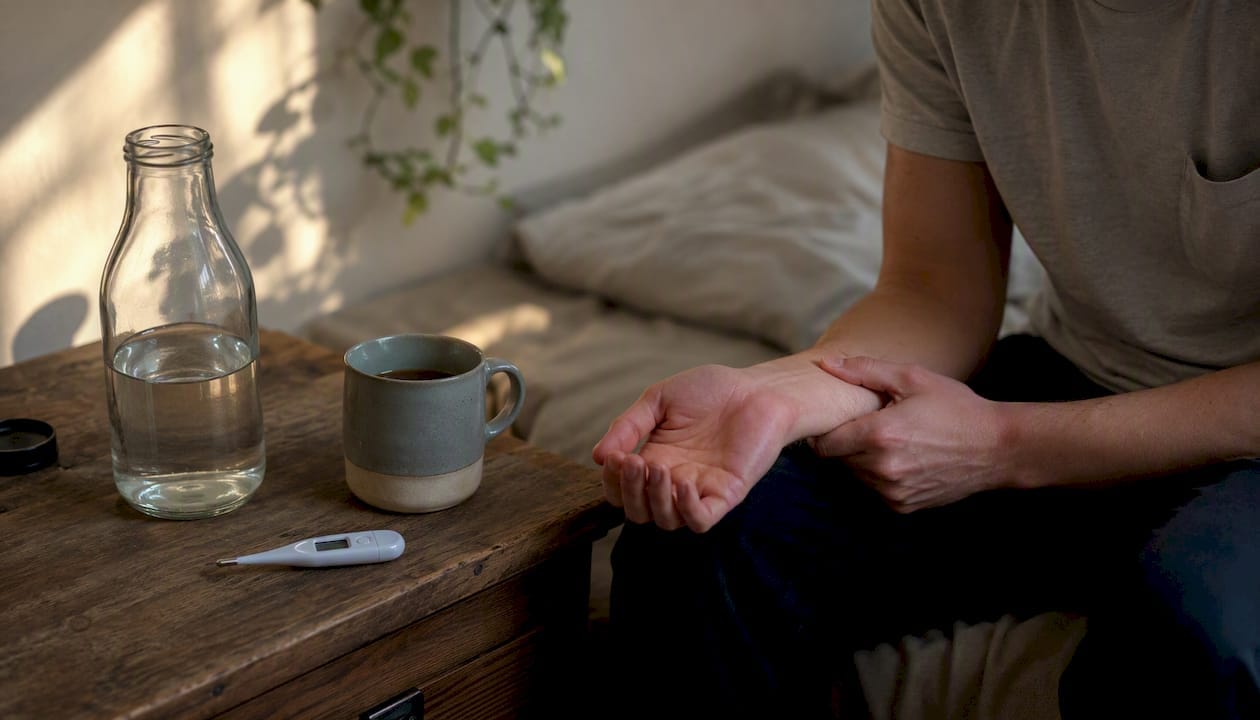
Long-term safety is a more serious open question. Technology Networks flags theoretical cardiovascular concerns from repeated serotonin 5-HT2B receptor activation, a mechanism associated with valvular heart disease in other contexts. No long-term human data currently exists to confirm or rule out this risk.
Who should avoid microdosing entirely:
- People with a personal or family history of psychosis, schizophrenia, or bipolar disorder.
- Those currently taking SSRIs, MAOIs, or lithium (interactions are poorly understood and potentially dangerous).
- People with cardiovascular conditions, given the theoretical 5-HT2B concerns.
- Pregnant or breastfeeding people.
- Anyone under 25, given ongoing brain development.
Pro Tip: Before considering any form of psychedelic use, speak with an NHS clinician or contact a legitimate research clinic. This is not a formality — it is the only way to identify personal contraindications that general guides cannot account for.
Sourcing adds another layer of risk. Unregulated products have variable potency and may contain contaminants. You cannot reliably know what you are taking or at what dose without laboratory testing, which is not available to most people outside a research setting. Sporebuddies’ microdosing safety guidance covers harm-reduction principles in more detail.
What UK law actually says about psilocybin and mushrooms
UK law on this topic is unambiguous, and press coverage frequently understates how serious the legal position is.
The Drugs Act 2005 inserted “Fungus (of any kind) which contains psilocin or an ester of psilocin” into the Class A list of the Misuse of Drugs Act 1971. That single amendment closed what had previously been a legal grey area around fresh mushrooms. Psilocybin-containing mushrooms are now Class A in all forms — fresh, dried, or prepared.
Practical implications for UK readers:
- Possession of psilocybin mushrooms in any form carries a maximum sentence of seven years’ imprisonment and/or an unlimited fine.
- Supply or intent to supply carries a maximum of life imprisonment.
- Cultivation of mushrooms for psilocybin production is treated as production of a Class A drug.
- Schedule 2 exemptions exist for approved research and licensed healthcare activities, but these require Home Office licensing and are not available to individuals.
Do’s and don’ts for UK readers:
- Do consult primary legislation directly rather than relying on press summaries or social media.
- Do not assume that decriminalisation discussions in other countries affect UK law.
- Do not assume that purchasing spores for microscopy implies any right to germinate or cultivate them for psilocybin production.
- Do check Sporebuddies’ legal spores buying guide for a clear explanation of what is and is not legal to purchase in the UK.
Spore syringes and prints sold for microscopy and research purposes occupy a different legal position from cultivated mushrooms, but the boundaries matter. Sporebuddies’ magic mushroom spores for research and microscopy are sold strictly for legal research and microscopy use within the UK.
How to tell whether a microdosing claim is worth trusting
The volume of microdosing content online has grown faster than the underlying evidence. Here is a practical checklist for evaluating any claim you encounter.
Checklist for credible microdosing claims:
- Does the study use a placebo control? Open-label designs cannot separate drug effect from expectancy.
- Was blinding assessed? Did the researchers check whether participants could identify their condition?
- What was the sample size? Fewer than 50 participants makes generalisation unreliable.
- Is the dosing protocol described precisely? Vague descriptions (“a small amount”) are a red flag.
- Is there a conflict of interest statement? Commercial funding or personal advocacy should be disclosed.
- Has the finding been replicated? A single study, however well-designed, is not sufficient for confident claims.
- Is the article peer-reviewed? Preprints and blog posts are not equivalent to published research.
Red flags to watch for:
- Anonymous anecdotes presented as evidence.
- Influencer testimonials with no method detail.
- Claims of “cure” or guaranteed results for depression, ADHD, or any other condition.
- Products marketed with health claims but no third-party lab testing.
- No disclosure of dose, schedule, or substance source.
When a product makes specific health claims, ask for a certificate of analysis from an independent laboratory. If none is available, treat the claim with scepticism. For personal health decisions, contact an NHS clinician or look into legitimate research studies through institutions such as Imperial College London’s Centre for Psychedelic Research.
Sources
The following sources were used in preparing this article. Where possible, consult primary legislation and peer-reviewed research directly rather than secondary summaries.
- Microdosing 101 | Psychology Today
- Drugs Act 2005
- Microdosing psychedelics: hype, hope or science? | Technology Networks
- Citizen scientists show placebo effect may explain benefits of microdosing | Imperial College London
- The emerging science of microdosing: A systematic review of research on low dose psychedelics (1955–2021) and recommendations for the field
- Is microdosing a placebo? A rapid review of low‑dose LSD and psilocybin | PMC
How to read a study abstract: check the sample size (look for n= in the methods), confirm whether a placebo control was used, note whether blinding was assessed, and identify the funding source. A small, unblinded, industry-funded study warrants far more scepticism than a pre-registered, placebo-controlled trial with independent funding.
This article is general information, not a substitute for advice from a qualified doctor. Consult a qualified healthcare professional about your own circumstances before acting on anything here.
FAQ
What are the main side effects of microdosing?
Commonly reported short-term effects include anxiety, headaches, disrupted sleep, elevated blood pressure, and fatigue. Long-term risks, including theoretical cardiovascular concerns from repeated 5-HT2B receptor activation, remain unstudied in human populations.
Is there solid scientific evidence that microdosing works?
The evidence is currently mixed. Placebo-controlled trials show null or inconsistent results on mood and cognition, and a rapid PMC review found that many positive findings come from non-controlled designs where expectancy is uncontrolled.
Can microdosing change your personality?
Some self-report studies note changes in openness or emotional sensitivity, but controlled trial data does not consistently support lasting personality change at sub-perceptual doses. Expectancy effects likely account for a significant portion of reported shifts.
Is microdosing legal in the UK?
No. Psilocybin-containing mushrooms are Class A substances under the Misuse of Drugs Act 1971, as amended by the Drugs Act 2005. Possession carries a maximum sentence of seven years’ imprisonment.
How do I know if a microdosing product or article is trustworthy?
Look for placebo-controlled study designs, disclosed sample sizes, blinding assessments, and conflict of interest statements. Avoid any source making cure claims, citing only anonymous anecdotes, or selling products without third-party laboratory testing.