
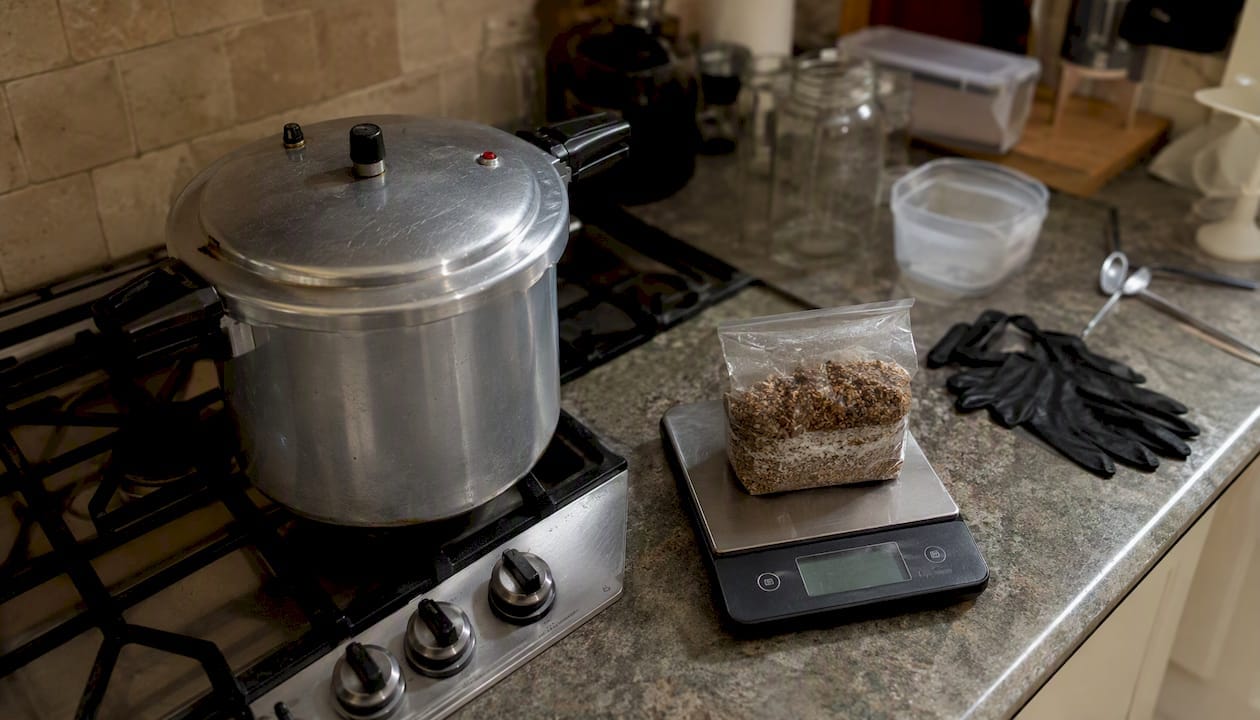
The most effective harm reduction practices for home growers and users of psychedelic mushrooms in the UK combine testing, precise dosing, set and setting, sterile cultivation, a sober trip sitter, and structured integration — applied consistently, these address the predictable causes of most adverse experiences.
Here is a quick checklist you can act on right now:
- Test every substance with a reagent kit (Ehrlich or Marquis) before use
- Weigh doses on a calibrated milligram scale; never estimate
- Screen for contraindications: SSRIs, lithium, MAOIs, and a personal or family history of psychosis are serious cautions
- Prepare your set (mindset) and setting (environment) in advance
- Arrange a sober, informed trip sitter for any full dose
- Maintain a sterile inoculation area and sterilise all substrate before use
- Plan integration time after any experience; avoid major decisions for at least 24 hours
Services such as WEDINOS (free UK postal drug checking) and The Loop (festival and drop-in testing) offer independent purity verification. The Psychedelic Society UK publishes clear contraindication guidance, and Sporebuddies provides legal cultivation supplies and educational resources for UK home growers.
Key takeaways
Consistent harm reduction for psychedelic mushroom use and cultivation requires testing, accurate dosing, a prepared environment, a sober sitter, sterile cultivation practice, and a clear integration plan.
| Point | Details |
|---|---|
| Test before every use | Use an Ehrlich or Marquis reagent kit first; send to WEDINOS for confirmation when needed. |
| Dose accurately | Weigh on a milligram scale; never estimate, and wait at least two hours before considering a redose. |
| Prepare set and setting | Screen for contraindications, choose a calm environment, and arrange a sober sitter for full doses. |
| Sterilise thoroughly | Pressure-cook substrate at 15 PSI for at least 90 minutes; never shorten the cycle. |
| Plan integration | Rest, avoid major decisions for 24 hours, and seek psychedelic-informed support if the experience was difficult. |
| Sporebuddies supplies | Legal spore syringes, mycology equipment, and substrate for UK home growers and researchers. |
Table of Contents
- What is the UK legal position on psilocybin mushrooms?
- Practical examples of harm reduction practices before you use
- How to keep someone safer during an experience
- Safer cultivation: examples that reduce contamination risk
- Equipment and UK testing resources you should know about
- What to do after a difficult experience
- Sporebuddies: legal supplies for safer cultivation
- Sources
- FAQ
What is the UK legal position on psilocybin mushrooms?
Psilocybin and psilocin are Class A substances under the Misuse of Drugs Act 1971. The Drugs Act 2005, section 21 extended this to include fungi that naturally contain those compounds, meaning prepared or dried mushrooms, grow kits designed to produce fruiting bodies, and mycelium intended for consumption can all carry severe penalties for possession, production, or supply.
A narrow practical distinction exists for wild fungi found growing naturally and not picked for supply, but this is a narrow legal grey area, not a safe harbour. Do not rely on it.
What is legal:
- Purchasing and using reagent test kits (Ehrlich, Marquis) for identification purposes
- Accessing postal testing services such as WEDINOS
- Attending educational events and harm reduction talks
- Buying spore syringes and prints for microscopy and research (spores themselves do not contain psilocybin)
- Seeking information from organisations like the Psychedelic Society UK
What carries legal risk:
- Possessing prepared, dried, or fresh mushrooms intended for consumption
- Growing mushrooms from spores through to fruiting bodies
- Supplying mushrooms or grow kits to others
The Misuse of Drugs Act 1971 and the Drugs Act 2005 together make psilocybin mushrooms one of the most strictly controlled substances in the UK. This article is general information only — consult a qualified solicitor for advice specific to your situation.
Practical examples of harm reduction practices before you use
Harm reduction strategies begin well before the experience itself. Clinical trial protocols at Imperial College London and Johns Hopkins consistently show that screening and preparation reduce adverse events more reliably than any in-session intervention.
Pre-use checklist (work through this every time):
- Screen your mental health: avoid use if you have a personal or family history of psychosis, schizophrenia, or bipolar disorder with psychotic features
- Check medications: SSRIs, SNRIs, lithium, and MAOIs all carry significant interaction risks; the Psychedelic Society UK lists these clearly
- Confirm you have slept well, eaten a light meal, and are well hydrated
- Test your substance with an Ehrlich reagent kit (turns purple/violet for indole-containing compounds) and, for greater certainty, send a sample to WEDINOS by post
- Weigh your dose on a milligram-accurate scale; for liquid preparations, use volumetric dosing (dissolve a known weight in a measured volume of water and dose by volume)
- Set a clear intention and choose your environment deliberately
- Commit to no redosing for at least two hours; most people who redose too early do so because the onset feels slow, then experience an unexpectedly intense combined effect
Microdosing preparation
Microdosing differs from full-dose use mainly in scale, not in principle. You still need an accurate scale, a consistent schedule, and awareness of medication interactions. Sporebuddies has a dedicated microdosing safety guide covering schedules, contraindications, and common questions for UK readers.
How to keep someone safer during an experience
The most evidence-backed principle in psychedelic safety is set and setting: mindset and environment shape the experience more than dose alone. A sober, prepared sitter and a calm physical space are your most reliable safety tools.
What a trip sitter should do
- Stay completely sober throughout
- Be present without directing or interpreting the experience
- Keep the space physically safe: remove obstacles, ensure the person cannot leave unsafely
- Offer water, a blanket, or a change of music if the person is distressed
- Use grounding questions calmly: “You are safe. You took a substance. This will pass.”
What a sitter should avoid
- Offering interpretations of what the person is experiencing
- Introducing new, stimulating, or alarming information
- Leaving the person alone during acute distress
The Zendo Project four principles, adopted by PsyCare UK and festival welfare teams, map directly onto this: create a safe space; sit, don’t guide; talk through, not down; a difficult experience is not necessarily a bad one. Difficult experiences commonly arise when a person resists the altered state; a sitter’s non-judgemental presence is often enough to allow the experience to shift.
Call 999 immediately if you observe: severe physical distress (chest pain, seizure, loss of consciousness), inability to be roused, self-harm risk, sustained psychosis lasting beyond the expected duration, or dangerous behaviour that cannot be safely managed.
Safer cultivation: examples that reduce contamination risk
Airborne contaminants are the primary infection vector in home cultivation. Rushed inoculation, insufficient settling time in still air boxes, and inadequate substrate sterilisation account for the majority of failed grows. Addressing these three points alone removes most contamination risk.
Core contamination control practices:
- Dedicate a specific inoculation area and clean it before every session
- Minimise air movement: close windows, turn off fans, and let a still air box settle for at least 10 minutes before opening
- Wear nitrile gloves and a face mask during all inoculation steps
- Flame-sterilise needle tips and wipe with isopropyl alcohol before each injection point
Sterilisation practices:
- Pressure-cook grain or bulk substrate at 15 PSI for a minimum of 90 minutes; do not shorten this cycle
- Allow sterilised jars to cool fully before inoculation; warm substrate accelerates bacterial growth
- Use 70% isopropyl alcohol for surface disinfection; higher concentrations (99%) evaporate before achieving full contact time and can be less effective on surfaces
Contamination red flags: green, black, or pink patches; sour or unusual odours; unusual liquid pooling. If you see any of these, stop, quarantine the affected container in a sealed bag, and dispose of it away from your grow space. Then review your sterilisation process before starting again.
Pro Tip: The single most common beginner mistake is shortening the pressure-cook cycle to save time. Follow conservative sterilisation times every time, without exception, and your contamination rate will drop sharply.
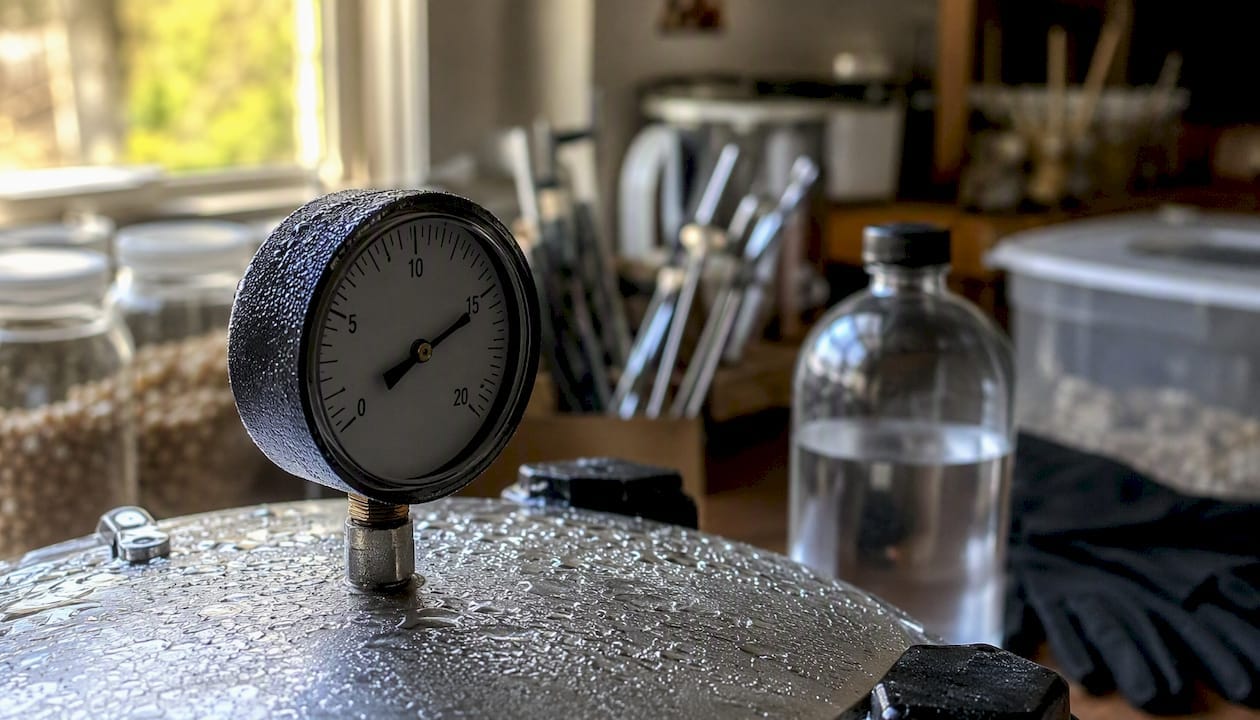
For a deeper look at contamination types and remediation, Sporebuddies has a practical guide on contamination in cultivation and a dedicated page on preventing mould.
Equipment and UK testing resources you should know about
Essential equipment
- Milligram scale: non-negotiable for safe dosing; look for 0.001 g resolution
- Reagent kits (Ehrlich, Marquis): around £15 each, quick to use, legal in the UK; first-line testing before any use
- HEPA air purifier: reduces airborne spore and bacterial load during inoculation
- Pressure cooker: the most reliable home sterilisation method for grain and bulk substrate
- Sterile consumables: alcohol wipes, nitrile gloves, face masks, and a still air box or laminar flow hood
Sporebuddies stocks a range of mycology equipment including sterilisation and contamination-prevention supplies, as well as mushroom substrate for home growers.
UK testing services
- WEDINOS: free postal drug-checking service; returns a full chemical analysis; best used when reagent results are ambiguous or purity verification is needed
- The Loop: festival and drop-in testing service operating at UK events; provides on-the-spot results and brief harm reduction conversations
- reagent-tests.uk: UK-based supplier of Ehrlich, Marquis, and other reagent kits for home testing
Use reagent kits as a fast first check and postal services for confirmation when the result is unclear or the substance is unfamiliar.
What to do after a difficult experience
Immediate aftercare
- Reassure the person: remind them the substance will clear and they are physically safe
- Offer water and a light snack once they are able to manage it
- Encourage rest in a calm, comfortable space
- Avoid major decisions, driving, or operating machinery for at least 24 hours
- Check whether any medications were missed or need to be restarted; if uncertain, contact a GP
- Stay with the person until they are clearly stable and oriented
Integration in the days that follow
- Rest and allow the nervous system to settle; avoid alcohol for at least 48 hours
- Journal thoughts, images, or emotions that arose during the experience
- Walk in nature or spend time in a calm environment
- Speak with a trusted person who understands the context
- Consider a psychedelic-informed therapist or peer support group if the experience raised difficult material
When to contact a professional:
- Persistent perceptual disturbances lasting more than a few days (possible HPPD)
- Sustained low mood, anxiety, or functional impairment
- Any thoughts of self-harm or suicide: call 999 or contact the Samaritans on 116 123
- Symptoms suggesting psychosis: contact your GP or NHS 111 immediately
Sporebuddies: legal supplies for safer cultivation
Safer cultivation starts with quality materials. Sporebuddies supplies UK home growers and researchers with legal mushroom spores for microscopy and educational use, alongside a full range of mycology equipment including sterilisation and contamination-prevention supplies. Every product is chosen to support cleaner, more consistent cultivation practice.
Whether you are setting up your first inoculation area or refining an existing process, browsing the Sporebuddies equipment categories is a practical next step. The site also carries educational guides on microdosing, contamination prevention, and cultivation technique, written specifically for the UK community.
Sources
- Drugs Act 2005 — section 21
- WEDINOS
- Psychedelics
- PsyCare UK — psychedelic support
- Psychedelic Society UK — risk & harm reduction
This article is general information, not a substitute for advice from a qualified doctor. Consult a qualified healthcare professional about your own circumstances before acting on anything here.
FAQ
Are reagent test kits legal in the UK?
Yes. Purchasing and using reagent kits such as Ehrlich and Marquis is legal in the UK. They test for the presence of specific compound classes and do not constitute possession of a controlled substance.
What medications interact dangerously with psilocybin?
SSRIs, SNRIs, lithium, and MAOIs all carry significant interaction risks. The Psychedelic Society UK recommends avoiding psilocybin entirely if you take any of these, and consulting a GP before making any changes to prescribed medication.
When should I call 999 during a difficult psychedelic experience?
Call 999 immediately if someone loses consciousness, cannot be roused, shows signs of self-harm, experiences a seizure, or displays sustained psychosis or dangerous behaviour that cannot be managed safely.
What is the safest way to dose psilocybin mushrooms?
Weigh every dose on a milligram-accurate scale. For liquid preparations, use volumetric dosing. Never estimate by eye, and wait at least two hours before considering any additional dose.
Where can I buy legal mycology supplies in the UK?
Sporebuddies sells legal spore syringes and prints for microscopy and research, along with mycology equipment and substrate for home cultivation. All products are supplied for educational and research purposes within UK law.