
Microdoses are measured using four main systems: weight in grams (g) or milligrams (mg) for dried mushrooms, micrograms (µg) for LSD, millilitres (ml) for volumetric liquid preparations, and estimated percentage of psilocybin by dry weight when calculating alkaloid content. For psilocybin mushrooms, the typical range sits between 0.05 g and 0.5 g of dried material, with most community users settling around 0.1–0.3 g. For LSD, experimental trials use 5–20 µg, with a community average often cited near 10 µg. A sub-perceptual dose is one you barely notice: no visual changes, no impaired concentration, no altered sense of time. If you notice any of those effects, the dose is too high.
Quick dose reference:
| Substance | Typical microdose range | Common community figure |
|---|---|---|
| Psilocybin mushrooms (dried) | 0.05–0.5 g | ~0.3 g |
| LSD | 5–20 µg | ~10 µg |
- A true microdose produces no perceptible psychedelic effect during normal daily activity.
- Potency varies between batches, so the same gram weight does not always deliver the same experience.
- Use a milligram-precision scale (0.001 g) or a calibrated volumetric syringe, and record every dose in a log.
For a broader introduction to the practice, Sporebuddies’ UK microdosing primer covers the basics before you begin measuring.
Key takeaways
Accurate microdosing depends on matching the right measurement unit to your substance, homogenising your batch, and logging every dose systematically across a structured protocol.
| Point | Details |
|---|---|
| Use the right unit for each substance | Weigh dried mushrooms in grams (0.05–0.5 g); measure LSD volumetrically in µg (5–20 µg). |
| Homogenise before weighing | Grinding an entire batch to uniform powder reduces within-batch potency variation significantly. |
| Start at the low end | Begin at 0.05–0.07 g for mushrooms or 5 µg for LSD; increase by 25% only after a full protocol cycle. |
| Log every dose day | Record dose, mood, focus, sleep, and side effects to identify your true sub-perceptual threshold. |
| Potency is always an estimate | Home weight-based dosing uses assumed psilocybin percentages; lab assays are the only precise alternative. |
Table of Contents
- What types of microdosing dose measurements do people use?
- What are the common microdosing ranges for different substances?
- Why does the same gram weight sometimes feel very different?
- How do you measure and prepare microdoses reliably at home?
- Which microdosing protocols should you know about?
- UK legal status, safety cautions, and harm reduction
- How to titrate your dose and keep a useful log
- Worked examples: converting psilocybin percentage to microdoses
- Ready to start measuring? Sporebuddies can help
- Sources
- FAQ
What types of microdosing dose measurements do people use?
The four units you will encounter are grams, milligrams, micrograms, and millilitres. Understanding how they relate to each other prevents the most common measurement errors.
The decimal chain:
- 1 g = 1,000 mg = 1,000,000 µg
- A typical mushroom microdose of 0.1 g equals 100 mg
- An LSD microdose of 10 µg is 0.00001 g — far too small to weigh directly on any home scale
This is why different substances need different measurement methods. Dried mushroom powder is heavy enough to weigh on a milligram scale. LSD is not, which is where volumetric dosing comes in.
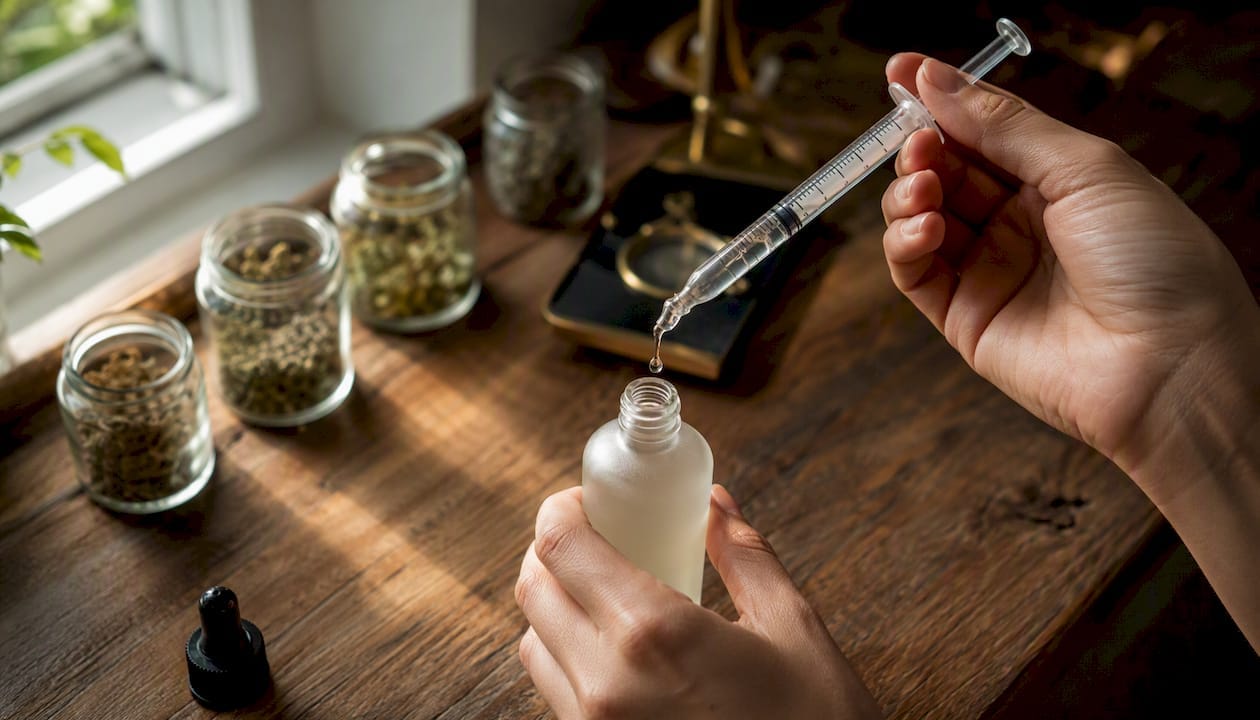
Volumetric concentration describes how much active substance is dissolved in a given volume of liquid, expressed as µg per ml or mg per ml. You dissolve a known quantity into a measured volume of distilled water or alcohol, then draw exact volumes with an oral syringe. For example, dissolving one 100 µg LSD tab into 10 ml of distilled water gives a concentration of 10 µg per ml; a 1 ml draw delivers exactly 10 µg.
Analytical methods such as LC-MS/MS used in clinical research can detect LSD at nanogram-per-litre plasma concentrations, which underscores how approximate home weight-based estimates are by comparison. That is not a reason to abandon home measurement, but it is a reason to be consistent and conservative.
Common unit pitfalls to avoid:
- Misreading 0.1 g as 1.0 g on a scale display (a tenfold error)
- Confusing mg and µg when labelling LSD solutions
- Using a scale with only 0.01 g precision for mushroom powder (too coarse for doses below 0.1 g)
- Failing to tare the container before weighing
A quick sanity check: if your mushroom dose looks like a small pinch of fine powder, you are probably in the right range. If it fills a teaspoon, something has gone wrong.
What are the common microdosing ranges for different substances?
Harvard Health notes that microdosing lacks a single formal definition, but the community convention is roughly one-fifth to one-twentieth of a recreational dose. For psilocybin mushrooms, survey data places most users between 0.06 g and 0.5 g of dried material, with the cluster around 0.1–0.3 g. WebMD cites 0.3 g as a commonly referenced figure.
For LSD, experimental trials use 5–20 µg. Research suggests perceptual effects can begin appearing around 20–26 µg, which is why anything at or above that threshold is better described as a mini-dose rather than a microdose. Staying below 15 µg gives you a comfortable buffer.
What to expect at different points in the range:
- Low end (mushrooms 0.05–0.1 g / LSD 5–10 µg): Minimal to no noticeable effect; a sensible starting point for anyone new to the practice.
- Mid range (mushrooms 0.1–0.3 g / LSD 10–15 µg): Where most experienced users settle; slight lift in mood or focus is possible but not disruptive.
- Upper end (mushrooms 0.3–0.5 g / LSD 15–20 µg): Approaching the boundary; some people notice mild perceptual shifts, particularly sensitivity to light or sound.
Signs a dose is too high include difficulty concentrating on routine tasks, visual brightening or trailing, and a sense that time is moving differently.
Pro Tip: Start at the lowest plausible dose for your substance, hold it constant for one full protocol cycle (usually two to three weeks), and only increase if you notice no effect at all. Patience here saves weeks of recalibration later.
Why does the same gram weight sometimes feel very different?
Psilocybin content in dried mushrooms is not fixed. Species, strain, growing conditions, mushroom part, and post-harvest handling all shift the alkaloid concentration in ways that make gram-for-gram comparisons unreliable across batches.
Biological sources of variability:
- Species matter significantly: Psilocybe azurescens typically contains more psilocybin by dry weight than Psilocybe cubensis, for instance.
- Within a single P. cubensis batch, caps tend to be more potent than stems.
- Younger, freshly harvested mushrooms often have higher alkaloid concentrations than older material from the same flush.
- Growth conditions including substrate composition, humidity, and temperature all influence final potency.
Processing factors:
- Incomplete drying raises water content, which inflates the apparent gram weight while diluting the alkaloid concentration per gram.
- Prolonged storage, especially in warm or light-exposed conditions, degrades psilocybin over time.
- Uneven distribution within a batch means one capsule from a poorly mixed powder could be noticeably stronger than another.
A survey of microdosing practices found that approximately 59.6% of participants weighed doses using electronic scales, while around 16% estimated by eye. That gap matters: eyeballing a dose of fine mushroom powder introduces errors that can easily double or halve the intended amount.
The practical consequence is that a gram from one batch is not the same as a gram from another. Homogenising your batch (grinding the entire lot to a uniform powder before weighing) reduces within-batch variation considerably, even if it cannot eliminate between-batch differences. For more on how strain and cultivation choices affect potency, Sporebuddies’ guide on mushroom potency variation goes into useful detail.
How do you measure and prepare microdoses reliably at home?
Reliable home measurement comes down to three things: the right tools, a homogenised batch, and a consistent preparation method. Here is how each approach works in practice.
Using a milligram scale for dried mushroom powder
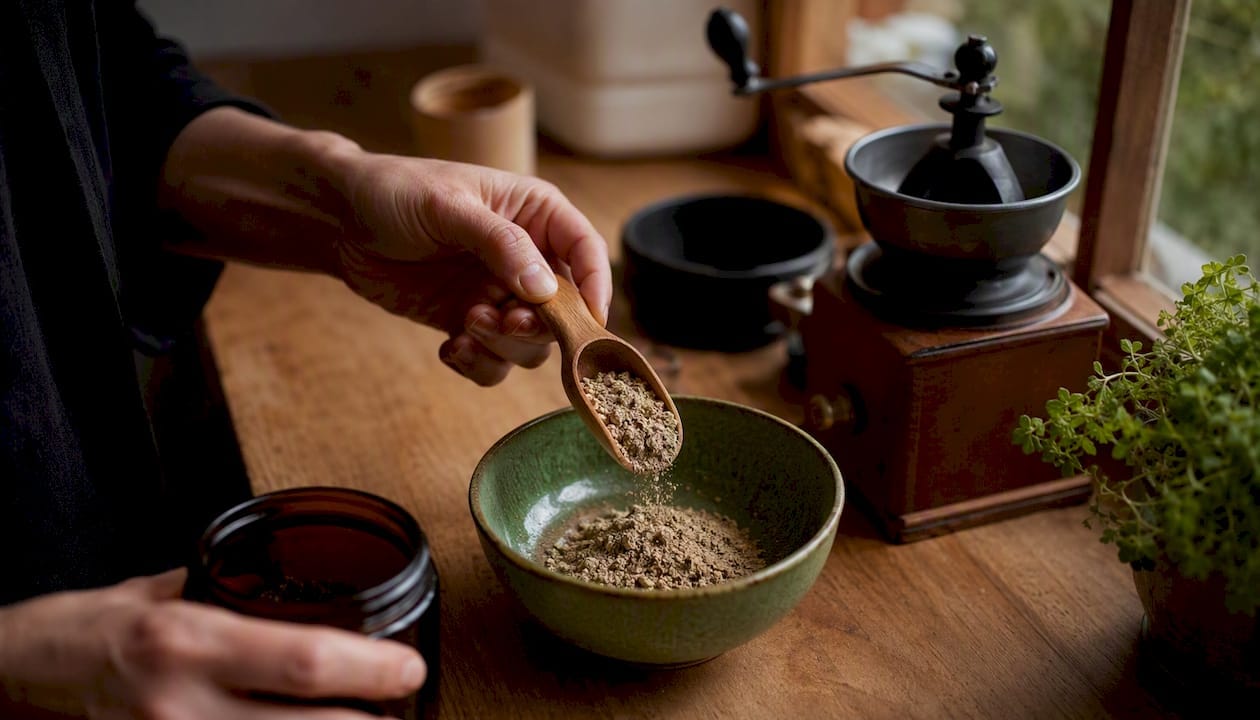
Grind your entire dried batch to a fine, uniform powder using a coffee grinder or spice mill. Mix the powder thoroughly in a clean container, then weigh individual doses directly onto the scale or into capsules. A scale with 0.001 g (1 mg) precision is the minimum you need for doses below 0.3 g. Community guidance consistently recommends this approach for reducing within-batch variation.
Calibrate your scale before every session using a certified calibration weight. Place the scale on a flat, vibration-free surface and tare your weighing container before adding powder.
Volumetric dosing for LSD and liquid preparations
Dissolve a known quantity into a precisely measured volume of distilled water or food-grade ethanol. Use an oral syringe (1 ml or 5 ml, graduated in 0.1 ml increments) to draw your target volume. Store the solution in an amber glass bottle away from light and heat, and label it with the concentration, preparation date, and your initials.
Encapsulation
Capsules (size 00 or 0) are useful for portability and for masking the taste of mushroom powder. Fill them using a capsule-filling tray after weighing each batch portion. The key limitation is that you must weigh the powder before filling, not after; capsule weight alone tells you nothing about dose accuracy.
Tools checklist:
- Milligram scale (0.001 g precision) with calibration weights
- Coffee grinder or spice mill for homogenisation
- Mixing bowl or zip-lock bag for blending powder
- Oral syringes (1 ml and 5 ml)
- Amber glass storage bottles
- Capsule-filling tray and size 00 capsules
- Permanent marker and labels
You can find precision measuring equipment suitable for home microdosing preparation through Sporebuddies’ mycology equipment range.
Pro Tip: After grinding, pour the powder into a zip-lock bag and shake vigorously for 60 seconds before weighing. This simple step distributes alkaloids more evenly than mixing in an open bowl, where lighter particles settle differently.
Which microdosing protocols should you know about?
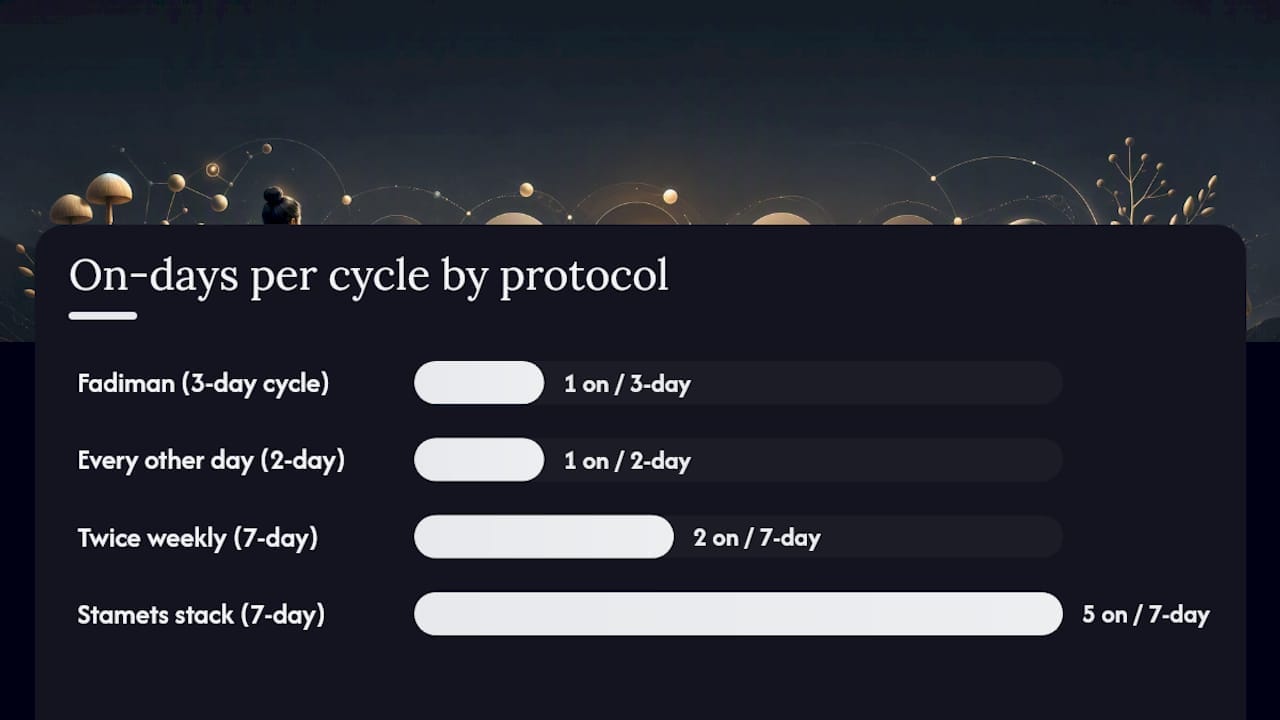
The most widely referenced schedule is the Fadiman protocol, named after researcher James Fadiman: dose on day 1, observe on day 2, rest on day 3, then repeat. The two-day gap prevents acute tolerance from building and gives you a clear baseline for comparison.
Other common schedules include:
- Every other day: Dose on day 1, rest on day 2, repeat. Simpler to track but offers less buffer against tolerance.
- Twice weekly: Fixed days (e.g., Monday and Thursday), which suits people with predictable weekly routines.
- Stamets stack: A named approach combining psilocybin with lion’s mane mushroom and niacin on a five-days-on, two-days-off schedule. This is a community protocol, not a clinically validated treatment.
Consistent measurement is what makes any protocol meaningful. Prepare a full cycle’s worth of pre-weighed doses before you start, label each one with the date it is to be taken and the exact weight, and store them in a cool, dark place. This removes the temptation to re-weigh on the day and eliminates handling errors.
A simple 8-week first-trial timeline:
- Week 1: Establish baseline. Log mood, sleep, and focus daily with no dose.
- Weeks 2–4: Run your chosen protocol at your starting dose. Log every dose day and rest day.
- Week 5: Rest week. No doses. Observe whether baseline mood changes.
- Weeks 6–7: Resume protocol. If no effect was noticed in weeks 2–4, increase dose by 25% for this cycle only.
- Week 8: Final rest week and review. Compare logs from weeks 2–4 and 6–7.
Tolerance to psilocybin and LSD develops with regular use, which is precisely why rest days are built into every established protocol rather than being optional. Skipping them does not intensify the effect; it usually eliminates it.
UK legal status, safety cautions, and harm reduction
UK legal position: Psilocybin and LSD are both Class A controlled substances under the Misuse of Drugs Act 1971. Possession carries a maximum penalty of seven years’ imprisonment; supply carries up to life. This article does not constitute legal advice. If you have questions about your specific situation, consult a qualified solicitor. For safety and welfare support, Sporebuddies’ microdosing safety FAQ covers harm-reduction principles within the UK context.
Medical cautions:
- SSRIs and MAOIs interact with psilocybin and LSD in ways that can blunt effects or, in the case of MAOIs, amplify them dangerously. Never adjust or stop prescribed medication without speaking to your prescribing doctor first.
- A personal or family history of psychosis, schizophrenia, or bipolar disorder with psychotic features is a significant contraindication.
- Cardiac conditions warrant caution with any serotonergic substance; seek medical advice before proceeding.
Harm-reduction checklist:
- Never drive or operate machinery on a dose day, even at sub-perceptual levels.
- Start at the lowest plausible dose and increase only after a full protocol cycle.
- Avoid combining with alcohol, cannabis, or other psychoactive substances.
- Store all prepared doses securely, out of reach of others, and clearly labelled.
- If you experience unexpected distress, contact NHS 111 or attend your nearest urgent care centre.
Pro Tip: If you are on any prescribed medication, print out the drug’s summary of product characteristics (available via the MHRA’s medicines database) and bring it to your GP appointment. It makes the conversation about potential interactions far more productive.
How to titrate your dose and keep a useful log
Titration means finding your personal sub-perceptual threshold through small, systematic adjustments rather than guesswork.
- Set your starting dose. Use the low end of the range for your substance: 0.05–0.07 g for mushrooms, or 5 µg for LSD.
- Hold it constant for one full protocol cycle (typically two to three weeks on the Fadiman schedule).
- Review your log. If you noticed no effect whatsoever, increase by 25% for the next cycle. If you noticed any perceptual change, decrease by 25%.
- Allow at least one rest week between cycles before changing the dose.
- Repeat until you find the highest dose that remains genuinely sub-perceptual across multiple protocol cycles.
Minimal logging template:
| Field | What to record |
|---|---|
| Date and time | e.g., March, morning |
| Dose (weight or volume) | e.g., 0.1 g dried powder / 1 ml solution |
| Mood score (1–10) | Rate before dosing and at 4 hours |
| Focus score (1–10) | Rate at 2 hours and end of day |
| Sleep quality (1–10) | Rate the following morning |
| Side effects | Any sensory, cognitive, or physical changes |
| Notes | Anything unusual worth tracking |
Run each dose level for at least one complete protocol cycle before judging its effect. A single data point is not enough; you need several dose days at the same level to see a pattern.
Worked examples: converting psilocybin percentage to microdoses
Because no home grower has access to laboratory assays, you must work from an assumed psilocybin percentage. Using a conservative estimate protects against accidentally taking more than intended.
Psilocybin content per gram at different assumed concentrations:
- Start with 1 g of dried mushroom powder.
- Multiply by the assumed percentage: 1 g × 0.005 = 0.005 g = 5 mg psilocybin per gram.
- Decide your target microdose in mg. A conservative target might be 0.5 mg psilocybin.
- Divide target by concentration: 0.5 mg ÷ 5 mg per g = 0.1 g of dried powder per dose.
- Weigh 0.1 g on your milligram scale. That is your dose.
The limit of this approach is real: you are working from an assumption, not a measurement. Lab assays using high-performance liquid chromatography (HPLC) or LC-MS/MS are the only way to know the actual psilocybin content of a specific batch. Home calculation gives you a working estimate, not a guarantee.
Ready to start measuring? Sporebuddies can help
If you are preparing for a structured microdosing practice, having the right cultivation foundation matters. Sporebuddies stocks a range of mushroom spore syringes for research and microscopy use, along with mushroom substrate and growing supplies for home cultivators. Browse the full microdosing guides on the Sporebuddies site for step-by-step preparation workflows that complement the measurement methods covered here.
Sources
- The popularity of microdosing of psychedelics: What does the science say? – Harvard Health
- Microdosing with classical psychedelics: research trajectories and practical considerations (Raz Lab PDF)
- Analytical quantification of LSD and metabolites in controlled dosing studies (PMC article)
- Psychedelic Drug Microdosing Practices: A Qualitative Online Exploration
- What Is Microdosing? – WebMD
- Psychedelics
This article is for general information only and does not constitute medical or legal advice. Consult a qualified medical professional before making any changes to your health or medication, and seek independent legal advice regarding the legal status of controlled substances in the UK.
This article is general information, not a substitute for advice from a qualified doctor. Consult a qualified healthcare professional about your own circumstances before acting on anything here.
FAQ
What is the standard unit for measuring a psilocybin mushroom microdose?
Dried psilocybin mushrooms are measured in grams (g), with most community users working in the 0.1–0.3 g range. A milligram-precision scale (0.001 g) is the minimum tool needed for reliable measurement at these quantities.
How do you measure an LSD microdose accurately at home?
Because LSD doses (5–20 µg) are far too small to weigh directly, volumetric dosing is the standard method: dissolve a known quantity in a measured volume of distilled water, then draw exact volumes using a calibrated oral syringe.
What is the difference between a microdose and a mini-dose?
A microdose is genuinely sub-perceptual, producing no noticeable change in consciousness during normal activity. Research suggests perceptual effects for LSD can begin around 20–26 µg; anything at or above that threshold is generally considered a mini-dose rather than a true microdose.
Why does the same gram weight of mushrooms sometimes feel stronger or weaker?
Psilocybin content varies with species, strain, mushroom part (caps vs stems), growing conditions, drying completeness, and storage. Grinding an entire batch to a uniform powder before weighing reduces within-batch variation, but between-batch differences remain unavoidable without lab assay data.
Is microdosing psilocybin or LSD legal in the UK?
No. Both psilocybin and LSD are Class A controlled substances under the Misuse of Drugs Act 1971. Possession and supply carry serious criminal penalties. This article does not constitute legal advice; consult a qualified solicitor for guidance specific to your situation.