
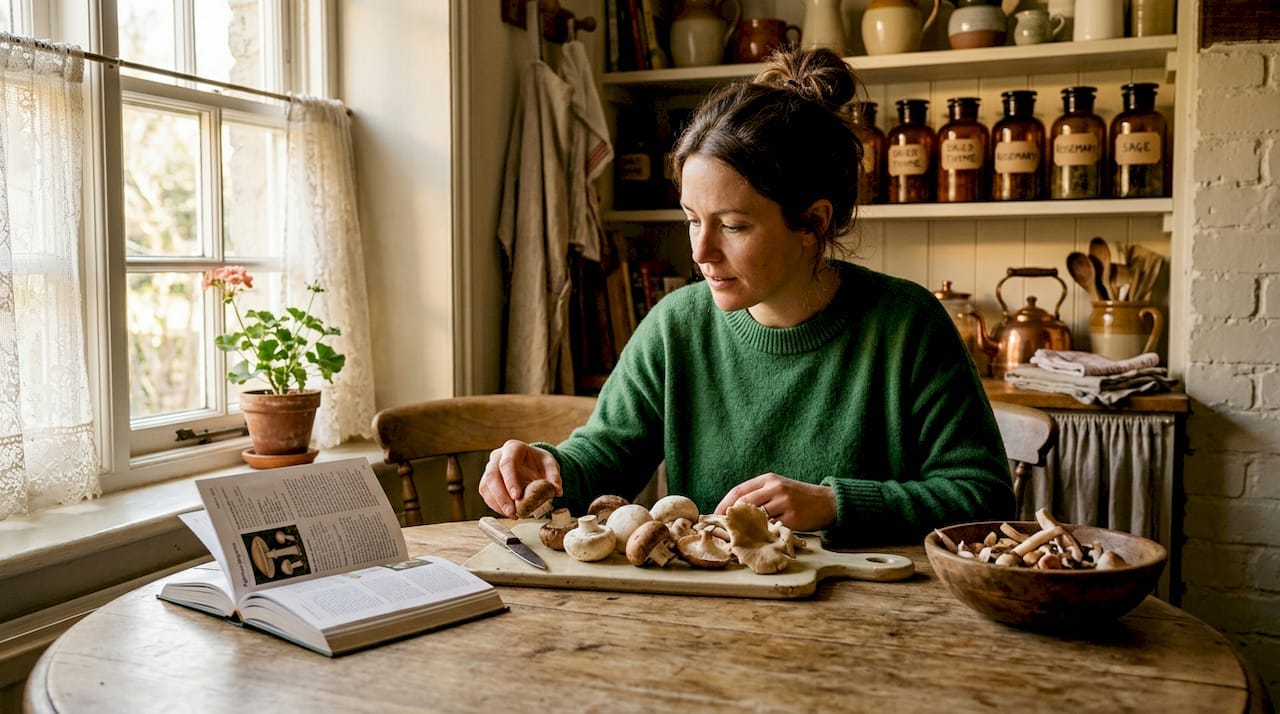
Whether you are planning a foray into foraging or simply looking to move beyond the standard button mushroom, having a reliable guide to edible mushroom varieties makes all the difference. The world of edible fungi (the mycological term for what most of us call mushrooms) stretches far beyond the supermarket shelf. From the rich, woody depth of porcini to the delicate crunch of enoki, each variety brings something genuinely distinct to the plate. But that diversity also comes with real responsibility. Choosing, identifying, and preparing mushrooms safely is not optional. It is the foundation of everything else.
Table of Contents
- Key takeaways
- A practical guide to edible mushroom varieties: what to look for first
- 1. White button mushrooms
- 2. Cremini (chestnut) mushrooms
- 3. Portobello mushrooms
- 4. Shiitake mushrooms
- 5. Oyster mushrooms
- 6. Lion’s mane mushrooms
- 7. Chanterelle mushrooms
- 8. Porcini mushrooms
- 9. Morel mushrooms
- 10. Enoki mushrooms
- Comparing popular edible mushroom varieties at a glance
- Safety considerations every forager and home cook should know
- My honest take on mushroom foraging and cooking
- Grow your own edible mushrooms with Sporebuddies
- FAQ
Key takeaways
| Point | Details |
|---|---|
| Know your Agaricus bisporus | White button, cremini, and portobello are the same species at different maturity stages, offering versatile culinary options. |
| Lookalikes are genuinely dangerous | Death Cap mushrooms are lethal and cooking does not remove the toxins, making correct identification non-negotiable. |
| Morels require careful preparation | True morels must always be fully cooked; false morels such as Gyromitra species are poisonous. |
| Cultivation is the safest starting point | Growing edible varieties from reputable kits eliminates identification risk entirely for beginners. |
| Seasonality shapes availability | Most foraged varieties follow strict seasonal windows, so knowing your timing is as important as knowing your species. |
A practical guide to edible mushroom varieties: what to look for first
Before you start building a shopping list or lacing up your boots for a forage, it helps to understand what separates a useful mushroom choice from a frustrating one. The best edible mushroom varieties for your kitchen depend on more than just taste. Several practical factors shape whether a particular type will work for you.
- Flavour profile. Mushrooms range from mild and earthy (white button) to intensely savoury and almost meaty (porcini, shiitake). Matching the mushroom to your cooking style matters. Delicate varieties can disappear in a slow-cooked stew, while bold types can overpower a light salad.
- Availability and sourcing. Some edible mushroom types are year-round supermarket staples. Others are seasonal wild finds or require specialist suppliers. If you want consistency, cultivated varieties win every time.
- Ease of identification. For foragers, this is critical. Some species are distinctive and safe to learn solo with a good field guide. Others have dangerous lookalikes that even experienced pickers have mistaken.
- Preparation requirements. A few edible types need specific treatment before eating. Morels must always be fully cooked. Some varieties release excess moisture and need dry-frying first.
- Toxicity risk of lookalikes. Certain popular foraged mushrooms grow alongside highly toxic species. Understanding which ones carry higher identification risk is essential before you pick anything.
Pro Tip: If you are new to mushroom foraging, start with varieties that have no dangerous lookalikes in your region. Hedgehog mushrooms (Hydnum repandum) and giant puffballs are often recommended as beginner-friendly options because their identifying features are clear and distinctive.
For anyone focused on mushroom health benefits alongside flavour, the variety you choose also shapes the nutritional and functional compounds you get. That adds another layer to the selection process worth considering.
1. White button mushrooms
White button mushrooms are arguably the most consumed variety in the world. Mild, versatile, and available year-round, they work in everything from omelettes to pasta sauces. What most people do not realise is that the white button is simply an early-stage, commercially cultivated form of Agaricus bisporus, the same species that gives us cremini and portobello mushrooms. The only differences are age and colour.
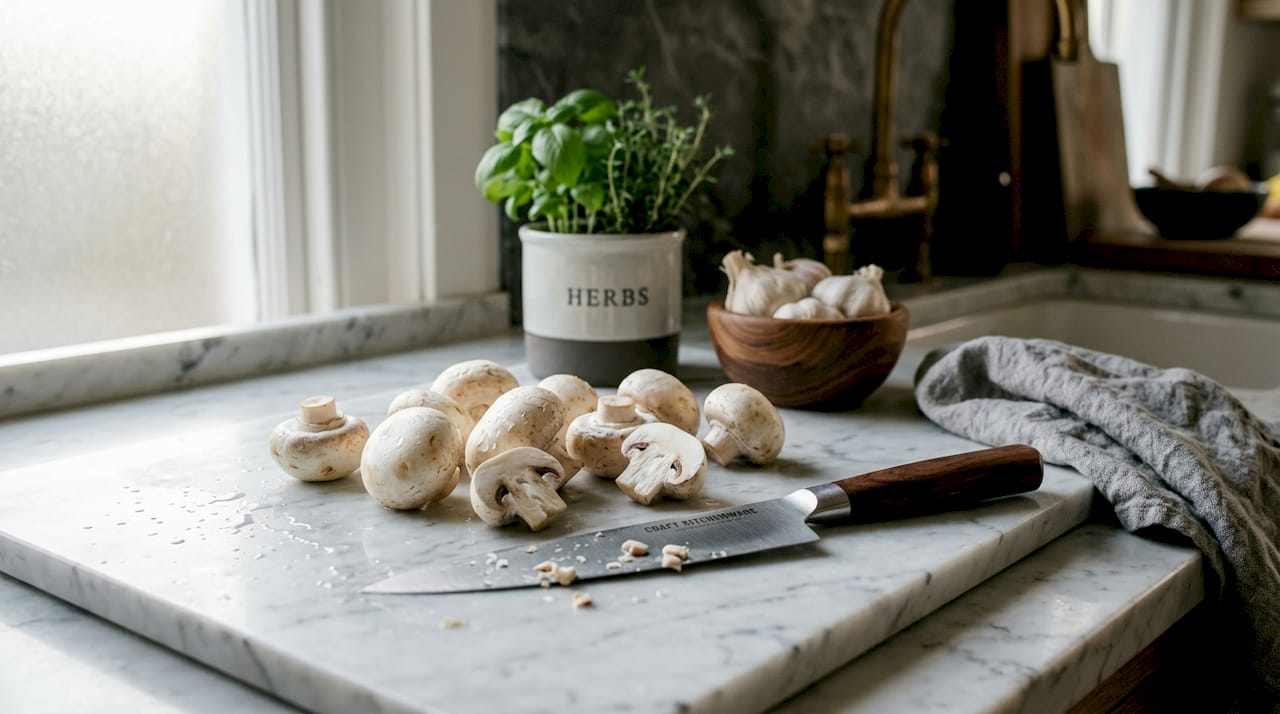
Because they are fully cultivated, there is no identification risk. They absorb flavours readily and work well raw in salads or cooked across almost any method.
2. Cremini (chestnut) mushrooms
Cremini mushrooms are the brown, slightly more mature version of the white button. They carry a deeper, earthier flavour and hold their texture better under heat, making them a favourite in soups, risottos, and roasted dishes. In the UK, you will often find them labelled as chestnut mushrooms.
As single-species variants, white button, cremini, and portobello allow considerable menu flexibility based purely on maturity and texture. Understanding this makes recipe planning noticeably more efficient.
3. Portobello mushrooms
The portobello is simply a fully mature cremini. At 10 to 15 centimetres across, its large, firm cap makes it ideal for grilling, roasting, and stuffing. The meaty texture holds up to high heat without collapsing, and the flavour is more pronounced than its younger counterparts.
Portobello is one of the best mushrooms to eat as a centrepiece rather than a supporting ingredient. It is also widely cultivated, so availability in the UK is consistent throughout the year.
4. Shiitake mushrooms
Shiitake (Lentinula edodes) are native to East Asia and have become one of the most popular cultivated varieties globally. They have a distinctly savoury, umami-rich flavour with a firm, slightly chewy texture. The stems are notably tougher than the caps and are often removed before cooking, though they are excellent for stocks.
Shiitake respond particularly well to dry heat. Pan-frying or roasting them concentrates their flavour in a way that steaming or boiling simply does not. They are one of the best mushrooms to eat for those who want depth of flavour without relying on wild-foraged species.
5. Oyster mushrooms
Oyster mushrooms (Pleurotus ostreatus) grow in fan-shaped clusters and come in several colour variants including pearl, golden, and pink. The flavour is gentle and slightly sweet, and the texture is delicate enough to cook quickly. They work brilliantly in stir-fries, cream sauces, and light soups.
One of the great advantages of oyster mushrooms is how well they suit home cultivation. They are among the fastest-fruiting and most forgiving varieties for beginners, and Sporebuddies offers grow kits specifically designed for this species.
6. Lion’s mane mushrooms
Lion’s mane (Hericium erinaceus) looks nothing like a conventional mushroom. It grows as a white, shaggy mass of cascading spines rather than a cap and stem. The texture is surprisingly similar to crab or lobster when cooked properly, and the flavour is mild and slightly sweet.
It is increasingly popular in the UK and is widely regarded as one of the most interesting specialty mushrooms available. For anyone building experience with edible mushroom varieties for production at home, lion’s mane is a rewarding species to grow.
7. Chanterelle mushrooms
Chanterelles (Cantharellus cibarius) are a prized foraged variety found in broadleaf and coniferous woodland across the UK, typically fruiting from late summer through autumn. They have a distinctive golden-yellow colour, a fruity apricot-like aroma, and a firm, slightly waxy texture that holds up beautifully in butter-based sauces.
They are not commonly cultivated commercially, so wild foraging or specialist markets are your main sources. The jack-o-lantern mushroom (Omphalotus olearius) is sometimes confused with chanterelles, so knowing the structural differences is worthwhile before you forage. Chanterelles have forking ridges rather than true gills, which is a reliable distinguishing feature.
8. Porcini mushrooms
Porcini (Boletus edulis) are among the most flavourful wild mushrooms available anywhere. The flavour is rich, nutty, and deeply savoury, and it intensifies significantly when dried. Dried porcini are a genuine kitchen staple for anyone who cooks Italian or French cuisine regularly.
Fresh porcini appear in the UK mainly from late summer into autumn, often found beneath oak and pine trees. They do not have a directly toxic lookalike in the UK, but some bitter bolete species can be confused with them. Learning the sponge-like underside (pores rather than gills) is a useful identification starting point for anyone reading a mushroom foraging guide.
9. Morel mushrooms
Morels (Morchella species) are among the most sought-after edible fungi, appearing briefly in spring. They have a honeycomb-textured cap and a hollow stem, and the flavour is intensely earthy with a nutty complexity. In the UK, they appear from March through May, often near ash trees or disturbed ground.
The critical safety point: morels must be fully cooked. Raw morels contain toxins that cause gastrointestinal distress. They must also be identified carefully, as false morels such as Verpa bohemica and Gyromitra species are poisonous. A true morel has a cap that is fully attached to the stalk and a completely hollow interior when sliced lengthways.
Pro Tip: If you find morels, preserve any surplus by soaking them briefly in lightly salted water, then drying in a dehydrator for 8 to 10 hours. Properly dried morels can be stored for months and rehydrated for use in risottos, sauces, and pasta dishes.
10. Enoki mushrooms
Enoki (Flammulina velutipes) are long, thin, and white with tiny caps. The cultivated form has an almost crunchy texture and a mild, slightly sweet flavour that suits raw applications in salads and Asian-style noodle dishes. They require very little cooking time and lose their appealing texture quickly if exposed to high heat for too long.
Wild enoki are darker and less commonly used in cooking, so the cultivated variety is what you will encounter in shops and restaurants.
Comparing popular edible mushroom varieties at a glance
| Variety | Flavour | Best cooking method | Sourcing | Safety notes |
|---|---|---|---|---|
| White button | Mild, earthy | Sauté, raw | Cultivated, year-round | No significant lookalikes |
| Cremini | Earthy, deeper | Roast, soups | Cultivated, year-round | No significant lookalikes |
| Portobello | Rich, meaty | Grill, stuff, roast | Cultivated, year-round | No significant lookalikes |
| Shiitake | Savoury, umami | Pan-fry, roast | Cultivated, year-round | No significant lookalikes |
| Oyster | Gentle, sweet | Stir-fry, sauté | Cultivated or wild | No significant lookalikes |
| Chanterelle | Fruity, buttery | Butter-sauté | Wild, late summer to autumn | Distinguish from jack-o-lantern (toxic) |
| Porcini | Nutty, rich | Sauté, dry and powder | Wild, summer to autumn | Check for bitter bolete confusion |
| Morel | Earthy, nutty | Fully cook only | Wild, spring | Never eat raw; distinguish from false morels |
| Enoki | Mild, crunchy | Raw or light heat | Cultivated, year-round | No significant lookalikes |
| Lion’s mane | Sweet, seafood-like | Pan-fry in butter | Cultivated | No significant lookalikes |
Safety considerations every forager and home cook should know
This is not a section to skim. Mushroom poisoning in the UK and abroad causes serious harm every year, and the risks are real regardless of experience level.
The Death Cap mushroom (Amanita phalloides) is responsible for the majority of fatal mushroom poisonings worldwide. A 2026 outbreak in California resulted in three adult deaths and three liver transplants, and notably, cooking did not remove the toxicity. This is a critical point: heat does not neutralise all mushroom toxins. Some toxins are heat-stable, meaning there is no cooking method that makes a toxic mushroom safe to eat.
Key safety practices for home cooks and foragers:
- Never consume a mushroom you cannot identify with complete confidence. Partial identification is not sufficient.
- Use a reputable field guide specific to the UK and cross-reference multiple features including cap shape, gill structure, spore colour, smell, and habitat.
- Be aware that wet seasons increase the flush of both edible and toxic species, raising the risk of accidental misidentification in the field.
- For guidance on poisonous lookalikes and UK-specific identification risks, Sporebuddies has a dedicated safety resource worth bookmarking.
- If you plan to sell wild-foraged mushrooms, bear in mind that in many jurisdictions this requires expert certification. In Michigan, for example, sellers must use certified mushroom identification experts. Similar considerations apply in various UK contexts.
- Even experienced mycologists find distinguishing toxic from edible wild mushrooms difficult in some cases. Treatment for poisoning often depends on managing symptoms rather than confirming exact species, which underlines how high the stakes can be.
Pro Tip: When in doubt, buy from a trusted supplier or grow your own. Cultivation eliminates identification risk entirely and gives you consistent, high-quality mushrooms every time.
Grow your own edible mushrooms with Sporebuddies
If this guide has sparked an interest in exploring edible fungi beyond the supermarket, Sporebuddies is a natural next step. The platform offers a range of mushroom growing kits designed specifically for popular edible varieties including shiitake, oyster, and lion’s mane. For those who want to go further, Sporebuddies also stocks mushroom spores and cultivation supplies including sterilised substrates and agar plates. Growing your own is the safest way to explore new varieties, and it gives you complete control over quality and freshness. Whether you are a beginner or an experienced home grower, the Sporebuddies catalogue has options to match where you are in your mushroom journey.
FAQ
What are the safest edible mushrooms for beginners?
Cultivated varieties such as oyster, shiitake, and white button mushrooms are the safest starting point because they carry no identification risk. For foraging, giant puffballs and hedgehog mushrooms are widely considered beginner-friendly in the UK due to their distinctive features.
How do I identify edible mushrooms safely in the wild?
Use a UK-specific field guide and check multiple features: cap shape and colour, gill or pore structure, spore print colour, stem characteristics, habitat, and smell. Never rely on a single feature, and avoid consuming any species you cannot identify with certainty.
Are morel mushrooms safe to eat?
Yes, but only when fully cooked. Raw morels contain toxins that cause gastrointestinal illness. They must also be correctly distinguished from false morels such as Gyromitra species, which are poisonous regardless of preparation.
Can cooking make a poisonous mushroom safe?
No. Some mushroom toxins are heat-stable and cannot be neutralised by cooking. The Death Cap mushroom is a clear example where cooking provides no protection against its lethal toxins.
What is the difference between cremini and portobello mushrooms?
Both are forms of Agaricus bisporus. Cremini mushrooms are harvested at a younger, smaller stage with a firmer texture, while portobello mushrooms are the fully mature form with a larger cap (10 to 15 centimetres) and a more pronounced, meaty flavour.