
If you have ever inoculated a substrate and watched nothing happen for days, you are not alone. Many home growers assume spore germination is automatic, something that just happens when conditions are roughly right. It is not. What is spore germination, really? It is a precise biological event triggered by a specific set of environmental signals, and understanding those signals is what separates growers who get consistent results from those who keep wondering what went wrong. This guide explains the science clearly and translates it into practical action for your home setup.
Table of Contents
- What is spore germination and why does it matter
- Environmental factors that influence spore germination
- Biochemical and genetic changes during germination
- Common challenges and solutions for successful germination at home
- Comparison of spore germination rates by temperature for popular fungi
- Why precise control of spore germination is a game-changer for home growers
- Start your mushroom cultivation journey with quality spores from Spore Buddies
- Frequently asked questions
Key Takeaways
| Point | Details |
|---|---|
| Spore germination process | Spore germination is the transition from dormancy to active growth triggered mainly by moisture and suitable environmental conditions. |
| Optimal conditions matter | Temperature around 25°C with high humidity and nutrient availability significantly increases germination success. |
| Biochemical activity | Germination involves complex gene activity and enzyme production to break spore coats and initiate mycelium growth. |
| Control challenges | Maintaining stable environment and substrate quality is essential to overcome common germination pitfalls in home cultivation. |
| Practical application | Understanding spore germination helps home growers optimise their setups for more consistent and robust mushroom cultivation results. |
What is spore germination and why does it matter
To understand how to improve germination, first we need to know exactly what spore germination is. A spore is a single reproductive cell, protected by a tough outer coat that allows it to survive harsh conditions for months or even years. Germination is the moment that dormancy ends. As spore germination research explains, spore germination is the process where dormant spores transition to active growth, triggered by moisture uptake and metabolic activation.
That transition is not passive. The spore coat softens, water enters the cell, and a cascade of chemical activity begins. Enzymes switch on, energy reserves are mobilised, and the spore begins to swell. Eventually, a tiny thread called a germ tube pushes through the outer layer. That germ tube is the beginning of mycelium, the white, thread-like network that colonises your substrate and ultimately produces your mushrooms. Understanding how spores drive mushroom growth gives you a solid foundation before you ever touch a substrate.
Here is why this matters for you practically:
- No germination means no mycelium. Without successful germination, your substrate will not colonise, no matter how good your other conditions are.
- Weak germination leads to weak mycelium. A spore that germinates under poor conditions starts at a disadvantage and is far more vulnerable to contamination.
- Understanding germination helps you diagnose failure. When something goes wrong, you can trace it back to the specific condition that was missing rather than guessing.
- Consistent germination gives consistent yields. Once you know the triggers, you can replicate them reliably across every grow.
The spore life cycle starts long before fruiting. Getting germination right is the single most important step in the whole process.
Environmental factors that influence spore germination
Knowing the biological process enables us to identify which environmental factors are critical to control for successful germination. These are not suggestions. They are the conditions that spores have evolved to respond to, and missing any one of them will slow or stop germination entirely.
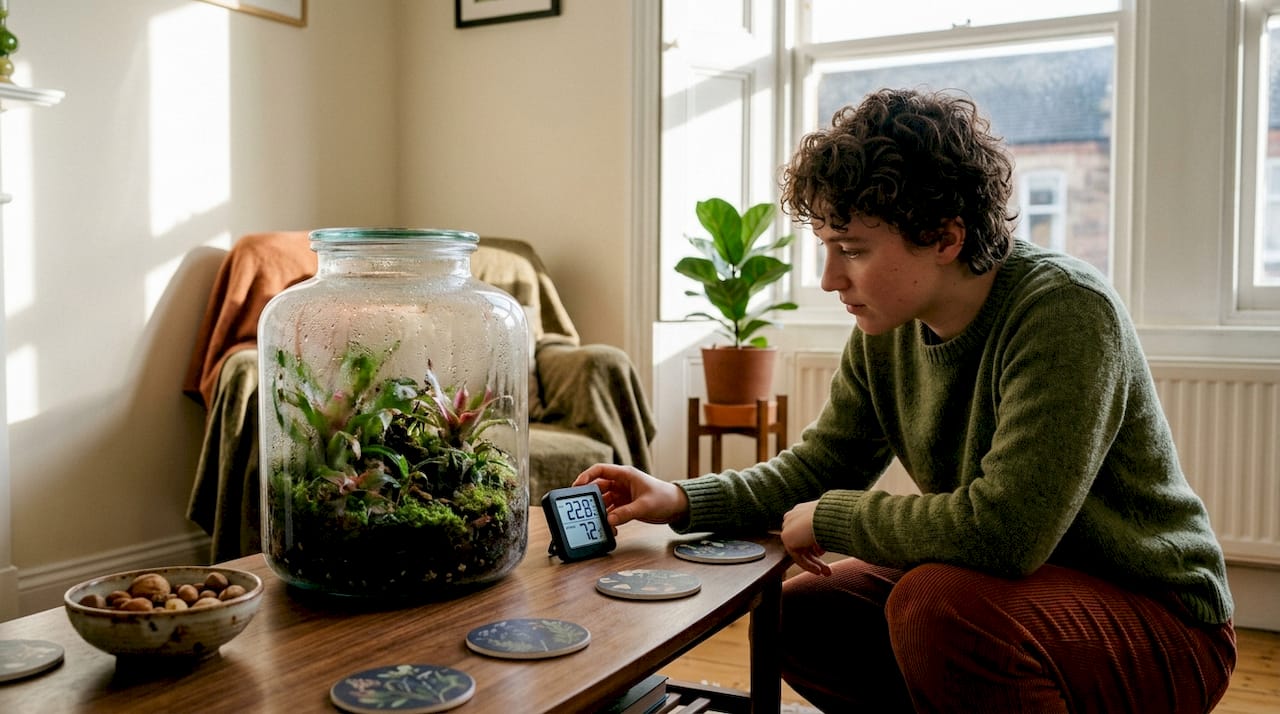
Temperature is the most measurable factor. Optimal spore germination occurs between 20°C and 27°C, with high humidity and nutrient availability triggering enzyme synthesis. Push beyond that range and enzyme function degrades. Drop below it and metabolic activity slows to a crawl. Impressively, peak germination rates occur at 25°C, reaching up to 95.67% within just 24 hours, which is a dramatic drop-off if you let your incubation space fluctuate even a few degrees.
Here are the key environmental factors you need to manage:
- Temperature: Maintain 20°C to 27°C. Use a thermometer inside your incubation space, not just in the room. Ambient room temperature and the temperature inside a sealed container can differ by several degrees.
- Humidity: Spores need moisture to rehydrate their outer coat. Relative humidity of 90% or above is ideal for most species during germination.
- Nutrient substrate: The presence of nutrients signals to the spore that it has landed in a viable environment. This is why a well-prepared substrate is not just about feeding mycelium later. It actively triggers germination enzymes.
- pH: Most fungal spores prefer a slightly acidic to neutral pH, roughly between 5.5 and 7.0. An incorrectly prepared substrate can inhibit germination before it even begins.
- Light and air exchange: These matter less at the germination stage than during fruiting, but stagnant, CO2-heavy air inside a poorly ventilated container can still impede early growth.
Pro Tip: If you are growing in the UK during winter, your ambient room temperature can easily fall below 18°C overnight. A small seedling heat mat set to 25°C under your incubation container makes an immediate difference to germination rates without requiring you to heat an entire room.
Learning to optimise your mushroom grow through a disciplined environmental approach is what separates growers who colonise every bag from those who lose half their attempts. Choosing the right mushroom substrate is equally important, because nutrient content and moisture retention both feed directly into the conditions for spore germination.
Biochemical and genetic changes during germination
Beyond environment, the biochemical shifts inside spores govern successful germination outcomes. These internal changes are fascinating, and knowing about them helps you understand why your substrate preparation and environmental controls matter so much at a cellular level.
The spore development process follows a clear sequence once the right conditions are met:
- Rehydration: Water enters the spore through its outer coat, swelling the cell and beginning the activation process.
- Metabolic activation: Dormant enzymes switch on. Energy stored within the spore, primarily in the form of trehalose (a sugar), is broken down to fuel early growth.
- Gene expression changes: Differential gene activity drives the ultrastructural and biochemical changes essential for the dormancy-to-growth transition. Genes responsible for cell wall construction, enzyme production, and stress responses all become active.
- Isotropic swelling: The spore expands uniformly in all directions. This is visible under a microscope and is a reliable indicator that germination is underway.
- Germ tube emergence: Growth becomes polarised. The cell stops expanding uniformly and begins pushing outward in one direction, forming the germ tube that becomes the first strand of mycelium.
The transition from spore to germ tube is not just a physical change. It is a complete reprogramming of cellular behaviour, driven by gene activity that responds directly to the environment the spore finds itself in.
Different spore strains show distinct biochemical responses to the same conditions, which is one reason why strains like Golden Teacher and Penis Envy behave differently even when placed in identical setups. If you are working with spore prints and agar, watching germination progress under a microscope gives you real-time feedback on whether your conditions are working.
Common challenges and solutions for successful germination at home
Understanding both environmental and biochemical factors helps us tackle the practical challenges faced during home cultivation. Most germination failures in home setups come down to a small number of recurring problems, all of which are entirely preventable once you know what to look for.
Here are the most common issues and how to address them:
- Temperature fluctuations: Even brief drops to 15°C or spikes above 30°C can reset the germination process or kill spores outright. Use a digital thermometer with a min/max memory function so you can see what happens overnight, not just when you check.
- Inconsistent humidity: Too dry and spores cannot rehydrate. Too wet and you create the conditions for bacterial contamination, which will outcompete your spores. Aim for high humidity without pooling water on your substrate surface.
- Contaminated equipment: Temperature and humidity control are crucial to reliably induce germination, but all of that effort is wasted if your syringes, jars, or substrate are not properly sterilised. Contamination almost always wins against early-stage mycelium.
- Poor substrate preparation: Substrates that are too wet, too dry, or have an incorrect nutrient balance will either block germination signals or create a hostile environment for germ tube growth.
- Impatience: Under ideal conditions, germination typically takes 3 to 7 days. Many growers disturb their setup too early, either checking too frequently or moving containers in a way that causes temperature drops.
Pro Tip: When you first inoculate, label your container with the date and resist opening or moving it for at least 5 days. Even brief exposure to cold air from opening a container can set germination back significantly.
Following a proven home growing guide will help you avoid the most costly mistakes from the start. And if you suspect something has gone wrong mid-grow, knowing how to manage contamination early can save a batch that might otherwise be lost.
Comparison of spore germination rates by temperature for popular fungi
Now that we have covered factors and challenges, let us compare how temperature specifically affects germination rates for common mushroom species. This table reflects the general patterns supported by laboratory data on fungal germination behaviour, helping you fine-tune your incubation temperature to the species you are growing.
| Species | Germination at 20°C | Germination at 25°C | Germination at 30°C | Notes |
|---|---|---|---|---|
| Psilocybe cubensis | 60 to 70% | Up to 95% | 40 to 55% | Very temperature-sensitive above 28°C |
| Oyster mushroom (Pleurotus ostreatus) | 55 to 65% | 85 to 90% | 50 to 60% | Tolerates slightly lower temps well |
| Shiitake (Lentinula edodes) | 50 to 60% | 80 to 88% | 35 to 45% | Sharp decline above 28°C |
| Lion’s mane (Hericium erinaceus) | 45 to 55% | 78 to 85% | 30 to 40% | Prefers cooler range than others |
As research confirms, maximum germination was recorded at 25°C with rates up to 95.67%, and this pattern holds broadly across most cultivated species. The drop-off above 30°C is sharp and often irreversible. If your incubation space regularly hits 31°C or above, you will see noticeably lower germination and weaker early mycelium growth across all species.
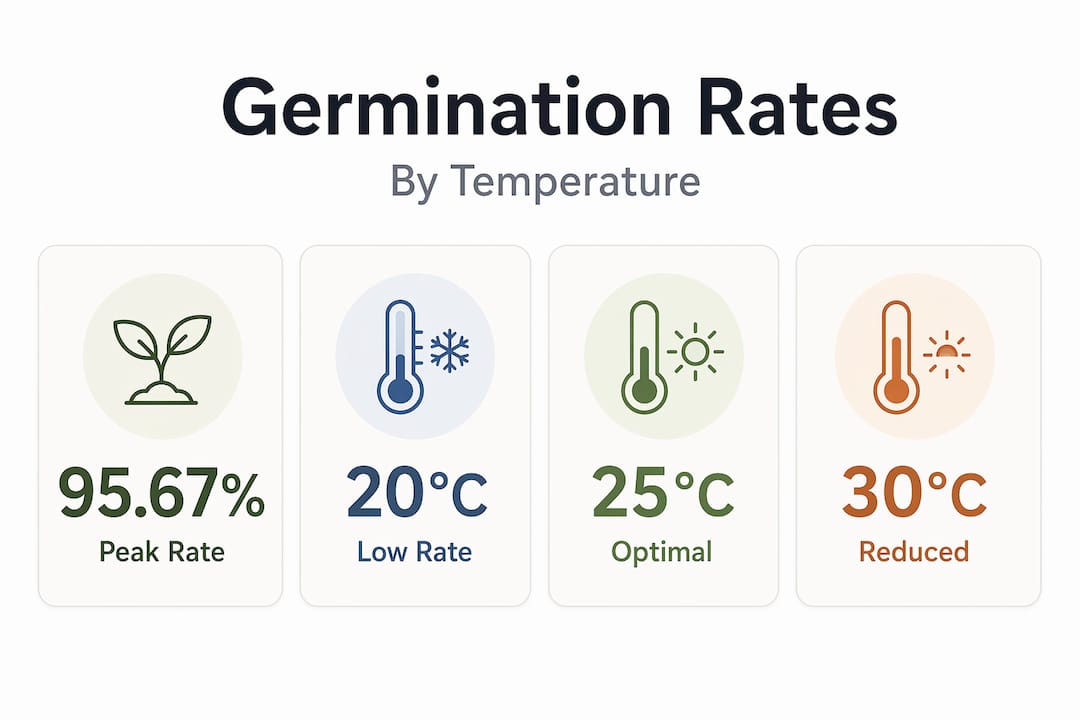
Matching your incubation temperature to the species you are working with is one of the simplest, most impactful changes you can make. Explore popular mushroom spore types to understand which strains suit your setup and climate best.
Why precise control of spore germination is a game-changer for home growers
Most new growers treat spore germination like planting a seed in soil: put it in, add water, and wait. That approach works sometimes, which is exactly why it persists. But when it fails, which it does regularly, growers tend to blame the spores rather than the conditions. After working through the data and science behind the spore germination stages, one truth stands out clearly: spore germination is subject to fine environmental control that determines success far more than the quality of the spores themselves.
Good spores in poor conditions will still fail. Average spores in excellent conditions will often surprise you. That is a counterintuitive fact that experienced growers understand but rarely say out loud, because it sounds like it undermines the importance of sourcing quality genetics. It does not. Quality matters. But environment is what activates that quality.
The growers who make consistent progress are those who treat their incubation space with the same seriousness as a laboratory. They measure temperature twice a day. They check humidity before and after sealing. They note the date of inoculation and observe without interfering. This level of attention is not obsessive. It is the difference between growing mushrooms and hoping mushrooms grow.
Understanding the biochemistry of germination also changes how you approach substrate preparation. When you know that nutrients actively trigger enzyme synthesis in spores, you stop treating substrate as passive filler and start treating it as part of your germination system. Following proven mycology cultivation insights built on this understanding can genuinely transform your results from unpredictable to reliable.
Start your mushroom cultivation journey with quality spores from Spore Buddies
If you want to put this knowledge into action, here is how Spore Buddies can equip you with the right materials for your mushroom growing projects. We stock a wide selection of quality mushroom spores suited to UK home growers, from popular strains like Golden Teacher and B+ through to oyster and lion’s mane varieties. Each spore syringe is prepared to a high standard to give your germination the best possible start. Alongside our spores, you will find premium mushroom substrate options ready to support healthy germination from day one. And if you want to build your knowledge alongside your setup, our mycology cultivation guide walks you through every stage of the process with practical, clear advice.
Frequently asked questions
What triggers fungal spores to germinate?
Fungal spores germinate primarily when moisture rehydrates them, activating enzymes and metabolic pathways, with temperature and nutrient presence also playing key roles.
What is the optimal temperature for spore germination?
Most fungal spores germinate best between 20°C and 27°C, with 25°C producing peak rates of up to 95.67%.
How long does spore germination usually take?
Under optimal conditions, fungal spore germination commonly occurs within 3 to 7 days, though this varies by species and environment.
Why is nutrient availability important for spore germination?
Nutrients trigger enzyme production that breaks down the spore coat, ensuring spores germinate only where conditions are genuinely suitable for growth and survival.