
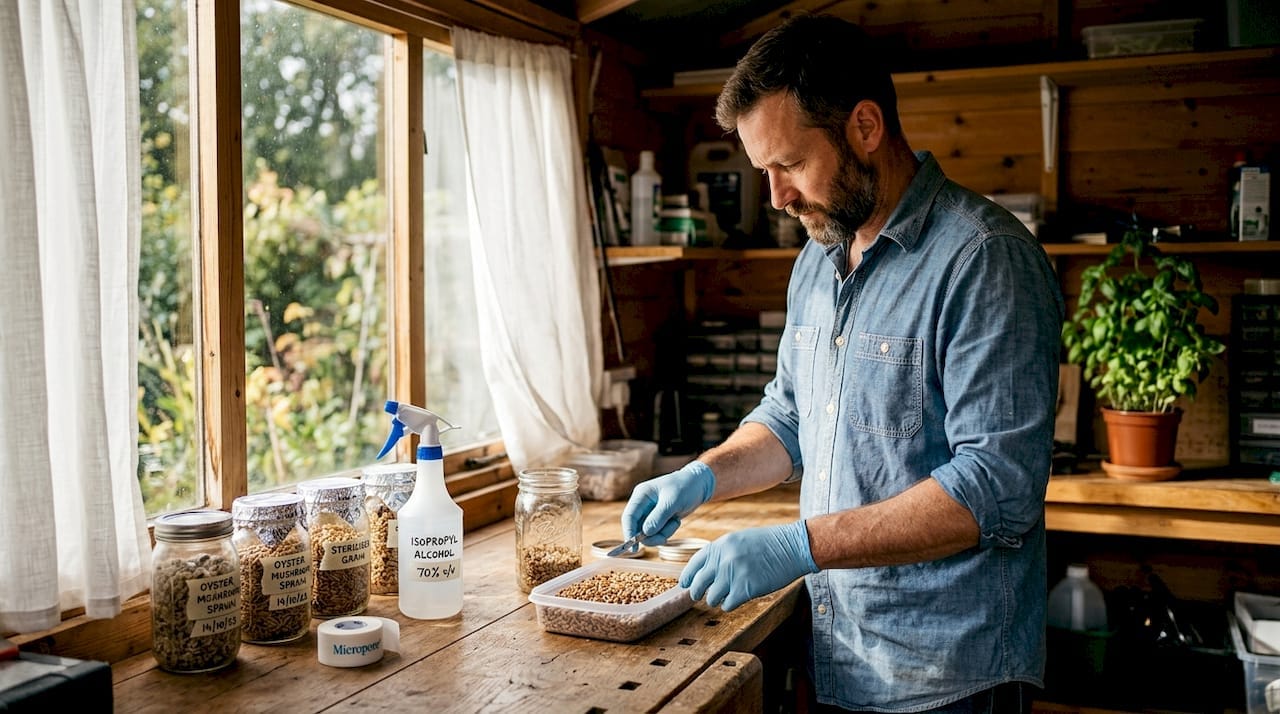
Mushroom inoculation is the process of introducing fungal spawn or spores into a prepared growing medium so that mycelium can establish, colonise, and eventually fruit. If you are new to mushroom cultivation, this is the single step that determines whether your grow succeeds or fails before it has even begun. Understanding what mushroom inoculation involves, why it works, and which method suits your setup will save you time, materials, and considerable frustration. This guide covers the biology behind the process, the main types of mushroom inoculation methods, practical steps for beginners, and the factors that separate a thriving grow from a contaminated one.
Table of Contents
- Key takeaways
- What is mushroom inoculation and how it works
- Types of mushroom inoculation methods
- How to inoculate mushrooms at home
- Factors that affect inoculation success
- My honest take on inoculation
- Start your grow with quality supplies from Sporebuddies
- FAQ
Key takeaways
| Point | Details |
|---|---|
| Inoculation introduces spawn | You introduce mushroom spawn or spores into substrate to trigger mycelium growth. |
| Method choice matters | Log, grain, and bag inoculation each carry different timelines and contamination risks. |
| Sterility is not always the goal | Outdoor log inoculation relies on microbial competition, not a sterile environment. |
| Timing affects success | Logs must be inoculated within 2-4 weeks of felling to avoid competing decay fungi. |
| Colonisation takes patience | Mycelium colonisation on substrate bags typically takes 25 to 30 days before fruiting begins. |
What is mushroom inoculation and how it works
Mushroom inoculation is the act of seeding a substrate, whether that is wood, grain, straw, or another nutrient-rich material, with fungal material that will grow into a full mycelial network. The fungal material you introduce is called spawn. Spawn is essentially a carrier, such as grain, sawdust, or wooden plugs, that has already been colonised by the target fungal species. Spores, on the other hand, are the microscopic reproductive cells of the mushroom. Both can be used for inoculation, though spawn tends to colonise faster and more reliably in most home setups.
Spawn versus spores
Spawn is pre-germinated mycelium on a carrier. When you add it to substrate, the mycelium simply continues growing. Spores need to germinate first, which adds time and increases the chance of contamination taking hold before the mushroom mycelium becomes established. For beginners, understanding what is mushroom spawning helps clarify this distinction. Spawning refers specifically to mixing or placing spawn into bulk substrate, while inoculation is the broader term covering any method of introducing fungal material into a growing medium.
Mycelium and colonisation
Once inoculated, the spawn begins extending thread-like structures called hyphae through the substrate. These hyphae form the white, web-like mycelium you will see spreading through grain bags or across a log surface. The mycelium is essentially the organism itself. The mushroom fruit bodies you eventually harvest are just the reproductive structures it produces when conditions are right.
Key conditions needed for healthy colonisation include:
- Temperature: Most culinary species colonise best between 20°C and 26°C.
- Moisture: Substrate moisture content should sit around 60 to 65 percent for most species.
- Gas exchange: Mycelium produces carbon dioxide as it grows. Good air exchange prevents CO₂ from accumulating and stalling growth.
- Darkness: Most mycelium colonises better without direct light, though low indirect light will not halt growth.
- Cleanliness: Contamination from competing moulds, particularly Trichoderma (green mould), is the most common cause of failure in indoor setups.
Pro Tip: Grain bag colonisation takes 3 to 4 weeks and requires approximately 1.5 to 2 ccs of spore or culture solution per bag. Using too little inoculant slows colonisation and gives contamination more time to establish.
Types of mushroom inoculation methods
The mushroom inoculation process differs significantly depending on what substrate you are using and what species you want to grow. Each method has its own contamination profile, timeline, and level of technical skill required.
| Method | Timeline | Contamination risk | Best for |
|---|---|---|---|
| Hardwood log inoculation | 6 to 18 months | Very low, under 5% | Shiitake, oyster, lion’s mane outdoors |
| Grain spawn inoculation | 3 to 4 weeks | Up to 38% in amateur setups | Indoor bulk substrate production |
| Pasteurised straw bag | 2 to 4 weeks | Around 12% failure rate | Oyster mushrooms, beginners |
| Agar/liquid culture | Variable | Moderate | Cloning, strain work, spore germination |
Hardwood log inoculation
This is one of the oldest and most forgiving methods for outdoor growers. You drill holes in a freshly cut hardwood log in a diamond pattern, insert plug spawn (short wooden dowels colonised with mycelium), and seal the holes with food-grade wax. Shiitake inoculation frequently uses this technique. The wax seals out competing organisms while the mycelium colonises the wood over many months. Beeswax or cheese wax are the preferred choices. Avoid paraffin wax, which can crack and allow contaminants in.
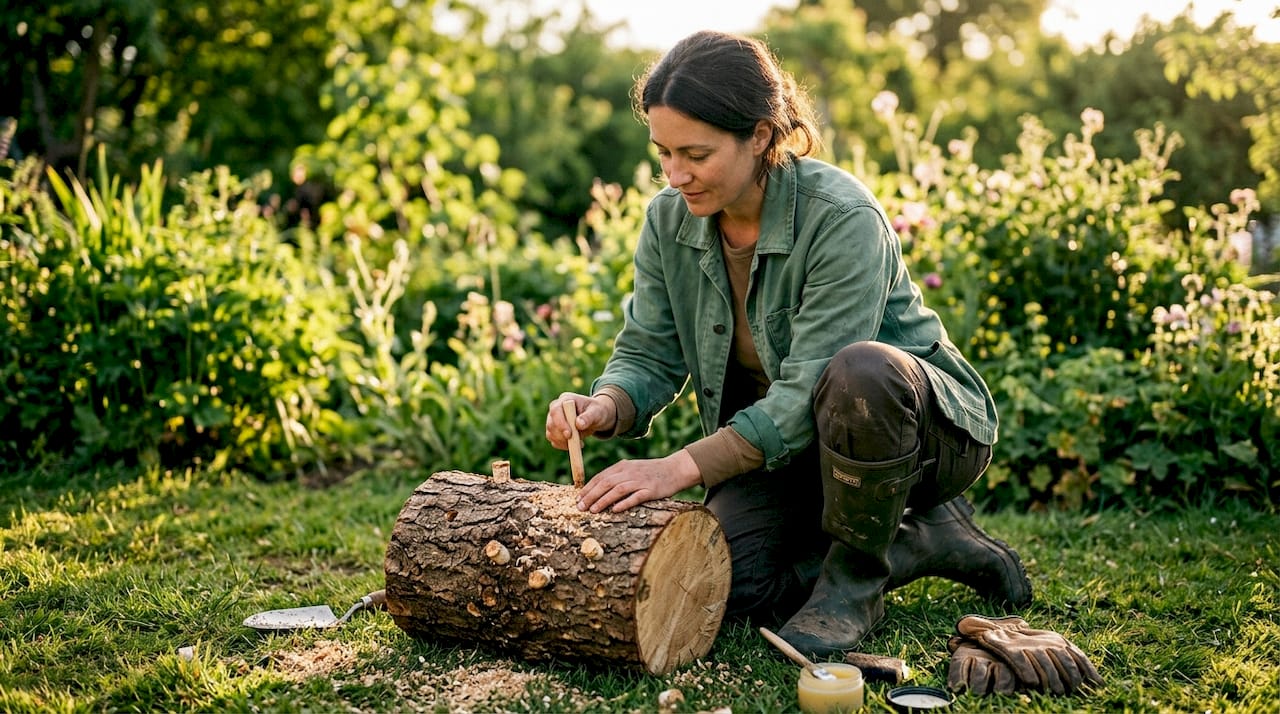
The major advantage of log inoculation is its resilience. Logs naturally host a range of microbes, and the introduced mycelium competes with these rather than requiring a sterile environment. The trade-off is time. You are typically waiting between six and eighteen months before the first flush appears.
Grain spawn inoculation
Grain spawn, usually rye, wheat, or oats, is sterilised and then inoculated with liquid culture or spore solution. The colonised grain is later used as spawn to inoculate bulk substrate. This method carries the highest contamination risk, up to 38 percent in amateur setups, because grain is extremely nutrient-dense and attractive to competing organisms. Strict sterile technique is non-negotiable here. A still air box or flow hood, flame-sterilised needles, and gloves are minimum requirements.
Bag substrate inoculation
Pre-sterilised or pasteurised substrate bags, filled with sawdust, straw, or a combination, are among the best mushroom inoculation methods for home growers wanting reliable indoor results. Pasteurised straw bags carry around a 12 percent failure rate, making them significantly more forgiving than grain. You inject liquid culture or crumble in grain spawn through a self-healing injection port or filter patch.
Pro Tip: For bag inoculation, time the inoculation within 10 to 15 days of mycelium reaching the bottom of the bag for best results. Acting too late increases contamination exposure.
How to inoculate mushrooms at home
Here is a practical walkthrough of the mushroom inoculation process for beginners. The steps below apply broadly to bag and grain inoculation, with notes on log methods where they differ.
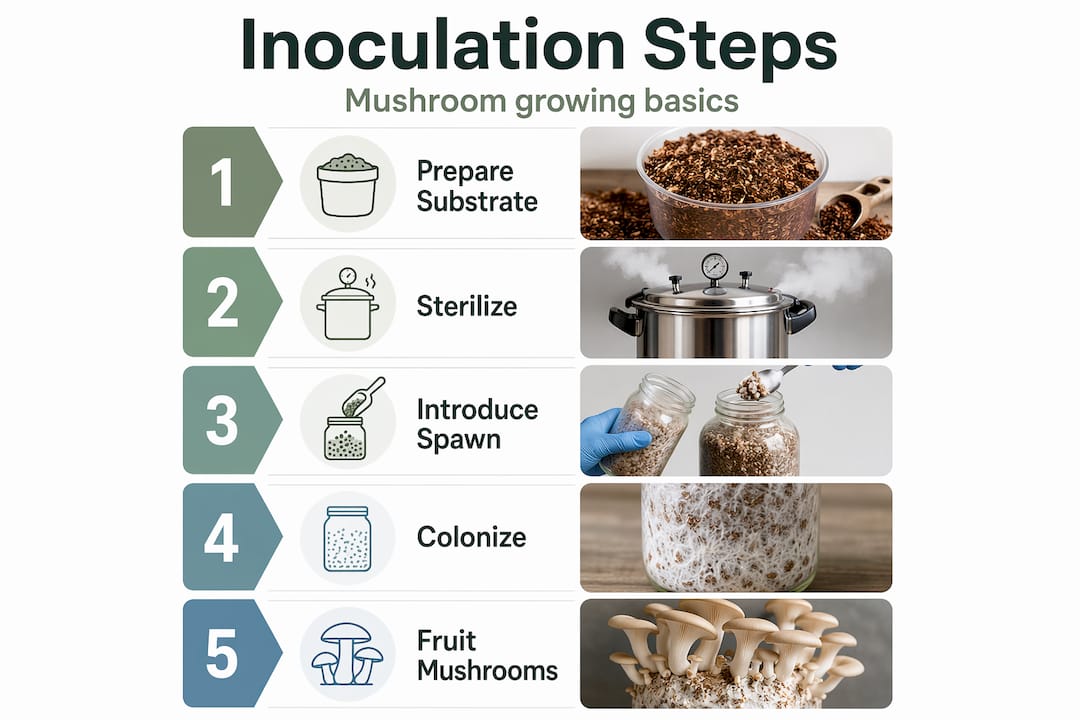
- Prepare your substrate. For grain bags, sterilise at 15 PSI for 2.5 hours in a pressure cooker. For straw, pasteurise by submerging in hot water at 70 to 80°C for one hour. Allow to cool fully before proceeding.
- Prepare your environment. Wipe all surfaces with isopropyl alcohol. Work in a still air box or use a flow hood if you have one. Wear gloves and avoid talking or coughing over open containers.
- Disinfect your tools and inoculant. Disinfect tools with alcohol and flame-sterilise needles before each injection. Wipe spore syringe ports with alcohol before use.
- Inoculate your substrate. For grain bags, inject 1.5 to 2 ccs of liquid culture or spore solution through the injection port. For straw bags, crumble grain spawn evenly through the bag in layers. For logs, drill holes in a diamond pattern every 10 cm along the log, insert plug spawn, and seal with wax.
- Seal and label. Date your bags or logs. Store in a clean, dark space at the appropriate temperature for your species.
- Incubation. Keep bags between 20 and 26°C and monitor for signs of colonisation. Mycelium growth on bags typically takes 25 to 30 days before fruiting can begin.
- Trigger fruiting. Once fully colonised, introduce fruiting conditions. Increase humidity to 85 to 95 percent, provide indirect light of 500 to 1000 lux, and improve air exchange. Soaking fully colonised substrate in cold water for 12 to 24 hours reliably triggers fruiting in many species.
Pro Tip: The most common beginner mistake is inoculating substrate that has not cooled fully after sterilisation. Heat above 35°C kills your spawn before colonisation even starts. Always wait until the bag feels cool to the touch.
Factors that affect inoculation success
Knowing the steps is one thing. Knowing what goes wrong and why separates growers who get consistent results from those who keep losing batches to contamination or poor colonisation.
Key factors to monitor include:
- Spawn quality and storage: Fresh spawn colonises faster and outcompetes contaminants more effectively. Store grain spawn in the fridge and use it within four to eight weeks of production.
- Inoculant rate: Under-inoculating gives contaminants a head start. Over-inoculating grain bags can cause metabolic heat that stresses the mycelium.
- Environmental contamination: Airborne mould spores are everywhere. Working quickly and minimising air movement during inoculation reduces exposure.
- Substrate moisture: Too wet and bacterial contamination becomes likely. Too dry and colonisation slows or stops.
- Healthy colonisation indicators: White, ropey, or fluffy mycelium spreading evenly through substrate is healthy. Yellow or brown liquid pooling, green or black patches, or sour smells all signal contamination.
- Choosing the right strain: Some strains colonise aggressively and are naturally more resistant to contamination, making them well suited to less sterile setups. Check out mushroom cultivation trends for 2026 to see which species and methods are gaining traction with UK home growers.
Manual inoculation in a standard workspace allows around 500 bags per day per person. If you are scaling up, purpose-built inoculation tents with proper disinfection protocols can increase that to roughly 2000 bags per day, though these are firmly in commercial territory.
Start your grow with quality supplies from Sporebuddies
Understanding the mushroom inoculation process is the foundation, but your results will only ever be as good as the quality of your starting materials. Sporebuddies supplies UK growers with everything needed to get started properly. Whether you are looking for mushroom spore syringes for your first inoculation, ready-to-use mushroom growing kits that take the guesswork out of substrate preparation, or professional-grade mycology equipment and supplies including sterilisation tools and injection ports, Sporebuddies has you covered. All products are sourced with quality and reliability in mind, so you spend less time troubleshooting and more time growing.
FAQ
What is mushroom inoculation in simple terms?
Mushroom inoculation is the process of introducing mushroom spawn or spores into a prepared growing medium so that mycelium can establish and colonise the substrate before eventually producing fruit bodies.
What is the difference between inoculation and spawning?
Inoculation is the broader term for introducing any fungal material into a growing medium. Spawning specifically refers to mixing colonised grain spawn into bulk substrate as part of the indoor cultivation process.
Which inoculation method has the lowest contamination risk?
Hardwood log inoculation carries the lowest contamination risk at under 5 percent, though it requires a wait of 6 to 18 months before the first harvest. Grain spawn inoculation carries the highest risk in home setups.
How long does it take for mycelium to colonise after inoculation?
Substrate bags typically colonise in 25 to 30 days, with first fruiting occurring 30 to 35 days after inoculation under ideal conditions.
Do I need a sterile environment to inoculate mushrooms at home?
For grain and supplemented substrate methods, yes. For outdoor log inoculation, strict sterility is not required because the mycelium naturally competes with environmental microbes. The method you choose determines the level of hygiene and equipment you need.