
Many home growers assume that mushroom hybridisation is as simple as mixing two batches of spores together and waiting for something new to appear. In reality, it is a precise biological process involving specific genetic interactions, compatible mating types, and carefully controlled conditions. When done correctly, hybridisation can dramatically improve what you grow at home, producing fungi with better yields, stronger disease resistance, and enhanced flavour. This article walks you through the genuine science behind mushroom hybridisation, explains the methods available to UK hobbyists, and helps you understand what it can realistically offer your cultivation setup.
Table of Contents
- Defining mushroom hybridisation: The essentials
- How mushroom hybridisation works: Scientific foundations
- Methods for creating mushroom hybrids at home
- Advantages and challenges of mushroom hybridisation
- What most guides miss about mushroom hybridisation
- Grow and innovate: Hybrid mushroom resources for UK enthusiasts
- Frequently asked questions
Key Takeaways
| Point | Details |
|---|---|
| Hybridisation explained | Mushroom hybridisation combines genetic material to produce new strains with improved traits for home growers. |
| Practical methods | Spore crossing, mycelial fusion, and protoplast fusion are accessible approaches, each with unique requirements. |
| Hybrid benefits | Hybrids often yield faster growth, greater resistance, and novel flavours or wellness effects. |
| Verification challenges | Microscopy and genetic tests are essential to confirm true hybrids—visual traits alone may mislead. |
| UK grower support | Specialised supplies and guides empower UK enthusiasts to safely and successfully create mushroom hybrids. |
Defining mushroom hybridisation: The essentials
Mushroom hybridisation is not a new concept, but it is frequently misunderstood among home growers. At its core, mushroom hybridisation combines genetic material from two or more compatible strains or species to create offspring with combined desirable traits, including improved yield, disease resistance, flavour, or growth rate. The key word here is compatible. Not every mushroom can hybridise with every other, and understanding why that is the case is the foundation of everything else in this field.
Unlike plant hybridisation, which you might associate with breeding rose varieties or developing disease-resistant wheat, mushroom hybridisation operates through fundamentally different biological mechanisms. Plants reproduce sexually using gametes, pollen and eggs that fuse to create seeds. Mushrooms, however, reproduce through spores that germinate into mycelium, the thread-like network that forms the bulk of a fungal organism. When two compatible mycelia meet, they can fuse their genetic material in a process called plasmogamy, forming what is known as a heterokaryon. This is a single organism containing two genetically distinct nuclei, and it forms the basis of a true hybrid.
Understanding the vocabulary helps. Here are the key terms you will encounter as you explore this field:
- Mycelium: The vegetative part of a fungus, made up of branching thread-like structures called hyphae.
- Plasmogamy: The fusion of two fungal cells without the immediate fusion of their nuclei, creating a heterokaryon.
- Heterokaryon: A fungal cell or organism containing two or more genetically distinct nuclei.
- Mating-type loci: Specific regions on fungal chromosomes that determine whether two strains are sexually compatible.
- Heterosis (hybrid vigour): The tendency of hybrid offspring to outperform either parent in growth, yield, or resilience.
Why does this matter for you as a cultivator? Because the mushroom health benefits associated with many popular species, including lion’s mane, oyster, and shiitake, can potentially be enhanced through selective hybridisation. A hybrid strain may produce higher concentrations of beneficial compounds, fruit more reliably in your growing conditions, or resist the moulds and bacteria that frequently derail home grows.
“Hybridisation in mushrooms is not about accident or chance. It is a deliberate, knowledge-driven process that rewards patience and scientific curiosity.”
Getting started means understanding the difference between true hybridisation and simple co-cultivation. Many beginners place two strains in the same substrate and assume the result is a hybrid. It rarely is. True hybridisation requires genetic exchange at the cellular level, and confirming it demands more than observing physical differences in the fruiting body.
How mushroom hybridisation works: Scientific foundations
The biological mechanics of mushroom hybridisation are what set it apart from breeding in other kingdoms of life. As noted in peer-reviewed research on fungal genetics, mushroom hybridisation differs from seed plants because it relies on mycelial interactions rather than gametes. Success depends on mating-type loci, which are unifactorial in many Agaricus species, and verifying true hybrids requires microscopy or genetic analysis rather than simple observation.
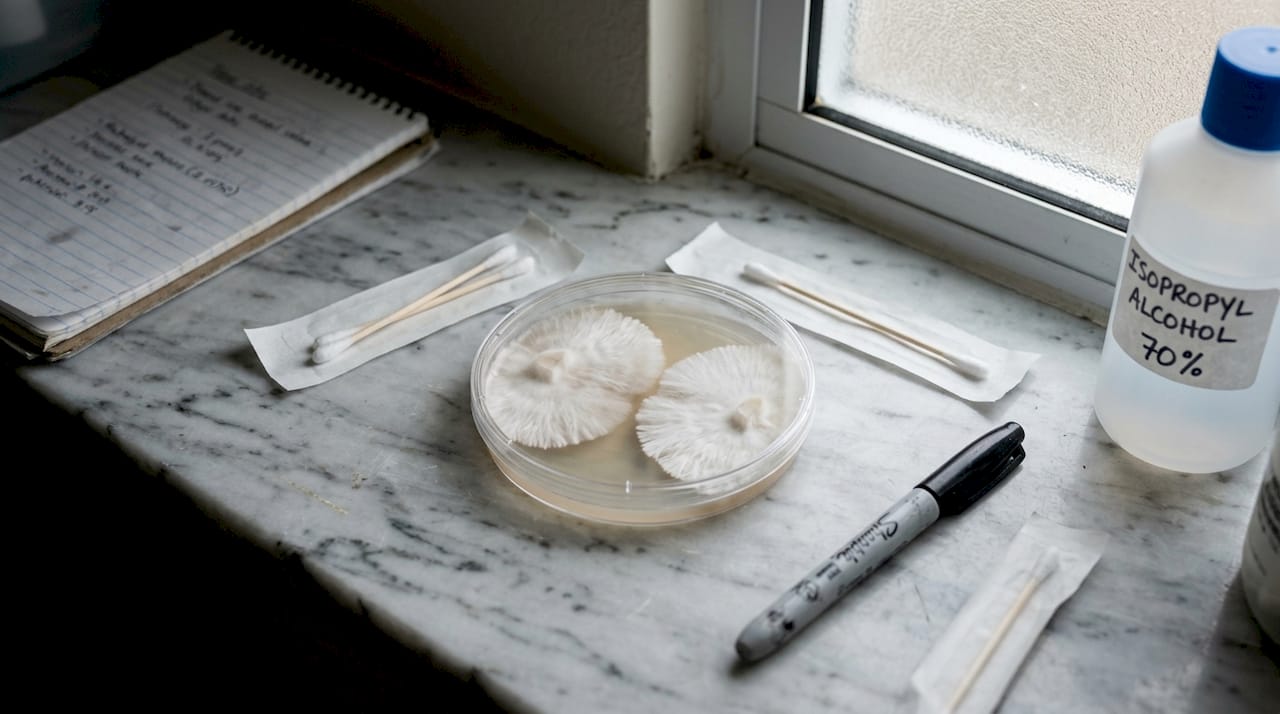
This has significant practical implications. When two mycelia grow towards each other on an agar plate, the first step is recognition. The mating-type loci on each mycelium must be compatible, essentially meaning they carry different versions of the mating gene. If they match, the hyphae will fuse through a process called anastomosis, and plasmogamy occurs. The result is a dikaryotic mycelium, one where paired nuclei from both parent strains coexist in each cell.
Here is a comparison of how hybridisation works in plants versus mushrooms:
| Feature | Plant hybridisation | Mushroom hybridisation |
|---|---|---|
| Reproductive units | Pollen and eggs (gametes) | Spores and mycelium |
| Fusion mechanism | Fertilisation | Plasmogamy (anastomosis) |
| Resulting structure | Seed (diploid embryo) | Heterokaryon (dikaryotic mycelium) |
| Verification method | Morphological observation | Microscopy or genetic testing |
| Compatibility factor | Species crossability | Mating-type loci matching |
For home growers, spore research microscopy plays a critical role in verifying outcomes. Without microscopy, you cannot confirm whether your mycelium is a true heterokaryon or simply two strains growing alongside each other without actually fusing. Many experienced growers have made this mistake, assuming that two strains growing together on the same plate have hybridised when, in reality, they remained genetically separate.
Two major pitfalls exist in home hybridisation. The first is sectoring, where a mycelium naturally divides into distinct genetic sectors over time, producing areas with different growth patterns that can easily be mistaken for hybridisation. The second is contamination, where bacterial or mould growth alters the appearance or behaviour of your mycelium, again mimicking the signs of a hybrid without any genuine genetic exchange having occurred.
Pro Tip: Use mushroom cultivation tools such as a quality digital thermometer to maintain stable temperatures during agar work. Temperature fluctuations are a leading cause of contamination and sectoring that confuse hybrid verification.
A practical way to reduce confusion is to keep detailed records of every plate you prepare, noting the strains used, the date of inoculation, and any observations about growth patterns. Consistent documentation is what separates a controlled experiment from guesswork.
Methods for creating mushroom hybrids at home
Once you understand the science, the next step is choosing your method. Key methodologies include spore crossing, where spores from different strains are inoculated onto the same agar plate to allow hyphal fusion; mycelial fusion (anastomosis), where mycelial fragments from two strains are placed together on agar; and advanced protoplast fusion, where cell walls are removed enzymatically to allow direct cellular fusion. Each method has its own requirements, difficulty level, and suitability for home growing.
Here is a practical step-by-step guide to the most accessible method for UK hobbyists: spore crossing.
- Prepare your agar plates. Use potato dextrose agar (PDA) or malt extract agar (MEA), both widely available in the UK. Pour plates in a still-air box or laminar flow hood to reduce contamination risk.
- Source compatible spore prints or syringes. Choose two strains known to have compatible mating types. Stick to species within the same genus for a higher chance of success.
- Inoculate both strains onto a single plate. Place spore samples at opposite ends of the plate to allow the resulting mycelia to grow towards each other. Label clearly.
- Observe the interaction zone. Over one to three weeks, watch for a distinctive interaction line where the two mycelia meet. A healthy fusion often shows a slight zone of differentiation rather than a clear barrier.
- Transfer promising sectors. Using a sterile scalpel, cut sections from the interaction zone and transfer them to fresh plates for further observation.
- Verify using microscopy. Confirm dikaryotic cells with clamp connections, a reliable indicator of successful hybridisation under the microscope.
Here is a quick reference for the three main methods:
| Method | Difficulty | Equipment needed | Verification |
|---|---|---|---|
| Spore crossing | Beginner to intermediate | Agar plates, sterile tools | Microscopy |
| Mycelial fusion | Intermediate | Agar, scalpel, still-air box | Microscopy, genetics |
| Protoplast fusion | Advanced | Enzymatic kits, laboratory setup | Genetic testing |
You can source quality mushroom spore syringes for your crossing experiments, and if you are researching psilocybin-producing species for microscopy only, magic mushroom spores are available legally for microscopy purposes in the UK.
Pro Tip: Always run a control plate for each strain on its own alongside your crossing plates. This gives you a clear baseline to compare growth patterns against, making it far easier to identify genuine heterokaryon behaviour in your interaction zone.
Avoiding contamination is the single greatest challenge in home hybridisation. Work in clean conditions, sterilise all tools with 70% isopropyl alcohol and a flame, and seal plates with parafilm or micropore tape. Even trace contamination can invalidate months of work.
Advantages and challenges of mushroom hybridisation
The benefits of hybridisation are well documented in scientific literature, and many of them translate directly to practical advantages in the home growing environment. Research confirms that hybrid vigour, or heterosis, leads to faster growth, higher yields, better disease resistance, and novel traits. A notable example is Pleurotus ostreatus (oyster mushroom) hybrids, which demonstrate mitochondria-dependent heterosis in mushroom production, meaning their increased vigour has roots in the mitochondrial genetics passed from parent strains.
What does this mean for your growing space? Consider these practical advantages:
- Faster colonisation times: Hybrid strains often colonise substrate more rapidly than either parent, reducing the window during which contamination can take hold.
- Higher fruiting body yields: Heterosis can result in noticeably larger or more numerous mushrooms per flush, increasing your return on each grow cycle.
- Improved disease and contamination resistance: Hybrid vigour often produces mycelia that outcompete bacterial contaminants and resist common fungal infections like Trichoderma (green mould).
- Adaptability to local conditions: By selecting parent strains suited to the UK’s variable climate and indoor humidity levels, you can develop hybrids that perform consistently in your specific setup.
- Novel flavour and texture profiles: Some hybrids develop distinctive taste or texture qualities not found in either parent, opening up interesting possibilities for culinary enthusiasts.
However, hybridisation is not without its challenges, and being realistic about those is just as important as understanding the benefits.
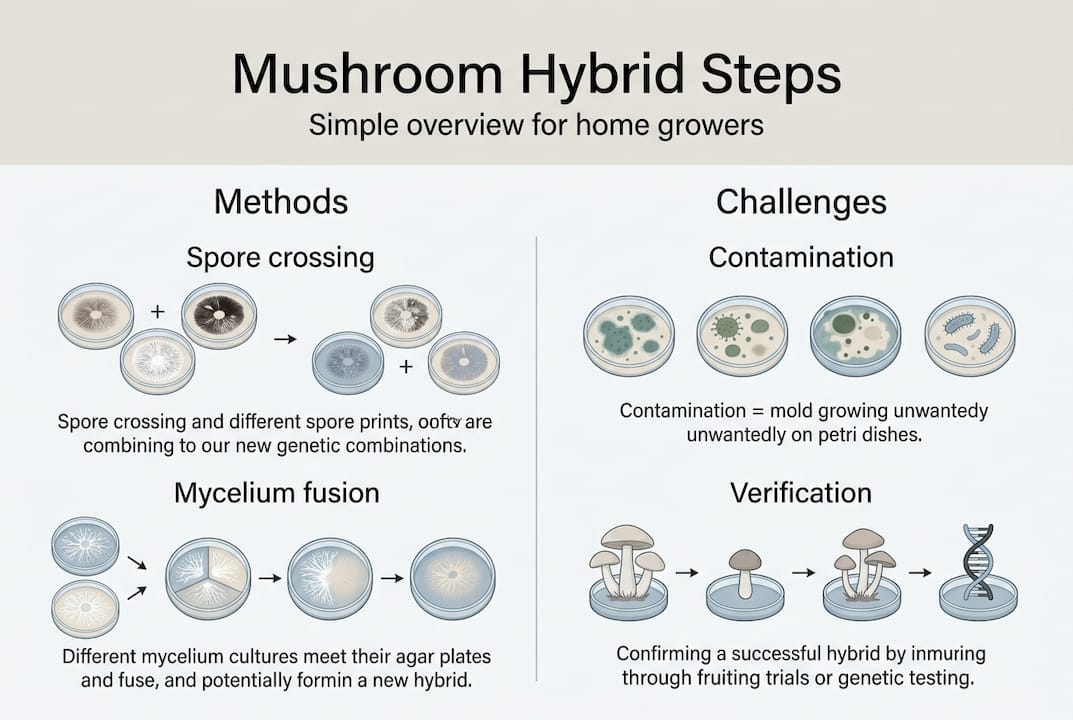
The UK’s climate presents specific difficulties. Indoor growing spaces experience fluctuating humidity and temperature, particularly during winter months, which can stress developing mycelia and complicate the delicate process of mycelial fusion. Maintaining the stable conditions required for successful agar work demands consistent attention and appropriate best mushroom strains selection.
Genetic drift is another concern. Over multiple generations of cultivation, hybrid strains can revert towards one parent’s genetics or develop unexpected mutations. Keeping proper spore prints and maintaining genetic records helps preserve the traits you want over time.
Finally, there is the question of verification. Without microscopy equipment, most home growers cannot definitively confirm they have created a true hybrid rather than experiencing sectoring or contamination. Investing in a basic microscope early in your hybridisation journey is genuinely worthwhile.
What most guides miss about mushroom hybridisation
Most hybridisation guides, even thorough ones, focus heavily on the excitement of the process and undersell how technically demanding verification actually is. After working with multiple strains across dozens of agar plates, the most consistent lesson is this: the interaction zone that looks most promising is often the one that disappoints under the microscope. Sectoring mimics hybridisation so convincingly that even experienced cultivators get fooled.
Here is what we think separates growers who succeed at hybridisation from those who cycle through frustration. It is not equipment. It is record-keeping and patience. Every plate needs a label, a date, and notes. Every interesting growth pattern needs to be photographed and compared against known baseline plates. Rushing to bulk substrate without proper verification wastes substrate and time, and teaches you nothing useful for the next attempt.
The mycology cultivation guide we recommend covers contamination prevention in depth, and that knowledge directly applies to hybrid work. Clean technique matters more than expensive equipment. A still-air box and disciplined workflow will outperform a poorly managed laminar flow hood every time.
We also want to be transparent: genuine hybridisation at home is genuinely difficult. That is not a reason to avoid it. It is a reason to approach it methodically, celebrate small and verified wins, and treat each failed plate as data rather than failure. The growers who make real progress are the ones who treat their setup as a long-term learning environment, not a shortcut to novel strains.
Grow and innovate: Hybrid mushroom resources for UK enthusiasts
Ready to put the science into practice? Spore Buddies offers a range of supplies designed specifically to support UK growers at every stage of their mycology journey. Whether you are beginning with your first agar plates or refining a multi-generation hybrid project, you will find everything from mushroom spore syringes sourced from quality strains, to microscopes for spore research and verification. Our educational blog covers contamination prevention, substrate preparation, and cultivation techniques in practical detail. We also stock grow kits for culinary species like oyster and lion’s mane, making it easy to build your skills before tackling more advanced hybridisation work. Explore our range and take the next step in your growing practice with confidence.
Frequently asked questions
Can any mushroom species be hybridised at home?
Only compatible strains or species can be hybridised; success depends on mating-type loci compatibility, meaning genetic similarity between strains is essential before attempting any crossing.
What is the easiest hybridisation method for home growers?
Spore crossing on agar plates is the most accessible starting point, though spore crossing still requires careful sterile technique and baseline microscopy to distinguish true fusion from sectoring.
How can I tell if a mushroom hybrid is genuine?
Look for clamp connections under a microscope; verifying true hybrids requires microscopy or genetic testing since visual traits alone frequently mislead growers who mistake sectoring for real hybridisation.
Are hybrid mushrooms legal to cultivate in the UK?
Most culinary and wellness hybrids, such as oyster and lion’s mane crosses, are fully legal to cultivate at home in the UK. Psychoactive species fall under separate legislation, so always verify the legal status of any strain before beginning cultivation work.