
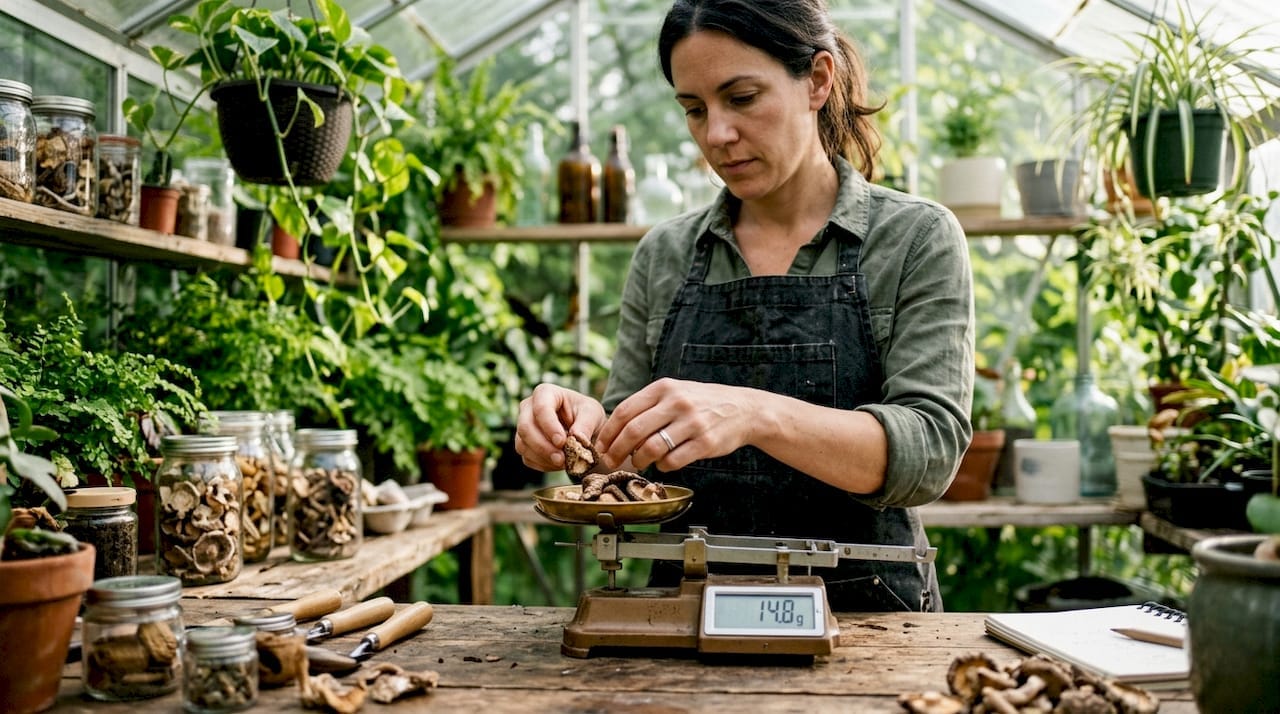
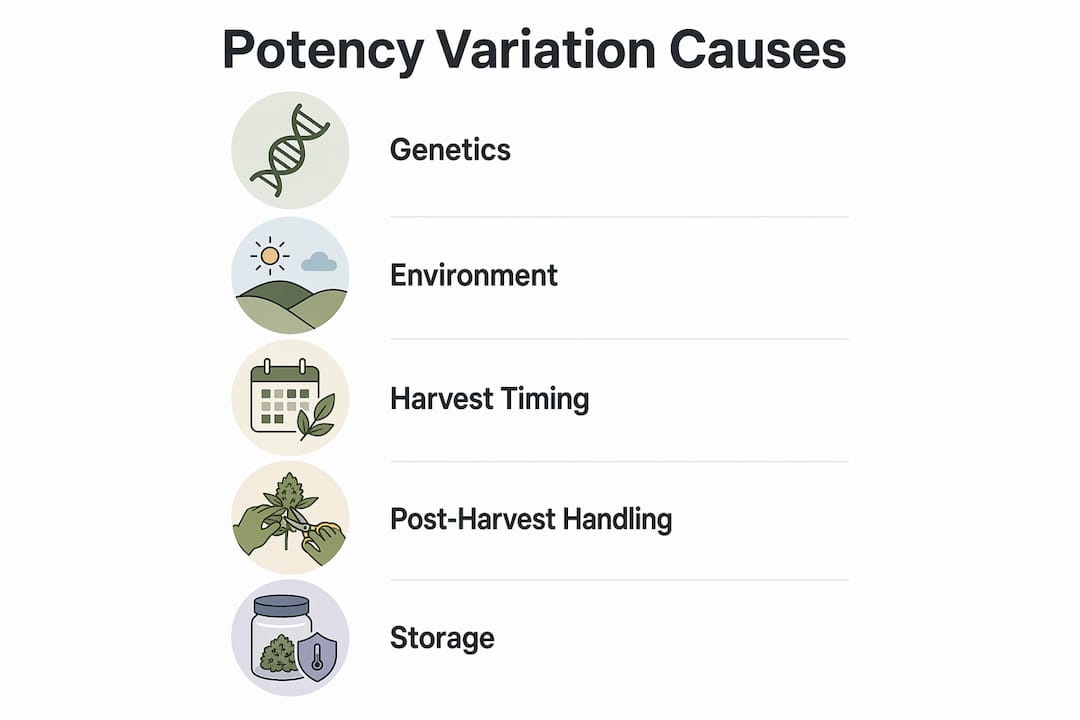
Mushroom potency variation is defined as the significant fluctuation in psilocybin and psilocin concentrations found within and between mushrooms, caused by genetics, growing conditions, harvest timing, and post-harvest handling. These are not minor differences. Psilocybin content in dried Psilocybe cubensis typically ranges from 0.5% to 1.5% by dry weight, with up to sixfold variability recorded within the same named strain. That range means two mushrooms from the same grow can deliver very different experiences at identical weights. Understanding what drives this variability is the foundation of responsible cultivation and informed dosing.
What is mushroom potency variation and what causes it?
Potency variation in mushrooms refers to the measurable differences in active compound levels between individual mushrooms, batches, flushes, and strains. The term “potency variation” is widely used in cultivation communities, but mycologists and researchers more precisely call these differences chemotypic variation, meaning differences in the chemical profile of a specimen rather than just its physical appearance. Both terms describe the same reality: the psilocybin you get from one mushroom is rarely identical to the psilocybin you get from another, even when they look the same.
Several distinct factors drive these differences. Understanding each one helps you make better decisions at every stage of your grow.
- Species and strain genetics. Different species carry different baseline potency ranges. Within a species, genetic diversity between individual specimens creates a wide spread of possible concentrations. Spore-grown mushrooms inherit a random mix of genetic traits from two parent spores, which means every spore-grown batch is genetically unique.
- Substrate composition. The nutrients available to the mycelium directly influence how much psilocybin the fruiting body produces. Richer substrates, such as those containing brown rice flour or grain, tend to support more vigorous growth, but the relationship between substrate richness and potency is not linear or predictable.
- Humidity and temperature during fruiting. Stress conditions, including temperature fluctuations and low humidity, can trigger the mushroom to produce more secondary metabolites, including psilocybin. Consistent environmental control reduces this stress response and can stabilise potency across flushes.
- Flush-to-flush variation. Psilocybin levels can vary roughly fourfold between different flushes from the same substrate. First flushes are often cited as the most potent, though this is not universal. Later flushes draw on a depleted substrate, which affects the chemical output of the mycelium.
- Within-mushroom distribution. Active compounds are unevenly distributed within a single mushroom. Caps generally contain higher concentrations than stems. This means splitting a mushroom by weight does not split the dose evenly.
- Harvest timing. Mushrooms harvested just before the veil breaks tend to retain more psilocybin than those left to sporulate. Once spores are released, the mushroom has completed its biological purpose and compound levels begin to decline.
- Drying, storage, and age. Psilocin degrades quickly with exposure to heat, oxygen, or light. Two mushrooms that look identical can vary widely in effective potency depending entirely on how they were dried and stored.
Pro Tip: Dry your mushrooms at temperatures below 35°C using a food dehydrator with a fan setting, then store them in an airtight container with silica gel desiccant, away from light. This combination minimises psilocin degradation and preserves potency for longer.
Why strain names are unreliable predictors of potency
The word “strain” is used loosely in mushroom cultivation, and that looseness creates real confusion about potency. In formal biology, a strain is a genetically distinct subtype of a species with verified, reproducible characteristics. In the mushroom cultivation world, names like Golden Teacher, B+, and Penis Envy are often marketing categories rather than scientifically verified chemotypes.
A chemotype is a population of organisms that shares a consistent chemical profile, confirmed through repeated laboratory analysis. Most named cultivars have not been chemically characterised in this way. Their potency profiles are unstable and vary between growers, grows, and even individual fruits from the same block. The name tells you about the cultural history of the strain, not its psilocybin content.
Environmental “noise” compounds this problem significantly. Even if two specimens share the same genetic lineage, differences in substrate, humidity, temperature, and harvest timing can overwhelm any minor genetic advantage one strain might have over another. A Golden Teacher grown in suboptimal conditions will likely be less potent than a B+ grown with careful environmental control. The grow matters more than the name.
Pro Tip: When researching strain potency claims online, look for sources that cite actual laboratory analyses with specific psilocybin percentages. Marketing descriptions that use words like “highly potent” or “beginner-friendly” without chemical data are not reliable guides to what you will actually grow.
Lab testing is the only method that provides a real chemical snapshot of a specific batch. Even then, laboratory measurement captures only a point in time, and potency degrades as the mushrooms age. A test result from one batch does not predict the potency of the next batch grown from the same spores.
How does potency variation affect dosing?
The practical consequence of potency variation is straightforward but often underestimated. Weighing mushrooms controls mass, not concentration. Equal weights are not equal doses. A 2g portion from a high-potency flush can deliver significantly more psilocybin than a 2g portion from a low-potency flush of the same strain. This is the core challenge for anyone trying to dose consistently.
Microdosing amplifies this problem. The goal of microdosing is to consume a sub-perceptual amount, typically around one-tenth of a standard dose. When intra-batch chemical inconsistency means that even adjacent pieces of the same mushroom contain different concentrations, achieving a reliably sub-perceptual dose becomes genuinely difficult. The challenges of consistent microdosing are directly tied to this chemical variability.
Practical steps to manage dosing uncertainty:
- Grind your dried mushrooms into a fine powder. Grinding homogenises the material, distributing the uneven compound concentrations more evenly across the batch. A capsule filled from powdered mushrooms is more consistent than a piece cut from a whole fruit.
- Start with a lower dose than you expect to need. Given the sixfold variability possible within a single strain, erring on the side of caution with a new batch is the rational approach.
- Keep records of each batch. Note the strain, flush number, substrate, drying method, and your subjective response. Over time, this log helps you calibrate your expectations for future grows.
- Store mushrooms correctly from the moment they are dry. Airtight containers, silica gel, cool temperatures, and no light exposure all slow psilocin degradation. Potency that was present at harvest can be lost through poor storage.
- Seek lab analysis where accessible. Professional psilocybin potency testing services exist in several countries. A quantified result, even as a snapshot, gives you a far more reliable baseline than visual assessment or strain reputation.
Pro Tip: Grinding a full batch into powder and encapsulating it is the single most practical step a home cultivator can take to reduce dose-to-dose inconsistency. It does not eliminate potency variation, but it distributes it more evenly across every portion.
How home cultivators can reduce potency variation
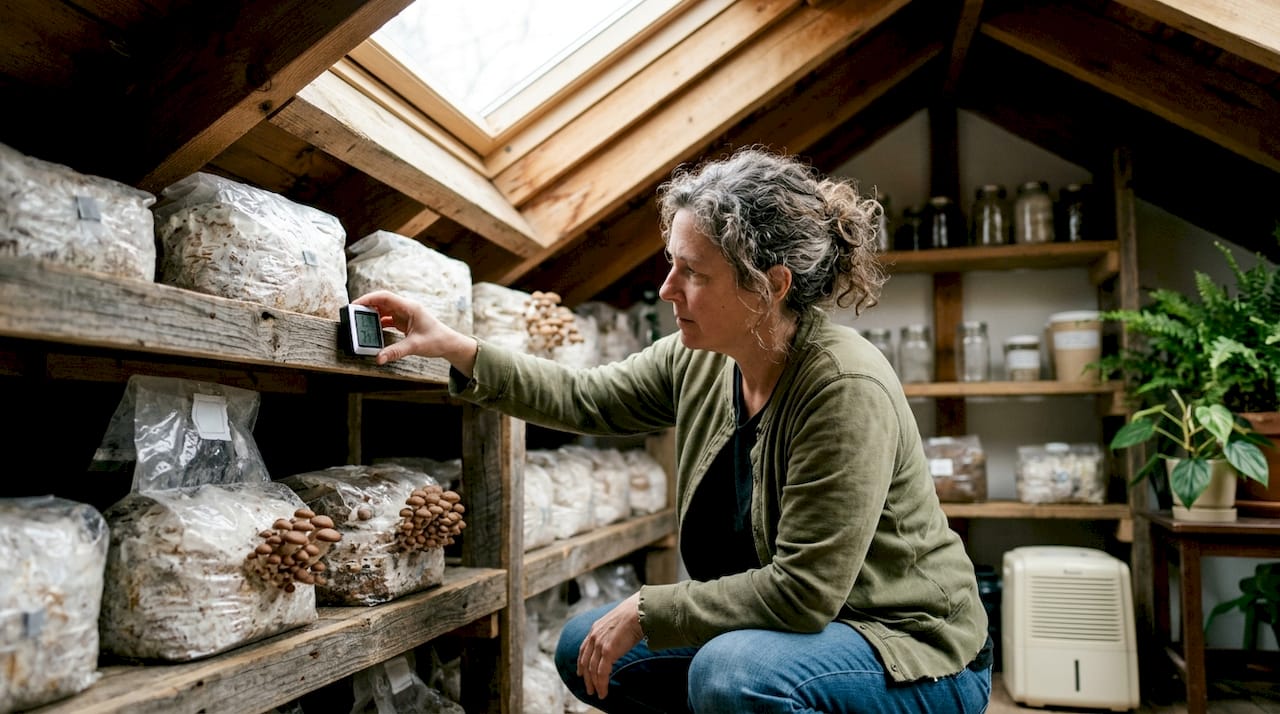
Reducing potency variation starts with accepting that you cannot eliminate it entirely. Biology is variable. What you can do is minimise the sources of variability that are within your control.
Genetics: clone versus spore
Cloning from a single fruit body reduces genetic variability and can help stabilise potency compared to spore growing. Spores carry two sets of genetic material that recombine unpredictably. A clone, taken from a tissue sample of a mushroom you have already grown and assessed, preserves the exact genetics of that individual. If that individual produced a potent flush, its clone is more likely to do the same.
Environmental consistency
| Variable | Target range | Effect on potency |
|---|---|---|
| Fruiting temperature | 22–25°C | Stable temps reduce stress-induced variation |
| Relative humidity | 90–95% | Consistent humidity supports even development |
| Fresh air exchange | 4–6 times per hour | Prevents CO₂ build-up, supports healthy fruiting |
| Harvest timing | Before veil breaks | Preserves maximum psilocybin content |
Maintaining these conditions across every flush is the most reliable way to reduce batch-to-batch differences. A digital waterproof heater and a grow light on a timer are practical tools for keeping temperature and light cycles consistent.
Post-harvest handling
- Dry mushrooms immediately after harvest. Delay allows enzymatic degradation to begin.
- Use a dehydrator set below 35°C, not an oven. Oven temperatures destroy psilocin rapidly.
- Store in vacuum-sealed or airtight containers with food-grade silica gel.
- Keep containers in a cool, dark location. A drawer or cupboard away from heat sources works well.
- Label each batch with the date, flush number, and strain. This record becomes your reference for future grows.
The combination of cloning, environmental control, and careful post-harvest handling will not produce pharmaceutical-grade consistency. It will, however, meaningfully narrow the range of variation you experience from one grow to the next.
Key takeaways
Mushroom potency variation is driven by genetics, environment, harvest timing, and storage, and equal weights of mushrooms are never guaranteed to be equal doses.
| Point | Details |
|---|---|
| Potency range is wide | Psilocybin content in Psilocybe cubensis spans 0.5%–1.5% dry weight, with up to sixfold variation within one strain. |
| Strain names are not chemical guarantees | Most named cultivars lack verified chemotypes; the grow environment often matters more than the strain label. |
| Equal weight is not equal dose | Uneven compound distribution within mushrooms means weighing controls mass, not psilocybin concentration. |
| Cloning reduces genetic variability | Tissue clones preserve the genetics of a specific fruit body, offering more consistent potency than spore grows. |
| Storage directly affects potency | Psilocin degrades with heat, light, and oxygen; correct drying and airtight storage preserve what you grew. |
Sporebuddies: quality genetics for consistent cultivation
Potency variation begins with genetics, and genetics begin with the quality of your starting material. Sporebuddies supplies a wide range of mushroom spore syringes to UK cultivators, covering popular strains including Golden Teacher, B+, and Penis Envy. Each syringe is prepared to support microscopy and research use. For growers focused on reducing variability, Sporebuddies also offers mushroom growing kits designed to provide consistent environmental conditions from the start. Alongside the product range, the Sporebuddies blog offers practical cultivation guides covering substrate preparation, contamination prevention, and harvest timing, giving you the knowledge to back up every grow.
FAQ
What is mushroom potency variation?
Mushroom potency variation is the fluctuation in psilocybin and psilocin concentrations between individual mushrooms, batches, and flushes. It is caused by genetics, growing conditions, harvest timing, and post-harvest handling.
Why does potency vary between flushes from the same substrate?
Psilocybin levels can vary roughly fourfold between flushes because the substrate becomes progressively depleted of nutrients. Later flushes draw on fewer available resources, which affects the chemical output of the mycelium.
Can I rely on strain names to predict potency?
No. Most named cultivars have not been chemically characterised as stable chemotypes. Potency claims attached to strain names are frequently based on reputation rather than laboratory analysis.
Does grinding mushrooms into powder improve dosing consistency?
Yes. Grinding homogenises the material and distributes uneven compound concentrations more evenly across a batch. It does not eliminate potency variation but reduces dose-to-dose inconsistency compared to using whole or roughly cut pieces.
How should I store dried mushrooms to preserve potency?
Store dried mushrooms in airtight containers with silica gel desiccant, away from heat, light, and oxygen. Psilocin degrades quickly under these conditions, so correct storage directly preserves the potency you achieved at harvest.