
Many UK enthusiasts assume that anything connected to magic mushrooms sits firmly on the wrong side of the law. That assumption is understandable, but it is not entirely accurate. Mushroom spores occupy a distinct legal space in the UK, and understanding that distinction is genuinely important whether you are a microscopy hobbyist, a student, or simply someone curious about mycology. This guide cuts through the confusion, explains exactly what the law says, and gives you a practical framework for engaging with mushroom spores legally, confidently, and responsibly.
Table of Contents
- Understanding mushroom spores: What makes them legal or illegal?
- Legal uses of mushroom spores: Microscopy, research, and education
- Selecting and sourcing legal mushroom spores in the UK
- Potential legal pitfalls and how to avoid them
- Why clarity on legality matters for UK mushroom hobbyists
- Find legal mushroom spores and mycology resources with Spore Buddies
- Frequently asked questions
Key Takeaways
| Point | Details |
|---|---|
| Spores legal, cultivation not | Mushroom spores are legal in the UK for research and microscopy but growing fruiting bodies remains strictly prohibited. |
| Microscopy and research only | Purchase and possession are permitted for documented scientific or educational purposes—never for cultivation. |
| Choose reputable suppliers | Always buy from vendors who provide proper labelling, documentation, and clear information about legal usage. |
| Avoid legal pitfalls | Stay compliant by avoiding cultivation and keeping records of your research or microscopy use. |
Understanding mushroom spores: What makes them legal or illegal?
To understand the legality, you first need to understand what a spore actually is. A mushroom spore is a single reproductive cell, roughly analogous to a seed. Crucially, spores from psilocybin-containing species do not themselves contain psilocybin or psilocin, the controlled substances listed under the Misuse of Drugs Act 1971. This is the foundational fact that shapes UK law on the subject.
The fruiting body of a psilocybin mushroom, what most people picture when they think of “magic mushrooms,” contains measurable quantities of psilocybin and psilocin. Those substances are Class A controlled drugs in the UK. Possessing, supplying, or producing them carries serious criminal penalties. But the spore itself, at the microscopy stage before germination, sits outside that chemical classification.
Here is where the legal boundary becomes clear:
- Spores in isolation: Legal to possess and study for microscopy, research, and education in the UK
- Germinated mycelium: The legal status becomes grey immediately upon germination, because mycelium can contain trace psilocybin
- Fruiting bodies: Clearly illegal to cultivate, possess, or supply as they contain Class A substances
- Intent to cultivate: Even possessing legal spores with documented intent to grow fruiting bodies constitutes preparation to produce a controlled substance
“Cultivation of psilocybin-containing mushrooms from spores is illegal as it constitutes production of a Class A controlled substance (psilocybin/psilocin), punishable by up to life imprisonment.”
This is why the legal framing matters so much. The spore itself is not the controlled substance. The moment you take deliberate steps to cultivate it into a fruiting body, you cross a clear legal line. Understanding spore kit legality in the UK in detail helps you appreciate exactly where your activities must stop to remain on the right side of the law.
Legal uses of mushroom spores: Microscopy, research, and education
Now that we have seen the legal distinctions, let us examine what you can lawfully do with mushroom spores in the UK. The good news is that there is a genuinely rich world of legal activity available to you, and many dedicated mycologists spend years exploring it without ever moving towards cultivation.
Microscopy is the primary legal application. Studying spore morphology under a microscope is a legitimate scientific pursuit. Spores from different species vary in shape, size, surface texture, and pigmentation. Learning to distinguish an ellipsoid spore from a subglobose one, or identifying the verrucose surface patterns that indicate a particular genus, is a skill that takes time and practice to develop. Many enthusiasts find this work genuinely absorbing.
Research and education are also clearly permitted. Universities, independent researchers, and science educators regularly work with mushroom spores for taxonomy, genetics, and ecology studies. If your interest is academic or educational in nature, spores are a legal and accessible study material.
Permitted activities include:
- Preparing spore slides for microscopic analysis
- Photographing and cataloguing spore morphology
- Comparing spore samples across different species for educational purposes
- Contributing to citizen science projects focused on fungal taxonomy
- Using spore prints as visual teaching tools
Strictly prohibited activities include:
- Inoculating any substrate with the intention of germination
- Cultivating mycelium or fruiting bodies from psilocybin-containing spores
- Supplying spores with instructions or equipment intended for cultivation
- Any activity that involves the active production of psilocybin
Equipping yourself properly for legal microscopy work makes a real difference to the quality of your study. Understanding the tools for studying mushroom spores thoroughly before you begin helps you invest in the right equipment and avoid frustration later.
Pro Tip: If you are new to spore microscopy, start with a basic compound microscope offering at least 400x magnification. Lower magnifications are useful for orientation, but spore detail typically becomes visible at 400x and exceptional at 1000x with an oil immersion objective.
You can also benefit greatly from refining your technique over time. Exploring microscopy techniques and tips provides practical guidance on slide preparation, staining methods, and achieving clear, high-resolution images. When you are ready to source your first sample, spore syringes for microscopy offer a convenient and standardised format that makes slide preparation straightforward.
| Activity | Legal status | Notes |
|---|---|---|
| Spore microscopy | Legal | For research and educational purposes only |
| Spore prints (possession) | Legal | When used for identification or study |
| Spore syringe (possession) | Legal | Intended for microscopy, not cultivation |
| Mycelium cultivation | Illegal | Controlled substance may be present |
| Fruiting body cultivation | Illegal | Class A drug production |
| Supplying spores for growing | Illegal | Intent to produce controlled substance |
This comparison makes it easy to see that the legal world of mushroom spores in the UK is genuinely accessible. You simply need to be clear about your purpose and consistent in how you practise your hobby.
Selecting and sourcing legal mushroom spores in the UK
Understanding legal usage is only part of the equation. Knowing how and where to source your spores safely is the next essential step, and it is one that many newcomers overlook until they have already made a costly or risky mistake.
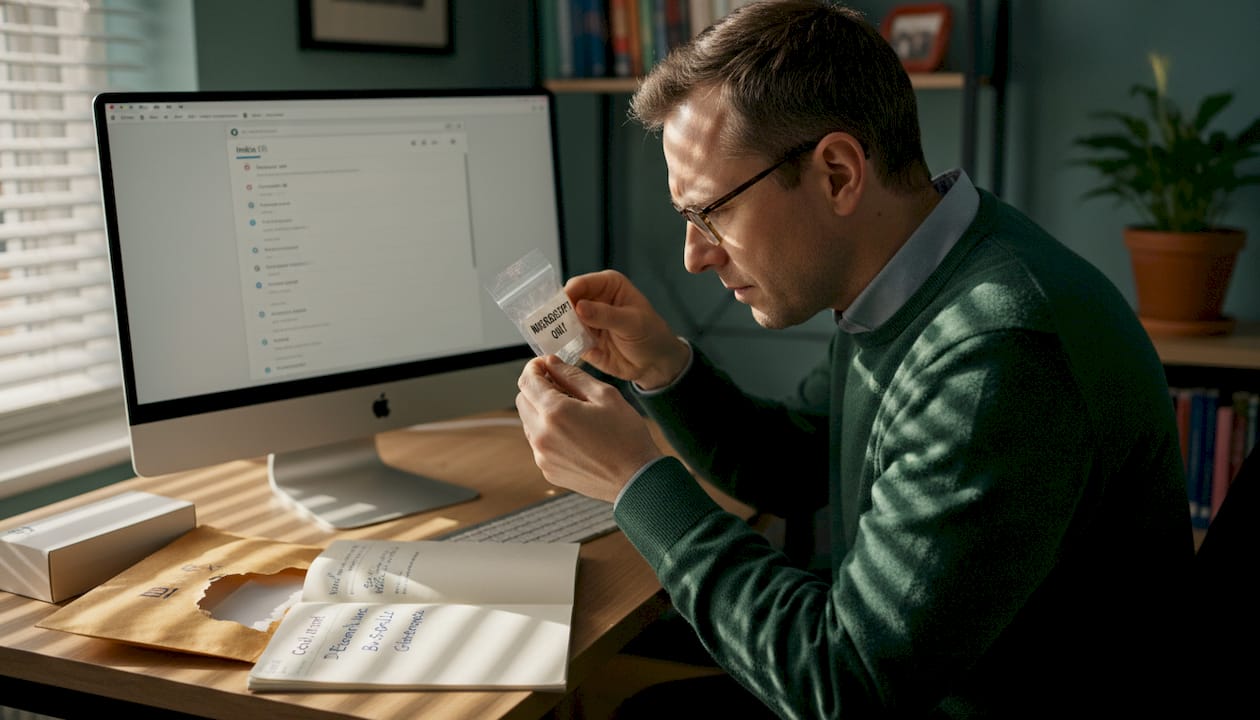
As confirmed by reputable sources, UK spores remain legal for microscopy purposes. The key is identifying vendors who operate transparently and align their practices with that legal framework. Not every seller in this space does so responsibly, and the consequences of dealing with a poorly managed vendor can range from receiving poor-quality samples to inadvertently associating yourself with illegal supply chains.
Here is a step-by-step approach to sourcing legal spores in the UK:
- Research the vendor’s stated purpose. A legitimate UK supplier will clearly frame their spore products as being for microscopy and research. If the listing language suggests cultivation outcomes, walk away.
- Check labelling and documentation. Reputable vendors label their products accurately, include species information, and provide purchase documentation that records the transaction clearly.
- Look for UK-based operations. UK suppliers are subject to UK law and typically have a greater incentive to operate within it. International suppliers may not be familiar with UK legal requirements.
- Read community feedback. Established mycology forums and communities often discuss vendor reliability. While no community opinion is infallible, consistent positive or negative patterns are informative.
- Review the vendor’s educational content. Suppliers who invest in explaining legal usage, proper microscopy techniques, and responsible hobbyist behaviour are generally more trustworthy than those who do not.
- Confirm return or quality policies. Legitimate suppliers stand behind their product quality and provide clear terms for resolution if samples are contaminated or mislabelled.
Pro Tip: Before making any purchase, send the supplier a quick question about the intended legal use of their products. A responsible vendor will immediately confirm that their spores are sold strictly for microscopy and research. Any ambiguity or redirection in the response is a warning sign.
| Vendor characteristic | Good sign | Red flag |
|---|---|---|
| Product labelling | Clearly states “for microscopy” | Vague or omits intended use |
| Legal information on site | Explicit legal guidance provided | No mention of legal status |
| Community reputation | Consistent positive feedback | Frequent complaints or silence |
| UK registration | Registered UK business | No verifiable business details |
| Educational content | Provides guides and resources | Only sales-focused content |
Choosing from well-established UK mushroom spore suppliers gives you confidence that your purchase is properly documented, accurately labelled, and genuinely intended for the purpose you are buying it for.
Potential legal pitfalls and how to avoid them
Having learned where and how to source legal spores, it is vital to understand the pitfalls that could put you at risk. The law in this area is not complicated, but it is firm, and a few common misunderstandings regularly trip up well-intentioned hobbyists.
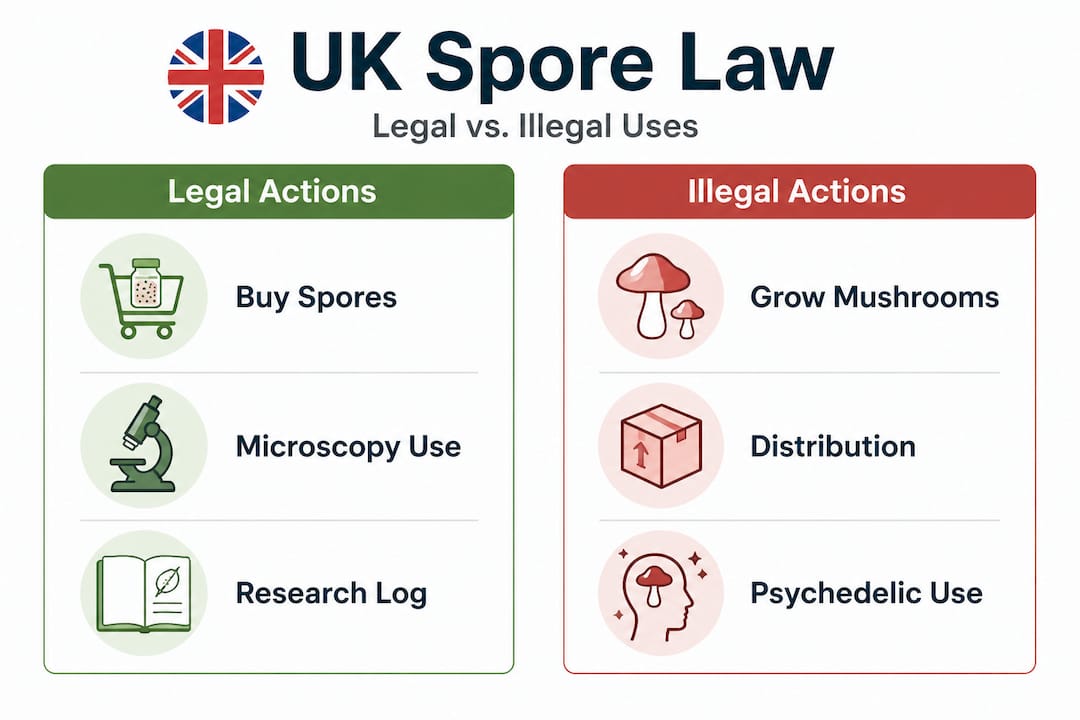
The most significant pitfall is intent. UK law does not simply look at what you are physically holding. It also looks at what you intended to do with it. Possessing spores while also owning cultivation substrates, grow tents, humidity controllers, and related equipment tells a clear story of intent. Even if no mycelium or fruiting bodies are present, authorities can and do treat such setups as evidence of preparation to produce a Class A drug.
Common mistakes to avoid include:
- Storing spore syringes alongside grow kits, grain jars, or inoculation tools
- Discussing cultivation plans in writing or online, even in private messages
- Purchasing spores from vendors who frame their products in cultivation terms
- Failing to keep purchase documentation or deleting it after the transaction
- Assuming that “everyone does it” provides any legal protection
“Cultivation of psilocybin-containing mushrooms from spores is illegal as it constitutes production of a Class A controlled substance (psilocybin/psilocin), punishable by up to life imprisonment.”
The penalties here are not trivial. Life imprisonment is the theoretical maximum for Class A drug production, and while most prosecutions do not result in that outcome, custodial sentences for production and supply convictions are common. This is not a space where taking chances is sensible.
Another area that creates confusion is online discussion. Sharing images of spore slides or discussing microscopy results is entirely consistent with legal use. Discussing cultivation techniques, sharing grow logs, or asking for advice on substrate preparation in the same spaces, even casually, undermines the credibility of your stated microscopy intent.
Pro Tip: Keep a simple research log. Note the date you received your spores, the supplier, the stated species, and the microscopy activities you undertake. This kind of documentation is straightforward to maintain and reinforces the legitimacy of your purpose if it is ever questioned.
The growing body of magic mushroom studies in clinical and academic settings shows just how valuable responsible mycology research can be. Staying compliant means you can participate in that broader scientific conversation from a position of legal and ethical integrity.
Why clarity on legality matters for UK mushroom hobbyists
Here is an opinion we hold firmly at Spore Buddies: most of the legal risk faced by UK mushroom enthusiasts does not come from deliberate wrongdoing. It comes from vague information, poorly managed curiosity, and a culture of assuming that grey areas are effectively the same as green ones.
The mycology community is genuinely enthusiastic, growing rapidly in the UK, and full of people with legitimate scientific interest. But the informal nature of much online mycology culture means that legal guidance is often mixed in with cultivation advice in ways that blur the boundaries for newcomers. Someone who starts out wanting to study spore morphology can, without much effort or intent, find themselves on forums where the next logical step described is inoculation and cultivation.
This is where we believe responsible suppliers have an active role to play. It is not enough to simply label a product “for microscopy.” Vendors who genuinely care about their customers provide clear legal context, support new buyers in understanding exactly what they can and cannot do, and invest in educational content that keeps the community informed and protected.
For you, as a hobbyist or researcher, the most important thing you can do is engage proactively. Do not assume that buying from a UK vendor automatically protects you if your own activities go beyond what the law permits. Read the legal framework, keep your documentation in order, and let your actions align clearly with microscopy and research rather than cultivation.
Sourcing research-grade spores from suppliers who are transparent about legal usage gives you a strong foundation. Build on that foundation with good personal practices, and you can explore this field with genuine confidence.
Find legal mushroom spores and mycology resources with Spore Buddies
With safety, clarity, and compliance in mind, Spore Buddies is here to support your legal mycology journey. We stock a broad range of research-grade spores, clearly labelled for microscopy and study, alongside everything you need to examine them properly. Whether you are setting up your first microscopy workstation or expanding an existing research collection, our range covers you at every level. Browse our spore syringe UK selection for standardised, ready-to-use samples, or explore our full range of mycology equipment supplies for microscopes, slides, and preparation tools. For those supplying research groups or running educational programmes, our wholesale mycology supplies offer flexible options at competitive prices. Every product we sell is backed by transparent legal guidance and genuine support for the UK mycology community.
Frequently asked questions
Are mushroom spores legal to buy and possess in the UK?
Yes, mushroom spores are legal to buy and possess in the UK when intended for microscopy and research. However, using them for cultivation is strictly prohibited, as growing psilocybin mushrooms constitutes production of a Class A controlled substance.
Can I grow mushrooms from spores at home legally?
No, cultivating psilocybin-containing mushrooms from spores at home is illegal in the UK. Even beginning the process constitutes production of a controlled substance and carries severe penalties including potential imprisonment.
How can I prove my mushroom spores are for microscopy or research?
Maintain clear purchase records, keep a research or microscopy log, and ensure your equipment is consistent with study rather than cultivation. Reputable mycology suppliers provide accurate labelling and documentation that reinforces your legal purpose.
What should I look for in a legal mushroom spore supplier?
Choose suppliers who explicitly state that their products are for microscopy and research, provide proper species labelling, offer purchase documentation, and publish clear legal guidance on their website. Transparent, reputable suppliers align their business practices with UK law and support their customers in doing the same.