
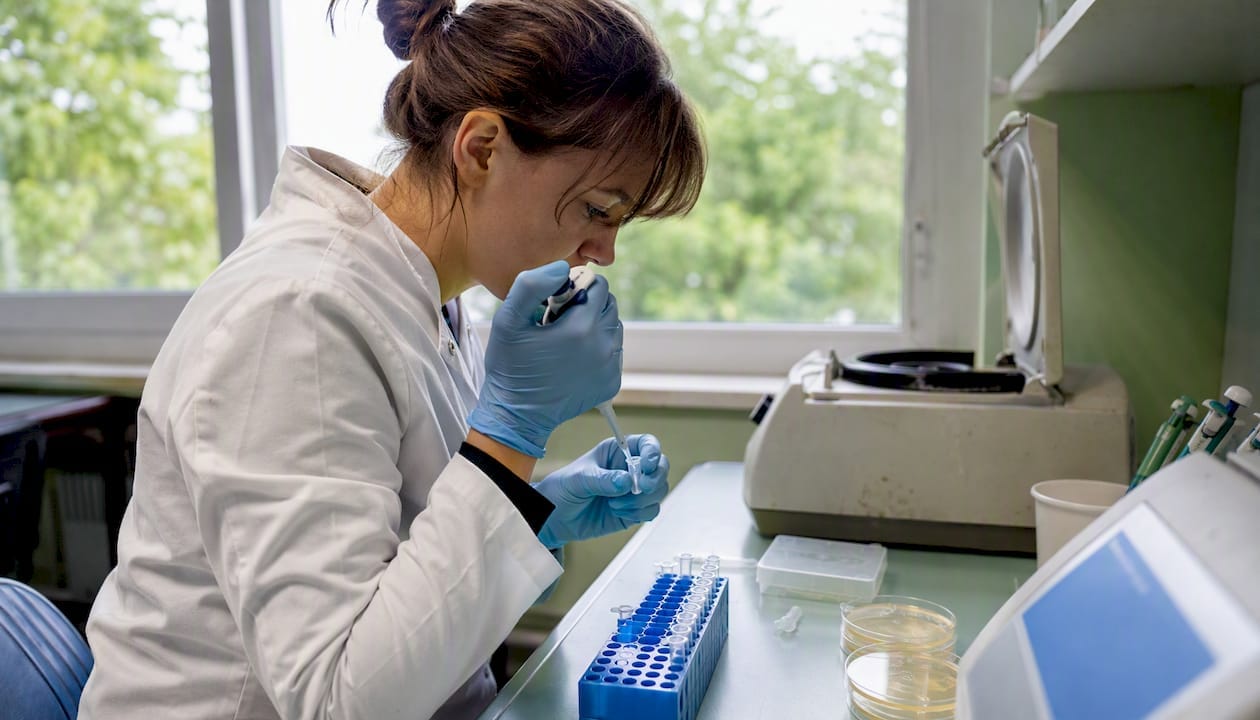
DNA barcoding delivers repeatable, scalable improvements to fungal species identification, taxonomy, and biodiversity research. By sequencing a short, standardised region of the genome, you can resolve cryptic species that look identical under a microscope, re-identify mislabelled herbarium specimens, and contribute verified records to global databases such as UNITE and GenBank. The British Mycological Society (BMS) actively supports barcoding initiatives across the UK, and projects like Lost and Found Fungi (LAFF) have already demonstrated what community-scale sequencing can achieve.
The core benefits at a glance:
- Resolves cryptic species and species complexes that morphology alone cannot separate
- Produces objective, repeatable sequence data that any lab can verify
- Scales from single field specimens to thousands of fungarium sheets via high-throughput sequencing
- Enables environmental DNA (eDNA) surveys without collecting physical fruiting bodies
- Supports applied uses in conservation, clinical diagnostics, food safety, and outbreak tracing
- Lowers barriers for citizen scientists to contribute standardised, citable records
TL;DR: This guide covers every major benefit of fungal DNA barcoding, the methods and realistic costs behind each, the limitations you need to plan for, and a practical UK-focused workflow to get you started.
Table of Contents
- 1. What is DNA barcoding and why is ITS2 the fungal standard?
- 3. Practical benefits for field mycologists and citizen scientists
- 4. How barcoding transforms fungaria and large-scale research
- 5. Applied uses across ecology, conservation, clinical work, and food safety
- 7. Limitations and common pitfalls to plan for
- 8. A UK-focused starter workflow for field mycologists and researchers
- Key takeaways
- Useful sources
- FAQ
1. What is DNA barcoding and why is ITS2 the fungal standard?
DNA barcoding uses a short, agreed genomic region as a species identifier, the same way a supermarket barcode identifies a product. For fungi, that region is the nuclear ribosomal internal transcribed spacer, known as nrITS, with ITS2 now preferred by most researchers because of its larger curated reference set in UNITE and GenBank. The region was chosen for its high PCR success rate across diverse fungal lineages and its useful balance of interspecific variation (enough to separate species) and intraspecific conservation (consistent within a species).
ITS2 is not perfect for every group. Genera such as Aspergillus and some Mucorales show intragenomic ITS variation or insufficient interspecific divergence, meaning a single ITS2 sequence can mislead you. For those clades, secondary markers, including RPB1, RPB2, TEF1-alpha, and beta-tubulin, are added to sharpen resolution. The landmark Schoch et al. 2012 study established ITS as the primary fungal barcode through a community consensus process, and it remains the entry point for almost every identification workflow today.
Pro Tip: When amplification of ITS2 fails on older or degraded material, try shorter amplicons targeting just the ITS2 sub-region with primers ITS3 and ITS4, which often succeed where full-length ITS primers do not.
3. Practical benefits for field mycologists and citizen scientists
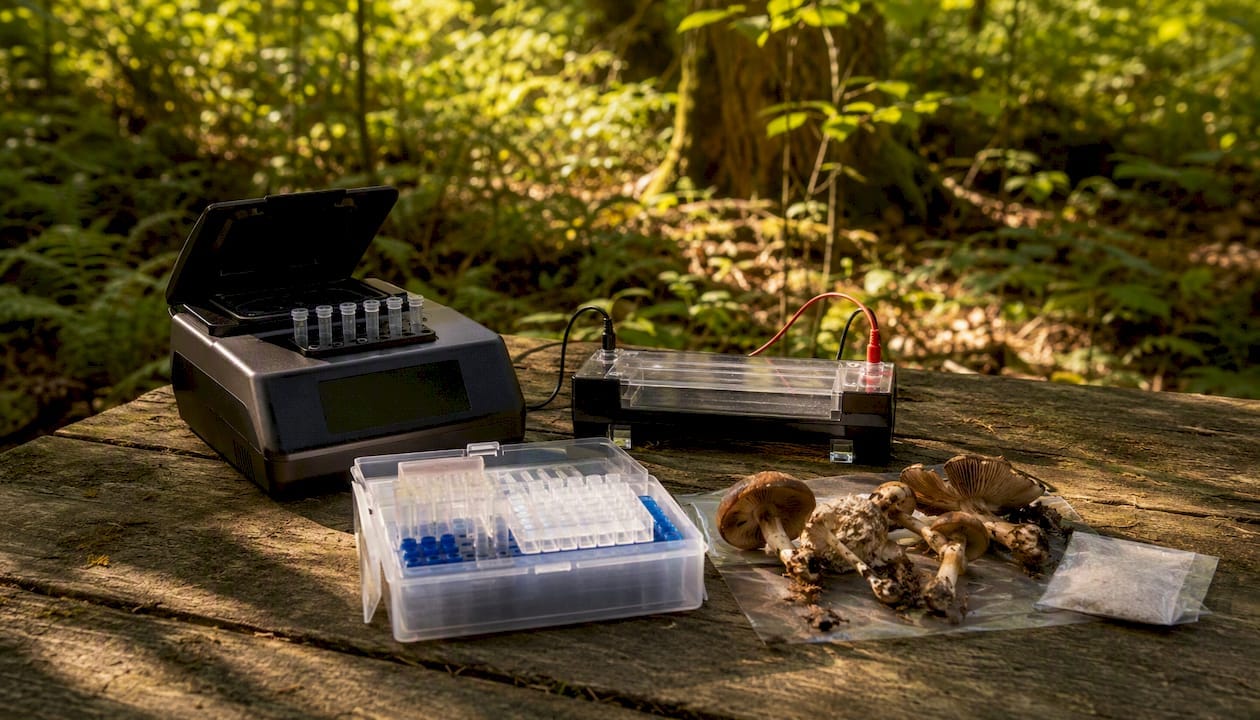
Portable field labs and community sequencing projects have changed what a field mycologist can achieve in a single season. The Bento Lab, a compact, battery-powered PCR and gel unit, lets you run a basic extraction and amplification in the field or at a field station, reducing the time between collection and a molecular result from weeks to days. Projects modelled on Lost and Found Fungi (LAFF) have shown that coordinated citizen science, where volunteers collect, voucher, and submit tissue for sequencing, can generate hundreds of verified records for rare and under-recorded species across the UK.
For citizen scientists, the gains go beyond speed. Barcoding standardises the data you contribute. A morphological record depends on the observer’s skill; a sequence deposited to UNITE with metadata is independently verifiable by anyone. The Botanic Gardens overview of DNA barcoding frames this well: community sequencing turns enthusiasts into genuine contributors to the global reference library.
Pro Tip: Collect a small piece of fresh tissue (pileus flesh or stipe base, roughly 0.5 cm³) into a clean, labelled tube with silica gel desiccant immediately after collection. Avoid touching the tissue with bare hands. This single step dramatically improves DNA yield from field samples.
4. How barcoding transforms fungaria and large-scale research
High-throughput barcoding turns static fungarium collections into active sources of sequence data and biodiversity discovery. Rather than sequencing one specimen at a time by Sanger, you can pool hundreds of specimens into a single Illumina run, dramatically reducing cost per barcode.
A fungarium high-throughput sequencing study provides a concrete illustration of what this looks like in practice:
| Platform | Approximate reads per run | Theoretical specimens per run | Approximate sequencing cost per specimen |
|---|---|---|---|
| Illumina MiSeq Nano | ~800,000 | ~1,000 | ~$1–2 (USD) |
| Sanger (single specimen) | 1 clean read | 1 | £8–15 per reaction (typical UK lab rate) |
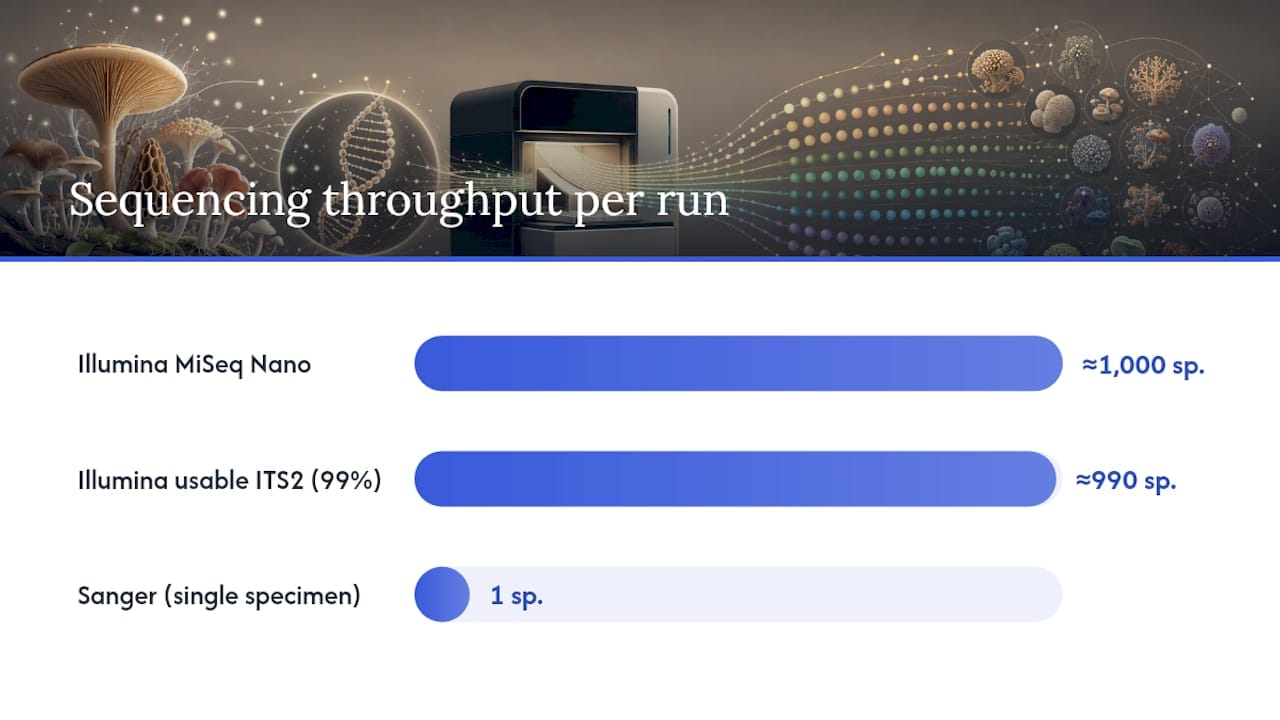
At a low cost per specimen for sequencing alone on a MiSeq Nano run, the economics of barcoding an entire fungarium cabinet become realistic for the first time. The same study reports that with a DADA2 bioinformatics pipeline, up to 99% of reads passing quality control can be assigned to usable ITS2 sequences, with contamination and chimeric reads accounting for a manageable fraction.
Re-identification at scale also corrects historical errors. Mislabelled specimens collected under one name decades ago are reassigned to the correct species or flagged as potentially novel, feeding directly back into the curated reference databases that everyone depends on.
5. Applied uses across ecology, conservation, clinical work, and food safety
Barcodes are already embedded in applied workflows well beyond academic taxonomy. The key use cases, each with a note on evidence and caveats:
- Clinical pathogen identification. ITS2 barcoding identifies most clinically relevant yeasts and moulds to species level. For some genera (Aspergillus section Fumigati, Fusarium), secondary markers or whole-genome sequencing are needed. Whole-genome sequencing adds drug-resistance marker detection and outbreak tracing capability, though it requires more infrastructure.
- Food product certification and supply-chain traceability. Species-level identity of dried mushrooms, extracts, and supplements can be confirmed by ITS2 barcoding, supporting labelling accuracy and fraud detection. Our traceability guide covers this in more detail for UK producers.
For clinical and food-safety applications, curated databases such as ISHAM and UNITE are strongly preferred over raw GenBank searches, which include unverified and mislabelled entries.
7. Limitations and common pitfalls to plan for
Barcoding is powerful but constrained by reference database quality, marker limits, and laboratory quality control. Knowing the failure modes lets you design around them.
Common pitfalls:
- Poor or absent reference sequences. Many accepted species have no vetted ITS entry in UNITE or GenBank. A BLAST hit to the closest relative is not a species identification.
- Intragenomic ITS variation. Some species carry multiple divergent ITS copies within a single genome, producing ambiguous or chimeric sequences.
- Contamination. Environmental fungi are ubiquitous. A single contaminated extraction can produce a convincing but wrong result. Negative controls in every PCR batch are non-negotiable.
- Mislabelled fungarium specimens. Historical misidentifications propagate into databases when sequences are deposited without critical review of the voucher.
- Inappropriate marker choice. Using ITS2 alone for Aspergillus or Fusarium identification in a clinical context is insufficient; secondary markers are required.
Best practices checklist:
- Voucher every sequenced specimen with a herbarium or culture accession number
- Record full metadata (collector, date, GPS coordinates, substrate, habitat)
- Use curated UNITE or ISHAM reference sets rather than raw GenBank for identification
- Include extraction blanks and PCR negatives in every batch
- Follow up ambiguous ITS results with a second locus before publishing or depositing
The Begerow et al. review makes the case clearly: investing in reference database curation yields fewer misidentifications and better downstream ecological inference for the whole community.
8. A UK-focused starter workflow for field mycologists and researchers
A structured workflow removes most of the uncertainty from a first barcoding project. Here is a compact, eight-step sequence tailored to UK practice:
- Sequence curation — Trim low-quality ends in Geneious, MEGA, or the free NCBI Sequence Read Archive tools. BLAST against the UNITE fungal ITS database for a curated match.
For fungarium material, target enrichment with ITS2-specific baits and short-amplicon primers designed for degraded DNA improve success rates on older sheets. Batch specimens by collection decade to set realistic expectations for yield.
Pro Tip: Contact the BMS Fungal Conservation Forum before starting a survey project. They can connect you with existing recording schemes, share field protocols, and help ensure your sequences are deposited in a way that feeds directly into national biodiversity assessments.
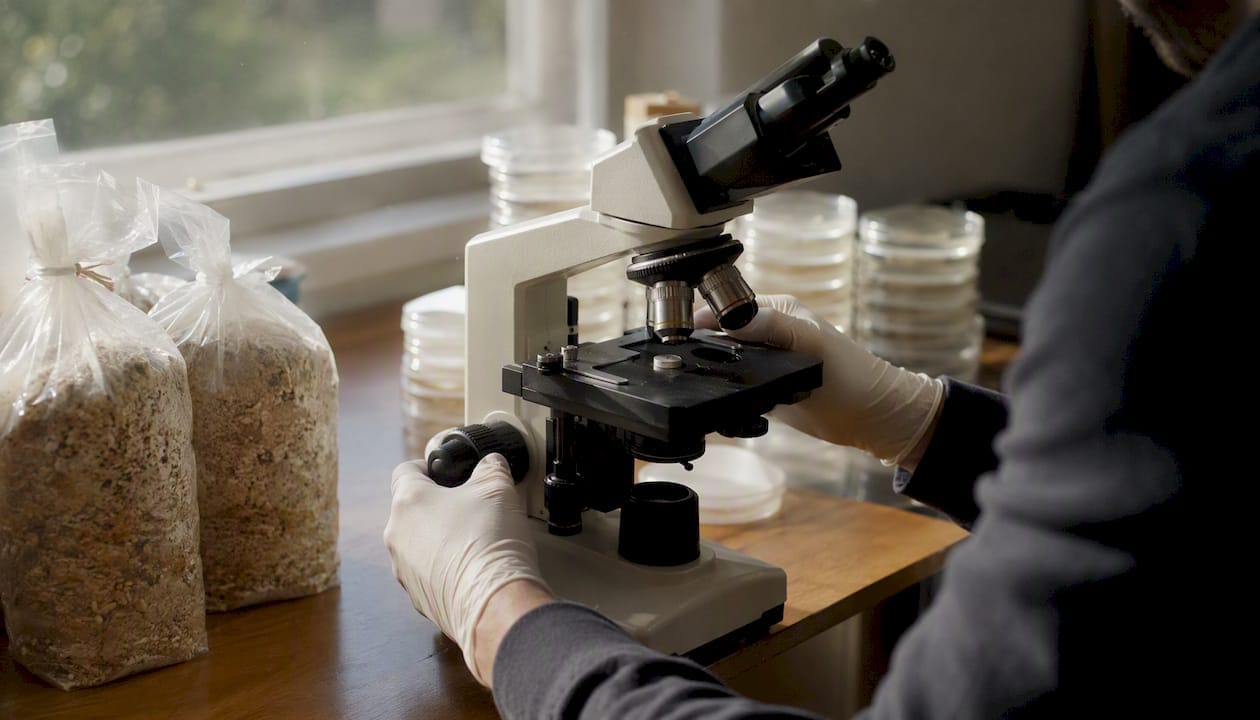
If you are building a reference collection to support your sequencing work, Sporebuddies stocks a range of mycology equipment and supplies including microscopes, agar plates, and sterilised substrates suitable for voucher preparation and basic molecular workflows. For researchers needing verified spore material for microscopy or cultivation studies, the mushroom spore range covers a broad selection of species.
Key takeaways
DNA barcoding advances mycology most effectively when ITS2 sequencing is embedded in integrative taxonomy workflows, paired with physical vouchers, and deposited to curated databases such as UNITE and GenBank.
| Point | Details |
|---|---|
| ITS2 is the standard fungal barcode | It offers high PCR success and broad reference coverage, but secondary markers are needed for difficult genera. |
| HTS dramatically cuts per-specimen cost | A MiSeq Nano run yields approximately 800,000 read pairs, reducing sequencing cost to roughly $1–2 per specimen at scale. |
| Vouchers are non-negotiable | Every sequence must link to a physical specimen with a herbarium accession number and full collection metadata. |
| Curated databases reduce misidentification | Prefer UNITE and ISHAM reference sets over raw GenBank hits for reliable species-level results. |
| UK practitioners have clear entry points | The BMS, Natural History Museum London, and national recording schemes all support barcoding projects and data deposition. |
Useful sources
The Schoch et al. integrative taxonomy paper remains the definitive argument for combining molecular and morphological evidence in fungal identification. The fungarium HTS study (PMC9934593) provides the most practical cost and throughput figures for large-scale barcoding projects. Begerow et al. covers the state of reference databases and the case for curating type sequences. For clinical and food-safety contexts, the ISHAM-focused clinical review (PMC9965959) explains why curated databases outperform raw GenBank searches. The BMC Genomics target enrichment study and the whole-genome sequencing review (PMC5570814) cover advanced methods for higher-resolution work. The Botanic Gardens DNA barcoding overview is a clear, accessible starting point for citizen scientists new to the concept. Finally, the Springer phylogenomics review maps where integrative multi-omics approaches are taking fungal taxonomy next.
For practical follow-up, the Sporebuddies functional mushroom research roundup surveys recent studies where accurate species identification is central to interpreting results.
FAQ
What is the standard DNA barcode marker for fungi?
The nuclear ribosomal internal transcribed spacer (nrITS), specifically ITS2, is the accepted fungal barcode. It was formalised through community consensus and is the primary region indexed in UNITE and GenBank for fungal identification.
How accurate is ITS2 barcoding for mushroom species identification?
ITS2 reliably identifies most macrofungal species when a curated reference sequence exists in UNITE or GenBank. Accuracy drops for genera with intragenomic ITS variation or sparse reference coverage, where secondary markers such as RPB2 or TEF1-alpha are needed.
How much does fungal DNA barcoding cost in the UK?
Sanger sequencing of a single ITS2 amplicon typically costs £8–15 per reaction at UK genomics facilities. High-throughput Illumina MiSeq Nano runs reduce the sequencing cost to roughly $1–2 per specimen when processing approximately 1,000 specimens in a single run.
Do I need a permit to collect fungi for barcoding in the UK?
Collection on Sites of Special Scientific Interest requires consent from Natural England; National Nature Reserves may impose additional conditions. The British Mycological Society publishes current guidance on collecting permissions and ethical practice for UK mycologists.
Can citizen scientists contribute barcoding data to national databases?
Yes. Projects such as Lost and Found Fungi (LAFF) have demonstrated that volunteers can collect, voucher, and submit tissue for sequencing, with resulting sequences deposited to UNITE and GenBank as verified, citable records contributing to national biodiversity assessments.