

People following the Fadiman protocol commonly report improved mood, sharper focus, and greater creative fluency, but controlled research tells a more cautious story. The 2021 self-blinding study by Szigeti et al. found that many reported gains also appeared under placebo, and the observational work of Polito and Stevenson (2019) showed that expectations shaped what participants recorded. That does not mean the protocol produces nothing, but it does mean you should read the evidence carefully before drawing conclusions. Sporebuddies has put together this guide to help you do exactly that.
Reported benefits at a glance:
- Improved mood and emotional stability — supported by observational data; shrinks under blinding
- Enhanced creativity and divergent thinking — frequently cited; limited blinded-trial support
- Better focus and productivity — common self-report; largely anecdotal
- Reduced anxiety and stress — observational reductions noted; expectancy likely contributes
- Greater social connectedness — reported qualitatively; no controlled trial confirmation
- Improved sleep and health habits — occasional self-report; no trial evidence
If you are taking prescribed medication, particularly antidepressants, read the risks section before anything else and speak to a clinician.
Key takeaways
The Fadiman protocol produces consistent self-reported improvements in mood, focus, and creativity, but blinded trials show many of these effects shrink under placebo conditions, making careful personal tracking the most reliable tool you have.
| Point | Details |
|---|---|
| Protocol schedule | The 1/3/1 cycle means dose on day one, rest for two days, then repeat for 4–8 weeks. |
| Top reported benefits | Mood, focus, creativity, and reduced anxiety are most frequently cited in observational studies. |
| Evidence quality | Observational signals exist, but blinded trials (Szigeti 2021) show effects often shrink under placebo conditions. |
| Safety essentials | SSRIs, bipolar history, pregnancy, and cardiovascular conditions are key contraindications; stop if perceptual changes persist. |
| Tracking is critical | Daily numeric ratings on dose and rest days are the only way to separate real effects from expectancy. |
Check the useful sources section below to read the original studies directly.
Table of Contents
- What is the Fadiman protocol and how does it work?
- Benefits of Fadiman protocol microdosing: what users report
- What the evidence actually shows
- Risks, side effects, and contraindications
- How to follow the protocol safely and track your results
- Why the evidence is mixed and how to interpret your own results
- Sources
- FAQ
What is the Fadiman protocol and how does it work?
The Fadiman protocol, sometimes written as the 1/3/1 schedule, is the most widely used microdosing regimen in self-report communities. A 2024 qualitative survey confirmed it as the most prevalent microdosing schedule in use, valued specifically for tolerance management and outcome tracking.
The schedule works like this:
- Day 1: Take a microdose
- Days 2 and 3: Rest, no dose
- Day 4: Take a microdose again, and repeat
The two rest days are not arbitrary. They are pharmacologically motivated to prevent rapid tolerance at the serotonin 5-HT2A receptor and to create a clear within-person contrast, so you can compare how you feel on dose days versus non-dose days. Without that contrast, separating a real effect from normal daily variation is nearly impossible.
James Fadiman, a psychologist and researcher, developed the protocol as a citizen-science tool rather than a clinical treatment. His emphasis was always on structured, repeatable self-observation using diary records, not laboratory proof. The schedule became the field default partly because of the large crowd-sourced dataset Fadiman and his colleague Korb assembled from thousands of self-reports, and partly because its simplicity makes it easy to follow and track. Most observational guidance suggests an initial trial of several weeks, followed by a break of similar length to evaluate what, if anything, changed.
A typical starting microdose of psilocybin mushrooms sits well below a perceptible threshold. The goal is sub-perceptual: you should not feel high, see anything unusual, or notice your thinking becoming noticeably altered. If you do, the dose is too high and the regimen is no longer microdosing. Individual metabolic variability means the right dose differs from person to person, which is why starting conservatively and adjusting slowly is standard practice.
Benefits of Fadiman protocol microdosing: what users report
The following list reflects what participants most frequently record in observational studies and self-report datasets. Each item includes a brief note on how well the evidence supports it.
- Improved mood and emotional stability. The most consistently reported effect. The six-week observational study by Polito and Stevenson tracked 98 participants and found lower depression and stress scores from pre- to post-trial. Mood ratings also rose on dosing days specifically. Evidence note: observational support is present; effects are smaller and less consistent under blinded conditions.
- Greater creativity and divergent thinking. Users frequently describe feeling more associative, open, and generative on dose days. This is one of the most cited microdosing benefits in self-report communities. Evidence note: largely anecdotal; no blinded trial has isolated a creativity effect beyond expectancy.
- Sharper focus and productivity. Many people follow the protocol precisely because they want to work more effectively. Reports describe reduced mental friction and easier task initiation. Evidence note: common self-report; no controlled evidence distinguishes this from placebo.
- Reduced anxiety and stress. Pre-to-post reductions in stress were noted in the Polito and Stevenson observational data. Some users describe a quieting of background worry on dose days. Evidence note: observational signal present; expectancy likely contributes significantly.
- Improved social connectedness. A subset of users report feeling warmer, more present in conversation, and less socially anxious. Evidence note: qualitative reports only; no controlled trial has examined this outcome specifically.
- Enhanced sensory absorption. Some participants describe colours appearing slightly more vivid or music sounding richer on dose days, without full perceptual distortion. Evidence note: anecdotal; if perceptual changes are pronounced, the dose is above the sub-perceptual threshold.
- Better sleep and health habits. A smaller proportion of users report improved sleep quality and a tendency to make healthier choices around food and exercise during a protocol period. Evidence note: incidental self-report; no study has examined this as a primary outcome.
The 1/3/1 schedule is thought to preserve these effects partly by preventing tolerance from building. Dosing every day would likely blunt any response within days; the two rest days maintain receptor sensitivity and keep the contrast between dose and non-dose days meaningful for self-tracking.
What the evidence actually shows
The short answer: observational studies show real signals, but blinded trials reduce those signals substantially, and expectancy is a plausible explanation for much of what people report.
The Szigeti et al. 2021 self-blinding citizen science study is the most methodologically rigorous work available. Participants prepared their own placebo capsules and blinded themselves to which they were taking on any given day. Under those conditions, many reported benefits also appeared on placebo days, and participants often could not reliably distinguish active-dose days from placebo days. Effects that looked robust in open-label reports shrank noticeably once blinding was introduced.
The Polito and Stevenson observational study, tracking 98 microdosers over six weeks, found genuine pre-to-post reductions in depression and stress, and higher mood ratings on dosing days. It also found increased neuroticism scores and clear evidence that participants’ expectations shaped what they recorded. The study’s own analysis noted that what microdosing communities expected to gain was often broader than what participants actually measured.
Harvard Health commentary by Dr Peter Grinspoon echoes this: widespread anecdotal reports of improved mood, creativity, and focus exist, but randomised controlled evidence is limited and expectancy effects are a plausible explanation for many of them. A 2024 rapid review reached a similar conclusion, finding that placebo-controlled evidence of effects beyond expectancy remains limited and recommending larger, better-blinded trials.
Key limitations of the current evidence base:
- Expectancy and placebo effects are the dominant confound; open-label reports consistently outperform blinded ones
- Dose standardisation is absent; dried mushroom potency varies considerably between batches and strains
- Sample sizes in blinded trials are small, limiting statistical power
- Follow-up periods are short, typically six weeks or less
- Legal and regulatory barriers prevent large-scale, properly funded RCTs in most countries
- No controlled trial has tested the Fadiman 1/3/1 schedule itself against an alternative schedule
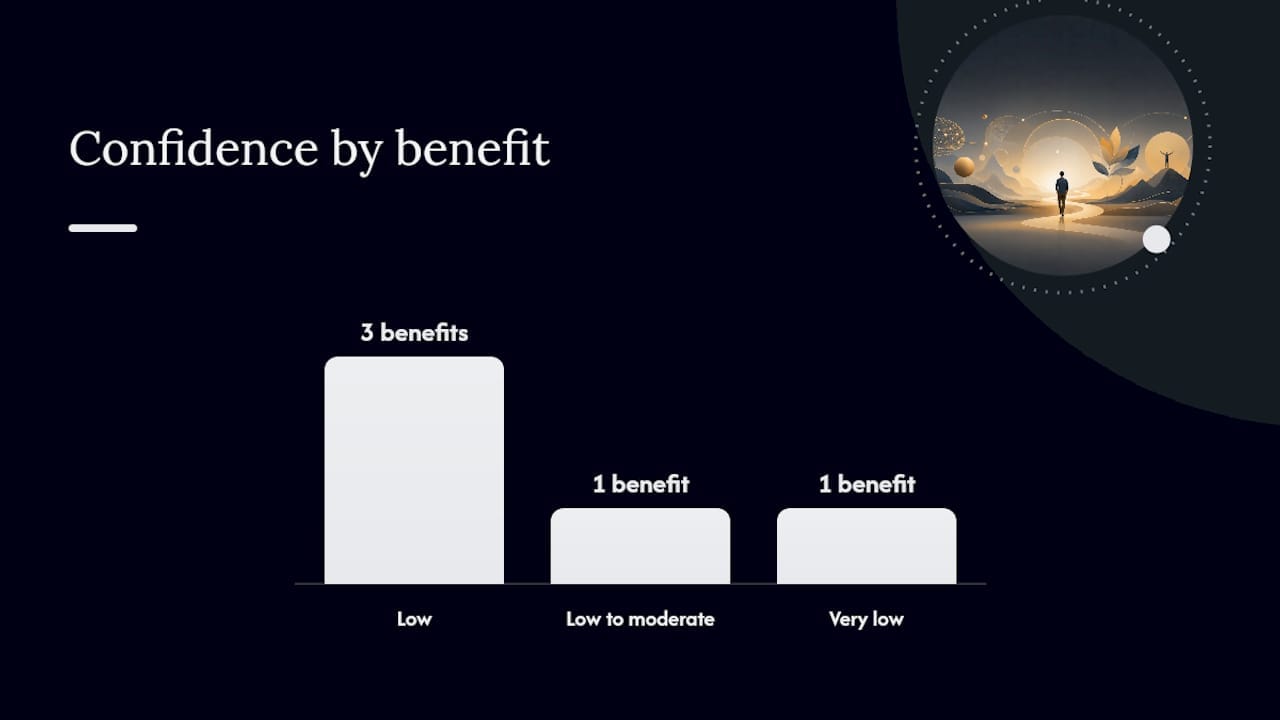
| Reported benefit | Observational support | Blinded-trial support | Confidence level |
|---|---|---|---|
| Improved mood | Yes — Polito & Stevenson 2019 | Partial — shrinks under blinding (Szigeti 2021) | Low to moderate |
| Reduced anxiety/stress | Yes — Polito & Stevenson 2019 | Not confirmed | Low |
| Enhanced creativity | Yes — self-report datasets | Not confirmed | Low |
| Better focus | Yes — self-report datasets | Not confirmed | Low |
| Social connectedness | Qualitative reports only | Not examined | Very low |
Risks, side effects, and contraindications
The benefits of Fadiman protocol microdosing come with real risks that deserve equal attention. The most common adverse effects reported in observational studies include unintended perceptual changes when the dose is too high, increased anxiety, and mood destabilisation. The Polito and Stevenson study also found increased neuroticism scores in a subset of participants, a finding that runs counter to the popular narrative.
Contraindications and interactions to take seriously:
- SSRIs and serotonergic medication: Combining psilocybin with SSRIs, SNRIs, MAOIs, or lithium carries serious interaction risks. Speak to a prescribing clinician before considering any protocol.
- Bipolar disorder history: Psychedelics can trigger manic episodes in people with bipolar disorder; this is a firm contraindication.
- Pregnancy and breastfeeding: No safety data exists; avoid entirely.
- Cardiovascular conditions: Psilocybin affects heart rate and blood pressure; anyone with a cardiac history should seek medical advice first.
- Active severe mental illness: Psychosis, schizophrenia, or a family history of psychotic disorders are contraindications.
- Under 25: Brain development continues into the mid-twenties; the risk profile for younger users is not well characterised.
For a full safety overview and frequently asked questions, the Sporebuddies microdosing safety guide covers contraindications and stop rules in detail.
Stop the protocol immediately if you notice: persistent perceptual changes on non-dose days, significant mood swings lasting more than a day after dosing, difficulty functioning at work or in relationships, or any acute psychological distress. These are signals that the dose is too high or that the protocol is not suitable for you. Seek medical advice promptly.
Pro Tip: If you are on any prescribed medication, do not rely on online forums for interaction guidance. Speak to a pharmacist or GP before starting any microdosing protocol. The interaction between psilocybin and serotonergic drugs is not fully characterised and carries real risk.
Legal status varies by country. Psilocybin mushrooms are a controlled substance in the UK and many other jurisdictions. Sporebuddies sells magic mushroom spores for microscopy and research purposes only, which is legal in the UK. Always verify the laws applicable in your location before proceeding.

How to follow the protocol safely and track your results
Following a structured schedule plus careful measurement is the only way to tell whether any benefit is real for you, rather than a product of expectation.
- Establish a baseline first. Spend one to two weeks before starting the protocol rating your mood, focus, anxiety, sleep quality, and productivity on a simple 1–10 scale each day. This gives you a genuine comparison point.
- Set up a daily log. Record the following every day: date, whether it is a dose day or rest day, dose amount, time taken, substance source, and your ratings for mood, focus, anxiety, sleep, and productivity. Keep descriptions numerical rather than descriptive.
- Start lower than you think necessary. Individual variability in metabolism means a dose that is sub-perceptual for one person is noticeable for another. Starting conservatively and adjusting slowly is the standard approach among experienced practitioners.
- Follow the 1/3/1 cycle consistently. Dose on day one, rest on days two and three, dose on day four. Consistency is what makes the within-person comparison meaningful.
- Run the trial for 4–8 weeks. Most observational protocols use this window. Shorter periods do not give enough data points; longer periods without a break make it harder to evaluate what changed.
- Take a four-week break before evaluating. After the trial period, stop dosing for at least four weeks and continue rating yourself daily. This washout period helps you see whether any changes persist or fade.
- Compare dose days with rest days systematically. Look at your average ratings on dose days versus rest days. If dose days are consistently higher across multiple cycles, that is a more meaningful signal than a general sense of improvement.
- Decide in advance what counts as a meaningful result. Pre-registering your own endpoints, before you start, reduces the temptation to reinterpret results in your favour after the fact.
Pro Tip: Use numerical scales rather than descriptive adjectives in your diary. Writing “mood: 7/10” is far more useful than “felt pretty good today” because it lets you calculate averages and spot patterns across weeks rather than relying on memory.
For step-by-step practical instructions, the Sporebuddies microdosing guide walks through the full process, including dosing considerations for beginners.
Stop rules: pause the protocol if you notice perceptual changes on rest days, persistent anxiety, or any interference with daily functioning. Consult a clinician if symptoms do not resolve within a few days of stopping.
Why the evidence is mixed and how to interpret your own results
The research disagrees partly because the problem is genuinely hard to study, and partly because the tools available so far are imperfect.
The main research gaps:
- No controlled trial has tested the Fadiman 1/3/1 schedule specifically against a different schedule or a no-dose control
- Blinding participants to whether they have taken a psychoactive substance is inherently difficult, which inflates expectancy effects
- Dried mushroom potency varies between batches, strains, and storage conditions, making dose standardisation across studies nearly impossible
- Most RCTs have enrolled small numbers of participants, limiting what conclusions can be drawn
- Follow-up periods rarely extend beyond six to eight weeks, so nothing is known about long-term effects
- Regulatory barriers in most countries prevent the large, well-funded trials that would resolve these questions
For you as an individual, this means personal reports are valuable but may be shaped by what you expect to find. Controlled trials reduce that bias and currently provide limited evidence of effects beyond placebo. The practical implication is straightforward: if benefits are subtle and reliably appear on dose days compared with rest days in a neutral tracking system, they are more likely to reflect a genuine personal response. If your ratings are similar across all days, or if improvements appeared before you even started dosing, treat the results cautiously.
The Sporebuddies microdosing guides section covers evidence summaries and practical templates for readers who want to go deeper.
Sources
- Self-blinding citizen science to explore psychedelic microdosing
- A systematic study of microdosing psychedelics
- The popularity of microdosing of psychedelics: What does the science say? – Harvard Health
- Qualitative survey study reporting prevalence of the Fadiman protocol
This article is general information, not a substitute for advice from a qualified doctor. Consult a qualified healthcare professional about your own circumstances before acting on anything here.
FAQ
What is the Fadiman protocol in microdosing?
The Fadiman protocol is a 1/3/1 microdosing schedule: take a sub-perceptual dose on day one, rest on days two and three, then dose again on day four and repeat. It was developed by psychologist James Fadiman as a structured citizen-science approach to self-observation.
What benefits do people report from the Fadiman protocol?
The most frequently reported benefits are improved mood, sharper focus, greater creativity, and reduced anxiety. These come from observational studies and self-report datasets; blinded trials show the effects are often smaller than open-label reports suggest.
Does the Fadiman protocol actually work, or is it placebo?
The honest answer is that controlled evidence is limited. The Szigeti et al. 2021 self-blinding study found that many reported benefits also appeared under placebo, suggesting expectancy explains a substantial portion of self-reported gains. Observational studies show real signals, but blinded conditions reduce them.
Is the Fadiman protocol safe to follow?
It carries real risks, particularly for people taking SSRIs or other serotonergic medication, those with a history of bipolar disorder or psychosis, and anyone with cardiovascular conditions. Always consult a clinician before starting, and stop immediately if perceptual changes persist on rest days.
How long should you follow the Fadiman protocol?
Most observational guidance recommends an initial trial of 4–8 weeks, followed by a break of at least four weeks to evaluate what changed. Continuing without a break makes it harder to separate protocol effects from normal life variation.