
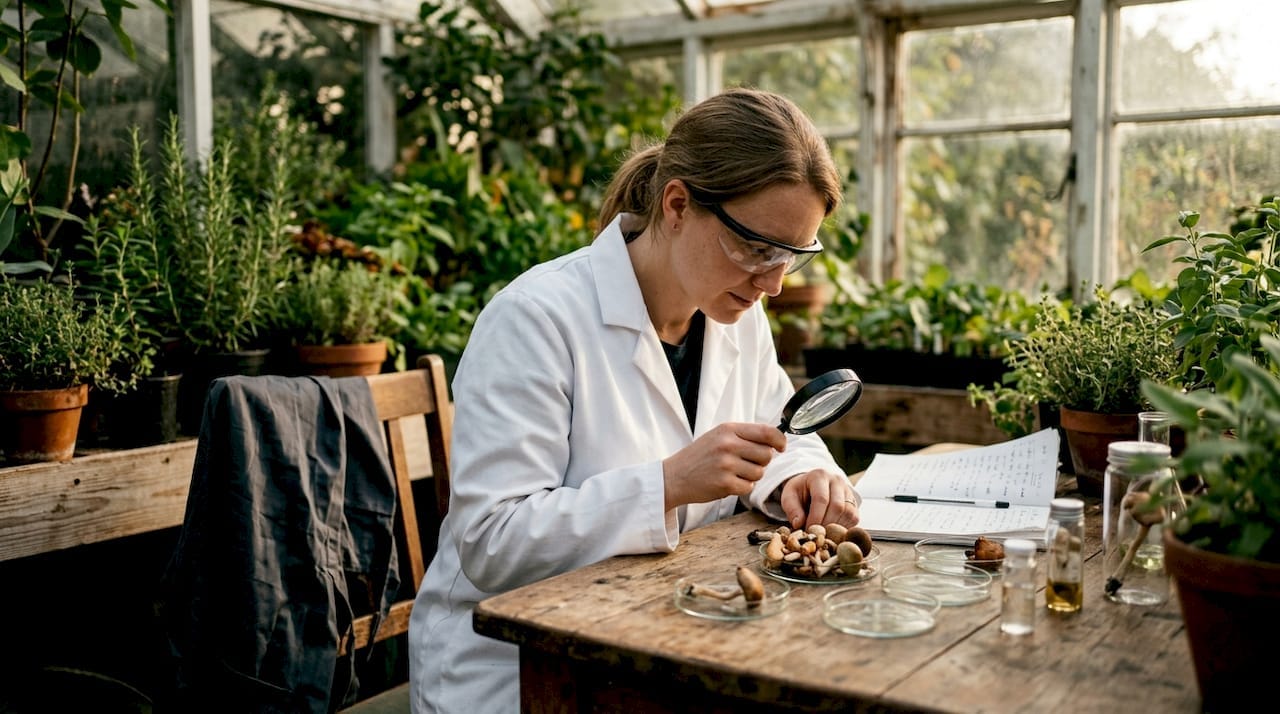
Mushroom odour is defined by volatile organic compounds (VOCs), chemical substances produced as metabolic byproducts that evaporate at room temperature and reach your nose. The most recognised of these is 1-octen-3-ol, the compound responsible for the classic earthy mushroom scent. Beyond that familiar note, fungi produce sulfur compounds, aldehydes, esters, and terpenes that create everything from almond sweetness to coal gas. Understanding why mushrooms smell unusual starts with understanding these compounds and the biological reasons fungi produce them.
Why mushrooms smell unusual: the key chemical compounds
Unusual mushroom smells result from a specific set of VOCs, each with a distinct scent character and biological purpose. Knowing which compound causes which smell gives you a real framework for identification and safety.
1-octen-3-ol is the baseline. It produces the damp, earthy smell most people associate with fresh mushrooms. Fungi synthesise it from linoleic acid, a fatty acid found in cell membranes, and release it as tissue breaks down.
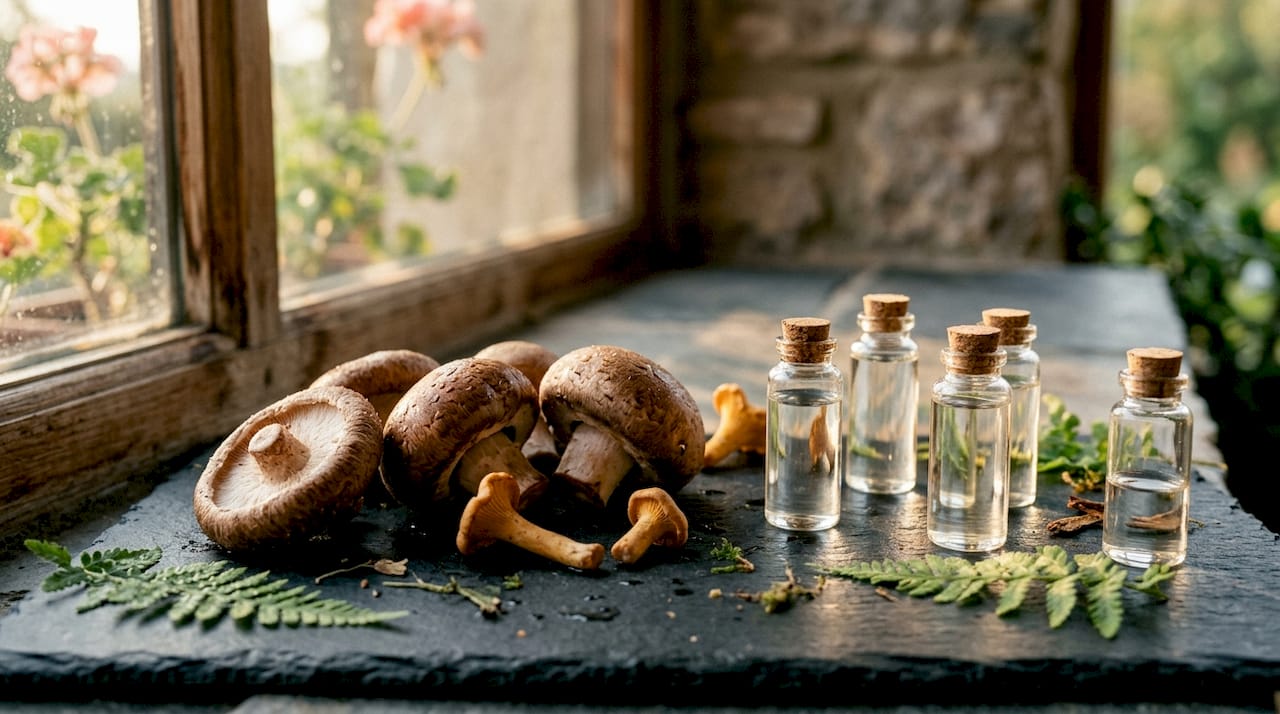
Sulfur compounds tell a different story. Methanethiol and dimethyl trithiocarbonate produce garlic, rotten egg, or gas-like smells. These are not signs of spoilage in all cases. Some species produce them as active biochemical defences.
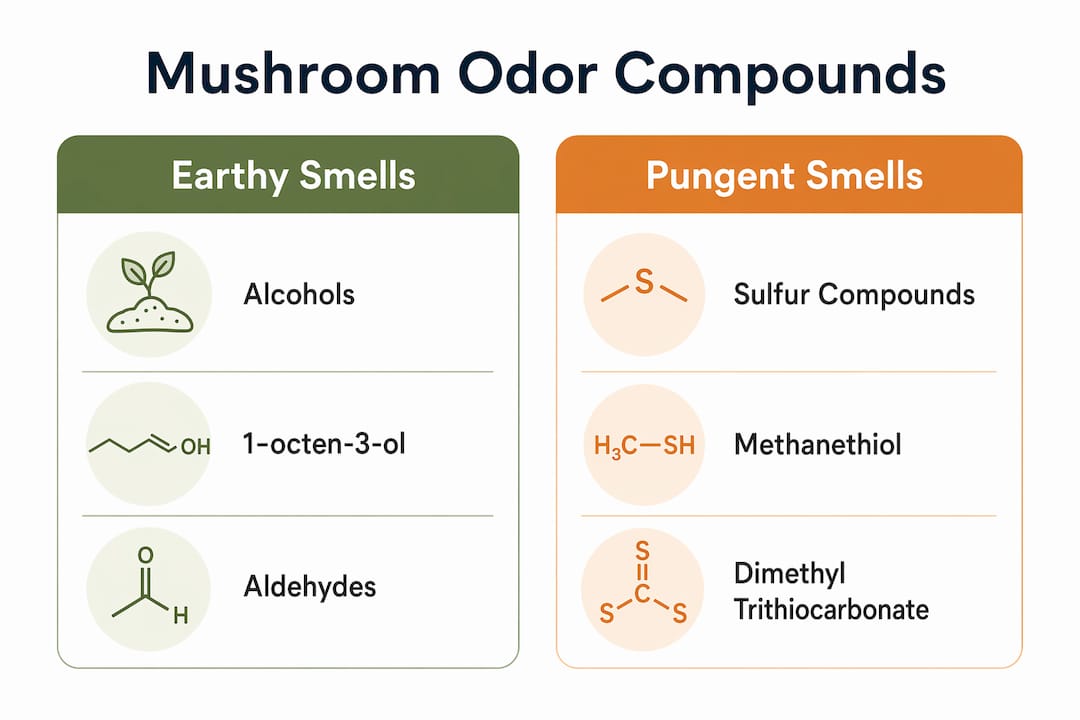
Aldehydes such as benzaldehyde create almond or anise notes. You will find these in species like aniseed funnel (Clitocybe odora), where the scent is strong enough to identify the mushroom from a metre away. Esters contribute fruity or floral notes, while terpenes add pine, citrus, or resinous characters. Phenols produce sharp, medicinal, or inky smells, most notably in the ink cap family.
| VOC class | Example compound | Scent character | Biological role |
|---|---|---|---|
| Alcohols | 1-octen-3-ol | Earthy, mushroomy | Tissue breakdown byproduct |
| Sulfur compounds | Methanethiol | Garlic, rotten egg | Defence, deterrence |
| Aldehydes | Benzaldehyde | Almond, anise | Species signalling |
| Esters | Various | Fruity, floral | Insect attraction |
| Terpenes | Various | Pine, citrus, resinous | Environmental communication |
| Phenols | Various | Medicinal, inky | Predator deterrence |
Pro Tip: When you encounter a strong or unfamiliar mushroom smell, try to match it to one of these VOC classes before drawing any conclusions. A garlic or gas note points to sulfur compounds; an almond note points to aldehydes. This narrows your identification considerably before you even look at spore colour or gill structure.
How does species and age affect mushroom odour?
Species identity is the single biggest factor in VOC profile variation. Each species carries a characteristic chemical fingerprint, shaped by its genetics and the enzymes it expresses. Two mushrooms growing side by side on the same log can smell entirely different because their metabolic pathways diverge at the species level.
Age compounds this further. Young mushrooms emit subtler smells; mature or drying specimens release more intense VOC profiles as cellular breakdown accelerates. This is why a freshly picked oyster mushroom smells mild and pleasant, while an older specimen left in a warm bag develops a sharper, more pronounced aroma.
Some species use this intensification deliberately:
- Tricholoma sulphureum (Sulphur Knight) produces a coal gas smell that strengthens as the fruiting body matures. This acts as a deterrent to animals and foragers alike.
- Stinkhorns (Phallus impudicus) emit a carrion-like odour at peak maturity, timed precisely to attract flies for spore dispersal.
- Clitocybe odora (Aniseed funnel) produces benzaldehyde-driven anise scent that remains consistent across its life cycle, making it one of the more reliably identifiable species by smell alone.
- Cortinarius traganus (Gassy Webcap) develops an increasingly unpleasant, goat-like odour as it ages, which intensifies further when cooked.
Substrate and environment also shift VOC output. Studies on culinary mushrooms show that compounds like octanal and 3-octanol vary depending on growing conditions, moisture levels, and the organic material the mycelium colonises. A shiitake grown on oak will smell slightly different from one grown on straw. This is not a flaw. It reflects the fungus responding chemically to its environment.
Pro Tip: Never rely on smell alone to identify a mushroom. Use it as one data point alongside cap shape, gill attachment, spore print colour, and habitat. A mushroom that smells right but looks wrong is still a risk.
What biological functions do unusual mushroom smells serve?
Mushroom smells are sophisticated chemical signals, not random byproducts. Fungi have evolved specific VOC profiles over millions of years because those profiles solve real biological problems.
The core ecological functions break down as follows:
- Spore dispersal via insects. Stinkhorns produce a foul, carrion-like smell that attracts flies and beetles. These insects land on the spore mass, pick up spores on their bodies, and carry them to new locations. The smell is the dispersal mechanism.
- Predator deterrence. Sulfur compounds and phenols make certain mushrooms unpalatable or repellent to fungivores, slugs, and small mammals. The Sulphur Knight’s coal gas odour is a clear example of this strategy.
- Competing fungi suppression. Some species release VOCs that inhibit the growth of neighbouring fungi, giving them a chemical advantage in colonising a substrate.
- Attracting specific pollinators. Esters and terpenes in certain species mimic floral scents, drawing insects that inadvertently assist in spore movement.
“Fungi produce esters, terpenes, and sulfur compounds that manipulate their immediate environment, attracting insects for spore dispersal or repelling fungivores through chemical deterrence. These are not passive smells. They are active biological tools shaped by evolutionary pressure.”
Strong chemical or foul odours are consistently linked to biochemical defences and usually signal inedibility or toxicity. This is not a coincidence. Species that invest in producing deterrent VOCs gain a survival advantage because they are left alone to complete their reproductive cycle. The smell is the mushroom’s way of communicating with the wider ecosystem, and it has been refined over an enormous timescale.
Understanding this reframes how you think about mushroom biochemistry. The smell is not incidental. It is functional.
How to interpret unusual mushroom smells safely when foraging
Smell is a secondary identification tool in mycology, not a primary one. Experts are clear that the human olfactory system is fallible, and some toxic mushrooms have mild or even pleasant odours while some edible species smell sharp or unpleasant. Relying on smell alone has led to serious poisoning incidents.
That said, certain odours do carry reliable warning signals worth knowing:
| Odour type | Example species | Recommended action |
|---|---|---|
| Coal gas or sulfurous | Tricholoma sulphureum | Do not eat; treat as inedible |
| Chemical or phenolic | Agaricus xanthodermus | Avoid; associated with GI toxicity |
| Fishy or ammonia-like | Overripe or degraded specimens | Discard; indicates breakdown or bacterial contamination |
| Carrion or rotting meat | Stinkhorns | Not edible; spore dispersal mechanism |
| Mild, earthy, or anise | Oyster, aniseed funnel | Proceed with full identification protocol |
Cooking does not neutralise strong odours. Heating certain mushrooms amplifies their smell rather than reducing it. Cortinarius traganus becomes more offensive when cooked, not less. If a raw mushroom smells wrong, cooking will not fix the problem and may concentrate whatever compounds are causing the issue.
Odour persistence is another factor worth noting. Piptoporus australiensis retains its curry-like smell for decades after drying. This illustrates how stable some VOCs are in fungal tissue. A dried specimen in a collection can still give you useful olfactory data years after it was picked.
Safe foraging practice integrates smell with multiple identification features: texture, anatomy, spore print, and habitat. A reliable field guide, ideally one specific to the UK, is non-negotiable. Sporebuddies covers this in detail in its safe foraging guide, which walks through the full identification protocol for UK species.
Pro Tip: When using smell as part of identification, crush a small piece of the cap and smell it directly. This releases more VOCs than sniffing the intact fruiting body and gives you a clearer read on the compound profile.
Sporebuddies: supporting your mushroom biology education
Understanding mushroom chemistry is the foundation of safe cultivation and responsible foraging. Sporebuddies provides the tools and knowledge to take that understanding further. Whether you are studying spore morphology under a microscope or growing your first oyster or lion’s mane flush at home, the right starting materials make a real difference. Browse the full range of mushroom spore syringes to find well-documented strains suited to research and cultivation. Pair them with quality mushroom substrate to give your mycelium the best possible growing conditions. Sporebuddies also publishes educational guides on contamination prevention, cultivation technique, and mycology science, all written to support growers at every level.
Key takeaways
Mushroom odours are produced by volatile organic compounds that serve active biological functions, including defence, spore dispersal, and chemical communication, making smell a meaningful but never sufficient identification tool.
| Point | Details |
|---|---|
| VOCs drive all mushroom smells | Compounds like 1-octen-3-ol, benzaldehyde, and sulfur compounds each produce distinct, identifiable scent profiles. |
| Species and age shape odour intensity | Mature mushrooms emit stronger VOC profiles; substrate and environment also shift the aroma of the same species. |
| Smell serves ecological functions | Foul or chemical odours deter predators; fruity or carrion-like smells attract insects for spore dispersal. |
| Warning odours signal inedibility | Coal gas, phenolic, and chemical smells consistently indicate inedible or toxic species. |
| Smell alone is never enough | Safe identification requires spore print, anatomy, habitat, and a reliable field guide alongside any olfactory assessment. |
FAQ
What causes the typical earthy smell of mushrooms?
The earthy smell comes primarily from 1-octen-3-ol, a volatile organic compound produced when fungal cell membranes break down. It is the most common VOC in edible mushrooms and the baseline of what most people recognise as a “mushroom smell.”
Why do some mushrooms smell like garlic or rotten eggs?
Sulfur compounds, specifically methanethiol and dimethyl trithiocarbonate, produce garlic and rotten egg odours in certain species. These are biochemical defence compounds, not signs of spoilage, and they are a reliable indicator that the species is inedible or toxic.
Can you identify a mushroom by smell alone?
Smell is a useful secondary tool but not a reliable sole identifier. Some deadly species have mild or pleasant odours, while some edible species smell sharp or unpleasant. Always combine smell with spore print, cap anatomy, gill structure, and habitat before drawing any conclusions.
Does cooking remove strong mushroom odours?
Cooking does not neutralise strong mushroom odours and can intensify them. Species like Cortinarius traganus become more offensive when heated. If a raw mushroom smells wrong, discarding it is the safest course of action.
Why do stinkhorns smell so bad?
Stinkhorns produce a carrion-like odour at peak maturity to attract flies and beetles, which carry spores to new locations. The foul smell is a deliberate spore dispersal mechanism, not a sign of decay, and it is timed to coincide with spore mass development.