
Psilocybin research is the scientific study of the effects, mechanisms, and therapeutic applications of psilocybin, a classic psychedelic compound found in certain species of fungi. The field has grown from fringe curiosity into a serious clinical discipline, with the US Food and Drug Administration granting psilocybin “breakthrough therapy” designation for both treatment-resistant depression and major depressive disorder. Researchers now run over 130 clinical trials internationally, and a market projection places the sector at £10.75 billion by 2027. If you want to understand what psilocybin research actually covers, this guide walks you through the pharmacology, the clinical evidence, the real-world challenges, and where the science is heading next.
What is psilocybin research and why does it matter?
Psilocybin research is defined as the systematic investigation of psilocybin’s pharmacological properties, psychological effects, and clinical utility, particularly for mental health conditions. The compound itself is a naturally occurring tryptamine alkaloid, most commonly associated with species such as Psilocybe cubensis. When ingested, the body converts it into psilocin, its active metabolite, which then acts on the brain.
The field sits at the intersection of neuropharmacology, psychiatry, and psychotherapy. That combination makes it unusual among pharmaceutical research programmes. Most drug trials focus on a molecule’s direct biochemical action. Psilocybin research also has to account for the psychological context in which the drug is administered, including the therapist’s role, the setting, and the patient’s preparation beforehand.
The FDA breakthrough therapy designation is not a marketing label. It signals that early clinical evidence suggests the treatment may offer substantial improvement over existing therapies for a serious condition. For psilocybin, that designation covers both treatment-resistant depression and major depressive disorder. That regulatory recognition has accelerated funding and trial approvals across the UK, Europe, and North America.
How does psilocybin work in the brain and body?
Psilocybin acts as a serotonin 5-HT2A receptor agonist, meaning it binds to and activates a specific class of serotonin receptors concentrated in the prefrontal cortex. This activation produces the compound’s characteristic effects: altered perception, visual phenomena, and a heightened sense of psychological insight. The distinction from other psychoactive substances matters here.
Ketamine works primarily through NMDA glutamate receptor antagonism. MDMA triggers a flood of serotonin, dopamine, and noradrenaline release rather than direct receptor activation. Psilocybin’s mechanism is more selective. It targets 5-HT2A receptors with particular specificity, which is one reason its subjective effects differ so markedly from those of ketamine or MDMA.
The pharmacokinetics are relatively predictable. Onset typically occurs within 20–40 minutes of ingestion. Effects peak at around 2–3 hours and resolve within 4–6 hours. Dose-dependency is clear: lower doses produce mild perceptual shifts, while higher doses produce the full psychedelic experience associated with therapeutic protocols.
The therapeutic mechanism likely involves neuroplasticity changes downstream of 5-HT2A activation. Psilocin increases serotonergic signalling, which triggers structural and functional changes in neural circuits associated with mood regulation. This is broadly analogous to ketamine’s neuroplastic effects, though the molecular targets differ. The result is a rapid antidepressant effect that outlasts the drug’s presence in the body by days or weeks.
Key pharmacological facts:
- Psilocybin converts to psilocin in the body; psilocin is the pharmacologically active form
- Primary target: serotonin 5-HT2A receptors in the prefrontal cortex
- Effects last 4–6 hours; antidepressant benefits can persist for weeks
- Neuroplasticity, not just receptor binding, drives therapeutic outcomes
- Psilocybin does not cause physical dependence or withdrawal
Pro Tip: If you are reading clinical trial papers on psilocybin, check whether the study reports the dose in milligrams of psilocybin or milligrams per kilogram of body weight. The two formats are not interchangeable, and inconsistent dosing notation is one of the most common sources of confusion when comparing study results.
What types of psilocybin studies have been conducted?
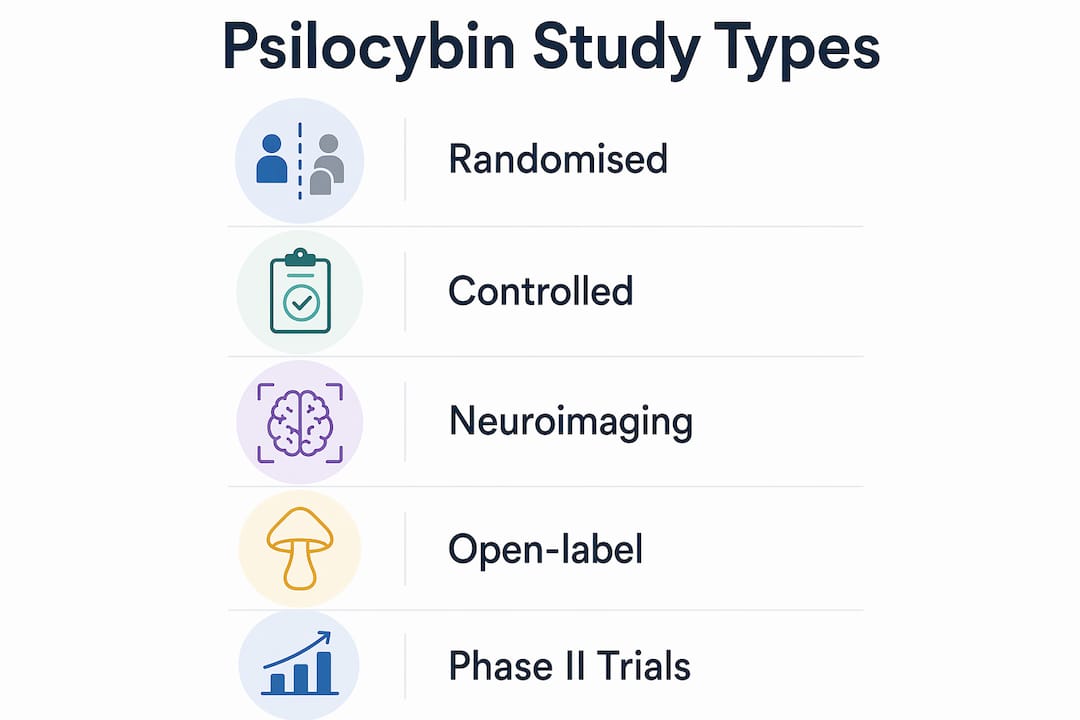
The clinical evidence base for psilocybin has expanded considerably since 2020. Researchers have used several distinct study designs, each with different strengths and limitations.
Randomised controlled trials
Randomised controlled trials (RCTs) are the gold standard for establishing clinical efficacy. A systematic review and meta-analysis drawing on 602 participants across multiple RCTs found that psilocybin produces a moderate reduction in depression symptoms, with a standardised effect size (Hedges’ g) of 0.62. An effect size of 0.62 is clinically meaningful. It places psilocybin’s antidepressant effect broadly in line with, or above, many approved antidepressants in head-to-head comparisons.
Neuroimaging studies
Neuroimaging research uses fMRI and EEG to map what happens in the brain during and after psilocybin administration. These studies have identified neural correlates of the psychedelic state, including changes in default mode network activity and increased global brain connectivity. The findings help explain why patients often describe a sense of ego dissolution or expanded awareness during sessions. This line of research is still expanding, and larger imaging studies are currently underway.
Open-label and phase II trials
Open-label trials, where both participants and researchers know the treatment being given, have provided early safety and tolerability data. Phase II trials have tested psilocybin in conditions including treatment-resistant depression, end-of-life anxiety, alcohol use disorder, and tobacco addiction. The safety profile across these studies is consistently favourable. Serious adverse events are rare. The most commonly reported side effects are transient and include:
- Nausea during the acute session
- Headache in the hours following the session
- Temporary anxiety or psychological discomfort during the experience
- Mild fatigue the following day
| Study type | Typical sample size | Primary outcome measured |
|---|---|---|
| Randomised controlled trial | 50–300+ participants | Symptom reduction scores (e.g., MADRS, HAMD) |
| Open-label phase II trial | 10–50 participants | Safety, tolerability, preliminary efficacy |
| Neuroimaging study | 10–30 participants | Neural correlates, brain connectivity changes |
| Meta-analysis / systematic review | 600+ (pooled) | Standardised effect sizes across multiple RCTs |
What are the challenges in interpreting psilocybin research?
The evidence is promising, but the field has real methodological problems that researchers and readers alike need to understand.
The most significant gap is the underreporting of the integration phase. Integration refers to the psychotherapeutic work that happens after a psilocybin session, where patients process their experience with a trained therapist. Most published trials describe the drug dose and the session setting in detail. Very few describe the integration protocol with enough specificity to allow replication. This matters because the integration phase is likely a key driver of therapeutic outcomes, not just the drug itself.
“Insufficient reporting of the psychotherapeutic integration phase hampers replicability and limits clinical application. Positive outcomes in psilocybin trials cannot be attributed to the compound alone when the therapeutic context remains poorly described.”
— Challenges in psychedelic clinical research reporting
A second challenge is the absence of standardised terminology across the field. Researchers use different definitions for dose categories, different scales to measure subjective effects, and different labels for therapy phases. Without a shared lexicon, comparing results across trials is genuinely difficult. Frameworks for standardising this terminology are being proposed, but adoption is slow.
The regulatory and ethical barriers are also substantial. Setting up a clinical psychedelic study requires navigating a process that researchers have described as unusually complex, involving stricter safety monitoring, ethics committee scrutiny, and controlled drug licensing than standard pharmaceutical trials. These barriers protect participants, but they also slow the pace of research.
Pro Tip: When evaluating a psilocybin study, look for three things: a clearly described integration protocol, a pre-registered trial design, and a validated depression scale as the primary outcome measure. Studies missing any of these elements require more cautious interpretation.
How is psilocybin research shaping future mental health treatments?
The pipeline of psilocybin trials is now substantial. Phase III trials, the final stage before regulatory approval, are underway or planned for treatment-resistant depression, generalised anxiety disorder, post-traumatic stress disorder, and alcohol use disorder. Phase III trials involve larger populations and are designed to confirm the efficacy and safety signals seen in earlier phases.
Neuroimaging and mechanistic neuroscience are becoming central to this next wave of research. Rather than simply asking “does it work?”, researchers are now asking “why does it work, and for whom?” That shift towards personalised medicine is significant. If neuroimaging can identify which patients are most likely to respond to psilocybin therapy, clinicians can target treatment more precisely and avoid exposing non-responders to unnecessary risk.
Multi-modal treatment approaches are also gaining traction. Researchers are investigating whether psilocybin works better when combined with specific psychotherapy models, mindfulness-based practices, or other pharmacological agents. The psilocybin therapy research literature increasingly treats the drug as one component of a broader therapeutic system rather than a standalone cure.
Key areas of active investigation include:
- Phase III RCTs for treatment-resistant depression and PTSD
- Long-term follow-up studies measuring durability of antidepressant effects
- Biomarker research to identify predictors of treatment response
- Microdosing protocols and their cognitive and mood effects
- Regulatory submissions in the UK, EU, and Australia
For researchers and curious readers wanting to engage with this science responsibly, the Sporebuddies glossary on psilocybin offers a clear grounding in definitions and UK legal context. Understanding the legal framework is the necessary first step before engaging with any aspect of psilocybin science.
Key takeaways
Psilocybin research is a clinically serious field with an effect size of 0.62 for depression, FDA breakthrough therapy status, and over 130 active international trials driving rapid progress.
| Point | Details |
|---|---|
| Defined mechanism | Psilocybin acts via serotonin 5-HT2A receptors; psilocin is the active metabolite driving therapeutic effects. |
| Clinical efficacy | A meta-analysis of 602 participants found a standardised effect size of 0.62 for depression symptom reduction. |
| Integration phase matters | Psychotherapeutic integration after sessions is underreported but critical to replicating positive outcomes. |
| Terminology gap | The absence of a shared research lexicon makes cross-trial comparisons unreliable without careful scrutiny. |
| Expanding pipeline | Phase III trials for depression, PTSD, and addiction are underway, with neuroimaging advancing mechanistic understanding. |
Sporebuddies and the science of mushroom research
Psilocybin research begins with understanding the fungi that produce it. Sporebuddies supplies a range of legal mushroom spores in the UK, including popular strains such as Golden Teacher, B+, and Penis Envy, all available as spore syringes and spore prints for microscopy and research purposes. Alongside spores, Sporebuddies stocks agar plates, sterilised substrates, and microscopy equipment suited to anyone studying fungal morphology at a serious level. The educational blog covers mycology science, cultivation technique, and the broader context of psilocybin studies, making it a practical resource for both beginners and experienced researchers. Responsible engagement with mushroom science starts with quality materials and accurate information, and Sporebuddies provides both.
FAQ
What is psilocybin research in simple terms?
Psilocybin research is the scientific study of how psilocybin affects the brain, its safety profile, and its potential to treat mental health conditions such as depression and anxiety. It spans pharmacology, clinical trials, and psychotherapy.
What does psilocybin do to the brain?
Psilocybin converts to psilocin in the body and activates serotonin 5-HT2A receptors, particularly in the prefrontal cortex, producing altered perception and triggering neuroplastic changes linked to antidepressant effects.
How effective is psilocybin for depression?
A meta-analysis of RCTs involving 602 participants found a standardised effect size of 0.62 for depression symptom reduction, a clinically meaningful result that supported the FDA’s breakthrough therapy designation.
Is psilocybin research legal in the UK?
Clinical psilocybin research in the UK requires a Home Office licence because psilocybin is a Schedule 1 controlled substance. Approved academic and clinical institutions can obtain licences to conduct trials under strict ethical and safety oversight.
What are the main challenges in psilocybin studies?
The two most significant challenges are poor reporting of integration protocols and the lack of standardised terminology across trials, both of which limit the reproducibility and comparability of study results.