
Glossary for: Psilocybin
Educational note: This glossary entry explains psilocybin in scientific, mycological, and legal context. It is intended for education and reference, not for instructions on finding, preparing, or using controlled substances.
Quick definition
Psilocybin is a naturally occurring psychedelic compound found in some mushroom species. Johns Hopkins describes it as a naturally occurring psychedelic compound found in “magic mushrooms,” and UK legislation treats fungus containing psilocin or an ester of psilocin as a Class A drug context in law. [1][2][3]
What is psilocybin?
Psilocybin is a naturally occurring psychedelic compound found in some mushroom species. Johns Hopkins describes it as a naturally occurring psychedelic compound found in “magic mushrooms,” and Imperial’s Centre for Psychedelic Research studies psychedelics including psilocybin in brain and clinical research contexts. [1][4]
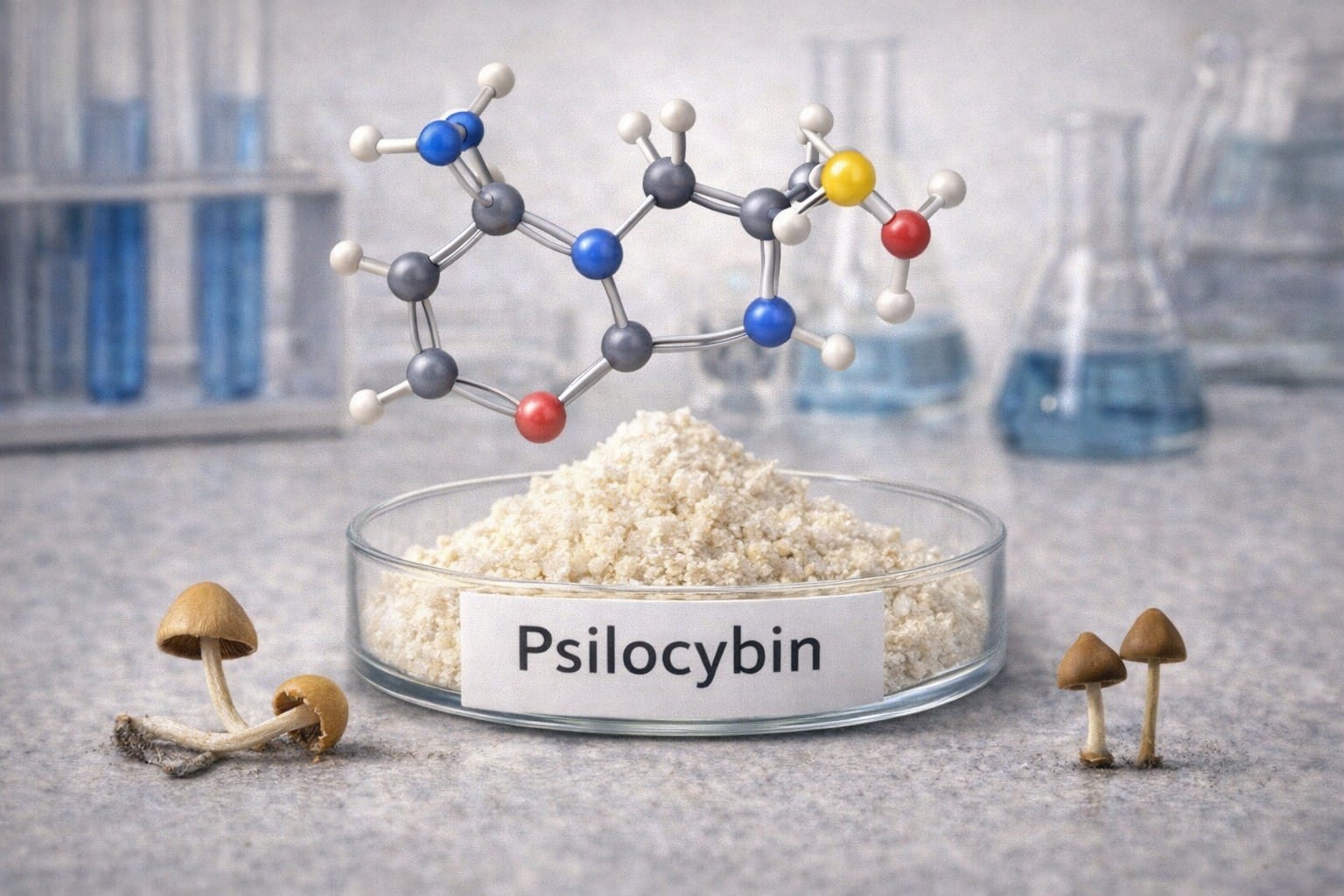
In plain terms, psilocybin is one of the best-known compounds associated with certain fungi. In educational and scientific writing, it is usually discussed in relation to mushroom biology, neuroscience research, and drug law. [1][4]
Chemical information
- Compound: Psilocybin
- Chemical formula: C12H17N2O4P
- Class: Tryptamine compound
- Found in: Certain mushroom species
Where psilocybin occurs in nature
Psilocybin is associated with certain mushroom species, especially within the genus Psilocybe. In broader mycology discussion, psilocybin-related species are also discussed in relation to groups such as Panaeolus, Gymnopilus, and Pluteus in some taxonomic and educational contexts. This page keeps the point general: psilocybin occurs in some fungi, not in mushrooms as a whole. [1][4]
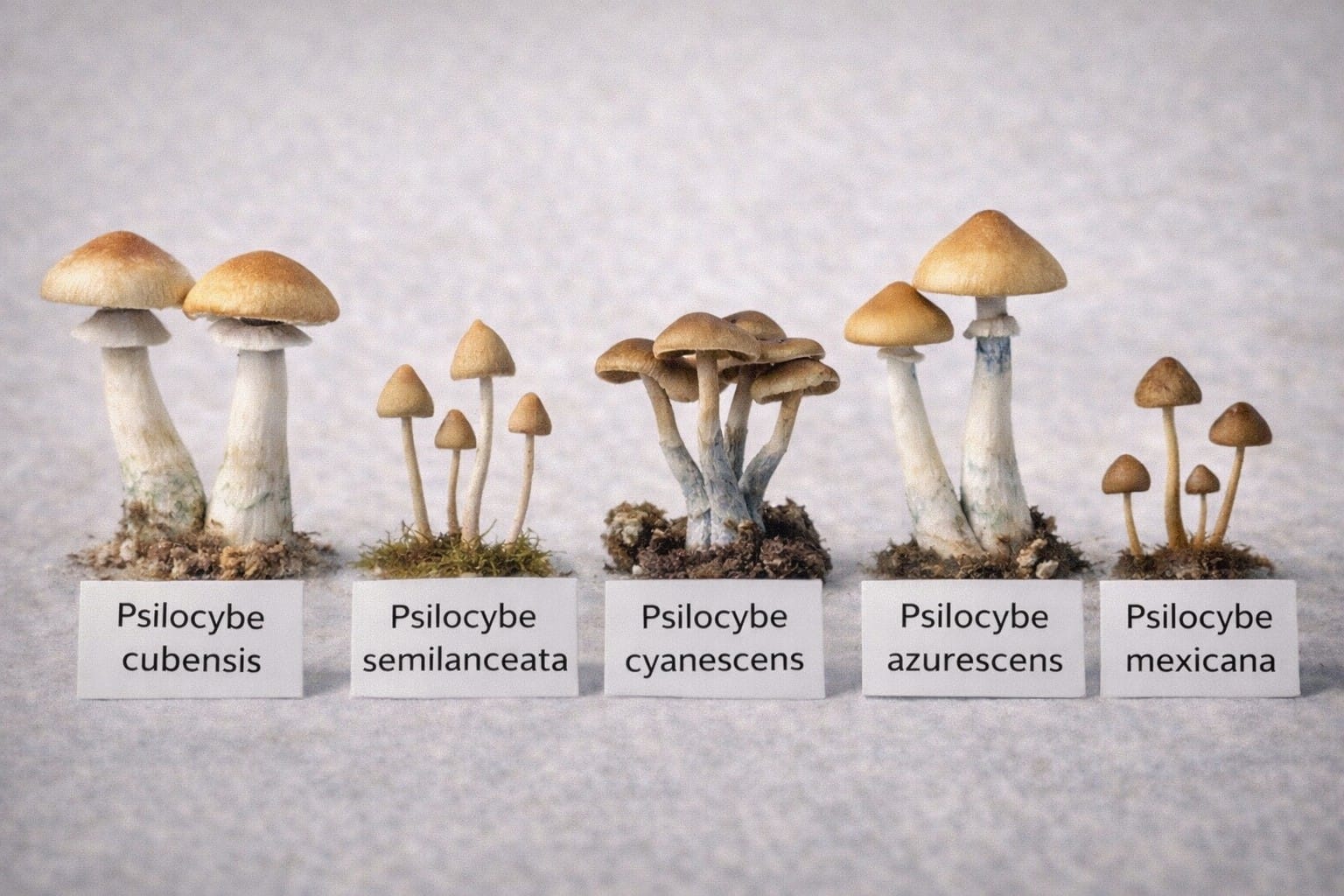
That distinction matters because most mushrooms do not contain psilocybin, and scientific or safety writing should avoid treating all fungi as chemically similar.
Answer-first
Is psilocybin found in all mushrooms? No. It occurs only in certain species and genera, not across fungi in general. [1][4]
Psilocybin and mushroom spores
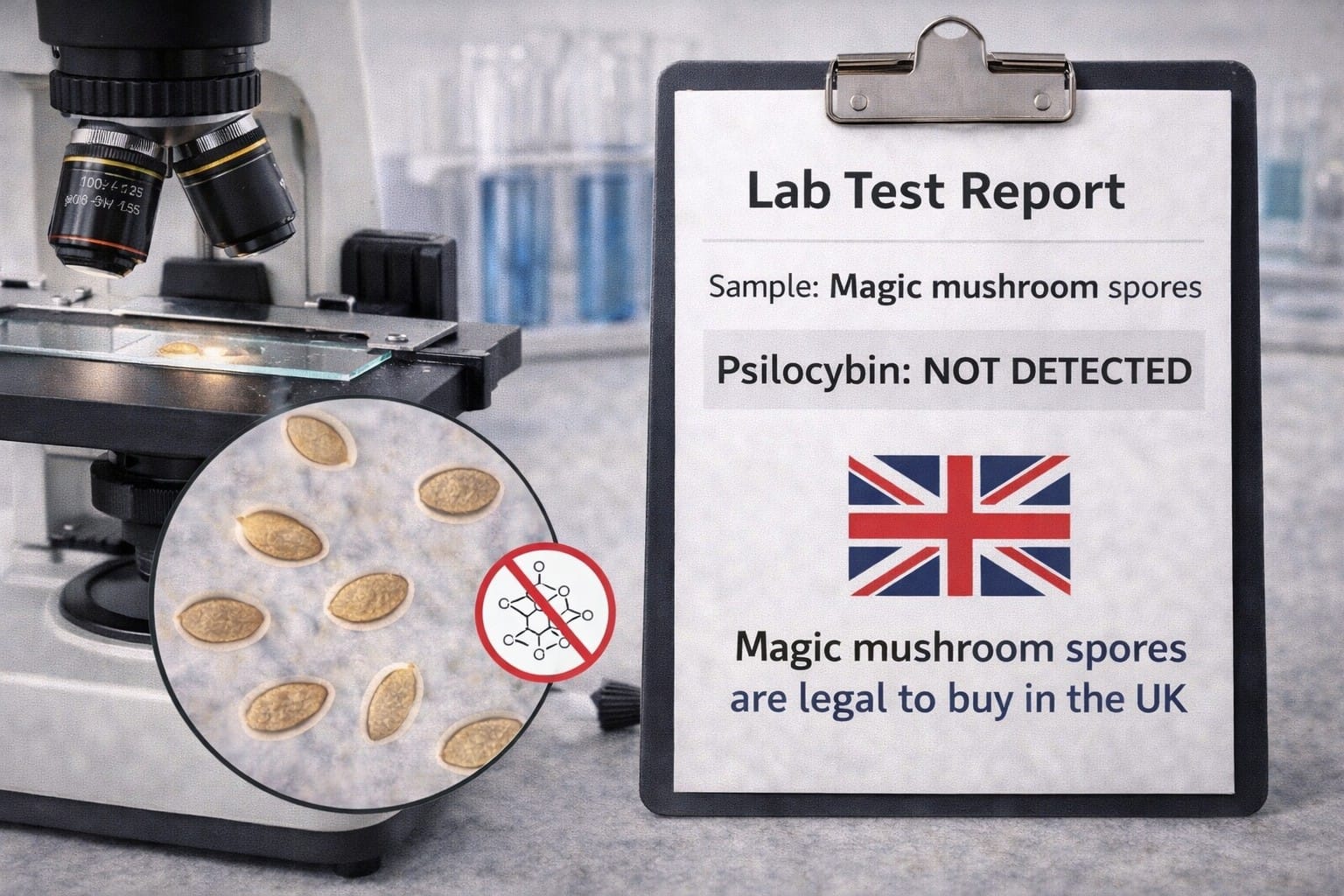
This is one of the most important clarifications: mushroom spores do not contain psilocybin in the way the fruiting body is commonly discussed. Spores are microscopic reproductive cells, which is why your microscopy and spore-print articles should stay framed around fungal biology and observation rather than chemistry.
For the biological side, see Spore Prints Explained and How to Study Mushroom Spores Under a Microscope.
Important distinction
Psilocybin is a chemical compound. Spores are reproductive cells. They belong in different parts of the educational journey: chemistry and law on one side, microscopy and fungal structure on the other.
Psilocybin in scientific research
Psilocybin has been the subject of substantial scientific interest. Imperial College London’s Centre for Psychedelic Research says its work focuses on the action of psychedelic drugs in the brain and their clinical utility, including depression-focused research. Johns Hopkins’ Center for Psychedelic and Consciousness Research also presents psilocybin as a major area of study in mental health and brain research. [1][4][5]
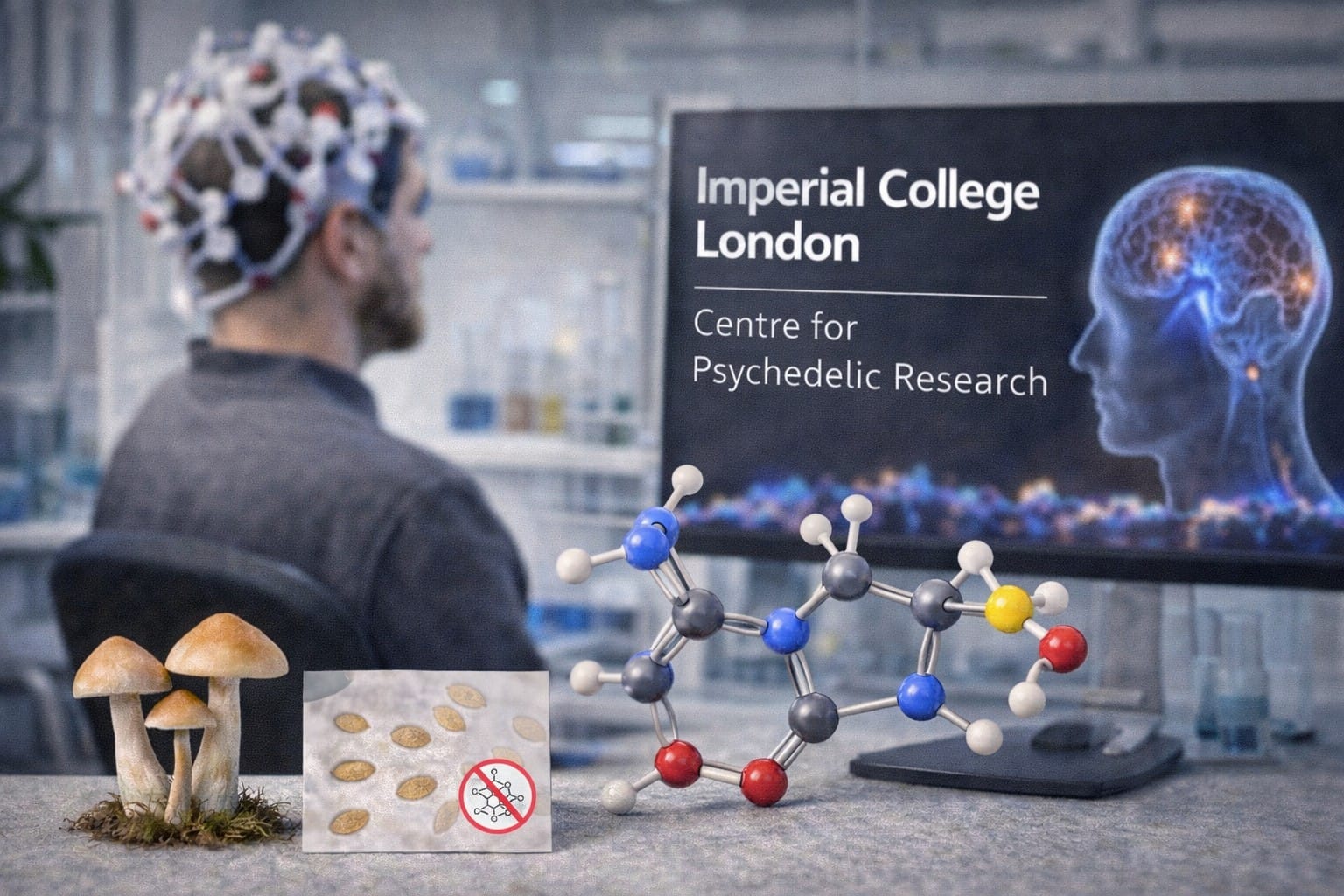
That does not mean psilocybin is a general-purpose treatment or that unsupervised use is safe. The research context is structured, clinical, and controlled. The main educational point here is that psilocybin is not only a legal term or cultural reference; it is also a subject of formal academic research. [1][4][5]
Answer-first
Is psilocybin being studied in medicine? Yes. Major academic centres including Imperial College London and Johns Hopkins publicly describe ongoing psilocybin-related research in brain science and mental health contexts. [1][4][5]
Legal status in the United Kingdom
In UK law, section 21 of the Drugs Act 2005 inserted into Class A drugs “fungus (of any kind) which contains psilocin or an ester of psilocin.” Legislation and the related explanatory memorandum make clear that mushrooms containing these compounds are treated as controlled drugs, including fresh forms. [2][3]
GOV.UK publishes the general penalties framework for possession, supply, and production of controlled drugs by class. [6]
UK legal note
In the UK, fungi containing psilocin or an ester of psilocin are treated in Class A drug law context. This glossary page is educational only and is not legal advice. [2][3][6] Magic mushroom legality explained
Psilocybin vs psilocin
These two names are often mentioned together, but they are not identical terms.
| Compound | Simple explanation |
|---|---|
| Psilocybin | The better-known named compound commonly referenced in mushroom research and public discussion |
| Psilocin | The closely related compound named directly in UK legislation alongside esters of psilocin in the fungi provision |
Users often search for “psilocybin,” while UK legislation often uses the language of psilocin and esters of psilocin. [2][3]
Why psilocybin appears in mushroom identification guides
People often encounter the word “psilocybin” while searching for mushroom identification information. That does not mean identification guides should become chemistry tutorials. A good educational guide separates:
- mushroom structure and safety – spores, prints, microscopy, lookalikes
- chemical/legal context – compounds, research, law
This glossary links to Identify “Magic Mushrooms” in the UK and Mushroom Identification Safety as it gives readers a clear semantic map of the topic.
FAQ
What is psilocybin?
Psilocybin is a naturally occurring psychedelic compound found in some mushroom species. [1][4]
Which mushrooms contain psilocybin?
Psilocybin is associated especially with some species in the genus Psilocybe, and is also discussed in relation to certain other genera in mycology contexts. [1][4]
Is psilocybin legal in the UK?
UK legislation treats fungus containing psilocin or an ester of psilocin within Class A drug law context. [2][3][6]
Do mushroom spores contain psilocybin?
For educational mycology, spores should be understood as microscopic reproductive cells rather than the chemistry focus of mushroom discussions. That is why microscopy and spore-print articles are kept separate from chemical glossary pages.
Is psilocybin being studied in medicine?
Yes. Major academic centres including Imperial College London and Johns Hopkins publicly describe psilocybin-related research in brain science and mental health contexts. [1][4][5]
Sources
- [1] Johns Hopkins Medicine – Center for Psychedelic and Consciousness Research. hopkinsmedicine.org
- [2] UK Legislation – Drugs Act 2005, section 21. legislation.gov.uk
- [3] UK Legislation – Explanatory Memorandum to the Misuse of Drugs (Amendment) (No. 2) Regulations 2005. legislation.gov.uk (PDF)
- [4] Imperial College London – Centre for Psychedelic Research. imperial.ac.uk
- [5] Imperial College London – Centre for Psychedelic Research: Research. imperial.ac.uk
- [6] GOV.UK – Penalties for drug possession and dealing. gov.uk