
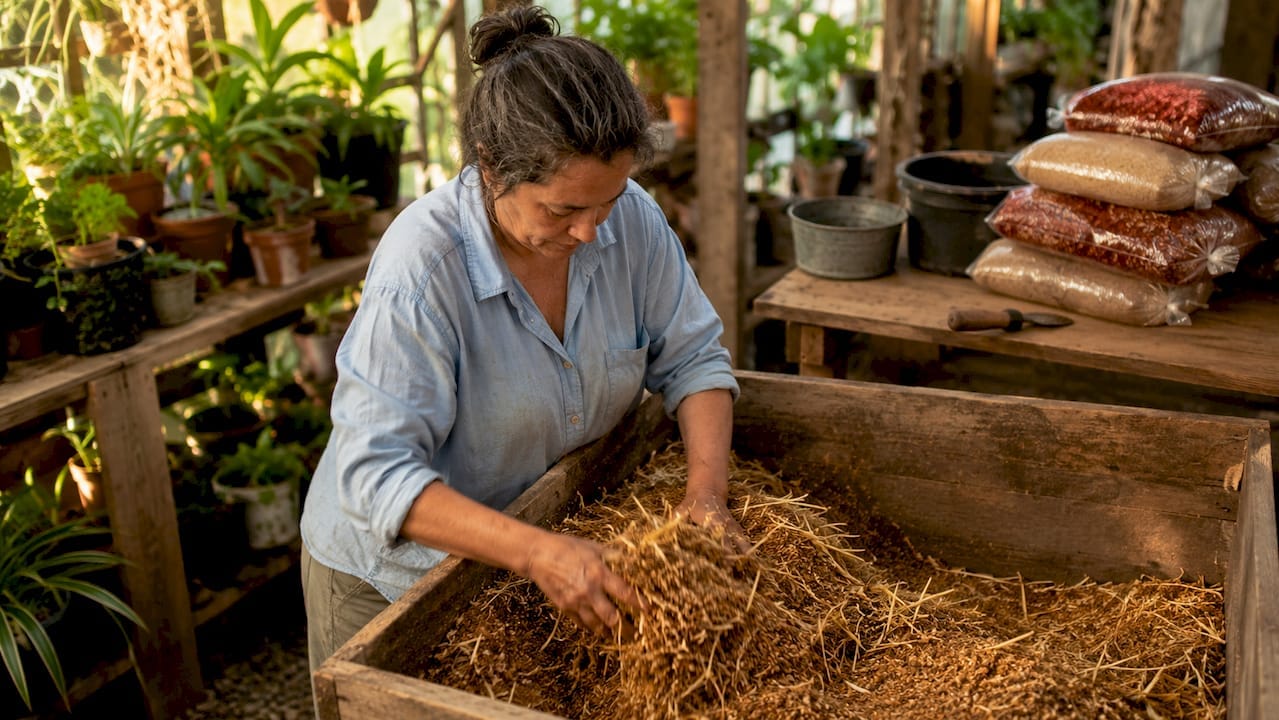
The substrate is defined as the material mushroom mycelium colonises, feeds on, and ultimately fruits from. Without the right substrate, even the healthiest spores will fail to produce a meaningful harvest. The role of substrates in mushroom growth goes beyond simply providing a surface to grow on. Substrates supply the carbon, nitrogen, cellulose, and lignin that mycelium breaks down to build itself and trigger fruiting. Three factors determine whether a substrate succeeds: nutrient composition, moisture content, and preparation method. Understanding all three is what separates a grower who gets consistent flushes from one who keeps battling contamination and poor yields.
How does substrate composition affect mushroom growth?
Substrate composition is the single biggest variable in home mushroom cultivation. The carbon-to-nitrogen ratio, known as the C:N ratio, controls how fast mycelium grows and how vulnerable your substrate is to contamination. The ideal C:N ratio for most gourmet mushrooms sits between 30:1 and 80:1. Ratios below 20:1 flood the substrate with nitrogen, which bacteria and competing moulds thrive on. Ratios above 300:1 starve the mycelium, slowing colonisation to a crawl.
Substrates are built from three structural carbohydrates: cellulose, hemicellulose, and lignin. Cellulose and hemicellulose are relatively easy for mycelium to break down. Lignin is tougher and requires species with specialised enzymes, which is why not every mushroom grows well on every material.
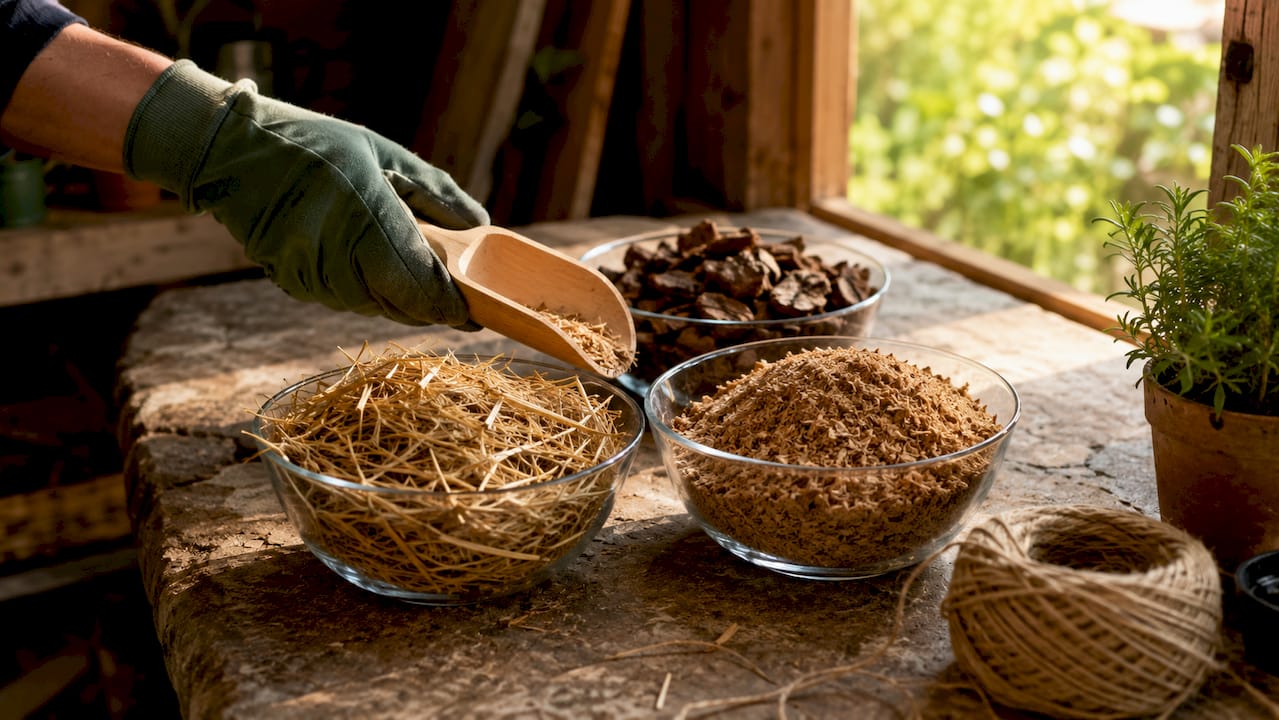
Hardwood sawdust is one of the most popular substrate materials for home growers. Unsupplemented hardwood sawdust has a naturally high C:N ratio of around 350:1 to 500:1. That makes it very resistant to contamination, but yields are modest. Adding supplements like wheat bran or soy hulls pulls the C:N ratio down towards the ideal 60:1 range and can increase yields by 20–50%. The trade-off is a sharp rise in contamination risk.
Straw sits at the other end of the spectrum. It has a lower C:N ratio than hardwood sawdust, colonises quickly, and suits fast-fruiting species like oyster mushrooms. Coco coir is another popular option, often mixed with vermiculite to improve moisture retention and air exchange.
Substrate comparison at a glance
| Substrate | Typical C:N Ratio | Contamination Risk | Best For |
|---|---|---|---|
| Hardwood sawdust (unsupplemented) | 350:1–500:1 | Low | Shiitake, lion’s mane |
| Hardwood sawdust (supplemented) | ~60:1 | High | Shiitake, lion’s mane (experienced growers) |
| Wheat straw | ~80:1–100:1 | Medium | Oyster mushrooms |
| Coco coir and vermiculite | ~100:1–150:1 | Low | Casing layers, Psilocybe cubensis |
| Master’s Mix (hardwood and soy hulls) | ~30:1–40:1 | High | High-yield gourmet species |
Pro Tip: If you are new to substrate supplementation, add wheat bran at no more than 10–15% of total substrate weight. Higher rates dramatically increase the chance of green mould (Trichoderma) taking hold before your mycelium can colonise.
Why does substrate moisture matter so much?
Moisture is the most overlooked factor in substrate preparation, and getting it wrong is the fastest route to a failed grow. Substrates must be kept at 60–65% moisture content, a level growers refer to as “field capacity.” At field capacity, the substrate holds as much water as it can without pooling. If you squeeze a handful and only a few drops fall, you are in the right range.
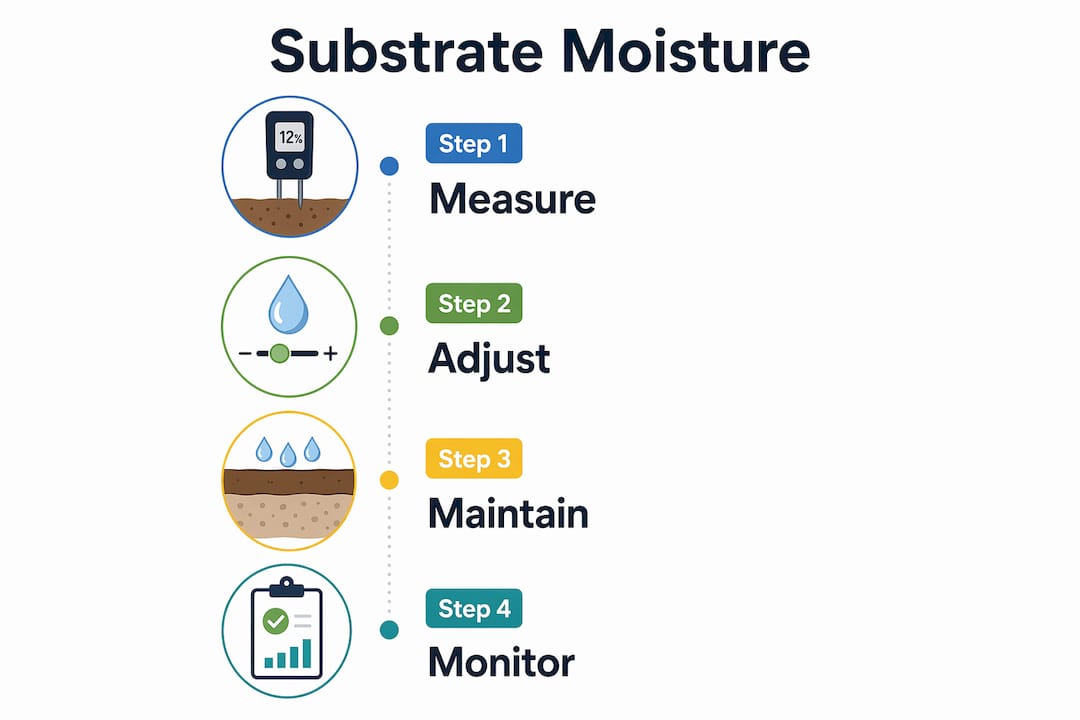
Too little moisture stalls colonisation. Mycelium needs water to transport nutrients and extend its network. Too much moisture creates anaerobic zones, pockets where oxygen cannot reach, and bacteria move in fast. Excess water pooling after soaking causes bacterial rot even when sterilisation has been carried out correctly.
Sterilisation vs pasteurisation: which should you use?
These two preparation methods serve different purposes, and choosing the wrong one is a common beginner mistake.
Sterilisation uses a pressure cooker or autoclave to reach temperatures above 121°C, killing virtually all microbial life. It is necessary for nutrient-rich substrates like supplemented hardwood sawdust or Master’s Mix, where the high nitrogen content would otherwise support rapid bacterial and mould growth.
Pasteurisation heats substrate to 65–82°C for one to two hours. It does not kill everything. Pasteurisation reduces competing microbes while preserving beneficial bacteria that occupy ecological niches and suppress mould. For straw and coco coir, pasteurisation is the preferred method. Sterilising straw is unnecessary and can actually remove the microbial protection that keeps contamination at bay.
Here is a straightforward substrate preparation process for home growers:
- Weigh your dry substrate material and note the starting weight.
- Soak in hot water (for pasteurisation) or prepare for pressure cooking (for sterilisation), depending on substrate type.
- Drain thoroughly until no water drips freely from the material.
- Allow to cool to room temperature before inoculating.
- Check field capacity by squeezing a handful. A few drops should fall, not a stream.
- Inoculate with your chosen spore syringe or grain spawn in a clean environment.
- Seal and store at the correct colonisation temperature for your species.
Pro Tip: After draining, spread your substrate on a clean surface for 10–15 minutes before bagging. This allows surface moisture to evaporate and reduces the risk of hidden wet pockets that cause bacterial rot later.
Which substrates work best for different mushroom species?
The substrate’s dual role is providing bio-available nutrients and physical structure that matches each species’ natural decomposition abilities. In the wild, oyster mushrooms grow on dead hardwood and agricultural waste. Shiitake grows on oak logs. Lion’s mane favours beech and other hardwoods. Replicating those natural conditions at home gives your mycelium a familiar environment to work with.
Different mushrooms specialise in breaking down different substrate components. Oyster mushrooms produce powerful enzymes that break down lignocellulosic materials quickly, which is why they colonise straw so aggressively. Shiitake and lion’s mane rely more heavily on lignin-degrading enzymes, making hardwood sawdust their natural match.
Substrate choice also affects colonisation speed and final yield. A well-matched substrate colonises faster, produces denser mycelium, and triggers stronger fruiting. A mismatched substrate colonises slowly, leaves the material vulnerable to contamination, and produces thin, weak flushes.
Here are the preferred substrates for the most popular home-grown species:
- Oyster mushrooms (Pleurotus ostreatus): Wheat straw, sugarcane bagasse, coffee grounds, cardboard
- Shiitake (Lentinula edodes): Hardwood sawdust (oak, beech, alder), supplemented with wheat bran for higher yields
- Lion’s mane (Hericium erinaceus): Hardwood sawdust, Master’s Mix
- King oyster (Pleurotus eryngii): Hardwood sawdust, straw, supplemented blends
- Psilocybe cubensis: Coco coir and vermiculite, brown rice flour and vermiculite (BRF), bulk grain and coco coir blends
You can find detailed substrate recipes for each species on the Sporebuddies website, with ingredient ratios and preparation notes tailored to home growers.
Common substrate mistakes and how to avoid them
Most failed grows trace back to a small number of predictable errors. Knowing them in advance saves you time, money, and frustration.
The biggest mistake beginners make is supplementing too early. Supplementing substrates increases yield by 20–50% but raises contamination risk sharply. Until you can consistently colonise unsupplemented hardwood sawdust or straw without contamination, supplementation will cause more problems than it solves.
Other common errors include:
- Over-watering: Squeezing substrate and seeing a stream of water means it is too wet. Drain further before inoculating.
- Inoculating while warm: Substrate above 30°C when inoculated will kill or stress mycelium. Always cool to room temperature first.
- Skipping sterilisation on rich substrates: Grain, supplemented sawdust, and Master’s Mix require full sterilisation. Pasteurisation alone is not sufficient for these materials.
- Reusing contaminated substrate: If green, black, or pink mould appears, discard the entire bag. Contamination spreads faster than mycelium.
- Poor air exchange during colonisation: Bags need some gas exchange. Fully sealed bags trap CO2 and slow mycelium growth.
One often-overlooked opportunity is what happens after your mushrooms have fruited. Spent mushroom substrate improves soil microbial activity and organic matter when applied gradually to garden beds. Rather than binning exhausted substrate, work it into compost or spread it around established plants. It is a practical way to close the loop on your growing cycle.
Pro Tip: Label each substrate bag with the preparation date and substrate type. When you review your results after fruiting, you will have clear records to identify which batches performed best and why.
Key takeaways
Substrate is the foundation of every successful mushroom grow. Get the composition, moisture, and preparation right, and everything else becomes easier.
| Point | Details |
|---|---|
| C:N ratio determines success | Aim for a C:N ratio of 30:1–80:1 to support healthy mycelium without raising contamination risk. |
| Field capacity is non-negotiable | Keep substrate at 60–65% moisture; too wet causes bacterial rot, too dry stalls colonisation. |
| Match substrate to species | Oyster mushrooms thrive on straw; shiitake and lion’s mane need hardwood sawdust for best results. |
| Sterilise rich substrates only | Use sterilisation for supplemented or grain-based substrates; pasteurisation suits straw and coco coir. |
| Master basics before supplementing | Beginners should colonise unsupplemented substrates consistently before adding wheat bran or soy hulls. |
Start growing with the right foundations
Understanding substrate science is only half the equation. The other half is starting with quality spores and reliable growing materials. Sporebuddies stocks a full range of mushroom spore syringes suited to popular species including oyster, shiitake, and lion’s mane, alongside ready-to-use pasteurised bulk substrate prepared to the correct field capacity. For growers who want to experiment with supplementation, Sporebuddies also carries wheat bran supplement and the popular Master’s Mix substrate. Browse the full range at Sporebuddies and pair your substrate knowledge with materials you can trust.
FAQ
What is the role of a substrate in mushroom cultivation?
A substrate is the material that mushroom mycelium colonises, feeds on, and fruits from. It provides the carbon, nitrogen, and structural compounds the fungus needs to grow and produce mushrooms.
What is the best substrate for beginner mushroom growers?
Wheat straw and coco coir mixed with vermiculite are the best starting substrates for beginners. Both have low contamination risk, require only pasteurisation, and suit fast-colonising species like oyster mushrooms.
How do i know if my substrate moisture is correct?
Squeeze a handful of prepared substrate firmly. If a few drops of water fall, moisture is at field capacity (60–65%). A steady stream means it is too wet; no drops at all means it is too dry.
Why does supplementing substrate increase contamination risk?
Supplements like wheat bran and soy hulls lower the C:N ratio towards the ideal range for mycelium, but the added nitrogen also feeds bacteria and competing moulds. Sterilisation is required for all supplemented substrates to manage this risk.
Can spent mushroom substrate be reused after fruiting?
Spent substrate is no longer productive for mushroom growing, but it improves soil microbial activity and organic matter when added gradually to garden beds or compost. Do not reuse it for a new mushroom grow.