
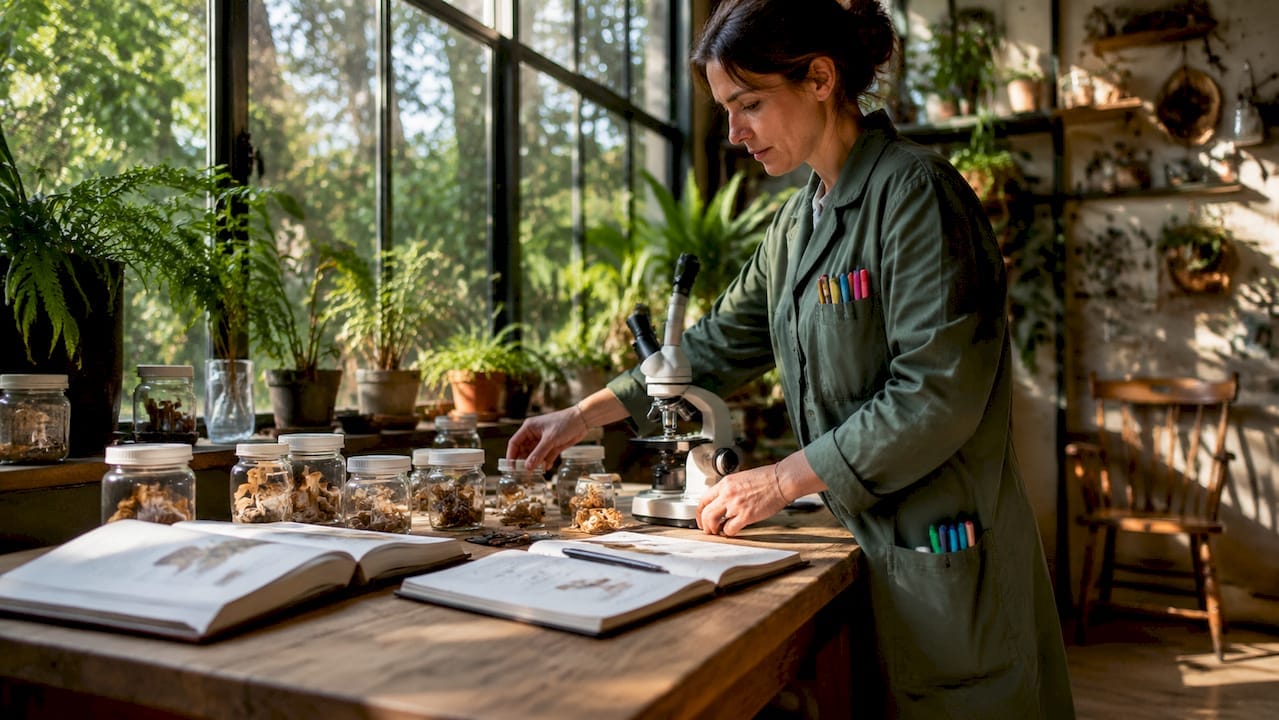
A curriculum for mushroom science is a structured educational programme that integrates fungal biology, ecology, species identification, and cultivation techniques to build comprehensive mycological knowledge. Formally, the field sits within mycology, the branch of biology dedicated to the study of fungi. Whether you are designing a university syllabus or selecting a mushroom science course for personal development, the best programmes share a common architecture: they move from cellular structure and genetics through to ecological roles, identification methods, and applied growing skills. Courses like the University of Maine at Augusta’s BIO 235 and NMBU’s BOT210 demonstrate how this architecture works in practice, combining lectures, laboratory exercises, and field excursions to produce well-rounded learners.
What essential subjects should a curriculum for mushroom science include?
A well-designed fungi studies curriculum covers six core subject areas, each building on the last to create a coherent learning journey. Skipping any one of them leaves gaps that become obvious the moment a student tries to identify a specimen in the field or troubleshoot a contaminated culture in the lab.
The six core areas are:
- Fungal diversity and classification. Students learn the major phyla, from Ascomycota and Basidiomycota to the lesser-studied Zygomycota and Chytridiomycota, and understand why classification matters for both science and safety.
- Cellular structure and genetics. This covers hyphal organisation, spore morphology, mating systems, and the genetic tools used to distinguish species that look identical to the naked eye.
- Mushroom lifecycle and reproductive biology. From spore germination through mycelial growth to fruiting body formation, understanding the lifecycle is the foundation for both identification and cultivation.
- Ecological roles. Fungi as decomposers, mycorrhizal partners, and pathogens each occupy distinct ecological niches. A strong mycology educational programme treats ecology not as background reading but as a core module.
- Species identification techniques. This includes morphological keys, chemical reagent tests, microscopy, and molecular methods such as DNA barcoding. Achieving species-level identification requires repeated exposure to dichotomous keys and specimen preservation workflows, not just a single field trip.
- Safety: toxicity, edibility, and ethical harvesting. A community-facing understanding of edibility, toxicity, and bioremediation fosters safer and more responsible mushroom study. This module is non-negotiable in any programme that sends learners into the field.
Pro Tip: When building a syllabus, sequence safety and ethics content in the first quarter of the programme, not the last. Students who understand toxicity risks early approach identification exercises with the right level of rigour from the start.
How can practical components enhance mushroom science education?
Theory without practice produces students who can describe a mushroom but cannot identify one. The most effective mycology educational programmes allocate at least 40% of contact hours to laboratory work, field excursions, and project-based learning.
Here is how leading institutions structure that practical component:
- Laboratory microscopy and culturing. Students examine spore prints, prepare wet mounts, and culture mycelium on agar plates. The University of Maine at Augusta’s BIO 235 online course pairs lecture content with a dedicated lab kit and web-based simulations, proving that practical work is achievable even in a fully remote format. Pairing lecture content with lab components is essential for developing both practical and analytical skills.
- DNA barcoding. Highlands Biological Station’s 12-day macrofungi course integrates morphological identification with DNA barcoding, using microscopes and chemical reagents alongside molecular methods. This dual approach reflects modern best practice and prepares students for research-level work.
- Field excursions. NMBU’s BOT210 includes a six-hour field excursion within its intensive fungi block, giving students direct exposure to species in their natural habitat. Field work builds ecological intuition that no laboratory exercise can fully replicate.
- Specimen preservation and herbarium preparation. Collecting, drying, labelling, and storing voucher specimens teaches students to document their findings to a publishable standard. This skill transfers directly to citizen science projects and professional research roles.
- Scientific reporting and data analysis. Students record observations, photograph specimens, and write structured reports. The University of Maine at Augusta’s BIO 235 explicitly includes photography and data analysis as assessed components, treating documentation as a scientific skill in its own right.
“Integrating modern molecular methods such as DNA barcoding alongside traditional morphological identification is a modern best practice in mushroom science curricula.” — Highlands Biological Station, 2026 Macrofungi of the Southern Blue Ridge
For educators building an understanding mushrooms syllabus from scratch, the Sporebuddies guide on teaching mushroom microscopy offers a practical framework for introducing microscopy techniques in a classroom setting.
Academic mushroom science vs applied cultivation training: what is the difference?
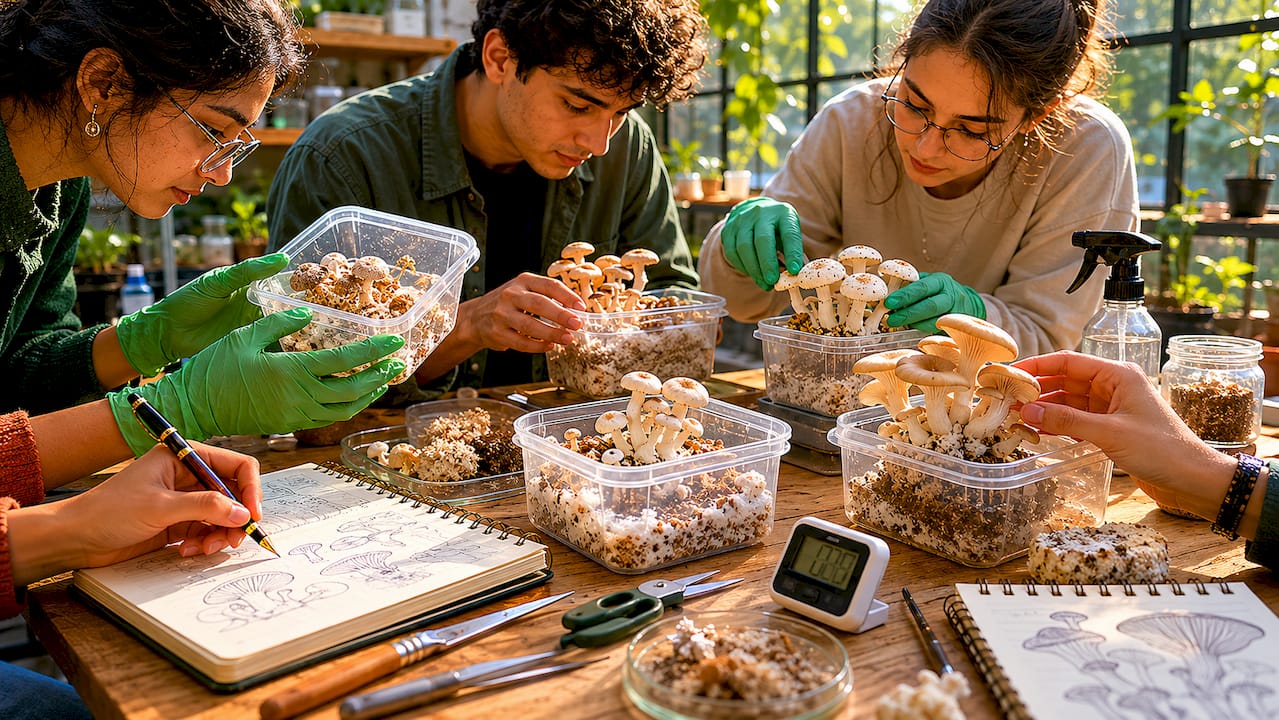
The distinction between academic mycology and applied mushroom cultivation training is one of the most misunderstood aspects of curriculum design. Treating them as interchangeable produces programmes with conflicting learning outcomes and confused students.
| Feature | Academic mycology course | Applied cultivation programme |
|---|---|---|
| Primary focus | Fungal biology, genetics, ecology, research methods | Substrate preparation, growth cycles, production techniques |
| Assessment style | Written exams, lab reports, species identification tests | Practical demonstrations, yield records, contamination logs |
| Example programme | UMA BIO 235, NMBU BOT210 | Universidad Nacional de Chilecito diplomatura |
| Career pathway | Research, conservation, environmental monitoring | Commercial growing, food production, nutraceuticals |
| Prerequisite knowledge | Basic biology or life sciences | Often none; beginner-friendly |
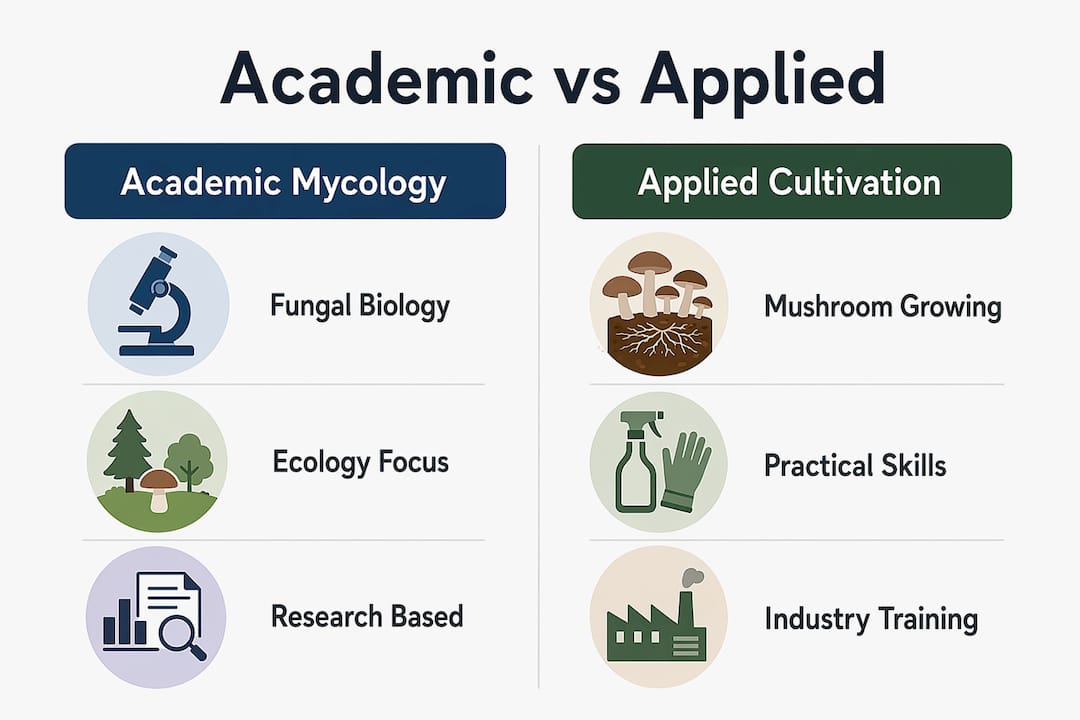
The Universidad Nacional de Chilecito’s applied mycology diplomatura illustrates the applied track clearly. Its structured modules progress from fungal biology and ecology through to cultivation techniques and advanced applications such as mycoremediation and nutraceutical production. This is a legitimate and valuable programme, but it serves a different purpose than a university-level biology course. Separating mushroom growing and mushroom science curricula prevents conflicting objectives and allows clear focus on either biological research or applied cultivation.
Pro Tip: If you are designing a programme that covers both tracks, label each module clearly as either “scientific mycology” or “applied cultivation.” Students who understand which mode they are operating in retain information more effectively and apply it more accurately.
Swedish University of Agricultural Sciences’ cryptogams course takes a third path worth noting. Its conservation-focused curriculum uses fungi as bioindicators for environmental monitoring, demonstrating that mycology education can serve ecological and policy goals beyond the laboratory or the growing room.
How to develop or select a mushroom science curriculum for different levels
Choosing or building the right programme depends on three variables: the learner’s existing knowledge, their goals, and the resources available to deliver the content. Getting this alignment right is what separates a programme that produces confident mycologists from one that overwhelms beginners or bores advanced students.
Consider the following when designing or selecting a programme:
- Assess prerequisite knowledge honestly. University-level courses like BIO 235 assume familiarity with cell biology and basic genetics. Community programmes like the North Branch Nature Center’s two-day mushroom course assume no prior knowledge and focus instead on taxonomy, ecology, and safe foraging. Placing a beginner in a molecular genetics module without preparation is counterproductive.
- Choose the right format for your learners. Intensive teaching blocks focusing on fungi before moving to related groups reduce cognitive switching and deepen identification competence. Extended semester courses suit learners who need time to practise identification between sessions. Short intensive formats work well for professional development; longer formats suit degree-level study.
- Include community science and ethical harvesting for beginners. These topics are not soft add-ons. They teach learners to contribute data to citizen science platforms, respect protected habitats, and avoid the legal and safety risks associated with misidentification.
- Use open curricula where resources are limited. The Fungi Foundation offers freely accessible educational materials suitable for secondary and tertiary level teaching. Mini Mushroom Growers provides curriculum-aligned lesson plans targeting mushroom growing, culinary use, and science education for classroom settings, making structured teaching accessible without a large budget.
- Scale molecular methods to learner goals. DNA barcoding and ITS sequencing are powerful tools, but they require equipment and technical support. For programmes without laboratory infrastructure, morphological identification using dichotomous keys and chemical reagents delivers strong foundational skills without the overhead.
- Incorporate mushroom hybridisation and genetics for advanced learners. Students ready to move beyond identification benefit from understanding how genetic variation drives phenotypic differences. The Sporebuddies article on mushroom hybridisation science provides an accessible entry point into this topic for growers and students alike.
Key takeaways
A well-structured curriculum for mushroom science must sequence theoretical and practical content deliberately, separating academic mycology from applied cultivation to produce clear, measurable learning outcomes.
| Point | Details |
|---|---|
| Core subject coverage | Include fungal diversity, lifecycle, ecology, identification, cultivation, and safety in every programme. |
| Practical component ratio | Allocate at least 40% of contact hours to lab work, field excursions, and project-based learning. |
| Academic vs applied distinction | Label modules clearly as scientific mycology or applied cultivation to prevent conflicting learning outcomes. |
| Molecular methods | Integrate DNA barcoding alongside morphological identification for research-level programmes. |
| Curriculum scaling | Match programme intensity, prerequisites, and methods to learner experience and available resources. |
How Sporebuddies supports your mushroom science education
Sporebuddies stocks the supplies that turn a good curriculum into a great one. Whether you are setting up a classroom lab or building a personal study programme, the mycology science and education category covers spore syringes, agar plates, microscopes, and sterilised substrates suited to both research and teaching use. For programmes that include a cultivation component, the mushroom grow kits range offers beginner-friendly shiitake, oyster, and lion’s mane options that align directly with applied growing modules. Schools and institutions needing bulk supplies can explore wholesale mycology supplies for cost-effective classroom provisioning. Sporebuddies also publishes educational content on its blog to support learners at every stage.
FAQ
What is a curriculum for mushroom science?
A curriculum for mushroom science is a structured programme covering fungal biology, ecology, species identification, cultivation techniques, and safety. It combines theoretical learning with practical laboratory and field components to build comprehensive mycological competence.
What is the difference between mycology and mushroom science?
Mycology is the formal scientific discipline studying all fungi, including moulds, yeasts, and mushrooms. Mushroom science is a more applied term that typically emphasises macrofungi, covering identification, ecology, and cultivation alongside core biological principles.
How long does a mushroom science course typically take?
Course lengths vary considerably. The University of Maine at Augusta’s BIO 235 runs for 15 weeks as a semester course, while Highlands Biological Station’s macrofungi programme is an intensive 12-day format. Community programmes like North Branch Nature Center’s course run over two days.
Should cultivation training be part of a mycology educational programme?
Cultivation training is a valuable component but works best when clearly separated from scientific identification and ecology modules. Mixing the two without clear labelling produces conflicting learning outcomes, as the skills and assessment methods for each track are fundamentally different.
What resources are available for educators building a fungi studies curriculum?
Freely accessible options include the Fungi Foundation’s educational materials and Mini Mushroom Growers’ curriculum-aligned lesson plans. For laboratory and field-based programmes, Sporebuddies provides spore syringes, microscopes, grow kits, and sterilised substrates suited to classroom and research use.