
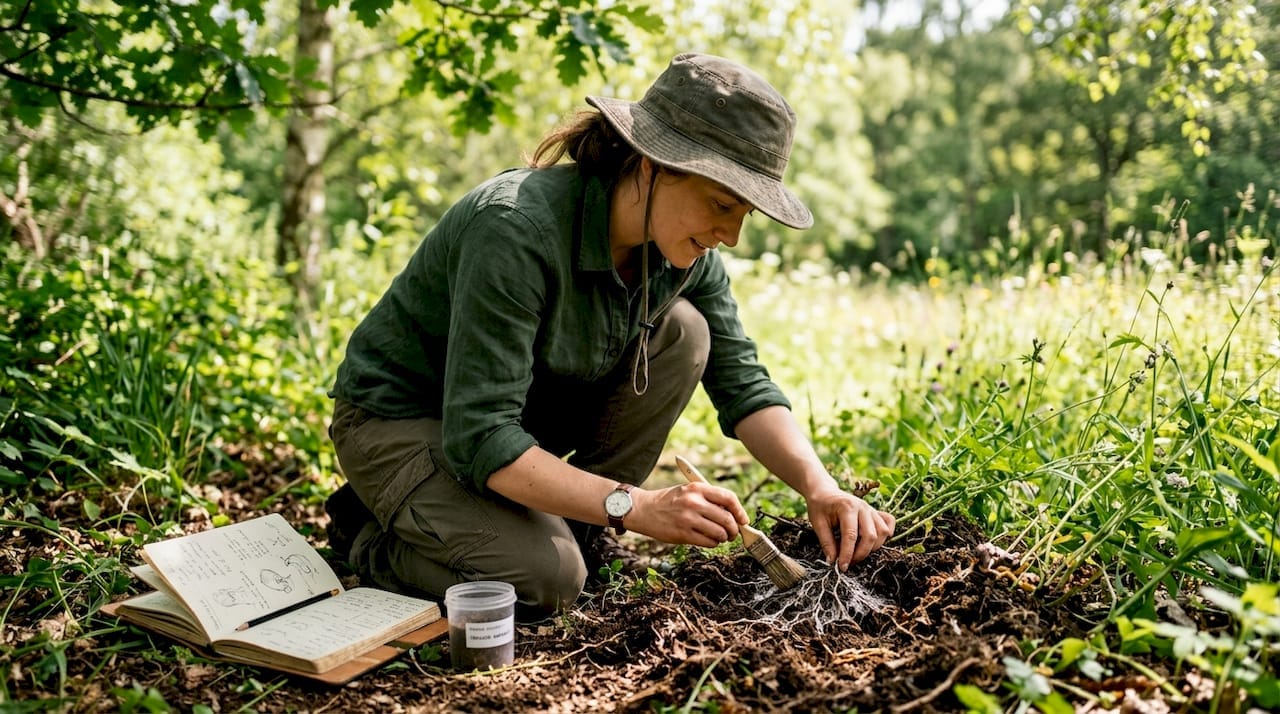
Fungi associated with mushrooms are defined as one of the most significant drivers of plant stem development and nutrient acquisition in terrestrial ecosystems. The role of mushrooms in stem biology is not direct. The mushroom fruiting body, including its stem or stipe, has no anatomical connection to plant tissue. What genuinely shapes plant stem health is the fungal mycelium operating underground, forming symbiotic partnerships with plant roots through structures known as mycorrhizal networks. Arbuscular mycorrhizal (AM) fungi and ectomycorrhizal (ECM) fungi are the two primary groups responsible for these associations, and 2026 research continues to expand our understanding of how they regulate nutrient flow, stress resilience, and plant growth.
How do mycorrhizal fungi influence plant stem growth and health?
Mycorrhizal fungi form symbiotic relationships with plant roots by exchanging plant-derived carbon for essential nutrients like nitrogen and phosphorus, and this exchange is the foundation of their influence on stem development. Plants can allocate up to 30% of photosynthate to ectomycorrhizal fungi, which means a substantial portion of the energy captured through photosynthesis is directed underground to sustain fungal growth and nutrient delivery. That nutrient return, particularly phosphorus and nitrogen, feeds directly into the biosynthetic processes that build stem tissue, regulate cell elongation, and support vascular development.
ECM fungi form two key structures at the root interface: the fungal mantle, a sheath of hyphae wrapping around root tips, and the Hartig net, a hyphal network that penetrates between root cortex cells. These structures maximise the surface area for nutrient exchange without breaching plant cell walls. AM fungi, by contrast, penetrate root cells directly and form arbuscules, tree-like branching structures that serve as the primary sites for phosphorus transfer to the plant.
The biochemistry behind this partnership is more active than it might appear. Plants transfer lipids to sustain fungal colonisation via the RAM2 pathway and ATP-binding cassette transporters, meaning the plant is actively investing in the relationship rather than passively hosting it. Disrupting these lipid export pathways reduces fungal colonisation and weakens the symbiotic benefits, including the nutrient supply that supports stem elongation and biomass accumulation.
AM fungi also contribute to stem resilience under environmental stress. Fungal networks excrete glomalin, a glycoprotein that improves soil aggregation and water retention around roots, while simultaneously altering plant metabolic pathways to improve antioxidant responses under drought, salinity, and heavy metal exposure. A plant with a well-established mycorrhizal network is measurably better equipped to maintain stem turgor and growth under conditions that would otherwise cause wilting or stunted development.
- Nutrient delivery: ECM and AM fungi supply nitrogen and phosphorus directly to root cells, feeding stem biosynthesis.
- Structural interfaces: Hartig nets and arbuscules maximise exchange surface area at the root level.
- Lipid investment: Plants actively export fatty acids to sustain fungal colonisation via the RAM2 pathway.
- Stress buffering: Glomalin secretion and metabolic pathway modulation improve stem resilience to drought and salinity.
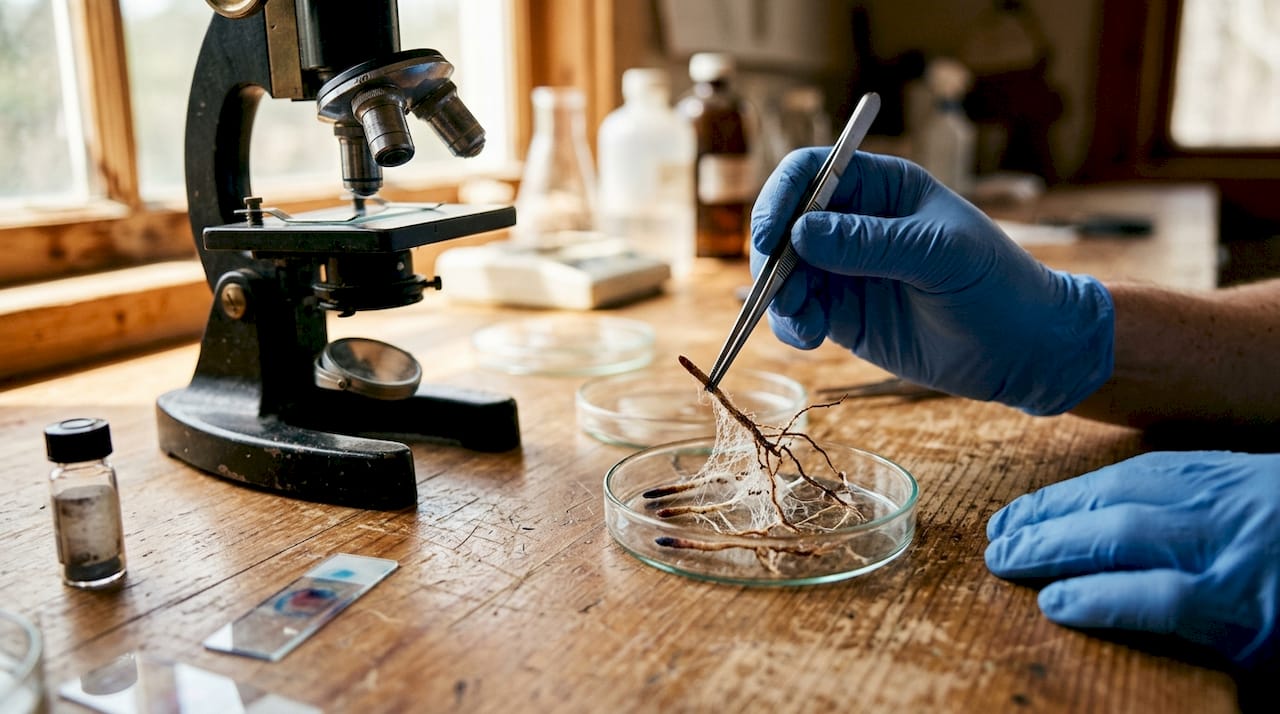
Pro Tip: If you are studying mycorrhizal colonisation in the lab, staining root samples with trypan blue allows you to visualise arbuscules and hyphae directly under a microscope, giving you a clear picture of colonisation density.
What ecological roles do fungi play in soil that affect plant stems?
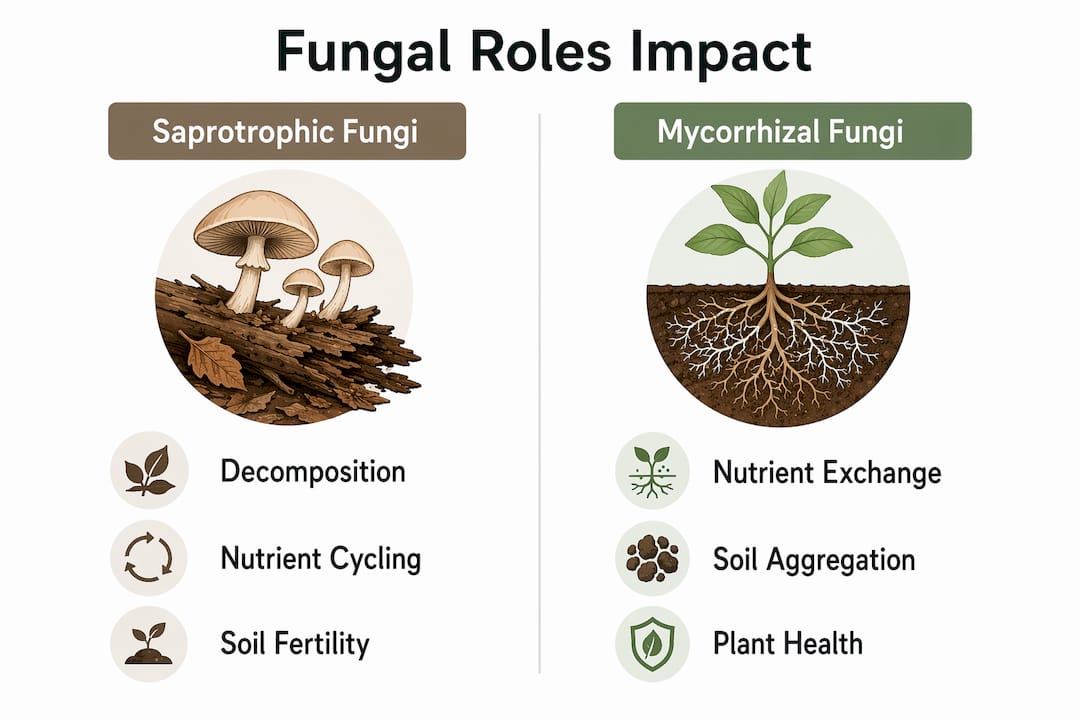
Fungal activity in soil shapes plant stem health through two distinct ecological pathways: decomposition and soil structure improvement. Saprotrophic mushrooms, including species like Pleurotus ostreatus (oyster mushroom) and Lentinula edodes (shiitake), degrade lignocellulose in dead plant material, releasing nitrogen, phosphorus, and carbon compounds back into the soil. This decomposition cycle directly replenishes the nutrient pool that plant roots draw from to sustain stem growth and tissue repair.
Saprotrophic fungi degrade lignocellulose to aid nutrient cycling and soil fertility, while mycorrhizal fungi simultaneously enhance soil carbon storage. This dual function means fungal communities regulate both the release and the retention of soil nutrients, creating a buffered environment that supports consistent plant stem development across seasons.
Spent mushroom substrate (SMS) is a particularly useful example of how fungal activity translates into measurable soil improvement. SMS is the biologically transformed growing medium left after mushroom cultivation. It is not simply a fertiliser. SMS can substitute 20 to 50% of peat in seedling growing media without reducing seedling quality, and it increases soil aggregation and water retention. These physical improvements matter because better soil structure means roots can access nutrients more efficiently, which translates directly into stronger stem development in seedlings and established plants alike.
The ecological contributions of fungal networks extend beyond individual plant interactions:
- Carbon sequestration: Mycorrhizal fungi stabilise soil organic carbon by binding it within hyphal networks and glomalin coatings, slowing decomposition and maintaining long-term soil fertility.
- Nutrient cycling: Saprotrophic species break down complex organic molecules, releasing bioavailable nitrogen and phosphorus that roots absorb for stem growth.
- Soil aggregation: Fungal biomass and glomalin bind soil particles into aggregates, improving aeration and water retention around root zones.
- Bioremediation: Certain fungal species absorb heavy metals and organic contaminants from soil, reducing toxicity stress that would otherwise impair root function and stem development.
| Ecological function | Mechanism | Benefit to plant stems |
|---|---|---|
| Lignocellulose decomposition | Saprotrophic enzyme activity | Releases N and P for stem biosynthesis |
| Soil carbon stabilisation | Glomalin binding and hyphal networks | Maintains long-term nutrient availability |
| Soil aggregation | Fungal biomass and glomalin | Improves root access to water and nutrients |
| Bioremediation | Heavy metal absorption by hyphae | Reduces root toxicity, supports stem growth |
How do environmental factors affect the fungal role in plant stem development?
Environmental stressors directly alter the quality and stability of fungal symbioses, and those changes cascade upward to affect plant stem health. Reactive nitrogen addition and warming both reduce belowground carbon inputs and stimulate organic carbon decomposition, weakening the soil conditions that mycorrhizal networks depend on. When fungal communities are disrupted by nitrogen fertilisation, plants often reduce their carbon allocation to mycorrhizal partners because the soil already supplies adequate nutrients. This sounds efficient, but it weakens the fungal network over time, leaving plants more vulnerable to drought and pathogen stress.
Warming temperatures shift fungal community composition. ECM fungi, which are particularly important for forest trees like Pinus sylvestris and Quercus robur, are sensitive to soil temperature changes. As warming reduces ECM diversity, the nutrient supply to tree stems becomes less consistent, contributing to reduced stem growth rates observed in some temperate forest studies.
Agricultural practices compound these pressures. Tillage disrupts hyphal networks physically, and synthetic nitrogen fertilisers reduce the plant’s incentive to invest in mycorrhizal partnerships. Both practices reduce the fungal impact on stems over time, even when short-term yields appear unaffected.
- Avoid high nitrogen inputs in soils where mycorrhizal colonisation is a priority. Excess nitrogen signals to the plant that fungal nutrient supply is unnecessary, reducing carbon allocation to fungi.
- Minimise tillage to preserve hyphal networks. No-till or reduced-till systems maintain fungal connectivity between plant roots and the broader soil ecosystem.
- Incorporate organic matter such as mushroom substrate to support microbial communities and improve soil physical properties that sustain fungal networks.
- Inoculate seedlings with AM or ECM fungi at transplanting, particularly in degraded or heavily fertilised soils where native fungal populations are depleted.
Pro Tip: When assessing soil health in a research or teaching context, measuring soil glomalin content using the Bradford protein assay gives you a reliable proxy for mycorrhizal fungal activity and soil aggregation quality.
What is the difference between a mushroom stipe and fungal networks in plants?
The mushroom stipe, the stem of the fruiting body you see above ground, is a structural component of the fungal reproductive organ. The stipe connects the mycelium below ground) with the cap above, elevating it to optimise spore dispersal into air currents. It is composed of densely packed fungal hyphae and serves a mechanical function within the fungal organism itself. It has no role in plant stem anatomy, vascular tissue, or growth regulation.
The confusion between mushroom stems and fungal roles in plant stems is understandable, particularly for students encountering mycology for the first time. The terminology overlaps in everyday language, but the biology is entirely distinct. The structures that genuinely influence plant stems are the hyphae and mycelium operating within the soil and root tissue, not the above-ground fruiting body.
| Structure | Location | Function | Role in plant stems |
|---|---|---|---|
| Mushroom stipe | Above ground | Elevates cap for spore dispersal | None |
| Fungal mycelium | Soil and root interface | Nutrient absorption and exchange | Direct: delivers N and P to roots |
| Hartig net | Root cortex | Maximises nutrient exchange surface | Direct: supports stem nutrient supply |
| Arbuscules | Inside root cells | Phosphorus transfer to plant | Direct: feeds stem biosynthesis |
Accurate terminology matters in plant biology education. Referring to the “role of mushrooms in stem” without clarifying this distinction risks conflating the fruiting body with the mycelial network, which are functionally and anatomically separate. The mycelium is the metabolically active partner in plant symbiosis. The mushroom is its reproductive output.
Key takeaways
Fungal mycelium and mycorrhizal symbioses, not mushroom stipes, are the biological mechanisms through which fungi shape plant stem development, nutrient supply, and stress resilience.
| Point | Details |
|---|---|
| Mycorrhizal nutrient exchange | ECM and AM fungi supply nitrogen and phosphorus to roots, directly supporting stem growth and tissue development. |
| Active lipid investment | Plants export fatty acids via the RAM2 pathway to sustain fungal colonisation and maintain symbiotic benefits. |
| Soil ecology and stem health | Saprotrophic fungi and spent mushroom substrate improve soil structure and nutrient cycling, indirectly benefiting stems. |
| Environmental disruption risk | Nitrogen addition and warming reduce fungal symbiosis quality, weakening the nutrient supply that underpins stem development. |
| Stipe versus mycelium | The mushroom stipe has no role in plant physiology; the mycelium and Hartig net are the structures that matter for plant stems. |
Explore fungal biology hands-on with Sporebuddies
Understanding fungal biology at the level described in this article becomes significantly clearer when you can observe it directly. Sporebuddies supplies a range of mushroom spores for microscopy and cultivation, including species like lion’s mane, oyster, and shiitake, all of which are excellent subjects for studying hyphal structure and mycelial growth. For those who want to move from theory to practice, the mushroom growing kits at Sporebuddies offer a straightforward way to observe colonisation, substrate breakdown, and fruiting body development in real time. Whether you are a student building your mycology knowledge or an educator looking for practical teaching resources, Sporebuddies has the supplies to support your work.
FAQ
What is the role of mushrooms in stem development?
Mushrooms influence plant stem development indirectly through their fungal mycelium and mycorrhizal networks, which deliver nitrogen and phosphorus to plant roots. The mushroom stipe itself has no direct role in plant stem anatomy or growth.
What are mycorrhizal fungi and why do they matter for plants?
Mycorrhizal fungi are symbiotic fungi that colonise plant roots and exchange nutrients for plant-derived carbon. Ectomycorrhizal and arbuscular mycorrhizal species are the two main types, and both improve plant stem growth, stress tolerance, and nutrient uptake.
How does spent mushroom substrate benefit plant growth?
Spent mushroom substrate improves soil aggregation, water retention, and microbial activity when used as a soil amendment. It can replace 20 to 50% of peat in seedling media without reducing seedling quality, supporting stronger root and stem development.
Can environmental changes disrupt fungal benefits to plants?
Yes. Nitrogen addition and soil warming reduce mycorrhizal carbon inputs and weaken fungal community diversity, which reduces the nutrient supply to plant roots and can impair stem growth and resilience over time.
What is the difference between a mushroom stipe and plant-associated mycelium?
The stipe is the above-ground stem of the mushroom fruiting body, serving only to elevate the cap for spore dispersal. Plant-associated mycelium operates in the soil and root tissue, forming the nutrient exchange structures that directly influence plant stem health.