
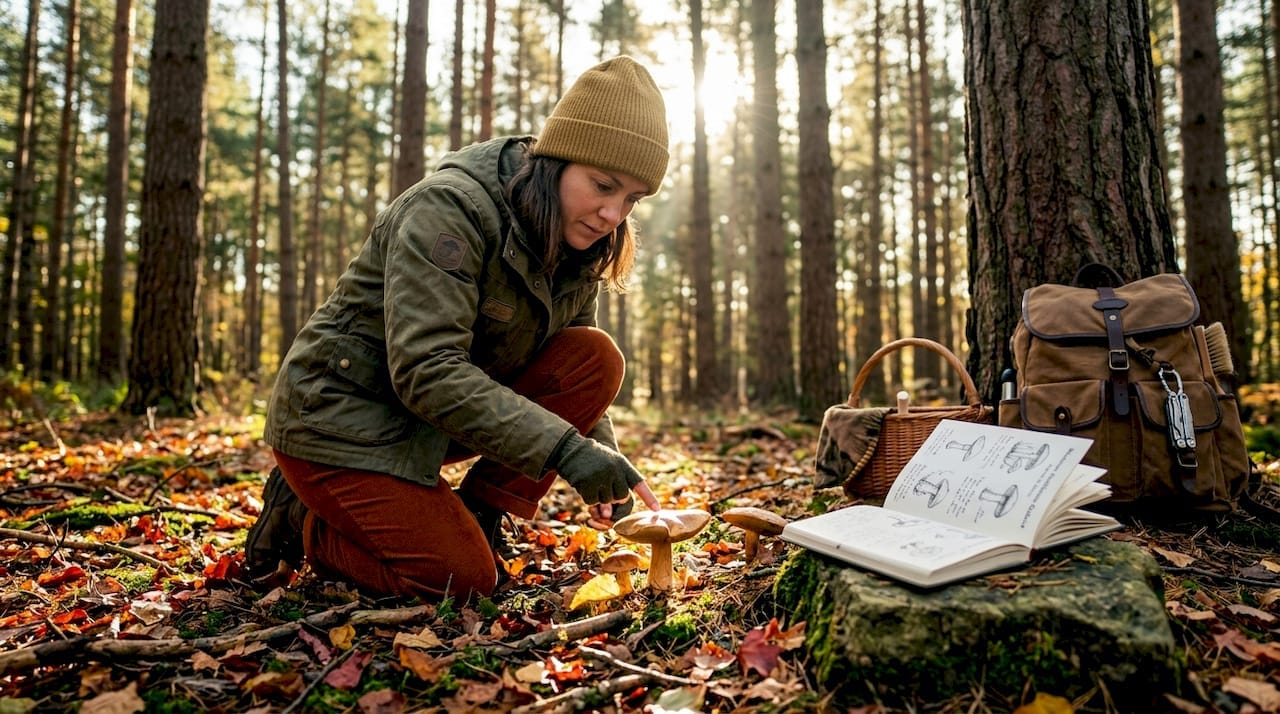
Mushroom classification is a hierarchical process that starts with taxonomy and builds through morphology, ecology, and practical use to create a reliable and meaningful list. The term “classification of mushrooms list” is a practical shorthand for what mycologists call fungal taxonomy, the formal science of naming and grouping fungi into division, class, order, family, and genus. Understanding this layered system matters because appearance alone is dangerously insufficient. Species within the genus Amanita, for example, include both prized edibles and some of the most lethal organisms on Earth. Whether you are growing shiitake at home, studying medicinal species, or foraging in the UK, a structured approach to mushroom types is your most reliable safeguard and your most rewarding guide.
1. The taxonomic backbone: how mushrooms are formally classified
Mushroom taxonomy begins at the kingdom level with Fungi, then moves through phylum, class, order, family, genus, and species. Most of the mushrooms you encounter in the field or kitchen belong to the phylum Basidiomycota, which produces spores on club-shaped cells called basidia. A smaller but significant group falls under Ascomycota, which includes morels (Morchella spp.) and truffles (Tuber spp.).
The class Agaricomycetes sits at the heart of this system. It contains roughly 21,000 species across 17 orders, 100 families, and 1,147 genera. That figure reflects decades of molecular phylogenetics work that has expanded and reorganised what was once a far simpler picture. Understanding this class gives you the structural framework for every other layer of classification.
2. Major orders in the fungi classification list
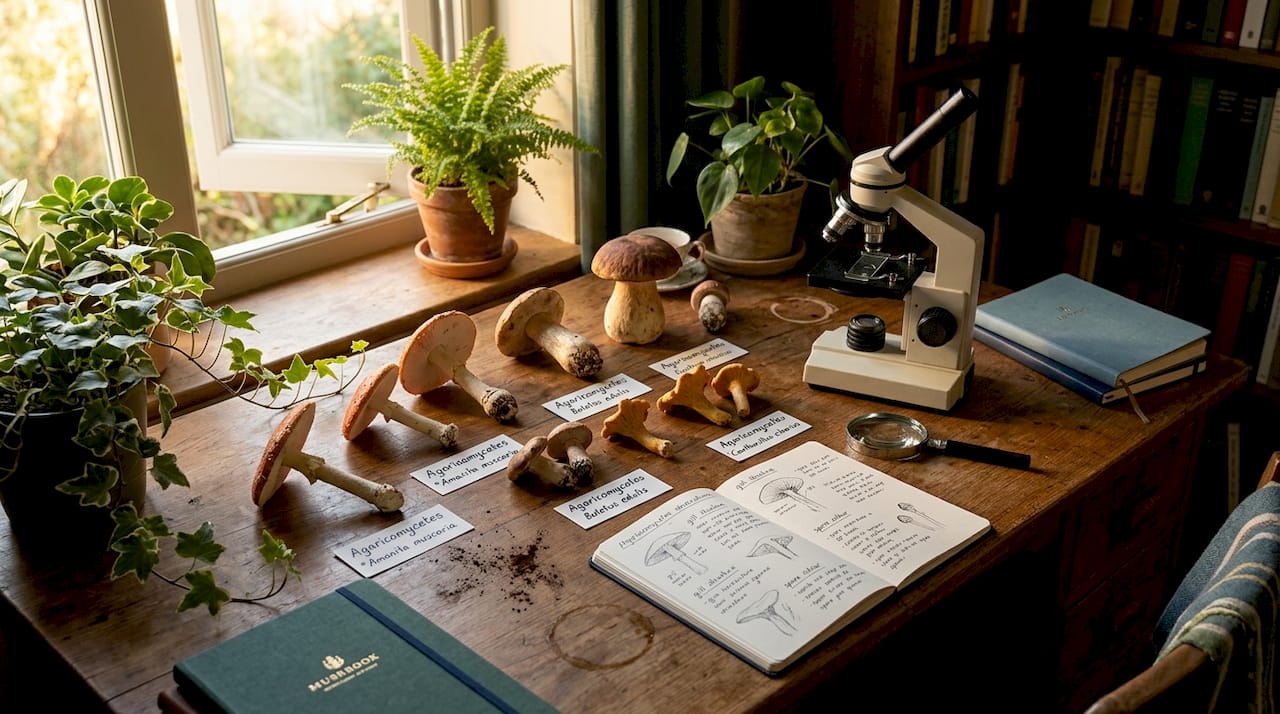
Within Agaricomycetes, the orders are your most practical high-level groupings. The table below outlines the key orders, their defining traits, and representative species.
| Order | Key traits | Representative species |
|---|---|---|
| Agaricales | Gilled mushrooms, diverse forms | Agaricus bisporus, Pleurotus ostreatus |
| Boletales | Pored or gilled, often mycorrhizal | Boletus edulis, Suillus luteus |
| Russulales | Brittle flesh, no partial veil | Russula emetica, Lactarius deliciosus |
| Polyporales | Bracket or shelf forms, wood decay | Trametes versicolor, Ganoderma lucidum |
| Cantharellales | False gills or smooth hymenium | Cantharellus cibarius, Craterellus cornucopioides |
The Agaricales order alone contains 46 extant families, over 400 genera, and more than 25,000 species. DNA research has reshaped this order significantly, revealing that some gasteroid fungi (puffballs, earthstars) are more closely related to gilled agarics than their appearance suggests. This is precisely why a flat visual list of mushroom types will always fall short of a taxonomy-grounded approach.
3. Morphological traits used in mushroom identification
Morphology is the traditional entry point for field identification, and it remains genuinely useful when applied correctly. Cap shape, gill attachment, spore colour, stem structure, and the presence of a volva or ring all contribute to genus-level identification. The Mycological Society of Toronto’s dichotomous key, developed in 2020, demonstrates how sequential trait decisions reduce the errors that flat lists produce.
The problem is morphological plasticity. A single species can look dramatically different depending on age, moisture, and substrate. The Death Cap (Amanita phalloides) in its button stage resembles edible paddy straw mushrooms (Volvariella volvacea), a confusion responsible for fatalities in immigrant communities unfamiliar with European species. Colour, size, and smell are supporting clues, never definitive ones.
Here is a practical sequence for morphological assessment:
- Note cap shape: convex, flat, umbonate, funnel-shaped, or irregular.
- Examine gill attachment: free, adnate, decurrent, or absent (pores, teeth, smooth).
- Check spore print colour by placing the cap gill-side down on paper for one hour.
- Observe stem features: hollow or solid, ring present or absent, base bulbous or with a volva.
- Record habitat: woodland type, substrate (soil, wood, dung), and associated tree species.
Pro Tip: Always take a spore print before consuming any wild mushroom. The spore print colour is one of the few traits that does not change with age or weather, making it a reliable step in any mushroom identification guide.
4. Ecological roles: a functional classification of fungi
Ecology offers a classification layer that goes beyond what a mushroom looks like or tastes like. Fungi in soil ecosystems act as decomposers, mutualists, or pathogens, and each role carries distinct implications for nutrient cycling, carbon storage, and ecosystem health. A 2026 review in Nature Reviews Microbiology highlights fungi’s sensitivity to climate change, making ecological classification increasingly relevant for conservation and study.
The three functional groups are:
- Saprotrophic (decomposers): Species like Pleurotus ostreatus (oyster mushroom) and Trametes versicolor (turkey tail) break down dead organic matter, releasing carbon and nitrogen back into the soil. These are among the most cultivatable species and the easiest for home growers to work with.
- Mycorrhizal (mutualists): Species like Boletus edulis (porcini) and Lactarius deliciosus (saffron milk cap) form symbiotic relationships with tree roots, exchanging minerals for sugars. They are notoriously difficult to cultivate because they require a living host plant.
- Parasitic (pathogens): Species like Armillaria mellea (honey fungus) and Cordyceps spp. infect living hosts. Some, such as Cordyceps sinensis, are also among the most valued medicinal fungi.
Understanding ecological classification reflects ecosystem function more accurately than a simple edible versus poisonous grouping. If you are studying mushroom ecology, this framework is the one that connects individual species to the broader natural world. Sporebuddies has a dedicated resource on mushroom ecology for those who want to go deeper.
5. Edible mushroom varieties: the culinary classification
Culinary classification groups mushrooms by flavour profile, texture, and cultivation method rather than strict taxonomy. The most widely consumed species globally is Agaricus bisporus, which covers button, chestnut, and portobello mushrooms depending on maturity and strain. Pleurotus ostreatus (oyster) and Lentinula edodes (shiitake) follow closely, both prized for their umami depth and ease of home cultivation.
Bioactive compounds in edible mushrooms, including polysaccharides and polyphenols, link culinary and medicinal categories more closely than most people realise. A 2026 academic review confirms that the functional properties of these compounds support the growing interest in classifying culinary mushrooms alongside their health benefits. Shiitake, for instance, contains lentinan, a beta-glucan with well-documented immune-modulating properties.
Common edible mushroom varieties worth knowing:
- Agaricus bisporus: button, chestnut, portobello
- Pleurotus ostreatus: oyster mushroom, saprotrophic, fast-growing
- Lentinula edodes: shiitake, wood-decomposing, widely cultivated
- Cantharellus cibarius: chanterelle, mycorrhizal, wild-foraged
- Boletus edulis: porcini, mycorrhizal, prized in European cuisine
- Hericium erinaceus: lion’s mane, saprotrophic, medicinal interest
6. Medicinal mushrooms: taxonomy and health context
Medicinal mushroom classification considers taxonomy, habitat, and distribution to contextualise pharmaceutical and wellness applications. A 2025 Italian study details the taxonomy and ecology of 15 medicinal taxa, reinforcing that accurate species identification underpins any credible health claim. Misidentified species do not deliver the expected compounds and, in some cases, deliver harmful ones instead.
| Species | Order | Ecological role | Primary use |
|---|---|---|---|
| Ganoderma lucidum | Polyporales | Saprotrophic/parasitic | Immune support, adaptogen |
| Hericium erinaceus | Russulales | Saprotrophic | Nerve growth, cognition |
| Cordyceps militaris | Hypocreales (Ascomycota) | Parasitic | Energy, athletic performance |
| Trametes versicolor | Polyporales | Saprotrophic | Immune modulation |
| Inonotus obliquus (Chaga) | Hymenochaetales | Parasitic | Antioxidant, anti-inflammatory |
Medicinal mushroom taxonomy is complicated by phenotypic plasticity, meaning the same species can look quite different across growing conditions. Molecular sequencing has become the gold standard for species delineation in this group, particularly for Ganoderma, which contains dozens of species that are visually similar but chemically distinct. For enthusiasts exploring medicinal mushroom benefits, taxonomy is the foundation that makes health claims credible.
Pro Tip: When purchasing medicinal mushroom supplements or spores, always check that the product specifies the Latin binomial (e.g., Ganoderma lucidum rather than just “reishi”). This confirms the supplier has classified the species correctly and is not substituting a related but less active species.
7. Poisonous species and the critical safety layer
Safety is not a separate topic from classification. It is the reason classification matters. CDC data from late 2025 into 2026 records over 50 Amanita poisoning cases in California, including deaths, during an unusually persistent bloom period. The California Department of Public Health warned against foraging during this period due to the presence of Death Caps (Amanita phalloides) and Western Destroying Angels (Amanita ocreata).
Amanita species produce amatoxins that cause lethal liver failure, and visual identification alone is unreliable. The button stage of A. phalloides has been mistaken for edible species across multiple continents. No cooking method destroys amatoxins. No antidote reverses advanced poisoning. These facts make expert verification non-negotiable for any wild mushroom intended for consumption. Sporebuddies covers this in detail in its guide on mushroom identification safety.
The safest approach for UK foragers combines a structured mushroom identification checklist with in-person verification from a qualified mycologist or a reputable foraging group such as the British Mycological Society.
Key takeaways
Accurate mushroom classification requires taxonomy, morphology, ecology, and safety knowledge working together, not any single layer in isolation.
| Point | Details |
|---|---|
| Taxonomy is the foundation | Start with phylum, class, and order before attempting field identification. |
| Morphology alone is insufficient | Use spore prints, habitat, and dichotomous keys alongside visual traits. |
| Ecological role clarifies species behaviour | Knowing if a species is saprotrophic or mycorrhizal guides cultivation and study. |
| Culinary and medicinal overlap | Bioactive compounds link edible varieties to health benefits; taxonomy confirms species identity. |
| Safety is non-negotiable | Amanita poisonings in 2025 and 2026 confirm that expert verification is required before consuming wild mushrooms. |
Explore mushroom spores and cultivation kits at Sporebuddies
If this guide has sparked your interest in growing or studying mushrooms at home, Sporebuddies has everything you need to take the next step. Browse a wide selection of mushroom spore syringes covering species from Golden Teacher to oyster and lion’s mane, all sourced for quality and reliability. For those drawn to the medicinal side of mycology, the health and wellness range brings together products grounded in the same taxonomy-first approach this guide covers. Complete growing kits are also available for beginners who want a guided start with shiitake, oyster, or lion’s mane without needing specialist equipment. Sporebuddies supports the UK cultivation community with educational resources alongside every product.
FAQ
What is the main classification system for mushrooms?
Mushrooms are classified using standard biological taxonomy: kingdom Fungi, phylum (primarily Basidiomycota or Ascomycota), class, order, family, genus, and species. Modern classification relies on molecular phylogenetics rather than appearance alone.
Which order contains the most mushroom species?
The order Agaricales contains over 25,000 species across 46 families and 400 genera, making it the largest order in the fungi classification list. DNA research has expanded this order to include some gasteroid fungi previously placed elsewhere.
Are all gilled mushrooms safe to eat?
No. Many toxic species, including Amanita phalloides (Death Cap), have gills and resemble edible mushrooms. The CDC recorded over 50 Amanita poisoning cases in 2025 and 2026, confirming that gill structure alone is not a reliable safety indicator.
What is the difference between saprotrophic and mycorrhizal mushrooms?
Saprotrophic mushrooms, such as oyster and shiitake, decompose dead organic matter and can be cultivated at home. Mycorrhizal mushrooms, such as porcini and chanterelle, form symbiotic relationships with living tree roots and cannot currently be cultivated without a host plant.
How do I safely identify wild mushrooms in the UK?
Use a dichotomous identification key, take a spore print, record habitat and associated tree species, and seek verification from a qualified mycologist or a group such as the British Mycological Society before consuming any wild specimen.