
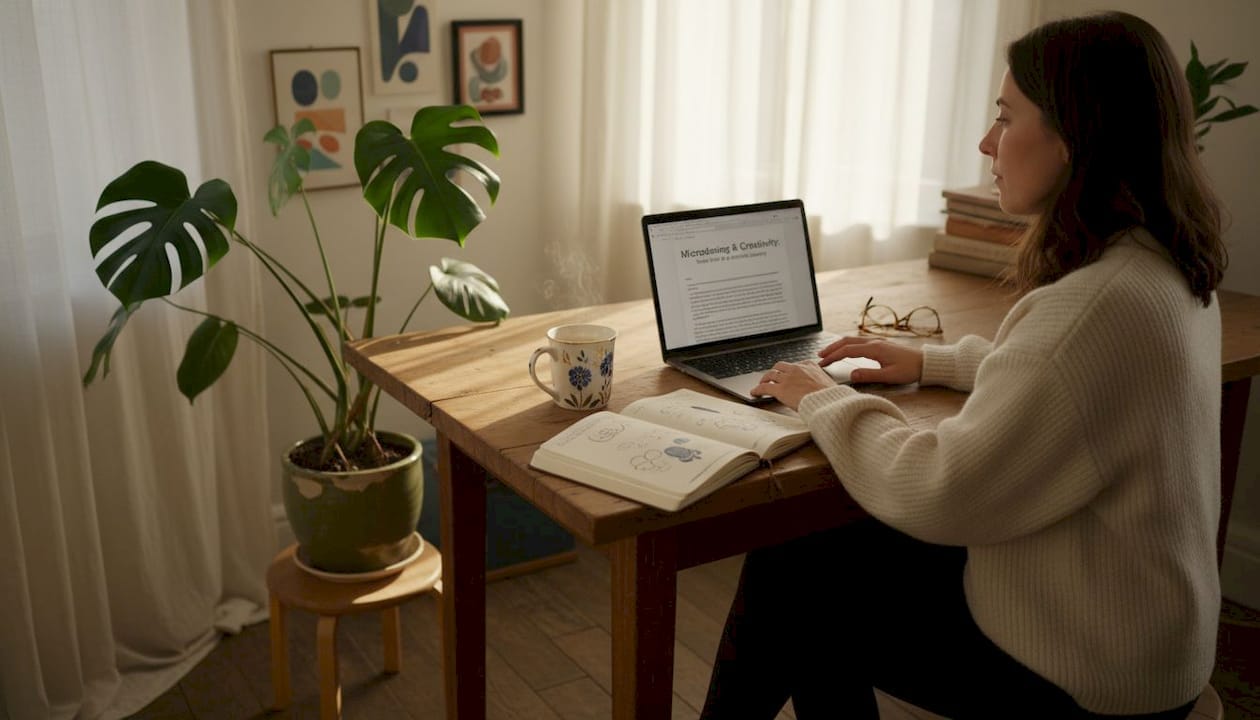
If you have heard the term “microdosing mushrooms” and imagined someone seeing walls melt or losing track of reality, you are not alone. That misconception is one of the most common barriers stopping curious UK adults from exploring what is microdosing mushrooms properly. In practice, microdosing psilocybin mushrooms involves doses so small they stay firmly below the psychedelic threshold. No hallucinations. No altered sense of time. Just subtle, often cumulative shifts in mood, focus, and mental clarity that many people report noticing only when they look back on their week.
Table of Contents
- Understanding microdosing mushrooms: dose, effects and protocols
- Legal status and safety considerations for microdosing in the UK
- Reported benefits and current scientific evidence on microdosing mushrooms
- Practical tips for beginners: safely microdosing mushrooms
- Looking beyond the hype: realistic perspectives on microdosing mushrooms
- Discover legal mushroom resources and support at Spore Buddies
- Frequently asked questions
Understanding microdosing mushrooms: dose, effects and protocols
So what exactly separates a microdose from a full psychedelic experience? The answer is almost entirely about quantity. Microdosing psilocybin involves consuming roughly 0.05g to 0.3g of dried mushrooms, which is approximately a tenth to a twentieth of a recreational dose. At that level, psilocybin sits beneath the threshold where it produces altered perception, making the effects “sub-perceptual.”
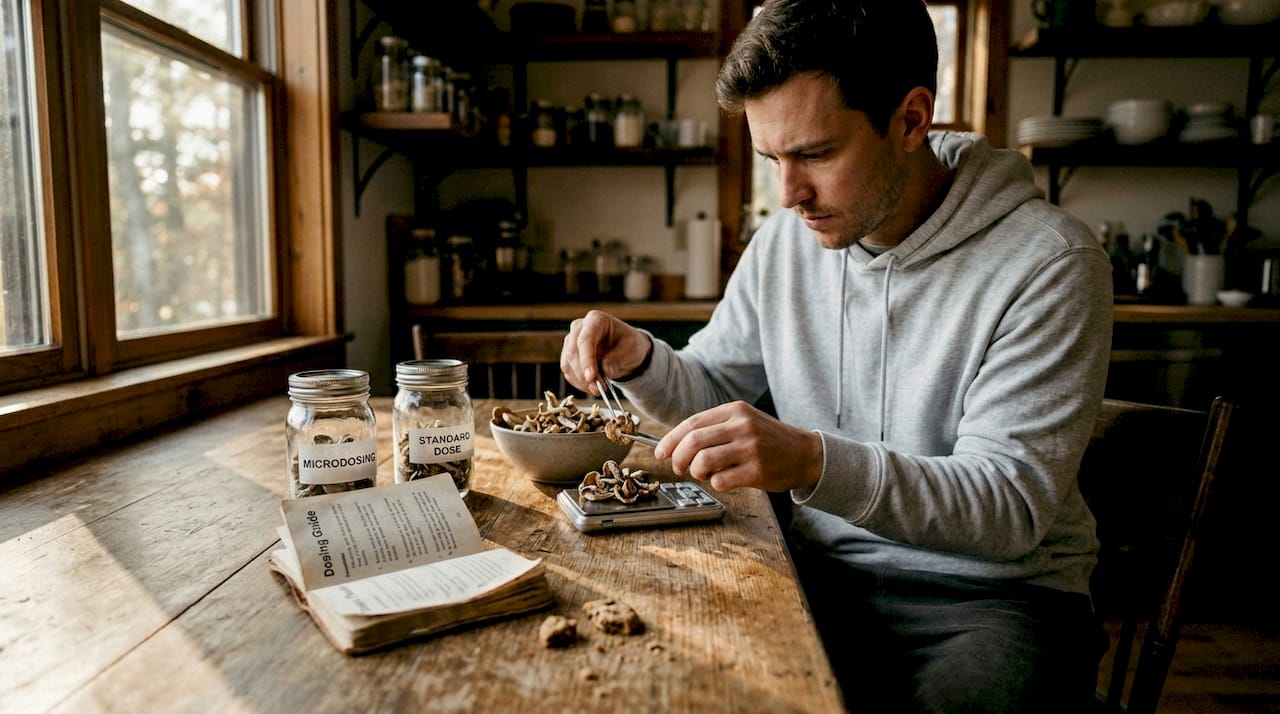
Sub-perceptual does not mean imperceptible. Many people who practise mushroom microdosing describe feeling slightly more focused, emotionally resilient, or creatively engaged on dosing days. What they do not experience is any loss of function or awareness. You can attend a meeting, drive (legally and safely), or have a conversation without anyone around you noticing a difference.
What a typical microdose looks like in practice:
- Dose range: 0.05g to 0.3g of dried psilocybin mushrooms
- Typical starting point: 0.05g to 0.1g for beginners
- Form: Dried mushrooms, often ground into capsules for consistent dosing
- Effects: Subtle lift in mood and focus; no visuals, no impairment
- Duration: Effects, when noticed, last roughly 4 to 6 hours
The two most widely followed dosing protocols are the Fadiman method and the Stamets stack. Understanding how each works helps you choose an approach that fits your lifestyle.
Comparing the two main microdosing protocols:
| Protocol | Schedule | Rest days | Best suited for |
|---|---|---|---|
| Fadiman method | 1 day on, 2 days off | Yes, built in | Beginners wanting minimal complexity |
| Stamets stack | 4 days on, 3 days off | Yes, weekly | Those combining mushrooms with lion’s mane and niacin |
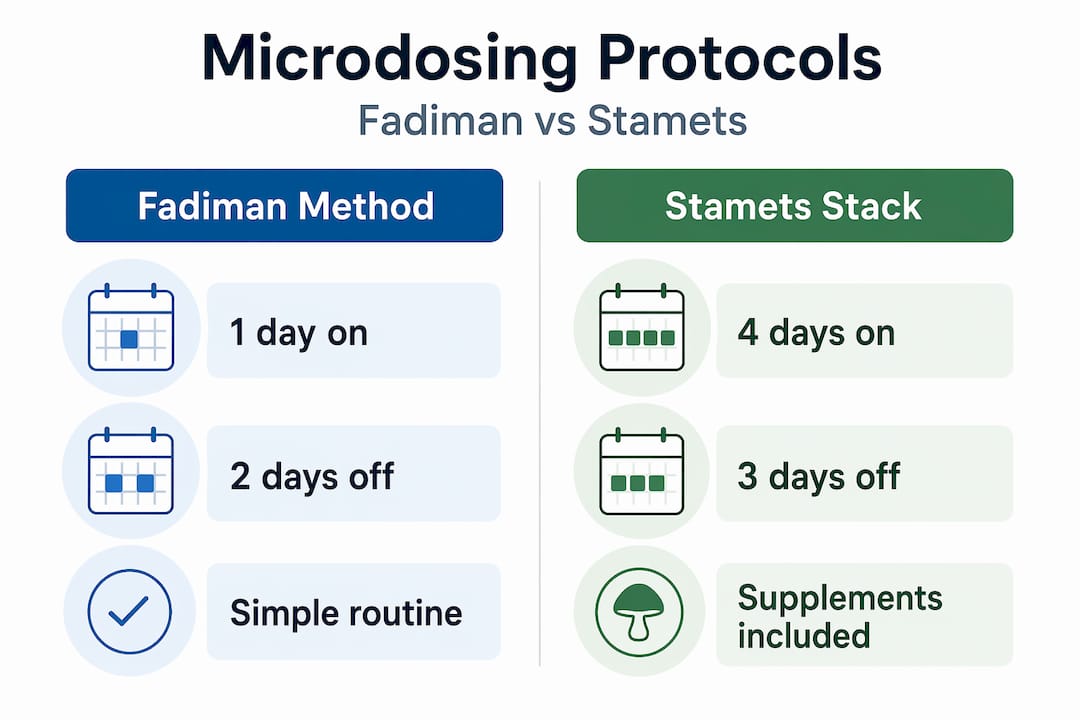
Rest days are not optional. Psilocybin tolerance builds quickly, which means dosing daily will diminish any perceived benefits within days. Structured protocols exist precisely to keep the practice effective over weeks and months.
Pro Tip: If you are new to microdosing, start on a day when you have no major commitments. This gives you a relaxed setting to observe your own response without pressure, and makes it easier to assess whether your dose is genuinely sub-perceptual.
For a deeper look at structuring your own approach, the how to microdose mushrooms guide from Spore Buddies covers the practical steps in detail.
Legal status and safety considerations for microdosing in the UK
Before you go further, this is the section you genuinely cannot skip. Microdosing psilocybin mushrooms in the UK carries serious legal risk. Psilocybin is classified as Class A under the Misuse of Drugs Act 1971, making it one of the most restricted substances in UK law alongside heroin and cocaine. Possession alone can result in up to seven years in prison. Supply or production carries a potential life sentence.
There is currently no legal framework for self-directed microdosing in the UK. Unlike some clinical settings in the US or the Netherlands where psilocybin research is advancing rapidly, British law makes no distinction between recreational use and personal wellness use. Intent does not reduce the legal exposure.
Key legal facts for UK residents:
- Psilocybin mushrooms are Class A, Schedule 1 controlled substances
- Possession: up to 7 years imprisonment plus an unlimited fine
- Supply or production: up to life imprisonment
- No legal self-medication or personal use exemption exists
- Clinical research trials do exist but require institutional oversight and ethical approval
The health risks are also worth taking seriously. Psilocybin can trigger psychosis in people with a personal or family history of conditions such as schizophrenia or bipolar disorder. Because most self-directed microdosing takes place without any medical screening, individuals who are predisposed to psychotic episodes may unknowingly put themselves at risk.
“Microdosing without medical oversight means no one is checking for contraindications, drug interactions, or early warning signs of psychological distress. That is a significant gap when dealing with a substance that acts on serotonin receptors.”
Beyond mental health, there is the issue of unregulated potency. Without laboratory testing, dried mushrooms vary considerably in psilocybin content, making consistent dosing difficult even for experienced users. You can read through our microdosing safety FAQs for a fuller picture of what responsible harm reduction looks like in practice.
Reported benefits and current scientific evidence on microdosing mushrooms
Interest in the benefits of microdosing mushrooms has grown considerably over the past decade, and research is beginning to catch up. A 2025 naturalistic survey of 1,435 adults found statistically significant improvements in well-being, focus, and productivity on microdosing days (p < .001). That is a meaningful result, though it is worth understanding what “naturalistic survey” means: participants self-selected, self-reported, and self-dosed. There was no placebo control.
That limitation matters. Placebo-controlled clinical trials of microdosing psilocybin mushrooms remain scarce as of 2026. The honest picture is that we have strong anecdotal and survey evidence, some promising early-phase research, and a genuine scientific community working to close the gap. But we do not yet have the kind of gold-standard clinical data that exists for, say, standard antidepressants.
What the current evidence suggests:
- Improved mood and emotional resilience reported on microdosing days
- Enhanced creative thinking and problem-solving in survey respondents
- Reduced symptoms of anxiety and depression noted in observational studies
- Increased sense of presence and mindfulness during daily activities
The benefits of mindfulness with microdosing is a theme that comes up repeatedly in user accounts. Many practitioners describe using microdosing not as a standalone treatment but as a complement to psilocybin therapy research and existing wellness practices. Journalling, meditation, breathwork, and therapy appear to amplify whatever subtle effects the microdose provides.
“Microdosing is not a switch you flip,” as experts consistently caution. “Effects are cumulative and subtle, and expecting rapid transformation is the fastest route to disappointment.”
Think of it less like taking a painkiller and more like beginning a meditation habit. The benefits emerge gradually, and they require you to pay attention.
Practical tips for beginners: safely microdosing mushrooms
If you are considering microdosing mushrooms safely, the single most important thing you can do is start low. Beginning at 0.05g to 0.1g of dried mushrooms keeps you firmly in sub-perceptual territory and avoids the anxiety that can come from accidentally dosing too high.
Here is a straightforward step-by-step approach to getting started:
- Choose a protocol. The Fadiman method (1 day on, 2 days off) is the most beginner-friendly. Start there before experimenting with other schedules.
- Weigh carefully. Use a milligram-accurate digital scale. Eyeballing dried mushrooms is not reliable enough at these quantities.
- Begin at the lower end. Start with 0.05g to 0.1g. If you notice any obvious effects, the dose is too high.
- Keep a journal. Record your mood, energy, focus, sleep quality, and any side effects each day, including off days. Patterns emerge over weeks, not days.
- Wait at least two weeks before adjusting. Psilocybin’s effects at microdose levels are subtle and cumulative. Give it time before concluding the dose is too low.
- Incorporate rest days strictly. Protocols with structured off days are essential for preventing tolerance build-up and maintaining any perceived benefits.
Common mistakes to avoid:
- Increasing the dose too quickly because you “do not feel anything”
- Skipping rest days because the practice feels productive
- Microdosing during high-stress periods without a stable baseline
- Ignoring mental health history or existing medication interactions
- Sourcing from unreliable or unverified suppliers, which compounds potency uncertainty
Pro Tip: Pair your dosing days with a simple mindfulness practice, even five minutes of quiet breathing after waking. Many people find this combination noticeably more effective than microdosing alone, and it builds a habit that supports you on off days too.
If you want a structured framework to follow, the practical mushroom microdosing guide at Spore Buddies walks through these steps with additional context for UK-based readers.
Looking beyond the hype: realistic perspectives on microdosing mushrooms
Here is something that does not get said enough in most microdosing content: the hype has outpaced the evidence, and that gap is doing real harm. When people approach microdosing expecting a transformation of their mental health, productivity, or creativity, many walk away disappointed or, worse, escalate their dose looking for the effect they were promised. That is precisely how a sub-perceptual practice becomes something riskier.
We think the most useful framing for UK readers right now is this: microdosing psilocybin mushrooms is a practice under serious scientific investigation, not a proven therapy. The anecdotal evidence is genuinely interesting. The early research is encouraging. But experts warn consistently about the risks of unregulated use, including unpredictable potency, legal exposure, and the absence of any clinical safety net.
The legal reality in the UK means that self-directed microdosing carries risk no wellness benefit can fully offset. A possession charge does not disappear because your intention was therapeutic. This is not said to discourage curiosity, but to anchor it in honest assessment.
What we do encourage is educating yourself thoroughly before forming strong opinions. The people who benefit most from exploring microdosing are those who approach it patiently, integrate it with other practices, and hold realistic expectations. Think of it as one input among many in a broader commitment to wellbeing, not the centrepiece of a mental health plan.
Our microdosing FAQs reflect this philosophy. We aim to give you clear, honest information so your curiosity leads somewhere genuinely useful.
Discover legal mushroom resources and support at Spore Buddies
If reading this guide has sparked your interest in the broader world of mushrooms and mycology, Spore Buddies is here to support your exploration within the bounds of UK law. We offer a wide range of legal magic mushroom spores for microscopy and research purposes, alongside detailed microdosing guides to help you build a well-informed understanding of psilocybin and its wider context. Whether you are drawn to the science, the cultivation side, or the wellness conversation, our resources are designed to meet you where you are. For those looking to go further into mycology, our wholesale mycology supplies cover everything from spore syringes and agar plates to microscopes and sterilised substrates, all vetted for quality and compliant with UK regulations.
Frequently asked questions
What exactly is microdosing mushrooms?
Microdosing mushrooms means taking a very small, sub-perceptual dose of psilocybin mushrooms (typically 0.05g to 0.3g dried) that does not cause hallucinations but may subtly support mood and focus over time.
Is microdosing mushrooms legal in the UK?
No. Psilocybin mushrooms are Class A controlled substances in the UK, meaning possession, supply, and production are all criminal offences carrying severe penalties, including imprisonment.
What are the main risks of microdosing mushrooms?
The key risks include legal penalties under UK law, the potential to trigger psychosis in predisposed individuals, and the absence of any quality control or dosage consistency in unregulated settings.
How do I know if I am taking the right microdose?
A correct microdose is sub-perceptual. If you notice strong visuals, feel intoxicated, or cannot function normally, reduce your dose immediately. Starting at 0.05g and adjusting slowly is the safest approach.
Are there proven benefits to microdosing mushrooms?
A 2025 survey of 1,435 adults showed significant improvements in mood, focus, and productivity on microdosing days, though placebo-controlled clinical trials are still limited, and more rigorous evidence is needed before firm conclusions can be drawn.