
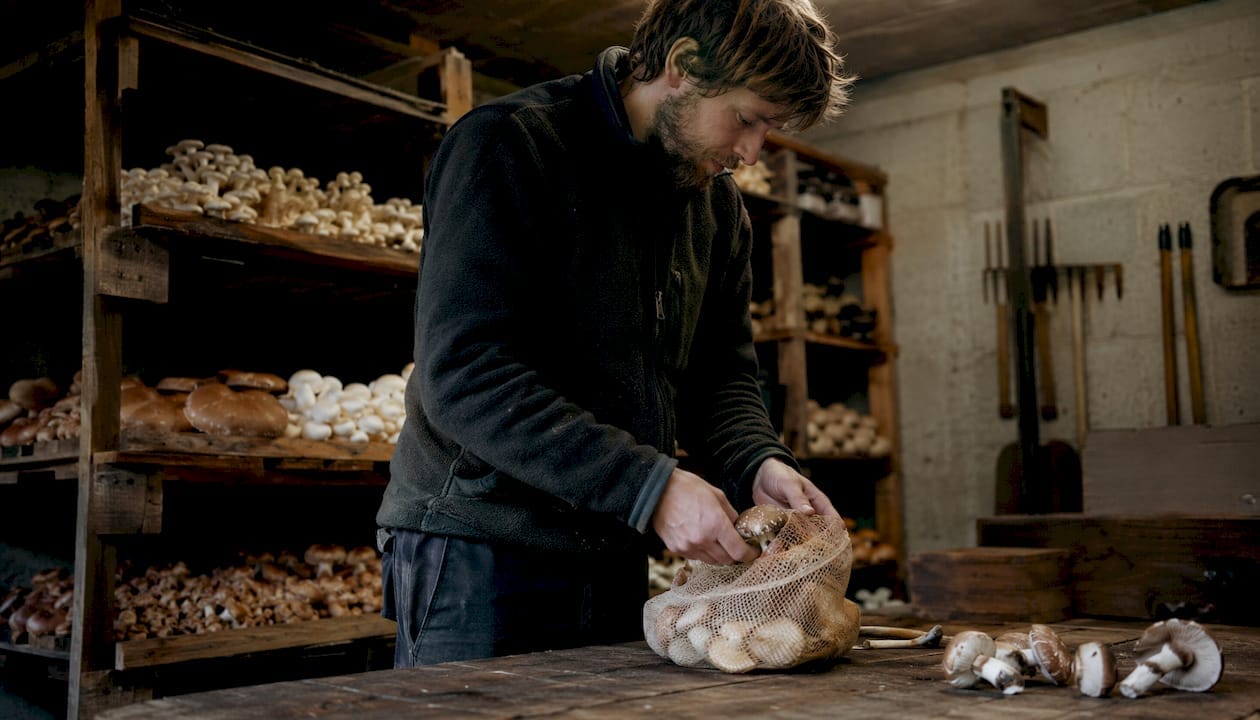
For most home growers, the single most effective approach is combining rapid cooling to around 5°C with loosely sealed micro-perforated packaging and active humidity control. Together, these mushroom shelf life extension methods typically deliver up to two weeks of usable freshness depending on species, compared with just a few days left in original plastic trays at room temperature.
Here is what that looks like in practice:
- Cool immediately. Move harvested mushrooms to refrigerated storage at approximately 5°C within one hour of harvest.
- Choose the right packaging. Micro-perforated bags or loosely folded paper bags on a fridge shelf outperform sealed plastic and crisper drawers.
- Combine methods for best results. Synergistic combinations of refrigeration, modified atmosphere packaging (MAP), and anti-browning agents consistently outperform any single method.
- Know when to go long-term. If you cannot use your crop within two weeks (14 days), dehydration or freezing with pre-treatment is the right call.
Ergothioneine (EGT), a naturally occurring antioxidant in mushrooms, is an active area of research for its anti-browning properties. It is not yet a consumer product, but it points to where preservation science is heading. Sporebuddies covers the practical side of all these approaches, from cultivation equipment to drying tools.
Table of Contents
- What should you do in the first hour after harvest?
- Which preservation methods actually extend mushroom freshness?
- How do you control browning and texture loss?
- Dehydration versus freezing: which suits your crop?
- What microbial risks should UK home growers know about?
- How do storage timelines differ by species?
- How should you monitor stored mushrooms?
- Equipment checklist and typical UK price ranges
- Key takeaways
- Where to find the right supplies in the UK
- Useful sources
- FAQ
What should you do in the first hour after harvest?
Speed matters more than anything else in the first 60 minutes. Mushrooms respire continuously after harvest and have no protective cuticle, so heat and moisture loss begin immediately.
- Brush off substrate gently with a dry cloth or soft brush. Avoid washing unless absolutely necessary.
- Move mushrooms to a cool area straight away, away from direct light or heat.
- Do not leave them in the original plastic-wrapped tray. That environment traps moisture and accelerates decay.
- Transfer to a paper bag or micro-perforated bag and place on a fridge shelf, not in the crisper drawer.
- Target 5°C (41°F) within one hour where possible.
Pro Tip: Never line your paper bag with kitchen towel. Tests show that paper towels trap moisture inside the bag, creating a damp microclimate that encourages fuzzy mould within days.
Which preservation methods actually extend mushroom freshness?
Refrigeration
A standard fridge shelf at 2–5°C with relative humidity around 85–95% is your baseline. The crisper drawer sounds logical, but its sealed, high-humidity environment accelerates mould. A paper bag on an open shelf allows gentle air circulation and keeps surface moisture in check. Under these conditions, button mushrooms can remain acceptable for over a week.
Modified atmosphere packaging and micro-perforated bags
Microperforated films regulate the balance of oxygen and carbon dioxide around the mushroom, slowing respiration without tipping into the anaerobic zone where off-flavours and bacterial growth accelerate. MAP bags designed for mushrooms typically target a low oxygen and elevated carbon dioxide gas mix suitable to slow respiration. For home use, food-grade micro-perforated bags are the practical equivalent and widely available in the UK for under £10 per pack.
Vacuum sealing
Vacuum sealing reduces gas exchange effectively but carries a real risk: removing all oxygen can push mushrooms into anaerobic respiration, producing unpleasant odours and accelerating certain bacterial spoilage. Use vacuum sealing only for mushrooms destined for freezing, not for fridge storage. For refrigerated fresh mushrooms, micro-perforated bags are the safer choice.
Why combined methods win
| Method | Shelf life gain | Best for |
|---|---|---|
| Refrigeration only | 4–7 days | Small batches, quick use |
| Paper bag on fridge shelf | Up to 14 days | Home growers, most species |
| Micro-perforated / MAP bag + fridge | 7–14 days | Larger batches, fragile species |
| Vacuum seal + freezer | Several months | Long-term, cooked dishes |
Research consistently shows that combining refrigeration with MAP or anti-browning agents yields a more stable outcome than either approach alone. Managing both respiration rate and surface moisture simultaneously is the key principle.
How do you control browning and texture loss?
Enzymatic browning happens when polyphenol oxidase (PPO) in mushroom tissue contacts oxygen, typically through physical damage or cut surfaces. Because mushrooms lack a cuticle, even light bruising activates this process quickly.
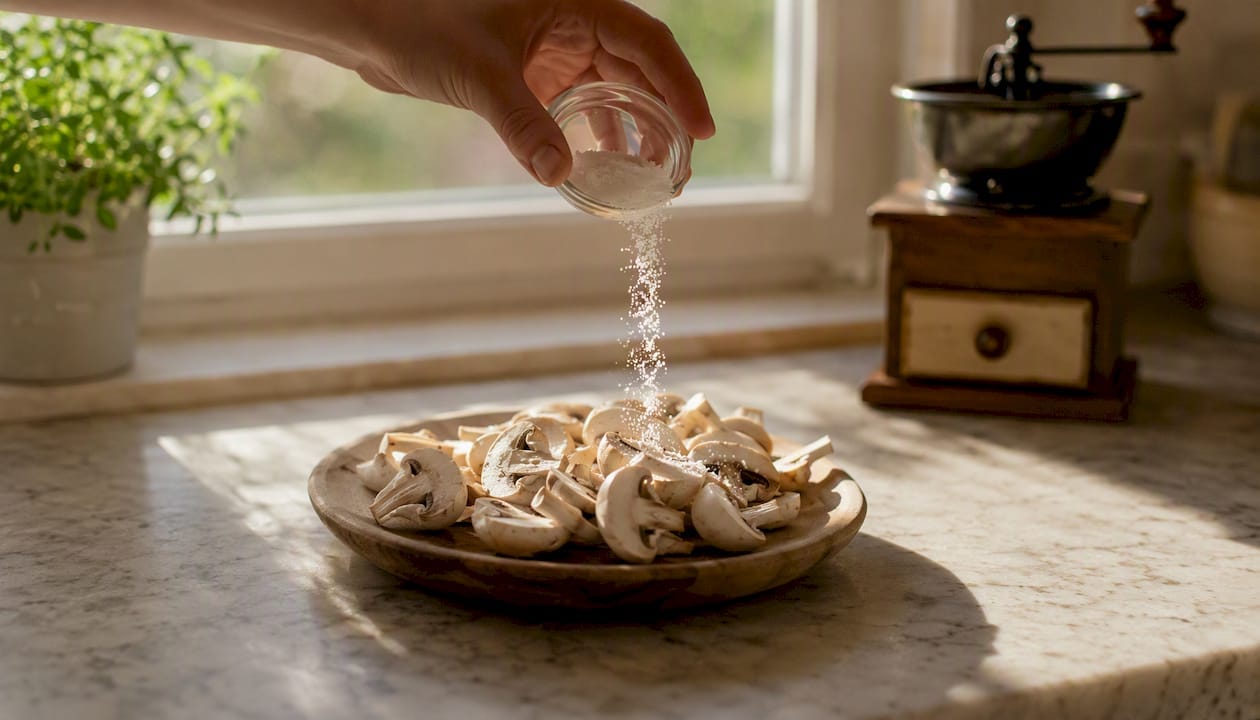
Ergothioneine (EGT) is a thiol-containing antioxidant naturally present in fungi. Research into its use as a preservation agent shows it can inhibit PPO activity and reduce browning in button mushrooms, but it remains a research-stage tool rather than something you can buy off the shelf in the UK today.
Practical safe options for home growers:
- Food-grade ascorbic acid or citric acid rinse. Soak mushrooms briefly in a solution of 1 teaspoon citric acid per 500ml of cold water before freezing. This pre-treatment helps retain colour.
- Steam blanching before freezing. Whole button mushrooms need 5 minutes of steam; quarters need 3.5 minutes; slices need 3 minutes.
- Minimal handling. Every squeeze or drop activates enzymes at the point of impact.
Pro Tip: Avoid aggressive chemical treatments or bleach-based washes. Food-grade ascorbic acid and citric acid are the only safe anti-browning rinses for edible mushrooms.
It is worth noting that most preservation studies measure colour, texture, and flavour. Fewer assess nutraceutical retention under different strategies, so claims about preserving specific bioactive compounds should be treated with caution.
Dehydration versus freezing: which suits your crop?
When to dehydrate
Dehydration is the right choice when you have a large flush, limited fridge space, or want shelf-stable mushrooms for months. Drying reduces fresh weight to roughly one seventh of the original, concentrates flavour, and targets a moisture content of around 13% for safe long-term storage. A food-grade dehydrator set to 50–55°C (120°F) works well for most species; slice mushrooms to approximately 1cm thickness for even drying.
To rehydrate, soak dried mushrooms in boiling water for a few minutes until softened, then lift out with a slotted spoon.
When to freeze
Freezing suits mushrooms you plan to use in cooked dishes. Raw frozen mushrooms turn soft on thawing, so pre-treatment is non-negotiable. Sauté in a little butter or oil until almost done, cool, then pack into freezer containers. Alternatively, steam blanch as described above.
| Method | Storage duration | Texture outcome | Yield change |
|---|---|---|---|
| Refrigeration (paper bag) | Up to 14 days | Fresh | Minimal shrinkage |
| Dehydration | — | Dry, chewy when rehydrated | ~85% weight loss |
| Freezing (blanched/sautéed) | 3–6 months | Soft, best in cooked dishes | Moderate moisture loss |
What microbial risks should UK home growers know about?
Mushrooms spoil faster than most vegetables because of their high moisture content and continuous respiration. Bacterial blotch, caused by Pseudomonas species, can appear within 24 hours at room temperature. Mould follows quickly in humid, poorly ventilated storage.
The most serious risk in long-term preservation is botulism. Pressure canning is the only safe method for plain, low-acid mushrooms; water-bath canning is unsafe and should not be used. Only commercially grown button mushrooms are considered safe for home canning; other varieties should be frozen or dried instead.
Clear discard signs:
- Sliminess or wet, sticky surface
- Off or sour odour
- Fuzzy mould growth (any colour)
- Sudden dark spots spreading across the cap
When in doubt, discard. Mushrooms are low-cost to grow again; foodborne illness is not worth the risk. For practical guidance on preventing contamination at the growing stage, the mould prevention guide from Sporebuddies is a useful companion read.
This article is general information, not professional food-safety or medical advice. For your specific situation, consult the Food Standards Agency (FSA) or a qualified food-safety professional.
How do storage timelines differ by species?
| Species | Fridge shelf life | Best long-term method | Key care note |
|---|---|---|---|
| Button (Agaricus bisporus) | 4–14 days | Dehydration or pressure canning | Avoid crisper; paper bag on shelf |
| Oyster | 3–7 days | Dehydration | Very fragile; use or preserve quickly |
| Shiitake | 7–14 days | Sliced and dried | Sturdier; handles refrigeration well |
| Lion’s mane | 2–5 days | Immediate freezing or dehydration | Delicate texture; cool rapidly after harvest |
Oyster mushrooms are the most time-sensitive of the common home-cultivated species. If you grow oysters and cannot process them within a day or two, move straight to dehydration rather than hoping refrigeration will buy enough time.
How should you monitor stored mushrooms?
Simple daily checks take under two minutes and catch problems before they spread.
- Temperature: Use a dedicated fridge thermometer to confirm your shelf sits at 2–5°C. Fridge door shelves fluctuate; use a middle or upper shelf instead.
- Humidity: A small digital hygrometer (under £10 at most UK hardware retailers) placed near your storage area confirms relative humidity stays around 85–95%.
- Visual check: Inspect each batch daily. Remove any mushroom showing sliminess or discolouration before it affects neighbours.
- CO2/O2 monitoring: If you use MAP bags, check the bag for inflation or collapse, which signals a gas imbalance. Colour-indicator sachets are available for more precise monitoring.
For research batches, keep a simple log: date harvested, species, storage method, temperature reading, and any observations. Even a basic spreadsheet catches trends across flushes. The environmental control equipment category at Sporebuddies covers hygrometers and monitoring tools suited to small-scale operations.
Equipment checklist and typical UK price ranges
| Equipment | Typical UK price range | When essential |
|---|---|---|
| Dedicated fridge or fridge thermometer | £10 (thermometer) / — (mini fridge) | Always |
| Micro-perforated MAP bags | £10 per pack | Larger batches, fragile species |
| Food-grade dehydrator | £30 | Large flushes, long-term storage |
| Vacuum sealer | — | Pre-freeze preparation |
| Digital hygrometer | £10 | Monitoring humidity in storage |
| Pressure canner | — | Canning button mushrooms only |
The mushroom dehydrator stocked by Sporebuddies sits in the mid-range and suits most home growers. For broader cultivation equipment including vacuum sealers and environmental monitors, the Sporebuddies shop covers the full checklist.
Key takeaways
Combined rapid cooling and micro-perforated packaging is the single most effective approach to extending mushroom shelf life, delivering up to two weeks (14 days) of freshness for most home-cultivated species.
| Point | Details |
|---|---|
| Cool within one hour | Move mushrooms to 5°C refrigerated storage within 60 minutes of harvest to preserve marketability. |
| Paper bag beats plastic | A loosely folded paper bag on a fridge shelf outperforms sealed plastic trays and crisper drawers. |
| Combine methods | Refrigeration paired with MAP or micro-perforated bags consistently outperforms any single method alone. |
| Dehydrate for long-term | Drying to ~13% moisture content preserves mushrooms for months with significant weight reduction. |
| Sporebuddies for supplies | Sporebuddies stocks food-grade dehydrators, MAP bags, and environmental monitoring tools for UK home growers. |
Where to find the right supplies in the UK
Growing your own mushrooms is only half the work. Having the right post-harvest kit ready before your first flush means you lose nothing to spoilage. Sporebuddies stocks the key items this guide recommends: food-grade dehydrators, vacuum sealers, MAP-compatible packaging, and environmental monitoring equipment, all available for UK delivery. Whether you are preserving a small oyster flush or running a research cycle with shiitake, the mushroom growing equipment range at Sporebuddies has what you need. Browse the full catalogue and order the tools that match your chosen preservation method.
Useful sources
- Shelf-life extension of fresh mushrooms (Wiley, 2021) — supports the BLUF section on respiration, cuticle absence, and MAP rationale.
- Fresh mushroom preservation techniques (MDPI, 2021) — backs the core methods section on microperforation, MAP, and nutraceutical retention caveats.
- Synergistic storage methods study (DOI, 2025) — supports the combined-methods recommendation throughout.
- Storage and preservation, Cornell Small Farms — source for the one-hour cooling rule and dehydration yield figures.
- Preserving mushrooms, OSU Extension Service — authoritative guidance on pressure canning safety and botulism risk.
- I tested 6 ways to store mushrooms, Serious Eats — practical kitchen-test evidence for paper bag storage and paper towel caution.
FAQ
How long do home-grown mushrooms last in the fridge?
Most species last up to two weeks (14 days) refrigerated at 2–5°C in a paper bag on a fridge shelf; fragile varieties like oyster mushrooms are closer to 3–7 days.
Is vacuum sealing safe for storing fresh mushrooms?
Vacuum sealing is best reserved for mushrooms going into the freezer. For fridge storage, it risks creating anaerobic conditions that accelerate off-flavours and certain bacterial spoilage.
What is the safest way to can mushrooms at home in the UK?
Pressure canning is the only safe method for plain, low-acid mushrooms; water-bath canning carries a botulism risk and should not be used.
Can you freeze mushrooms without blanching them first?
Raw mushrooms can be frozen but thaw with a very soft, watery texture. Steam blanching or sautéing before freezing gives a far better result for cooked dishes.
What is ergothioneine and does it help preserve mushrooms?
Ergothioneine (EGT) is a natural antioxidant found in fungi that research shows can inhibit browning enzymes in button mushrooms. It is currently a research-stage tool, not a consumer product available in the UK.