
What is the threshold dose for psilocybin mushrooms?
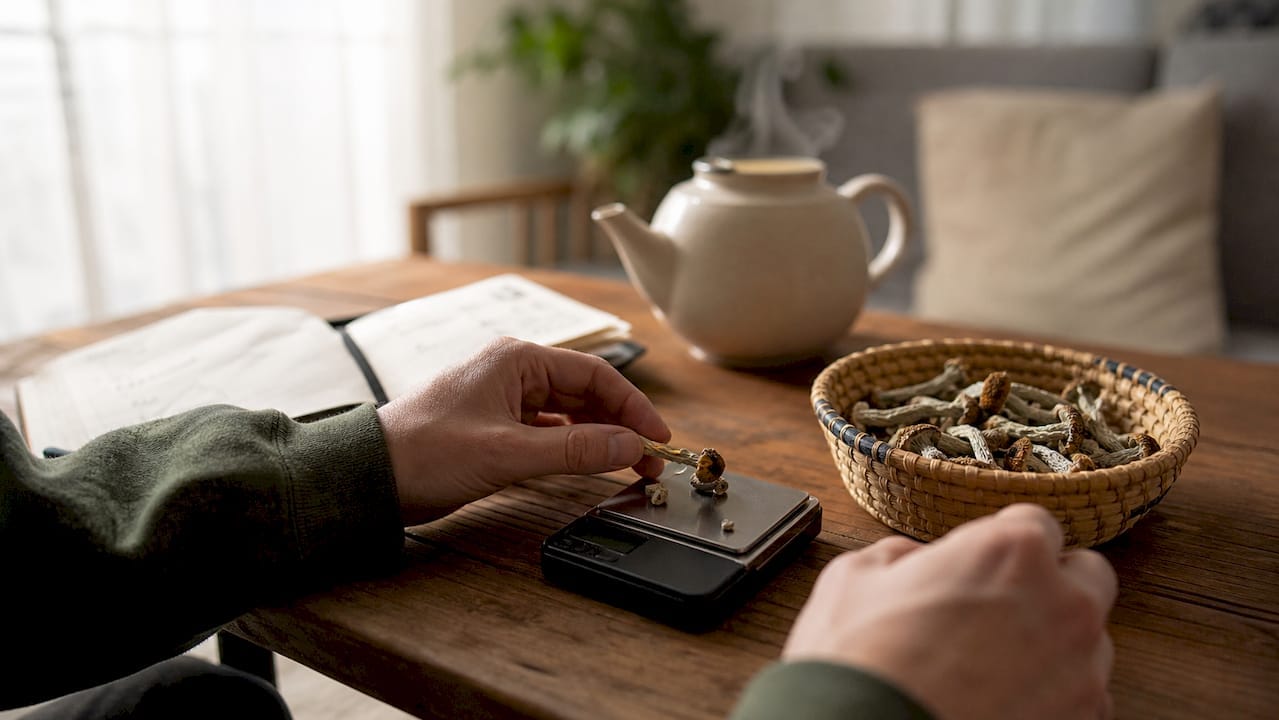
The threshold dose is the smallest amount of dried psilocybin mushrooms that produces the first detectable psychedelic effects. For Psilocybe cubensis, the most widely cultivated species, that point sits at roughly 0.25–0.5 grams of dried material. Below it, you feel nothing. At it, you begin to notice something, though the effects remain faint and easy to second-guess.
Those first signs are subtle by design:
- A slight shift in colour saturation or visual sharpness
- Mild physical sensations such as tingling or a sense of lightness
- A barely perceptible change in headspace or thought pattern
- Heightened sensory awareness that you might initially attribute to imagination
Psilocybin is the primary alkaloid in Psilocybe cubensis. Once ingested, the body converts it into psilocin, the compound that actually binds to serotonin receptors and produces psychedelic effects. Because that conversion varies between individuals, and because potency differs across batches, the threshold is not a fixed number. It is a personal boundary you discover through careful, incremental exploration.
How do dosing categories for psilocybin mushrooms compare?
Understanding where the threshold sits requires knowing the full dosing picture. The categories below reflect commonly used dose tiers for dried Psilocybe cubensis:
- Microdose (0.05–0.3 g): Sub-perceptual. No altered cognition, no visuals, full daily function. Effects, if any, are noticed retrospectively through tracking rather than acutely on the day.
- Threshold / low dose (0.3–1 g): The first perceptible effects appear. Light mood lift, mild colour enhancement, gentle sensory shifts. Not suitable for most work contexts.
- Moderate dose (1–2.5 g): A clear psychedelic experience with visuals, emotional amplification, and altered time perception.
- High dose (2.5–3.5 g): Strong visual and emotional intensity. Preparation and a trusted sitter are advisable.
- Heroic dose (3.5 g+): Associated with ego dissolution and mystical-type experiences studied in clinical settings such as the Johns Hopkins psilocybin trials.
Once perceptual effects appear, the dose has moved beyond the sub-perceptual range. If you notice anything psychedelic during a session you intended as a microdose, the dose is already in threshold or low-dose territory.
Why mushroom potency is more complex than weight alone
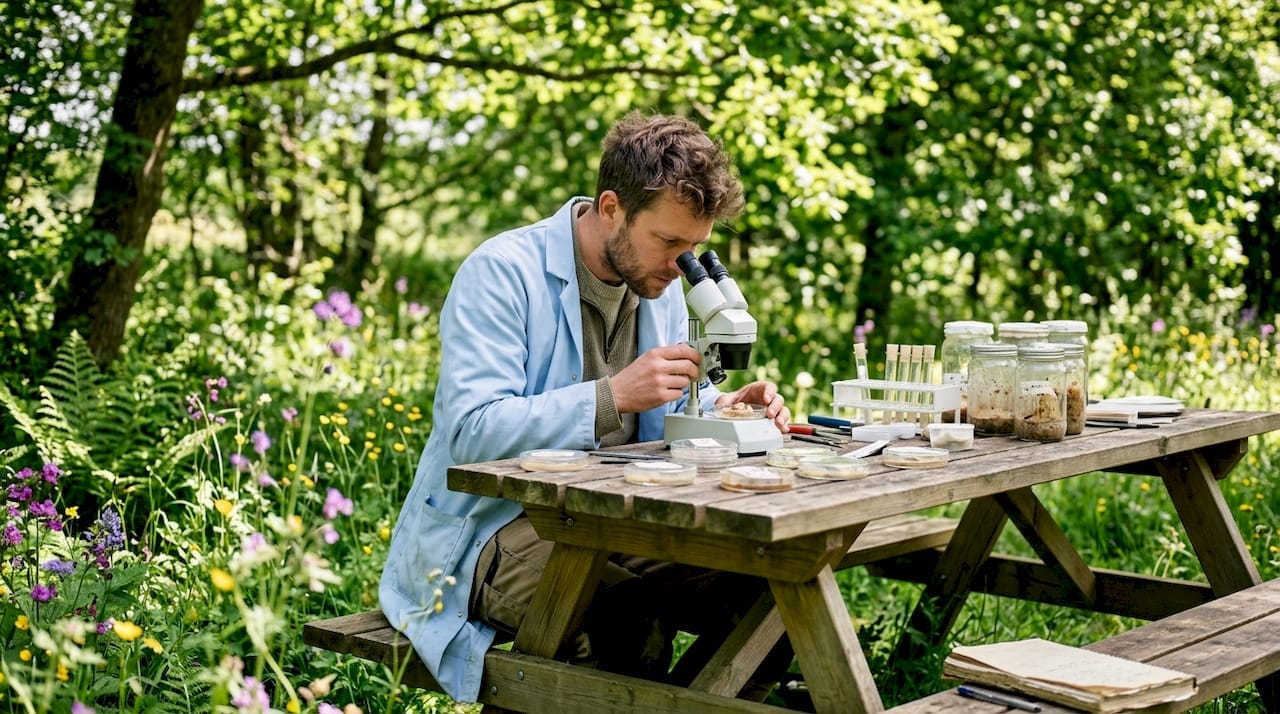
Potency is measured as milligrams of psilocybin and psilocin per gram of dried material, not by the weight of the mushroom itself. Average psilocybin content in Psilocybe cubensis sits at roughly 1% of dried weight (approximately 10 mg per gram), but the realistic range runs from 0.5% to 2%. That twofold spread means two visually identical mushrooms can deliver very different experiences at the same weight.
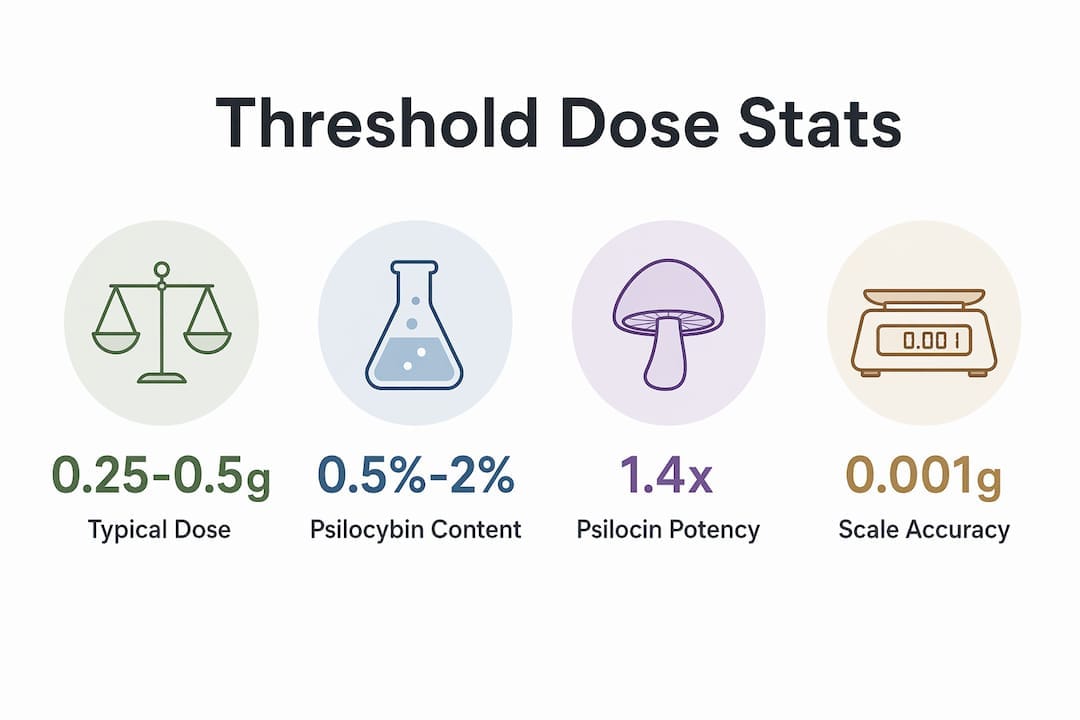
Psilocin adds another layer of complexity. It is approximately 1.4 times more potent by weight than psilocybin, so the ratio between the two compounds in a given batch affects the overall strength. A useful measure called Psilocin Equivalence combines both figures to give a single potency number that reflects what your body actually receives.
Variability does not stop at the species level. A classic controlled study found psilocin was essentially absent in early harvests of Psilocybe cubensis and only reached its peak around the fourth flush, with psilocybin varying by up to roughly fourfold between flushes. Uncontrolled samples varied by more than tenfold. Lab analysis using chromatography is the only method that actually measures concentration rather than mass.
| Potency indicator | What it measures | Limitation |
|---|---|---|
| Dry weight (grams) | Mass only | Cannot detect alkaloid concentration |
| Psilocybin % | mg psilocybin per gram dried | Excludes psilocin contribution |
| Psilocin Equivalence | Combined bioavailable potency | Requires lab analysis; degrades over time |
What personal factors affect your threshold sensitivity?
Your threshold dose is shaped by biology as much as by the mushroom itself. Individual sensitivity varies across several factors:
- Body weight and metabolism: Heavier individuals or those with faster metabolisms may process psilocin more quickly, altering onset and intensity.
- Receptor density and sensitivity: Serotonin receptor density differs between people, directly influencing how strongly psilocin binds.
- Tolerance: Recent use of psilocybin builds tolerance rapidly. Even a few days between sessions can shift your threshold noticeably.
- Serotonergic substances: Prior or current use of SSRIs, cannabis, or other psychedelics can blunt or modify effects significantly.
- Mental state and setting: Anxiety, fatigue, or an unfamiliar environment can amplify or suppress the subtle signals that mark the threshold.
No published chart can account for all of these variables simultaneously. Treat any dose range as a starting point, not a prescription.
How to find your personal threshold dose safely
Starting well below the expected threshold is the safest approach. Begin at around 0.05 g and increase by 0.025–0.05 g per session, keeping a written log of every subtle shift you notice. When you first detect any effect, however faint, you have found your personal threshold.
A few practical steps make this process more reliable:
- Homogenise your material. Grinding multiple dried mushrooms together evens out the uneven alkaloid distribution between caps and stems, reducing the chance of an unexpectedly strong or weak dose.
- Account for flush differences. Potency shifts between harvests, so recalibrate when you start a new flush or a new batch entirely.
- Store correctly. Psilocybin degrades with heat, light, and moisture, so potency drifts downward over time even in a sealed container.
- Log everything. Note the dose weight, the batch, the time, and any effects, however minor. Patterns only emerge from consistent records.
Pro Tip: Patience is the method. Chasing a stronger effect by jumping dose increments is the single most common mistake. The threshold is a boundary to locate, not a target to exceed.
In the UK, psilocybin mushrooms are a Class A controlled substance. Sporebuddies supplies legal spores and mushroom grow kits for microscopy, research, and educational purposes only. Cultivation for the purpose of producing fruiting bodies is not legal in the UK.
A quick summary of threshold dose essentials
- The threshold dose for dried Psilocybe cubensis typically falls between 0.25 and 0.5 grams
- Potency ranges from 0.5% to 2% psilocybin by dried weight; lab analysis is the only precise measure
- Psilocin Equivalence, not dry weight alone, gives the most accurate picture of bioavailable potency
- Individual biology, tolerance, and setting all shift the personal threshold
- Incremental dosing in 0.025–0.05 g steps, combined with careful logging, is the safest discovery method
- In the UK, spores and grow kits are legal for research and education; fruiting body cultivation is not
How to accurately measure threshold doses
A precision scale is the starting point. Scales accurate to 0.001 g (milligram scales) are widely available and far more reliable than kitchen scales for doses below 0.5 g. Weigh your material on a clean, flat surface, tare the container first, and record the exact figure in your log.
Grinding multiple mushrooms together before weighing is the single most practical step you can take to reduce dose variability. Alkaloid content differs between caps and stems, and between individual mushrooms in the same batch, so a homogenised powder gives a more consistent dose than a piece torn from a single mushroom. For a deeper look at how potency variation affects your grows, Sporebuddies covers mushroom potency variation in detail.
Store dried material in an airtight container away from heat and light. Psilocybin degrades with exposure to both, meaning a batch measured accurately today will be weaker in a few months if stored poorly.
Key takeaways
The threshold dose of dried Psilocybe cubensis sits at roughly 0.25–0.5 grams, but potency variation and individual biology mean that figure is a starting point, not a fixed rule.
| Point | Details |
|---|---|
| Threshold dose range | Dried Psilocybe cubensis threshold is typically 0.3–1 g, the range in which first subtle perceptual effects are reported. |
| Potency varies widely | Psilocybin content ranges from 0.5% to 2% by dried weight; equal weights are not equal doses. |
| Lab analysis is the only precise measure | Chromatographic analysis measures actual alkaloid concentration; weighing controls mass, not potency. |
| Individual factors shift the threshold | Metabolism, receptor sensitivity, tolerance, and serotonergic substance use all affect personal response. |
| Incremental dosing is safest | Start at 0.05 g, increase in 0.025–0.05 g steps, and log every session to map your personal threshold. |
FAQ
What is the threshold dose for dried Psilocybe cubensis?
The threshold dose is typically in the 0.3–1 gram range of dried Psilocybe cubensis, producing the first faint but detectable perceptual effects such as mild colour shifts or a slight change in headspace.
How does a threshold dose differ from a microdose?
A microdose (0.05–0.3 g) is sub-perceptual, meaning you feel nothing acutely during the session. A threshold dose begins to produce noticeable effects, placing it just above the microdosing range.
Why does the same weight produce different effects each time?
Psilocybin content in Psilocybe cubensis ranges from 0.5% to 2% by dried weight, and potency shifts between flushes, between mushrooms, and even between cap and stem. Weighing controls mass but not alkaloid concentration.
Is it safe to explore threshold dosing at home in the UK?
Psilocybin mushrooms are a Class A controlled substance in the UK. Sporebuddies provides spore syringes and related products legally for microscopy, research, and educational use only.
How do I reduce dose variability when measuring?
Grind multiple dried mushrooms into a homogenised powder before weighing, use a milligram-accurate scale, and store material in an airtight container away from heat and light to slow alkaloid degradation.