
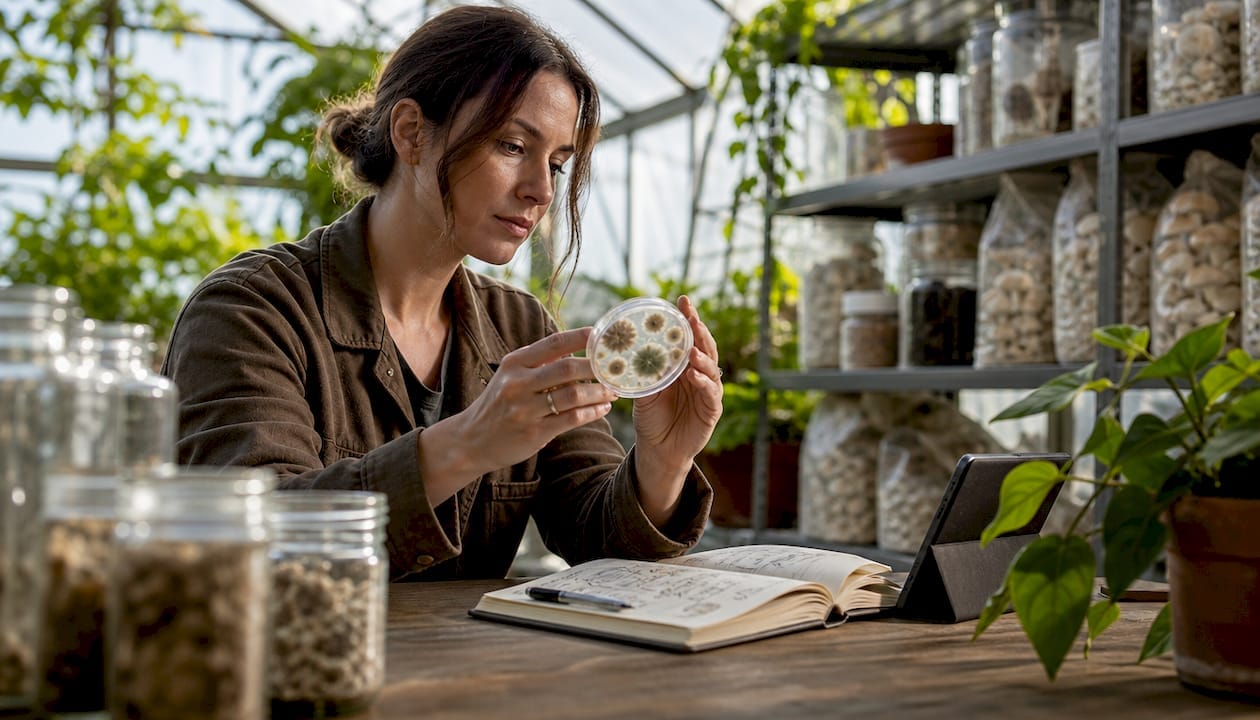
Mycology is the scientific study of fungi, organisms that are indispensable to ecological balance, human health, and economic innovation in 2026. Fungi are not plants, animals, or bacteria. They occupy their own kingdom, and that distinction matters enormously. They decompose dead matter, supply plants with nutrients, produce life-saving medicines, and now offer credible solutions to climate change and industrial pollution. Understanding why mycology matters in 2026 means recognising that fungi are not a niche scientific curiosity. They are a foundational force in every ecosystem on Earth, and research is only beginning to reveal their full potential.
Why mycology matters in 2026: the ecological case for fungi
Fungi are the invisible cornerstone of ecosystems, and their absence from environmental impact assessments has limited climate and agricultural management for decades. That oversight is now being corrected, and the numbers are striking.
Soil fungi sequester approximately 4 billion tons of CO2 annually, equivalent to around 11% of human-caused emissions. To put that in context, that is more carbon than the entire aviation industry produces each year. Fungi achieve this by pulling carbon from plant roots into the soil, where it can remain locked away for centuries.
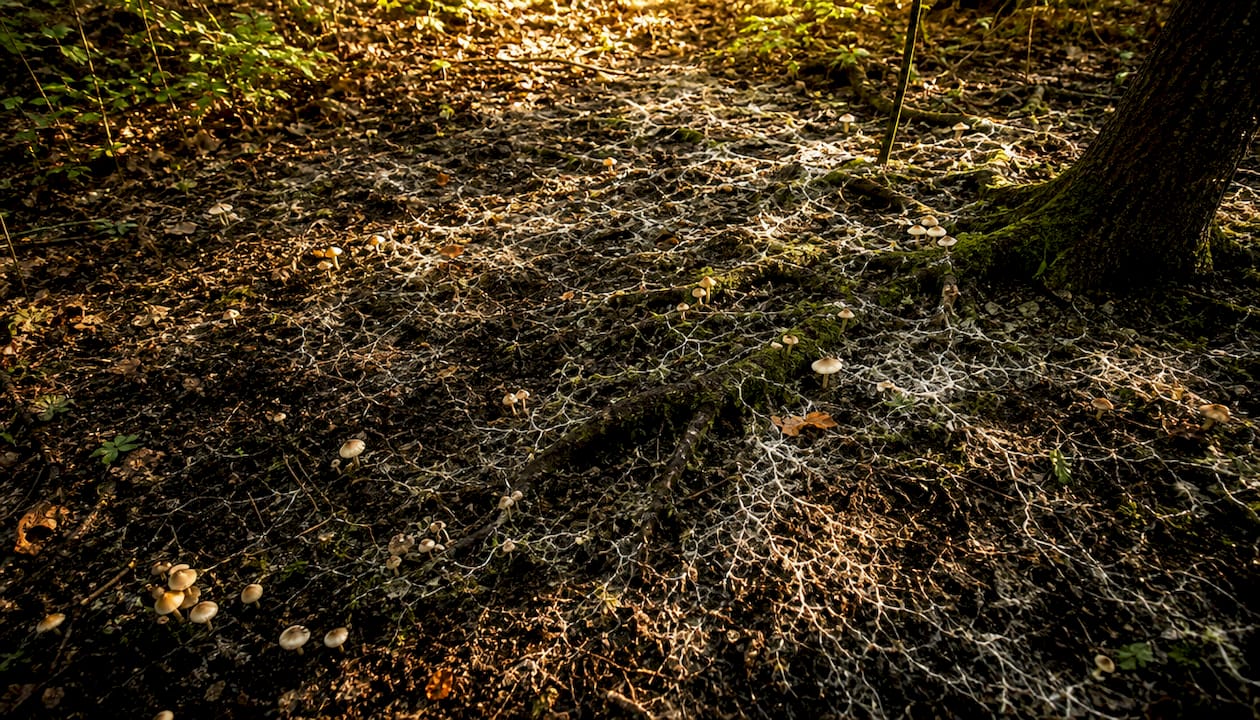
Mycorrhizal fungi, the group that forms symbiotic partnerships with plant roots, are central to this process. Arbuscular mycorrhizal fungi collectively hold 300 megatons of biomass, with hyphae stretching roughly 110 quadrillion kilometres. That network threads through virtually every soil on the planet. These same fungi supply plants with up to 80% of their phosphorus and up to 20% of their nitrogen, making them more important to plant growth than most fertilisers.
Beyond carbon storage, fungi act as ecosystem engineers. They break down lignin and cellulose in dead wood, releasing nutrients that feed bacteria, insects, and plants. Without this decomposition function, forests would drown in their own debris.
Pro Tip: If you grow mushrooms at home, the mycelium you cultivate is performing the same nutrient-cycling chemistry that sustains forests. Understanding that process makes you a better grower and a more informed steward of the environment.
| Ecological function | How fungi deliver it |
|---|---|
| Carbon sequestration | Soil fungi lock CO2 into stable organic compounds underground |
| Nutrient cycling | Decomposer fungi release phosphorus and nitrogen from dead matter |
| Plant nutrition | Mycorrhizal fungi transfer minerals directly to plant roots |
| Soil structure | Fungal hyphae bind soil particles, reducing erosion |
| Biodiversity support | Fungal networks create habitat and food sources for soil organisms |
Fungi’s diversity and functions also serve as sensitive indicators of human impact. Climate change, land-use shifts, and chemical pollution all alter fungal communities before those changes become visible above ground. Monitoring fungi gives scientists an early warning system for ecosystem stress.
What does fungal diversity mean for science and medicine?
Scientists estimate approximately 2.5 million fungal species exist worldwide, yet only a fraction have been formally described. South Africa alone is thought to host around 200,000 species. That gap between what exists and what is known represents one of the largest unexplored frontiers in biology.
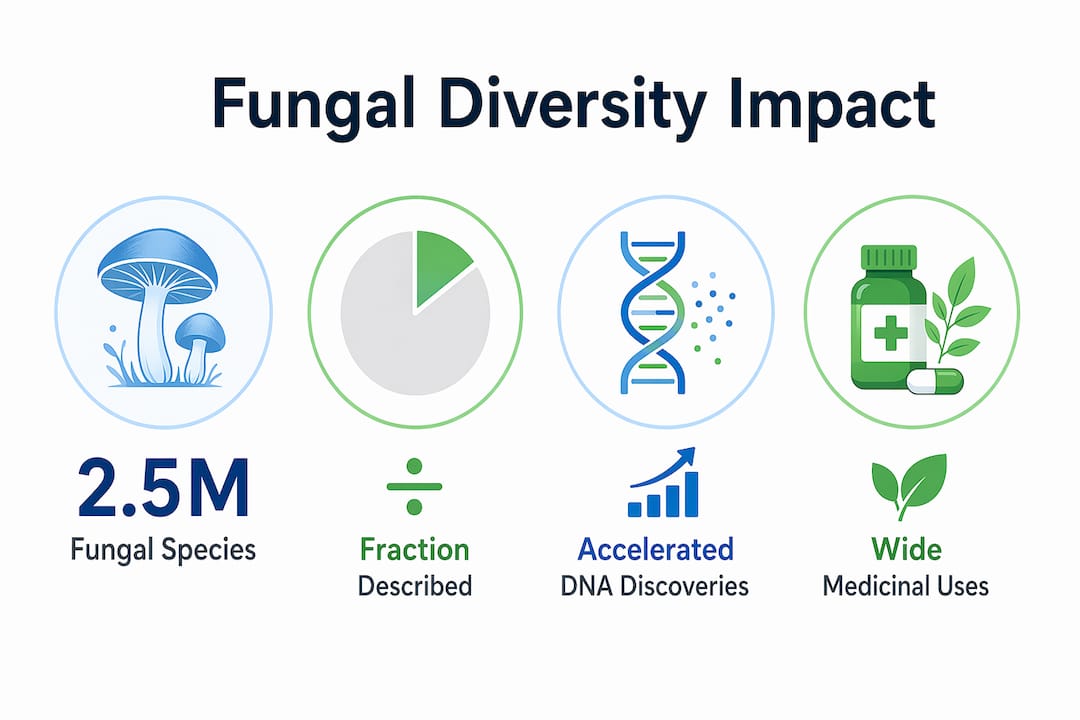
Technological advances in DNA sequencing and environmental sampling are accelerating the pace of discovery. Researchers can now identify fungal species from a soil sample without ever culturing them in a laboratory. This has transformed mycology from a slow, specimen-based discipline into a data-rich science capable of mapping entire fungal communities in days.
The practical benefits of that diversity are already visible in medicine and agriculture. Penicillin, cyclosporin (used to prevent organ rejection), and lovastatin (a cholesterol-lowering drug) all derive from fungi. Biocontrol agents based on entomopathogenic fungi, species that infect and kill insects, offer alternatives to synthetic pesticides. Researchers are also investigating fungal compounds for antiviral, anticancer, and neuroprotective properties.
Technological advances are positioning mycology as a critical frontier for sustainable food sources and eco-friendly materials. The research frontiers currently attracting the most attention include:
- Myco-proteins as high-protein, low-carbon food alternatives to meat
- Fungal packaging materials grown from mycelium as replacements for polystyrene
- Biocontrol agents derived from fungi to replace chemical pesticides in crops
- Fungal enzymes for breaking down plastics and industrial pollutants
- Medicinal compounds from understudied species, particularly in tropical and subtropical regions
Each of these areas connects directly to the role of mycology in food production and sustainable agriculture, fields that are growing rapidly as pressure on conventional systems intensifies.
How do fungi affect human health and indoor environments?
Fungi shape human health in ways that extend far beyond the pharmacy. The One Health Mycology framework links agricultural fungicide overuse, increased fungal resistance, and shared environmental and clinical risks. When farmers apply azole fungicides to crops, resistant strains of Aspergillus fumigatus can develop in the soil and later cause treatment-resistant infections in hospital patients. That connection between field and clinic is precisely why cross-disciplinary policy is now considered necessary to manage fungal resistance globally.
Indoor environments present a separate but equally significant challenge. A study of 118 UK households found over 2,000 fungal genera present in indoor air, far more than previously recognised. That finding reshapes how we think about indoor air quality. Most people associate fungal risk with visible mould on walls, but the evidence shows that fungal bioaerosols can be abundant even in homes with no visible dampness or mould growth. Traditional housing inspections routinely miss these hidden risks.
The health implications are real. Airborne fungal spores are linked to asthma exacerbations, allergic rhinitis, and hypersensitivity pneumonitis. For immunocompromised individuals, certain airborne species pose serious infection risks. Understanding the mushroom health and wellness dimension of fungi means recognising both their therapeutic potential and their capacity to cause harm when conditions are wrong.
Pro Tip: You do not need visible mould to have a fungal air quality problem. If you or someone in your household has persistent respiratory symptoms, consider professional air quality testing that specifically screens for fungal bioaerosols, not just bacteria or particulates.
Key public health considerations arising from current mycology research include:
- Routine indoor air quality assessments should include fungal screening, not just bacterial or chemical analysis
- Agricultural fungicide policy needs to account for resistance risks that extend into clinical settings
- Immunocompromised patients benefit from environmental fungal monitoring in care settings
- Home cultivators should practise good contamination hygiene to avoid inadvertently increasing airborne spore loads
What are the economic and environmental applications of fungi?
Fungi are moving from the laboratory into industry at a pace that reflects genuine commercial demand. Myco-proteins and bio-based materials are the most visible examples, but the economic case for fungi runs deeper than food and packaging.
Mycoremediation, the use of fungi to clean contaminated environments, outperforms bacterial methods in deep-soil restoration. Fungal hyphae physically penetrate soil matrices that bacteria cannot reach, making them uniquely effective at breaking down crude oil, heavy metals, and persistent organic pollutants. This is not a theoretical advantage. Research published in Frontiers in Microbiology confirms that fungal morphology gives mycoremediation a structural edge in complex contamination scenarios.
In agriculture, fungi are replacing chemical inputs across several crop systems. Mycorrhizal inoculants reduce the need for phosphorus fertilisers. Fungal biocontrol agents suppress soil-borne pathogens without the residue problems associated with synthetic fungicides. These applications connect directly to how mycology impacts agriculture and plant health at a practical level.
| Application | Fungal method | Traditional method |
|---|---|---|
| Soil decontamination | Mycoremediation via hyphal penetration | Bacterial bioremediation, limited to surface layers |
| Crop nutrition | Mycorrhizal inoculants supplying phosphorus | Synthetic phosphorus fertilisers |
| Pest control | Entomopathogenic fungal agents | Broad-spectrum chemical pesticides |
| Food protein | Myco-protein from fermented fungi | Livestock farming with high land and water use |
| Packaging materials | Mycelium-based composites | Polystyrene and petroleum-based plastics |
The challenge ahead is scaling these applications without losing the biological specificity that makes them effective. Myco-proteins, for example, require precise fermentation conditions to maintain nutritional quality. Mycoremediation works best when the fungal species is matched carefully to the contaminant and soil type. These are solvable problems, and the economic incentives to solve them are growing.
Sporebuddies: your starting point for practical mycology
Mycology is not only a subject for researchers and ecologists. Hands-on cultivation is one of the most direct ways to understand how fungi grow, behave, and interact with their environment. Sporebuddies supplies UK growers and researchers with everything needed to get started, from quality mushroom spores and spore prints to agar plates, sterilised substrates, and microscopy equipment. Whether you are cultivating lion’s mane for personal use, studying spore morphology under a microscope, or setting up a more structured growing environment, Sporebuddies stocks the mycology equipment and supplies to support your work. The Sporebuddies blog also provides practical guides on cultivation technique, contamination prevention, and strain selection, making it a useful resource alongside the product range.
FAQ
What is mycology and why does it matter now?
Mycology is the scientific study of fungi, a kingdom of organisms that drive carbon storage, plant nutrition, drug discovery, and sustainable materials development. Fungi’s roles in climate regulation and medicine make mycology one of the most consequential scientific fields in 2026.
How much CO2 do soil fungi store each year?
Soil fungi sequester approximately 4 billion tons of CO2 annually, equivalent to around 11% of human-caused emissions. That figure makes fungal carbon storage a significant factor in any serious climate strategy.
Are indoor fungi a health risk even without visible mould?
Yes. Research on 118 UK households identified over 2,000 fungal genera in indoor air, and fungal bioaerosols can reach clinically significant levels even without visible dampness or mould. Persistent respiratory symptoms warrant professional fungal air quality screening.
What is One Health Mycology?
One Health Mycology is a cross-disciplinary framework that links agricultural fungicide use, environmental fungal resistance, and clinical infection risk. It recognises that resistant fungal strains developed in farm soils can later cause treatment-resistant infections in hospital patients.
How does mycoremediation differ from standard bioremediation?
Mycoremediation uses fungal hyphae to physically penetrate and colonise deep contaminated soils, reaching zones that bacteria cannot access. This structural advantage makes it particularly effective for complex pollutants such as crude oil and heavy metals.
Key takeaways
Mycology matters in 2026 because fungi drive carbon storage, plant nutrition, drug discovery, and sustainable industrial applications that no other organism can replicate at the same scale.
| Point | Details |
|---|---|
| Carbon sequestration | Soil fungi store 4 billion tons of CO2 annually, making them a critical climate tool. |
| Plant nutrition | Mycorrhizal fungi supply up to 80% of plant phosphorus, reducing the need for synthetic fertilisers. |
| Indoor health risk | Over 2,000 fungal genera exist in UK household air, posing hidden respiratory risks. |
| Fungal resistance policy | Agricultural fungicide overuse drives clinical resistance, requiring joined-up environmental and health policy. |
| Economic applications | Mycoremediation, myco-proteins, and mycelium materials offer credible alternatives to polluting industrial methods. |