
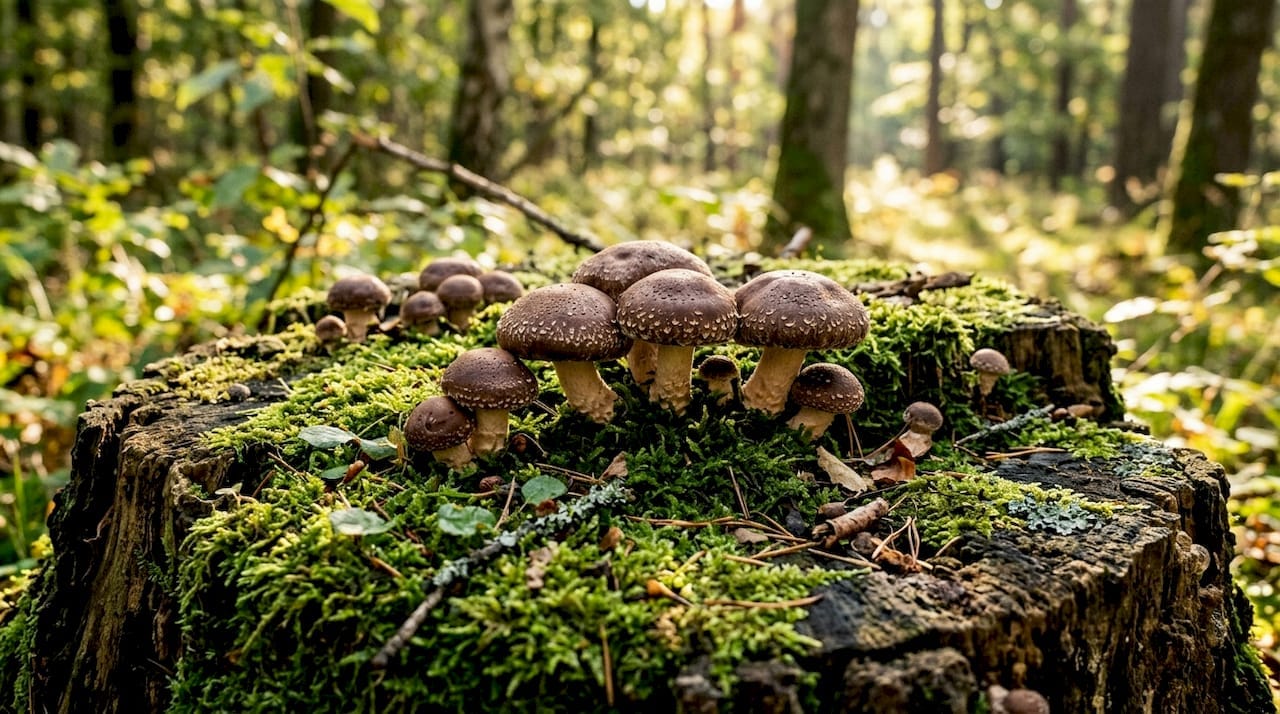
Shiitake mushrooms are defined as an edible fungus native to East Asia, scientifically known as Lentinula edodes, prized for their deep umami flavour and a growing body of evidence supporting their health benefits. They are the most widely cultivated mushroom variety in the world, accounting for 25% of annual global mushroom production. That figure alone tells you how significant shiitake are, not just in Asian kitchens, but in home cooking and wellness circles worldwide. Their distinctive savoury taste, combined with bioactive compounds like beta-glucans and lentinan, makes them genuinely useful both on the plate and for your health. Whether you want to cook with them, understand what are shiitake mushrooms from a nutritional standpoint, or grow your own at home, this guide covers everything you need.
What are the nutritional and health benefits of shiitake mushrooms?
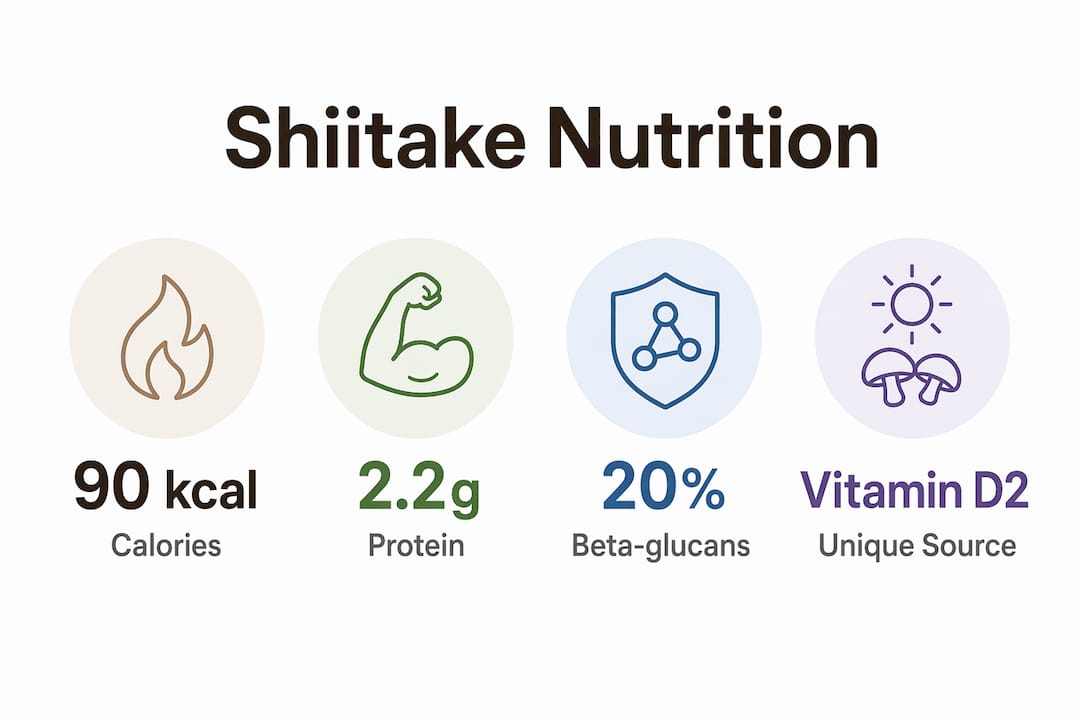
Shiitake mushrooms deliver a strong nutritional profile for a relatively low calorie count. A 100-gram serving provides approximately 89.7 calories, 2.41 grams of protein, 4.2 grams of fibre, and 243 mg of potassium. That combination makes them a genuinely useful ingredient for anyone watching their diet without sacrificing flavour or satiety.
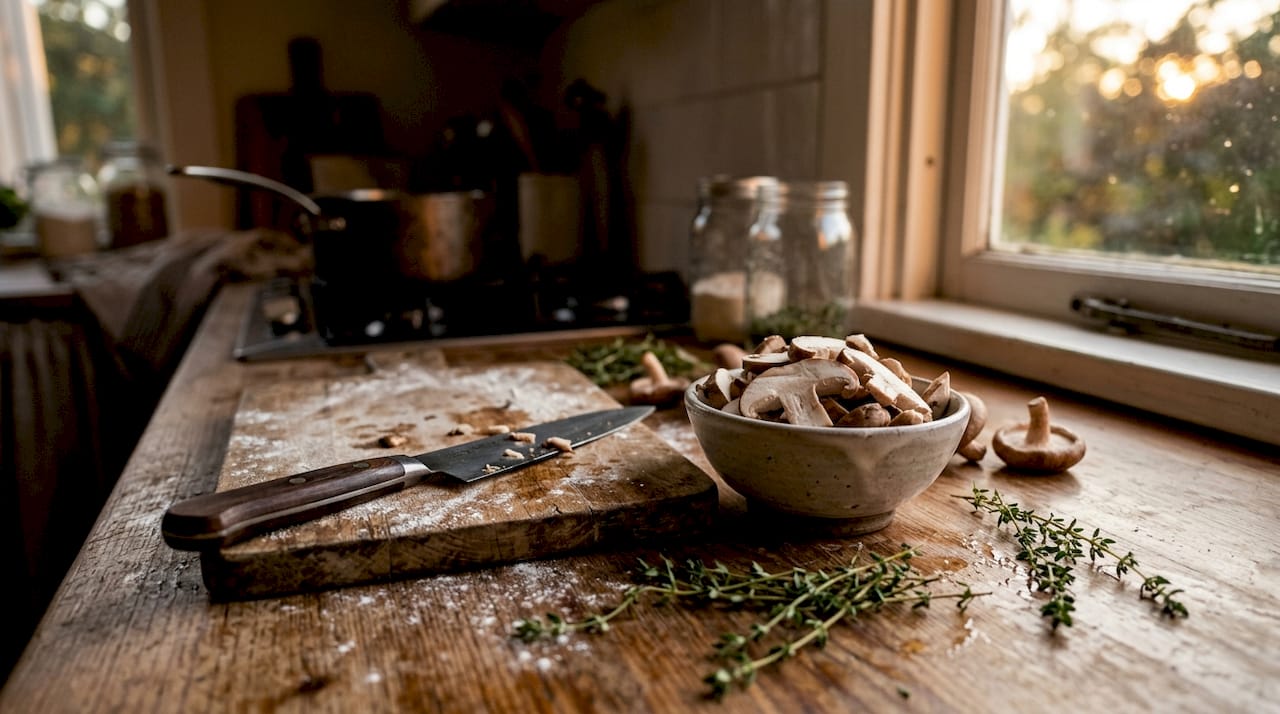
The fibre in shiitake is not ordinary dietary fibre. Beta-glucans compose up to 20% of the cap’s dry weight, and these compounds actively support immune function and gut health. Beta-glucans work by stimulating white blood cell activity, which helps your body respond more effectively to infection and inflammation.
Shiitake also contain lentinan and eritadenine, two compounds under active scientific study. Lentinan is associated with immune regulation, while eritadenine has been linked to cholesterol reduction and blood pressure management. These are not marketing claims. They are the subject of ongoing clinical research, and while the evidence is promising, shiitake should be seen as a dietary complement rather than a medical treatment.
One more nutritional distinction sets shiitake apart: they are a rare food source of vitamin D2. When exposed to sunlight or UV light during drying, their vitamin D2 content increases significantly. This makes dried shiitake particularly valuable for people seeking plant-based sources of this nutrient.
Shiitake nutritional and health summary
| Nutrient or compound | Value or benefit |
|---|---|
| Calories per 100g | Approximately 89.7 kcal |
| Protein per 100g | 2.41 grams |
| Fibre per 100g | 4.2 grams |
| Potassium per 100g | 243 mg |
| Beta-glucans | Up to 20% of cap dry weight; supports immune and gut health |
| Lentinan | Linked to immune regulation (under clinical study) |
| Eritadenine | Associated with cholesterol and blood pressure management |
| Vitamin D2 | Rare plant-based source; increases with UV exposure |
Pro Tip: Place dried shiitake gill-side up in direct sunlight for two to three hours before cooking. This significantly boosts their vitamin D2 content with no extra effort.
What do shiitake mushrooms taste like, and how do you cook them?
Shiitake mushrooms have a distinct umami flavour that sets them apart from milder varieties like button or chestnut mushrooms. Umami is the fifth basic taste, often described as savoury, meaty, and deeply satisfying. In shiitake, this quality comes from glutamates and sterols concentrated in the cap, making them a natural flavour booster in broths, stir-fries, and sauces.
The texture of the cap is firm and slightly chewy when cooked, which gives it a satisfying bite that holds up well in high-heat cooking. This is why shiitake work so well as a meat substitute in vegetarian dishes. They do not turn mushy under heat the way softer mushrooms can.
The stems are a different matter entirely. Shiitake stems are tougher than the caps and do not soften well in quick cooking methods. Most cooks remove them before sautéing or roasting, but that does not mean they go to waste. The stems are excellent for slow-cooked stocks and broths, where they release their earthy umami properties over time.
Pro Tip: Never discard shiitake stems. Collect them in a freezer bag and add a handful to your next vegetable or chicken stock. The flavour payoff is significant.
Versatile ways to use shiitake in the kitchen
- Stir-fries: Slice caps thinly and cook over high heat with garlic, ginger, and soy sauce for a quick weeknight dish.
- Broths and ramen: Add whole dried shiitake to your broth base and simmer for at least 20 minutes to extract maximum flavour.
- Roasted as a side dish: Toss caps with olive oil, salt, and thyme, then roast at 200°C for 15–20 minutes until the edges crisp.
- Pasta and risotto: Sauté sliced caps with shallots and deglaze with white wine before folding into pasta or risotto.
- Meat substitute: Use whole caps as a burger patty alternative or slice thickly for a vegetarian “bacon” when pan-fried until golden.
- Dumplings and gyoza: Finely chop caps and mix with tofu, cabbage, and sesame oil for a rich, plant-based filling.
- Soups: Combine with miso paste, tofu, and spring onions for a classic Japanese-style soup that takes under 15 minutes.
Compared to button mushrooms, shiitake deliver considerably more depth of flavour and a firmer texture. They are closer in character to portobello mushrooms but with a more pronounced savoury quality and a slightly smoky note when dried and rehydrated.
What are the traditional and modern methods for cultivating shiitake?
Shiitake cultivation, known formally as Lentinula edodes production, has a history stretching back centuries in China and Japan. Understanding how they grow helps you appreciate both the patience required and the science behind modern methods.
Traditional log cultivation
Traditional shiitake cultivation uses hardwood logs, typically oak, hornbeam, or beech, inoculated with shiitake spawn. The logs are left to colonise for 6–12 months before the first fruiting occurs. Once established, a single log can produce mushrooms for 3–6 years. This method produces mushrooms with exceptional flavour and density, but it demands significant time and outdoor space.
Modern sawdust block cultivation
Modern shiitake farming uses sawdust blocks or pellet substrates that dramatically shorten the growing cycle. Sawdust blocks colonise in 6–8 weeks rather than months, and fruiting can begin shortly after. This method suits home growers and small-scale producers who want consistent results without waiting a year for their first harvest. The trade-off is that log-grown shiitake often have a more complex flavour profile, though sawdust-grown mushrooms are nutritionally comparable.
The shift towards synthetic substrates reflects a broader trend in sustainable cultivation, where agricultural byproducts like wheat bran, rice bran, and hardwood sawdust are repurposed as growing media. This circular approach reduces waste and lowers the environmental cost of production.
Log vs sawdust block: a practical comparison
| Factor | Log cultivation | Sawdust block cultivation |
|---|---|---|
| Colonisation time | 6–12 months | 6–8 weeks |
| Production lifespan | 3–6 years | 1–3 harvests per block |
| Space required | Outdoor, shaded area | Indoor or outdoor, small footprint |
| Flavour profile | Complex, dense | Good, slightly milder |
| Effort level | Low maintenance after setup | Moderate: humidity and temperature management |
| Best for | Patient growers with outdoor space | Beginners and indoor growers |
Pro Tip: If you choose log cultivation, soak freshly inoculated logs in cold water for 12–24 hours before placing them in a shaded, humid spot. This “shocking” technique encourages the mycelium to establish faster.
How can home cooks grow shiitake mushrooms successfully?
Growing shiitake at home is genuinely achievable for beginners, provided you set realistic expectations from the start. The two main routes are sawdust grow blocks and outdoor log inoculation. Sawdust blocks are the better starting point for most home cooks because they are faster, more forgiving, and require less space.
Step-by-step guide for beginners
- Choose your substrate. Select a pre-inoculated sawdust block or inoculate your own using shiitake grain spawn mixed into hardwood sawdust. Sourcing quality mushroom substrate makes a measurable difference to your yield.
- Allow colonisation. Place the block in a warm location (18–24°C) away from direct sunlight. Sawdust blocks take 6–8 weeks to fully colonise. Do not rush this stage.
- Watch for the browning phase. Shiitake mycelium undergoes a browning phase before it is ready to fruit. The surface develops a leathery, dark skin. Many beginners mistake this for contamination and discard the block prematurely. It is not contamination. It is a sign the block is ready.
- Initiate fruiting. Soak the colonised block in cold water for 12–24 hours, then move it to a humid environment (85–95% relative humidity) with indirect light and good air circulation.
- Harvest at the right time. Pick mushrooms when the cap edges are still slightly curled inward. Once the cap fully flattens, the mushroom begins to drop spores and the flavour diminishes.
- Rest and repeat. After harvesting, allow the block to rest for two to three weeks before initiating another fruiting cycle by soaking again.
The most common mistake home growers make is abandoning the block during the browning phase. Patience is the single most important skill in shiitake cultivation. For those interested in scaling up, mushroom growing equipment designed for home use makes managing humidity and temperature considerably easier.
Pro Tip: Keep a spray bottle of clean water nearby and mist the block surface twice daily during fruiting. Consistent surface moisture prevents the developing pins from drying out before they mature.
Key takeaways
Shiitake mushrooms are a nutritionally rich, flavour-forward edible fungus that rewards both the cook and the grower with consistent, high-quality results when handled correctly.
| Point | Details |
|---|---|
| Global significance | Shiitake account for 25% of annual global mushroom production, making them the world’s most cultivated variety. |
| Nutritional value | A 100g serving provides 89.7 kcal, 4.2g fibre, and 243mg potassium, plus immune-supporting beta-glucans. |
| Culinary versatility | Caps suit high-heat cooking; stems are best reserved for stocks and broths to extract their full umami depth. |
| Cultivation choice | Sawdust blocks colonise in 6–8 weeks and suit beginners; logs take 6–12 months but produce for up to 6 years. |
| Browning phase | Dark, leathery mycelium signals readiness to fruit. Never discard a block at this stage. |
Sporebuddies: your starting point for shiitake cultivation
Growing your own shiitake is one of the most satisfying things you can do as a home cook. You get full control over freshness, flavour, and growing conditions, and the process itself is genuinely fascinating. Sporebuddies stocks a range of mushroom growing equipment suited to shiitake cultivation at home, from substrates and spawn to the tools that make managing humidity and temperature straightforward. For those interested in the broader health side of mushrooms, the mushroom health and wellness section covers shiitake-based supplements and tinctures worth exploring. Whether you are starting your first block or setting up a more serious growing space, Sporebuddies has the supplies to get you there.
FAQ
What is a shiitake mushroom exactly?
A shiitake mushroom is an edible fungus, Lentinula edodes, native to East Asia. It is the most widely cultivated mushroom in the world, known for its rich umami flavour and health-promoting compounds including beta-glucans and lentinan.
What do shiitake mushrooms taste like?
Shiitake mushrooms have a deep, savoury umami flavour with earthy and slightly smoky notes. The caps are firm and chewy when cooked, making them one of the most satisfying mushrooms to eat and a popular meat substitute in vegetarian cooking.
What are the main health benefits of shiitake mushrooms?
Shiitake mushrooms provide fibre, potassium, protein, and vitamin D2, along with beta-glucans that support immune and gut health. Compounds like lentinan and eritadenine are under study for their roles in immune regulation and cholesterol management.
How long does it take to grow shiitake mushrooms at home?
Sawdust blocks take 6–8 weeks to colonise before fruiting, while hardwood logs require 6–12 months. Sawdust blocks are the faster, more beginner-friendly option for home cooks wanting a quicker first harvest.
Why has my shiitake block turned dark brown?
Dark, leathery browning on a shiitake block is a normal and necessary developmental stage called the browning phase. It signals that the mycelium is mature and ready to fruit. Do not discard the block at this point.