
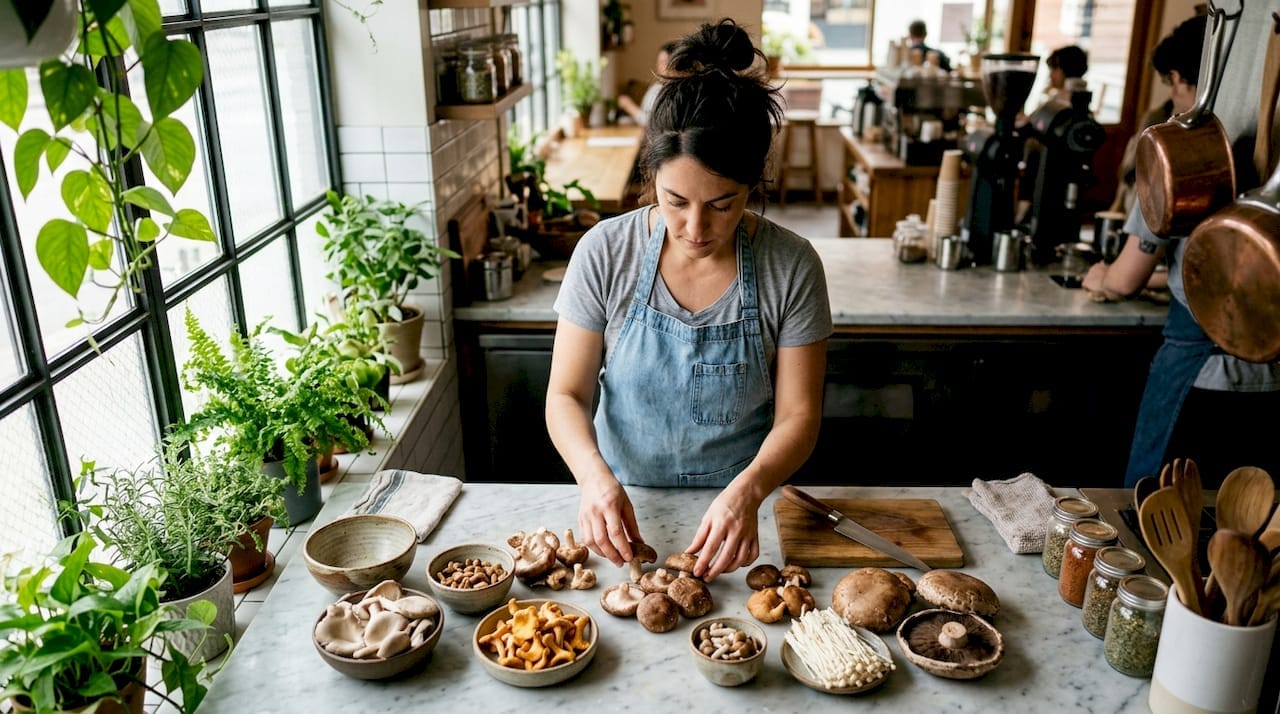
Edible mushroom textures fall into four distinct categories: tender-velvety, chewy-meaty, dense-steaklike, and crisp-delicate. Understanding these types of edible mushroom textures changes how you shop, cook, and build flavour in a dish. The category a mushroom belongs to determines its ideal cooking method, how long it needs on the heat, and which recipes it will genuinely improve. Mushroom cell walls are made of chitin, a fibrous compound that behaves very differently from the cellulose found in vegetables. That structural difference is why mushrooms hold their shape under heat and why texture is as important as flavour when choosing between oyster, shiitake, portobello, or enoki.
1. Tender-velvety textures: soft mushrooms and how to cook them
Oyster mushrooms are the clearest example of the tender-velvety texture profile. Their caps are thin, silky, and slightly wavy, with edges that soften quickly under heat. They carry a mild, faintly anise-like aroma that pairs well with light sauces and delicate proteins.
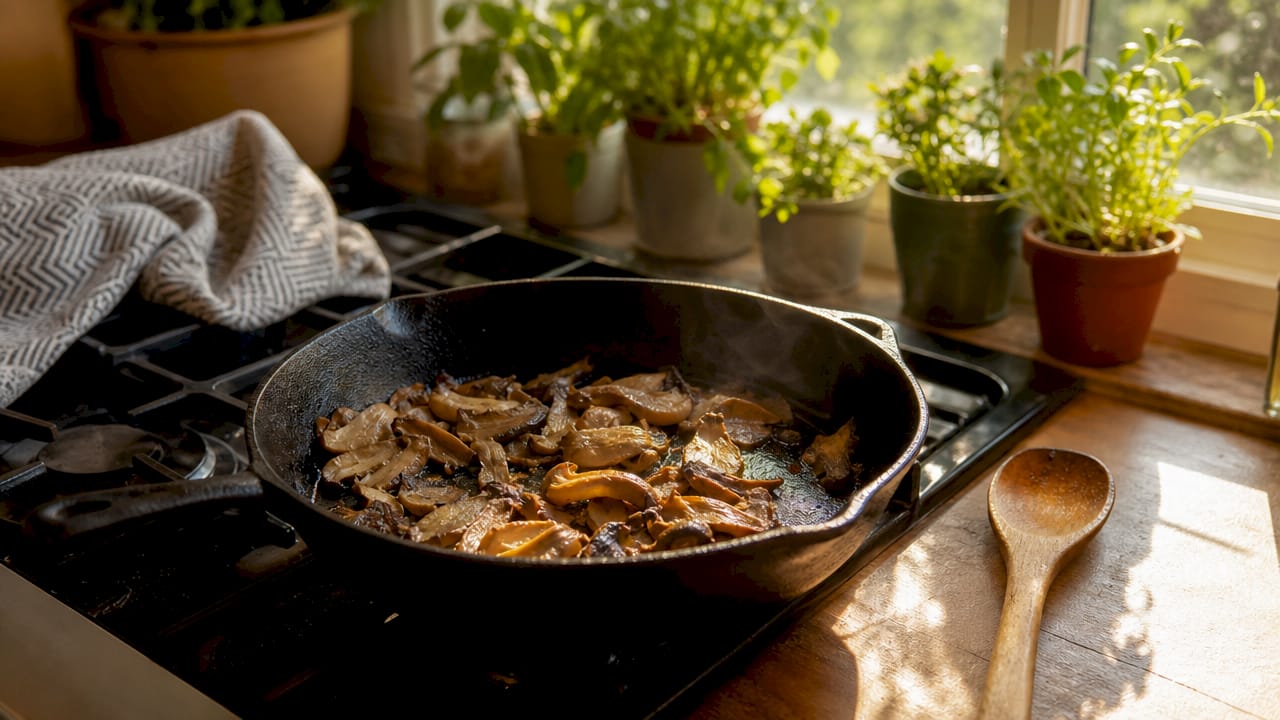
The key to preserving this texture is gentle heat and a short cooking window. Cook oyster mushrooms for 5–7 minutes over medium heat to achieve their characteristic velvety finish. Any longer and the caps collapse into a limp, watery mass that loses both texture and flavour.
Tender-velvety mushrooms work best in:
- Stir-fries with light soy or sesame dressing
- Cream-based pasta sauces where they absorb flavour without breaking down
- Steamed dishes or broths where brief exposure to heat is natural
- Garnishes on ramen or noodle soups, added at the very end
Pro Tip: Add oyster mushrooms to a hot pan last. If you are building a sauce with onions and garlic, let those cook fully before the mushrooms go in. This keeps the cooking time short and the texture intact.
2. Chewy-meaty textures: varieties and best preparation methods
Shiitake mushrooms define the chewy-meaty category. Their caps are thick and firm, with a fibrous resistance that holds up through long cooking times. Shiitake’s chewy texture makes them ideal for stir-fries, soups, and pasta dishes where texture longevity matters.
Cremini mushrooms sit in the same category. They are younger versions of the portobello, with a denser cell structure than white button mushrooms and a more pronounced earthy flavour. Both shiitake and cremini benefit from high heat and enough space in the pan to brown properly.
The science behind this mouthfeel is straightforward. Mushrooms’ high glutamate levels combine with their chitin structure to create a meaty sensory perception. That physical and flavour synergy is why these varieties are the most popular meat substitutes in plant-based cooking.
The best preparation methods for chewy-meaty mushrooms:
- Sauté in a hot, dry pan before adding oil. This draws out surface moisture and starts the browning process.
- Roast at 200°C for 18–22 minutes. High oven heat concentrates flavour and firms the texture further.
- Add to broths and stews during the last 15 minutes. Earlier addition softens them too much.
- Slice shiitake caps thickly. Thin slices lose their chew quickly.
- Remove shiitake stems before cooking. The stems are too fibrous to eat comfortably but are excellent for stock.
Pro Tip: Clean chewy-meaty mushrooms with a dry brush or a barely damp cloth. Soaking them in water saturates the cells and produces a rubbery, steamed result rather than a proper sear.
3. Dense-steaklike textures: identifying and cooking thick, firm mushrooms
Portobello and king oyster mushrooms represent the dense-steaklike end of the mushroom texture spectrum. Their flesh is thick, substantial, and holds together under aggressive heat in a way that genuinely resembles cooked muscle fibre. Portobello mushrooms have a dense, steak-like texture and moderate umami, making them excellent grilled or roasted as meat substitutes.
King oyster mushrooms add another dimension. Their thick, cylindrical stems are the main attraction, with a firm, almost rubbery density that softens beautifully when pan-seared or grilled. The caps are smaller and less significant than those of standard oyster mushrooms.
Cooking tips for dense-steaklike varieties:
- Use high heat. A cast-iron pan or a hot grill produces the surface caramelisation that makes these mushrooms satisfying.
- Do not move them too early. Let a portobello cap sit undisturbed for 3–4 minutes per side before flipping.
- Slice king oyster stems into rounds. This cross-section shape sears evenly and looks striking on the plate.
- Trim the very base of king oyster stems. The bottom centimetre can be tough and woody.
- Season before cooking. Salt draws out a small amount of surface moisture, which then evaporates quickly on a hot surface and aids browning.
Achieving a proper sear on dense mushrooms depends entirely on moisture management. A crowded pan traps steam and prevents the surface evaporation needed for browning. Professional chefs treat pan space as a non-negotiable variable, not an afterthought.
The portobello cap is large enough to serve as a direct burger substitute or a base for grilled toppings. King oyster rounds mimic scallops closely enough that they appear on restaurant menus as a vegan alternative. These are not compromises. They are genuinely satisfying results from a mushroom with the right structural density.
4. Crisp-delicate textures: lighter mushrooms and their culinary uses
Enoki mushrooms define the crisp-delicate category. Their long, slender stems cluster together like a bundle of pale noodles, and their texture is firm and fresh rather than soft or chewy. Enoki mushrooms have a crisp, noodle-like texture best appreciated raw or very lightly cooked.
This texture provides contrast in dishes that would otherwise feel heavy or uniform. A bowl of miso soup, a plate of cold noodles, or a fresh salad all benefit from the clean, firm bite that enoki brings.
Key culinary uses for crisp-delicate mushrooms:
- Raw in salads. Separate the cluster into smaller bundles and dress lightly with rice vinegar and sesame oil.
- Added to hot soups at the last moment. Thirty seconds in hot broth is enough. Longer cooking destroys the crunch.
- As a garnish on ramen or pho. The residual heat of the bowl softens them just enough without making them limp.
- In Korean hotpot dishes. Enoki are a traditional inclusion, added at the table and eaten almost immediately.
Freshness matters more with enoki than with any other texture category. Their delicate structure degrades quickly once the cluster is damaged or exposed to excess moisture. Buy them with the base intact, store them in the refrigerator wrapped in paper, and use them within two days of purchase.
Maitake mushrooms offer an interesting variation within this category. They have a firm, succulent core with frilly edges that turn delicate and crisp when roasted. That dual texture makes them one of the more complex edible mushroom varieties to cook well.
5. How moisture and cooking technique shape the final texture
Mushroom texture is not fixed at the point of purchase. Cooking technique determines the final result as much as the variety itself. Home cooks who understand this produce consistently better dishes than those who treat mushrooms as a passive ingredient.
The single biggest mistake is washing mushrooms under running water or soaking them in a bowl. Mushrooms act like sponges and absorb water rapidly, which negatively affects mouthfeel. A brush or a barely damp cloth removes surface debris without saturating the cells.
Steps for controlling mushroom texture through technique:
- Dry your mushrooms thoroughly before they touch the pan. Pat them with kitchen paper if they feel damp.
- Heat the pan before adding oil. A hot surface starts evaporation immediately and prevents sticking.
- Cook in batches. A crowded pan traps steam, preventing the surface evaporation needed for a proper sear.
- Rehydrate dried mushrooms in hot liquid for 30 minutes. Dried mushrooms offer a chewy texture and concentrated umami distinct from fresh; the soaking liquid is a valuable cooking ingredient worth adding to sauces and broths.
- Adjust heat by variety. Tender-velvety types need medium heat. Dense-steaklike types need high heat. Crisp-delicate types need almost no heat at all.
Pro Tip: Save the liquid from rehydrating dried shiitake or porcini mushrooms. Strain it through a fine sieve to remove grit, then add it to risotto, gravy, or soup. The depth of flavour it adds is significant.
| Texture category | Best cooking method | Heat level | Avoid |
|---|---|---|---|
| Tender-velvety (oyster) | Sauté, stir-fry | Medium | Overcooking beyond 7 minutes |
| Chewy-meaty (shiitake, cremini) | Roast, sauté, broth | High | Soaking in water |
| Dense-steaklike (portobello, king oyster) | Grill, pan-sear | High | Overcrowding the pan |
| Crisp-delicate (enoki, maitake edges) | Raw, brief broth | None to low | Any prolonged heat |
Improper storage also degrades texture before cooking begins. Wet mushrooms stored in sealed plastic bags develop sliminess that no cooking technique can reverse. Such mushrooms should be discarded to preserve dish quality. Store them in a paper bag in the refrigerator and use them within three to five days.
Understanding mushroom cellular structure helps explain why these rules matter. Chitin walls respond to heat and moisture in predictable ways once you know what to expect.
Key takeaways
Matching mushroom texture to cooking method is the single most important decision a home cook makes when working with edible mushroom varieties.
| Point | Details |
|---|---|
| Four texture categories exist | Tender-velvety, chewy-meaty, dense-steaklike, and crisp-delicate each suit different dishes and methods. |
| Chitin drives chewiness | Mushroom cell walls made of chitin resist heat, producing the meaty mouthfeel that makes mushrooms effective meat substitutes. |
| Moisture is the main variable | Avoid soaking mushrooms; use a brush or damp cloth and cook in batches to prevent steaming. |
| Dried mushrooms add unique value | Properly rehydrated dried mushrooms offer concentrated umami; always use the soaking liquid in your dish. |
| Heat level must match the variety | Crisp-delicate types need minimal heat; dense-steaklike types require high heat and an uncrowded pan for a proper sear. |
Grow your own and control the texture from the start
The most reliable way to experience the full range of mushroom textures is to grow the varieties yourself. Home cultivation gives you control over harvest timing, which directly affects texture. Oyster mushrooms picked young are more tender; left a day longer, they develop more chew. Sporebuddies stocks a full range of mushroom growing equipment suited to UK home growers, from substrate to complete grow kits for shiitake, oyster, and lion’s mane. If you are ready to move beyond buying mushrooms at the supermarket, the mushroom grow kits range is a practical starting point that requires no prior cultivation experience.
FAQ
What are the four main types of mushroom textures?
The four main mushroom texture profiles are tender-velvety, chewy-meaty, dense-steaklike, and crisp-delicate. Oyster, shiitake, portobello, and enoki mushrooms are the clearest examples of each category respectively.
Why do mushrooms have a meaty texture when cooked?
Mushroom cell walls are made of chitin, a fibrous compound that resists heat and holds its structure after cooking. Combined with high natural glutamate levels, this produces the meaty mouthfeel and umami flavour associated with varieties like shiitake and portobello.
How do I stop mushrooms going soggy when I cook them?
Avoid washing mushrooms under water; clean them with a dry brush or barely damp cloth instead. Cook them in a hot pan without overcrowding, as a crowded pan traps steam and prevents the surface evaporation needed for a firm, browned result.
Can dried mushrooms match the texture of fresh ones?
Dried mushrooms do not replicate fresh texture exactly, but they offer a distinct chewy quality and more concentrated umami that fresh mushrooms cannot match. Rehydrate them in hot liquid for 30 minutes and use the soaking liquid as a flavour base in your dish.
Which mushrooms are best for raw eating?
Enoki mushrooms are the best choice for raw consumption, offering a crisp, noodle-like bite that holds up well in salads and cold dishes. Button and cremini mushrooms can also be eaten raw when sliced thinly, though their flavour is milder uncooked.