
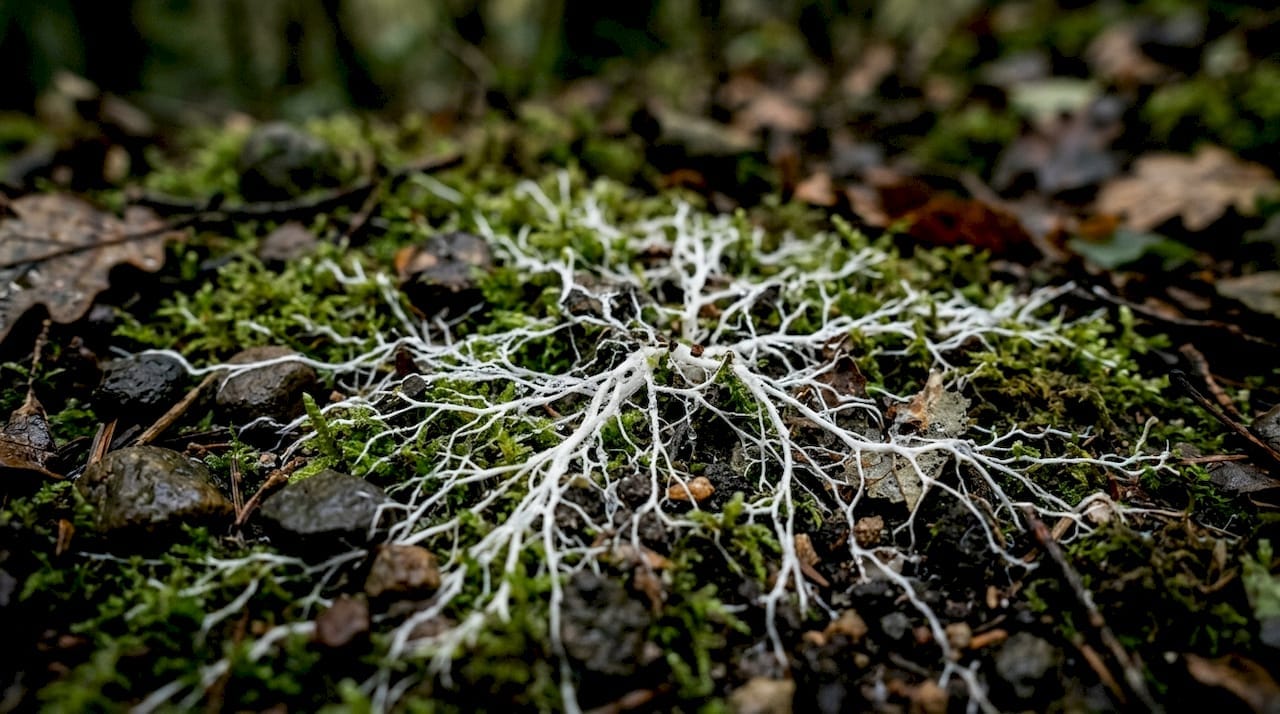
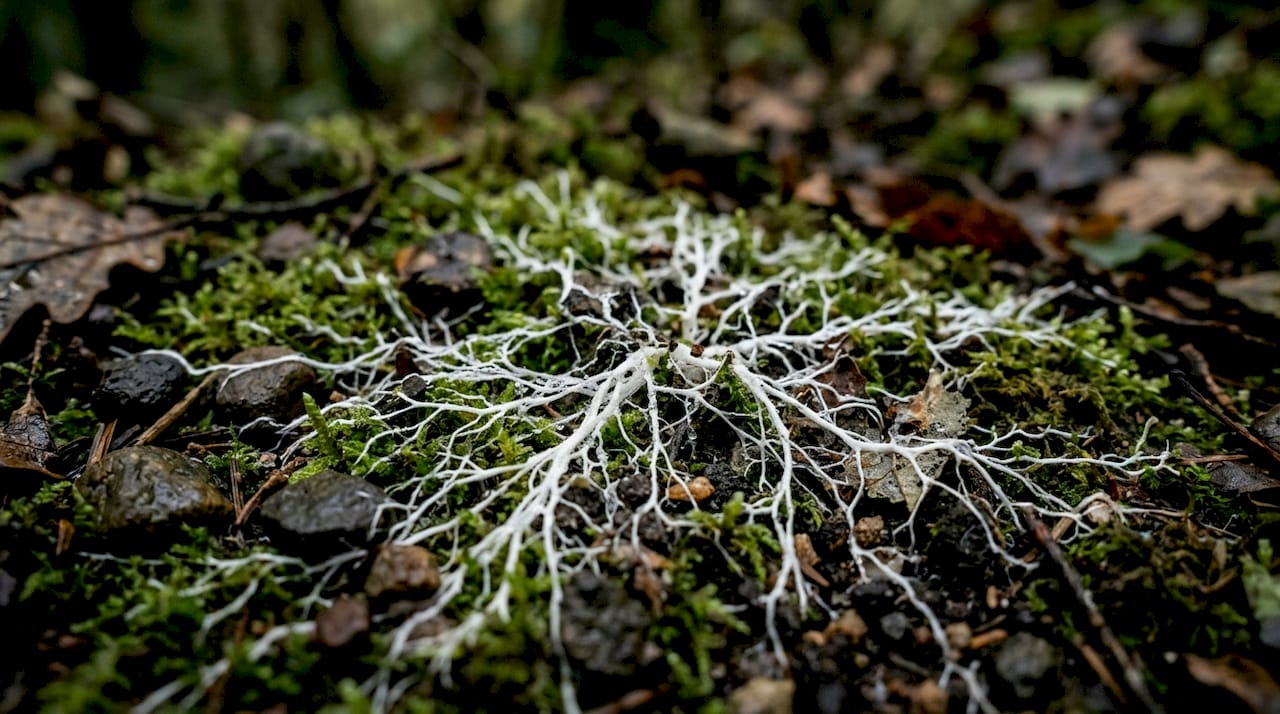
Mushroom mycelium is defined as the vegetative body of a fungus, an interconnected network of microscopic, thread-like structures called hyphae that colonise substrates, absorb nutrients, and drive all fungal growth before a single mushroom ever appears. Most people focus on the fruiting body — the cap and stem you see above ground — but the mycelium is the true organism. It is the engine behind every flush of oyster, shiitake, or lion’s mane mushrooms you will ever grow. Understanding how it works transforms the way you approach cultivation, ecology, and even materials science.
What is mushroom mycelium and how does it grow?
Mushroom mycelium is built from hyphae, tubular cells with walls made of chitin and beta-glucans. In septate fungi, individual hyphae are divided by internal walls called septa; in others, the cytoplasm flows continuously through the entire network. Either way, hyphae secrete enzymes directly into the surrounding substrate, break down organic matter externally, and then absorb the resulting nutrients. Think of it as digestion happening outside the body.
Growth follows a predictable sequence:
- Germination — a spore or piece of spawn activates and sends out the first hyphal threads.
- Colonisation — hyphae branch repeatedly, forming a dense white mat through the substrate.
- Consolidation — the network thickens and begins storing energy reserves.
- Fruiting trigger — environmental signals shift, and the mycelium redirects energy into producing fruiting bodies.
Several environmental factors govern how quickly and healthily mycelium colonises a substrate. Temperature, relative humidity, CO2 concentration, and light exposure all interact. For species like Lentinula edodes (shiitake), colonisation takes roughly 30 days in darkness, followed by a browning and maturation stage of 30 to 90 days in light before fruiting begins. That timeline underlines why patience and environmental control are not optional extras in cultivation. They are the foundation.
Pro Tip: Keep your growing space between 20°C and 24°C during colonisation. Even a few degrees above this range encourages contamination from competing moulds like Trichoderma before your mycelium has a chance to establish itself.
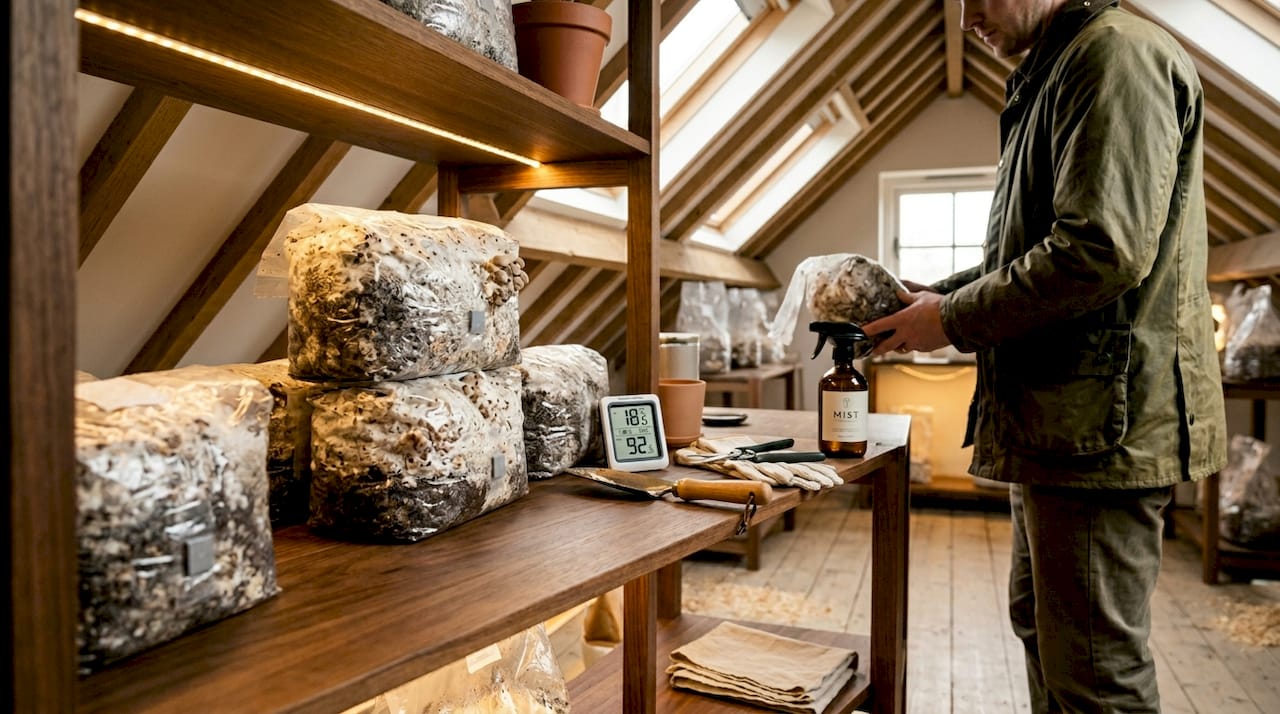
In liquid culture or industrial bioreactors, inoculum density and agitation rate directly influence whether mycelium forms loose filamentous mats or compact pellets. For home growers, this translates simply: do not shake or disturb colonising bags unnecessarily, as physical disruption can stress the network and slow growth.
What roles does mycelium play in natural ecosystems?
Mycelium is one of the most ecologically significant structures on Earth, yet it operates almost entirely out of sight. Its functions extend far beyond decomposing a fallen log in your garden.
The key ecological roles of fungal mycelium include:
- Nutrient cycling — hyphae break down lignin and cellulose in dead plant material, releasing carbon, nitrogen, and phosphorus back into the soil.
- Mycorrhizal partnerships — mycelium enhances plant phosphorus uptake and water acquisition, and helps plants resist pathogens. An estimated 90% of land plant species form these associations.
- Carbon sequestration — mycorrhizal mycelium transfers carbon from plant roots into stable soil compounds, locking it away from the atmosphere.
- Greenhouse gas regulation — mycorrhizal fungi reduce CO2 and N2O emissions from soils, contributing to climate regulation at a landscape scale.
The table below summarises how different mycelium types interact with their environment:
| Mycelium type | Primary ecological function | Benefit to soil health |
|---|---|---|
| Saprotrophic | Decomposes dead organic matter | Releases nutrients, improves soil structure |
| Mycorrhizal | Partners with plant roots | Increases plant nutrient and water uptake |
| Endophytic | Lives inside plant tissue | Enhances plant stress tolerance |
| Parasitic | Colonises living hosts | Regulates population dynamics in ecosystems |
The impact on carbon storage varies with soil type, ecosystem context, and land management practices. This means mycelium and soil health cannot be treated as a single fixed equation. A mycorrhizal network in a managed UK woodland behaves differently from one in an undisturbed peat bog. For gardeners and growers, the practical takeaway is clear: preserving fungal networks in your soil by reducing tillage and avoiding broad-spectrum fungicides protects a system that actively feeds your plants.
How is mycelium used in mushroom cultivation?
In cultivation, mycelium is not a background process. It is the entire first phase of production, and how well you manage it determines whether you get a heavy flush or a contaminated block.
The cultivation process follows these stages:
- Substrate preparation — select and sterilise a growing medium such as hardwood sawdust, straw, or a grain-based spawn. The substrate composition directly affects colonisation speed and eventual yield.
- Inoculation — introduce mushroom spawn (mycelium already growing on grain or sawdust) into the prepared substrate.
- Spawn run — keep the inoculated substrate in darkness at the correct temperature and allow mycelium to colonise fully. This stage typically takes 10 to 30 days depending on species and temperature.
- Fruiting initiation — once colonisation is complete, shift environmental conditions to trigger fruiting. For species like Grifola frondosa (maitake), CO2 must drop below 2000 ppm to initiate fruiting, then fall below 1000 ppm after primordia form, with humidity held above 90%.
- Harvest and rest — collect fruiting bodies at the right stage, then allow the mycelium to recover before the next flush.
The distinction between mycelium and fruiting bodies matters practically. Mycelium is the vegetative phase; fruiting bodies are the reproductive output. Many beginners treat the appearance of pins as the goal, but experienced growers know that healthy mycelial colonisation is the real predictor of yield and contamination resistance.
Pro Tip: A fully colonised block should feel firm and smell clean, slightly mushroomy. Any sour, sweet, or chemical odour at this stage signals bacterial contamination. Remove the block from your growing space immediately to protect other cultures.
Shiitake cultivation has advanced significantly through pure culture spawn technology, enabling growth on synthetic sawdust logs and allowing growers to select specific cultivars for yield, flavour, and seasonal timing. This evolution in technique is why modern shiitake cultivation can be reliably reproduced at home with the right substrate and environmental controls.
What are the industrial applications of mycelium?
Beyond cultivation and ecology, mycelium is emerging as a material in its own right. Researchers and manufacturers are using it to replace plastics, leather, and synthetic foams.
| Application | Mycelium role | Advantage over conventional material |
|---|---|---|
| Biocomposite packaging | Binds agricultural waste into rigid shapes | Biodegradable, low energy to produce |
| Mycelial leather | Forms dense, flexible mats | No animal products, lower carbon footprint |
| Acoustic insulation | Creates lightweight foam-like panels | Compostable at end of life |
| Mycoprotein food | Provides protein-rich biomass | Fast-growing, low land use |
Mycelium-based materials bond well to growth media and can be moulded into complex shapes before being heat-treated to stop growth and fix the final form. This makes them genuinely competitive with expanded polystyrene for packaging applications. Companies including Ecovative Design in the United States have already commercialised this at scale, and research into strain selection and downstream processing continues to improve material properties.
The physical structure of mycelium in industrial production, whether it forms pellets or mats, depends on inoculum fragmentation, agitation rate, and nutrient ratios. Optimising these variables increases both biomass yield and the protein content relevant to food applications. For the home grower, this research is a reminder that the same biological principles governing your grow bag also underpin a rapidly growing sector of sustainable manufacturing.
Key takeaways
Mushroom mycelium is the primary vegetative structure of fungi, responsible for nutrient absorption, substrate colonisation, ecological cycling, and the production of fruiting bodies.
| Point | Details |
|---|---|
| Mycelium is the main organism | The fruiting body is a reproductive structure; mycelium is the active, growing body of the fungus. |
| Environmental control drives success | Temperature, CO2, humidity, and light all determine colonisation speed and fruiting quality. |
| Ecological role is substantial | Mycelium supports plant nutrition, soil carbon storage, and greenhouse gas regulation across ecosystems. |
| Industrial use is growing | Mycelium-based composites and mycoprotein represent fast-growing alternatives to synthetic materials. |
| Substrate quality matters | The composition and sterilisation of your growing medium directly affects mycelial health and yield. |
Start growing with quality spores and kits from Sporebuddies
Understanding mycelium biology is the first step. The second is getting your hands on quality materials to work with. Sporebuddies supplies a full range of mushroom spores and spawn for species including oyster, shiitake, and lion’s mane, along with ready-to-use grow kits designed to take you from inoculation to first flush without guesswork. Whether you are studying spore morphology under a microscope or running your first colonisation, Sporebuddies provides the supplies and educational resources to support every stage. Browse the full catalogue at sporebuddies.com and find the right starting point for your cultivation goals.
FAQ
What is mushroom mycelium made of?
Mushroom mycelium is made of hyphae, microscopic tubular cells with walls composed of chitin and beta-glucans. These cells branch and fuse to form the dense filamentous network that colonises substrates and absorbs nutrients.
How long does mycelium take to colonise a substrate?
Colonisation time varies by species and conditions. Shiitake (Lentinula edodes) takes approximately 30 days in darkness, while faster-growing species like oyster mushrooms can fully colonise a straw substrate in 10 to 14 days at optimal temperatures.
What triggers mycelium to produce mushrooms?
A shift in environmental conditions signals the transition from vegetative growth to fruiting. Reducing CO2 below 2000 ppm, increasing humidity above 90%, and introducing fresh air exchange are the primary triggers for most cultivated species.
Is mycelium the same as a mushroom?
No. The mushroom is the fruiting body, a temporary reproductive structure produced by the mycelium. The mycelium is the permanent, vegetative body of the fungus and continues to live and grow after fruiting bodies are harvested.
Can mycelium improve soil health in a garden?
Yes. Mycorrhizal mycelium forms partnerships with plant roots, improving phosphorus and water uptake while contributing to soil carbon storage. Reducing tillage and avoiding broad-spectrum fungicides helps preserve these networks in garden soil.