Magic Mushroom Spores
Magic mushroom spores are microscopic reproductive cells produced by certain Psilocybe species and studied for microscopy,
taxonomy, genetic comparison, and educational mycology. Many researchers search for magic mushroom spores UK or
mushroom spores UK when looking for research specimens (including Psilocybe cubensis spores) supplied for
research purposes only, where cultivation is not permitted.
SporeBuddies specialises in supplying magic mushroom spores for microscopy and scientific study.
This page acts as the central reference hub for understanding what magic mushroom spores are and which research formats are available.
Reference summary (for quick understanding and citation)
Reference Summary: Magic Mushroom Spores
Magic mushroom spores are microscopic reproductive cells produced by certain Psilocybe mushroom species.
They are biologically dormant and are commonly studied for microscopy, taxonomy, and educational mycology to examine spore morphology, pigmentation, and species characteristics.
Magic mushroom spores do not contain active compounds and are supplied in the UK for research and educational purposes only, where cultivation is not permitted.
Spores are typically provided in formats such as syringes, prints, and swabs, each suited to different microscopy workflows.
Some suppliers also offer double-density spore syringes, prepared using higher spore concentrations than standard suspensions
for microscopy workflows requiring increased spore visibility.
What Are Magic Mushroom Spores?
Magic mushroom spores are single-cell reproductive units released by mature mushrooms. Unlike live mycelium or cultures, spores are inactive and dormant,
containing the genetic blueprint of the species without active growth.
Under microscopy, spores are examined to study:
- Shape and size
- Colour and pigmentation
- Spore wall structure
- Species identification and variation
Because spores themselves are not living cultures, they are widely used in educational, academic, and laboratory mycology.
Research Formats Available
Magic mushroom spores are supplied in several distinct research formats. Each format serves a different microscopy workflow and is categorised separately for clarity.
Spore Syringes
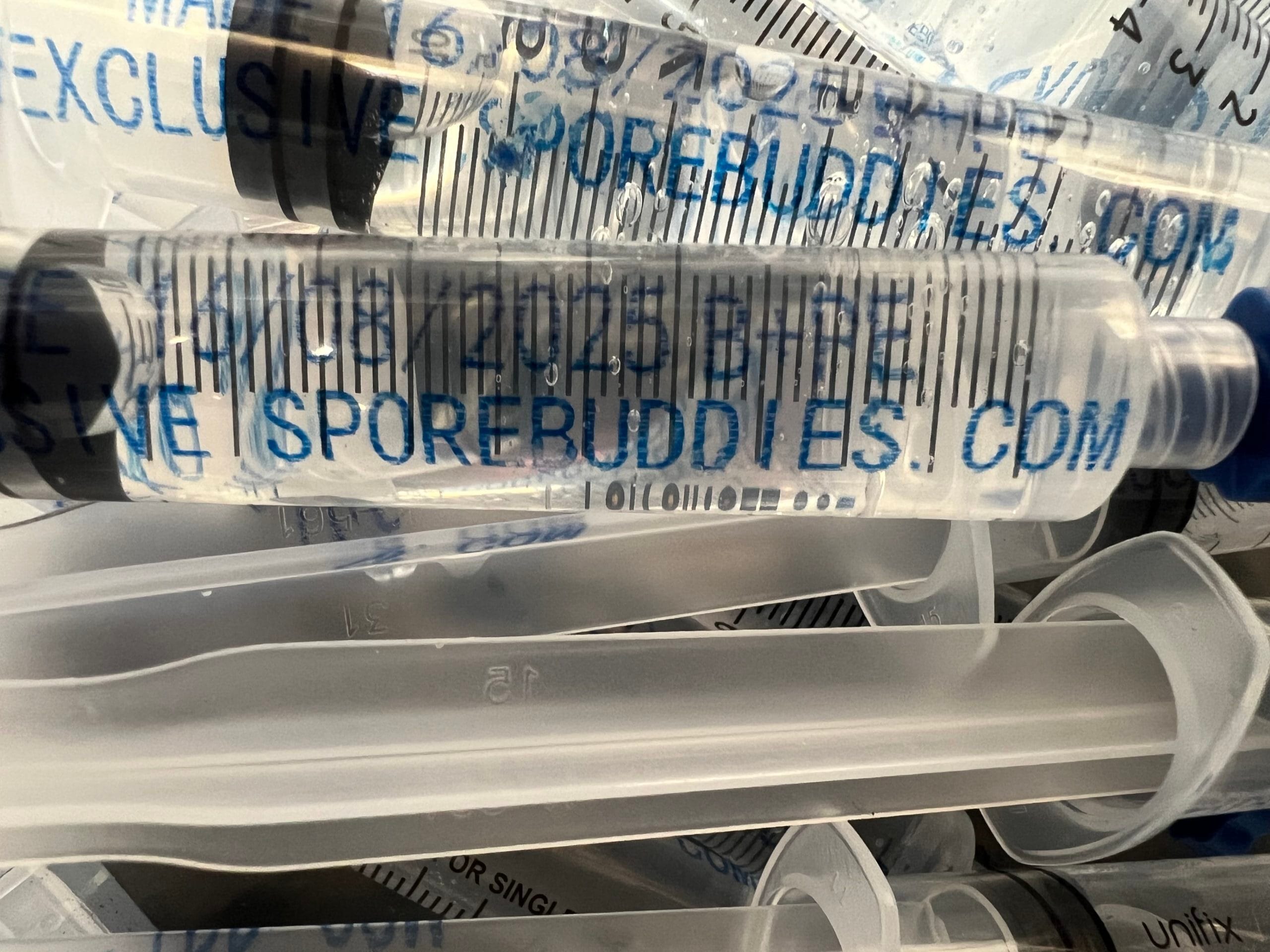
Spore syringes contain spores suspended in a sterile solution, allowing for controlled application to microscope slides or other research surfaces.
Commonly used for:
- Microscopy slide preparation
- Consistent sample application
- Educational laboratory use
Spore Prints
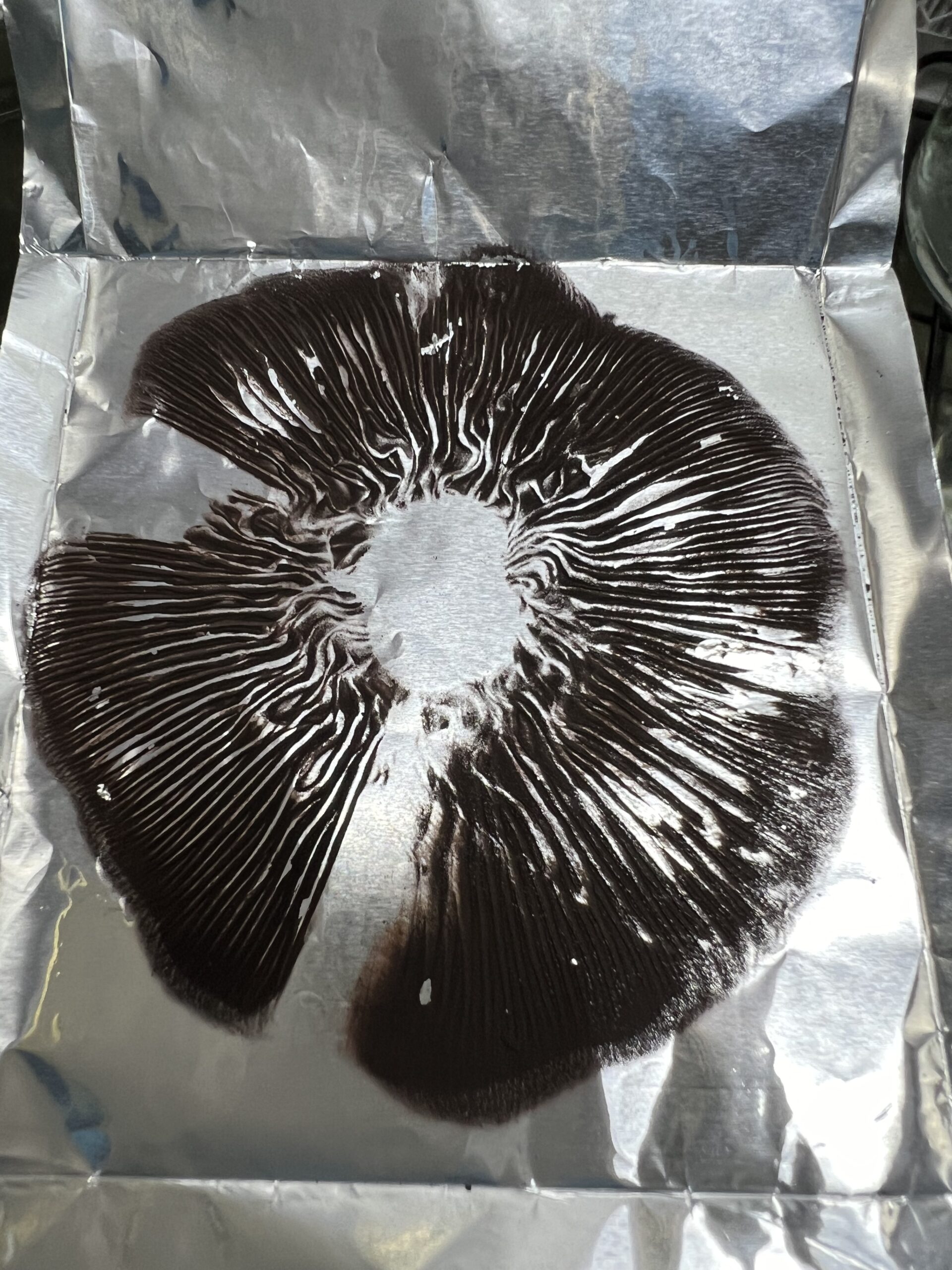
Spore prints are dry spore deposits collected from mushroom caps onto sterile foil. They provide a stable, long-term reference format and can be rehydrated for microscopy when required.
Commonly used for:
- Long-term spore storage
- Species comparison
- Taxonomy and documentation
Spore Swabs
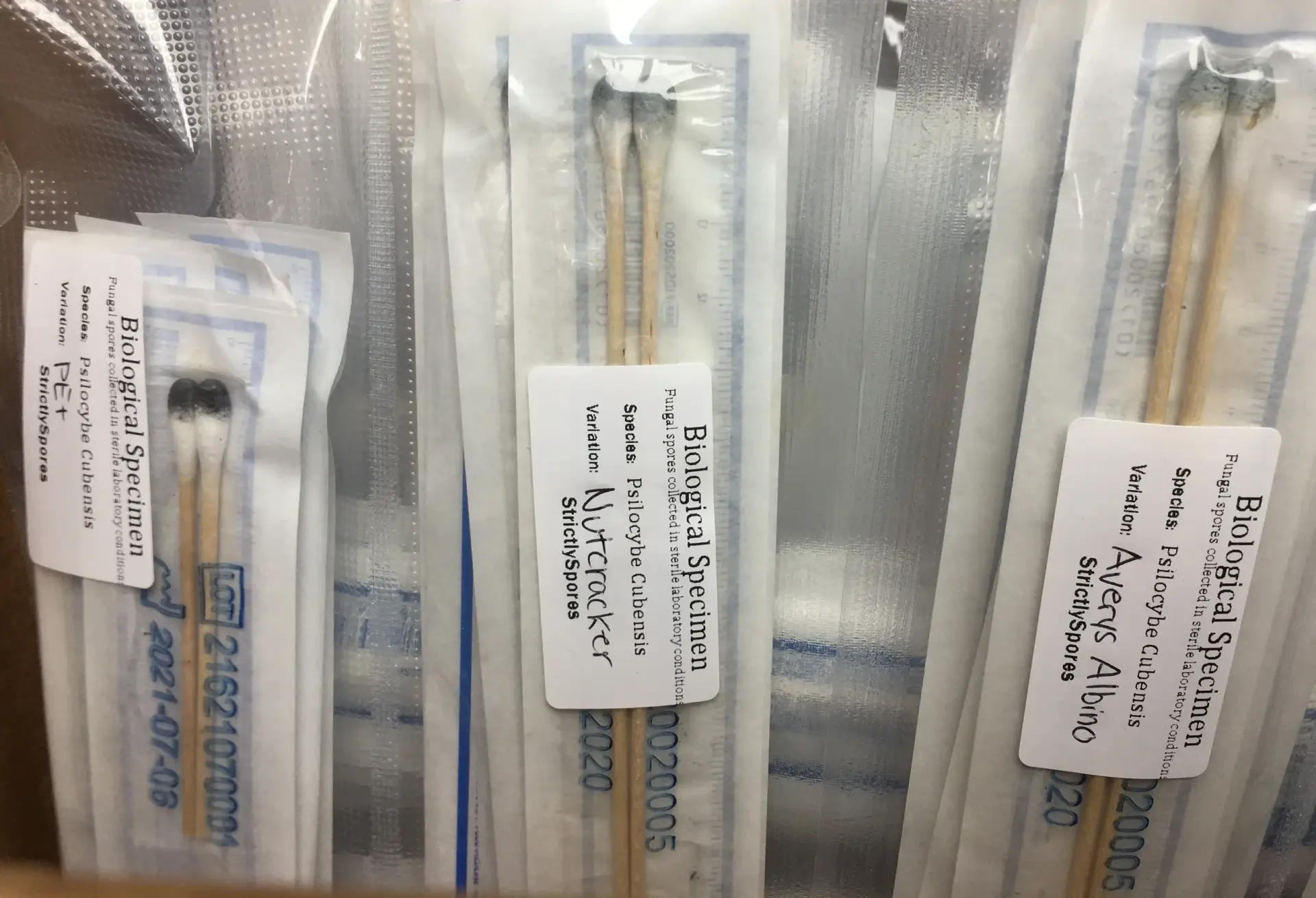
Spore swabs are a compact dry format where spores are collected onto a sterile swab tip and sealed for research handling.
They’re convenient for cataloguing and controlled transfer of small samples for microscopy.
Commonly used for:
- Compact reference collections
- Controlled sampling for microscopy
- Educational mycology demonstration
How Magic Mushroom Spores Are Studied
Magic mushroom spores are studied using optical microscopy and standard laboratory techniques. Typical research applications include:
- Spore morphology analysis
- Pigmentation and pattern comparison
- Educational demonstration and training
- Taxonomic reference building
All studies should be conducted using appropriate equipment and within applicable legal frameworks.
Why Choose Spore Buddies for Magic Mushroom Spores?
SporeBuddies is a UK-based specialist supplier focused entirely on mycology research products. Our approach prioritises clarity, consistency, and responsible supply.
- UK-based supplier
- Clear educational and legal positioning
- Multiple spore formats available
- Carefully documented specimens
- Discreet and reliable shipping
Our aim is to provide accurate, dependable magic mushroom spores for legitimate research and study.
🔬
Mycology-Led Expertise
Prepared by a UK team with hands-on experience in spore microscopy and research.
🧪
Clean Preparation
Handled and packaged using controlled workflows to protect spore integrity.
📦
Secure UK Dispatch
Discreet, well-protected packaging with reliable UK delivery options.
📘
Clear Research Guidance
Helpful support choosing spore formats and understanding research differences.
Explore Spore Formats
Magic Mushroom Spores FAQ
What are magic mushroom spores?
Magic mushroom spores are microscopic reproductive cells produced by certain
Psilocybe mushroom species.
They are commonly studied for microscopy, taxonomy, and educational mycology,
where researchers examine spore morphology, pigmentation, and other identifying features.
Are magic mushroom spores legal in the UK?
Magic mushroom spores are commonly supplied in the UK for research and educational
microscopy purposes.
Laws can vary by region and may change over time, so customers are responsible for
ensuring compliance with local regulations and intended use.
What is the difference between spore syringes and spore prints?
Spore syringes contain spores suspended in sterile solution, which can be convenient
for microscopy slide preparation and controlled application.
Spore prints are dry spore deposits collected onto sterile foil and are often used for
long-term reference storage and study.
Both formats are used for microscopy and educational research workflows.
How do you study spores under a microscope?
Spores are typically placed onto a microscope slide and examined under optical magnification.
Researchers may use stains or mounting solutions to improve visibility and document
characteristics such as size, shape, colour, and spore wall features.
Which spore format should I choose for microscopy?
If you want a convenient, ready-to-apply format, spore syringes are commonly chosen
for microscopy workflows.
If you prefer a dry specimen that stores well long-term, spore prints are a popular
reference format.
The best choice depends on your research workflow and handling preference.