
When growing mushrooms indoors, one of the most common questions growers ask is whether mushrooms actually need light to grow. Unlike plants, mushrooms do not rely on photosynthesis — but light still plays an important role in fruiting behaviour, orientation, and overall consistency.
In this guide, we’ll explain how mushroom grow lights work, how much light mushrooms need, whether LED mushroom grow lights are worth using, and when natural light is enough. We’ll also explore species-specific requirements and show how modern grow setups use lighting as a simple but effective environmental control.
Do Mushrooms Need Light to Grow?
The short answer is yes and no — mushrooms do not need light to grow mycelium, but they do benefit from light during the fruiting stage.
Mushrooms obtain their energy from nutrients in the substrate, not from light. However, once fruiting begins, light acts as a developmental signal. It helps mushrooms:
Trigger fruiting at the correct stage
Grow upright and evenly
Develop consistent caps and stems
Orient themselves instead of growing sideways
Mushrooms can still fruit in complete darkness, but they often appear elongated, pale, or irregular. For indoor cultivation, a simple mushroom grow light improves consistency and predictability rather than increasing growth speed.
How Much Light Do Mushrooms Need to Grow?
Mushrooms require far less light than plants. In most indoor grows, gentle ambient lighting is more than sufficient.
Typical guidelines include:
Intensity: approximately 500–1,000 lux
Duration: 10–14 hours per day
Spectrum: cool white or daylight
Excessively bright light does not improve yields and can dry surfaces if paired with heat. The goal is visibility-level lighting, not intensity. This is why low-watt LED mushroom grow lights work so well — they provide a clear fruiting signal without disrupting humidity or temperature.
Mushroom Grow Lights vs Sunlight – Which Is Better?
Many growers successfully fruit mushrooms using indirect daylight from a window, but natural light has limitations.
Indirect sunlight
Free and simple
Changes seasonally
Difficult to control duration
Unsuitable for enclosed grow spaces
Direct sunlight can damage mycelium
Mushroom grow lights
Consistent year-round
Simple on/off cycles
Suitable for tents, tubs, and chambers
Independent of window placement
Mycelium-friendly and predictable
For monotubs, grow tents, and incubation chambers, artificial lighting is often the most practical and reliable option.
LED Mushroom Grow Lights – Are They Worth It?
For indoor growers, yes.
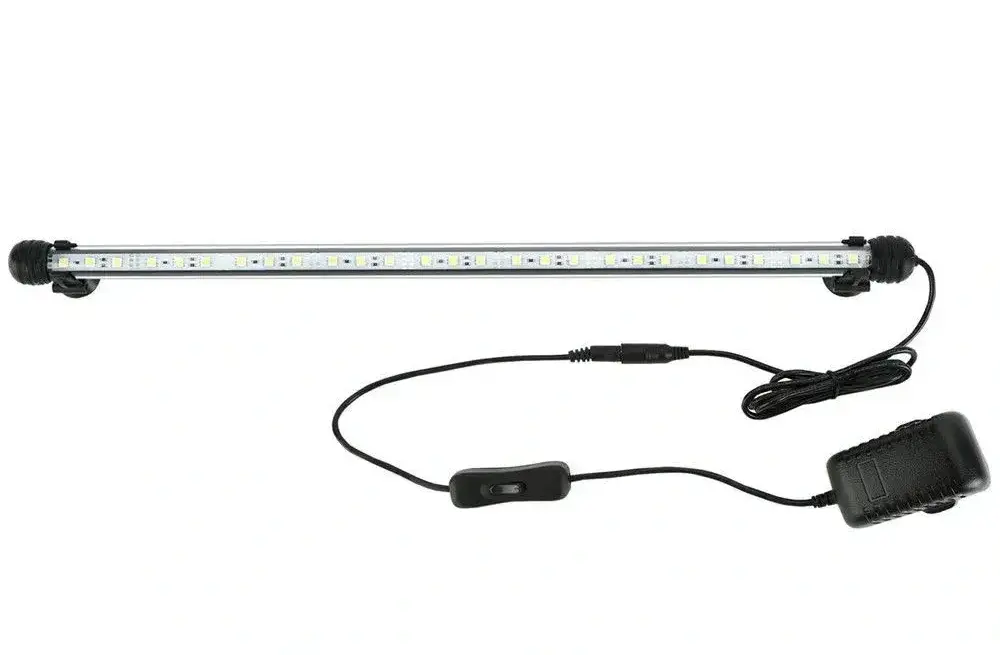
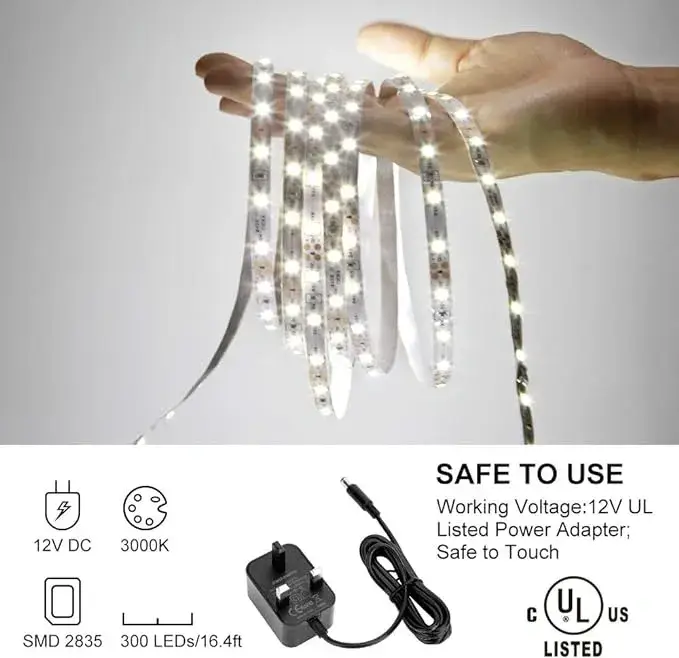
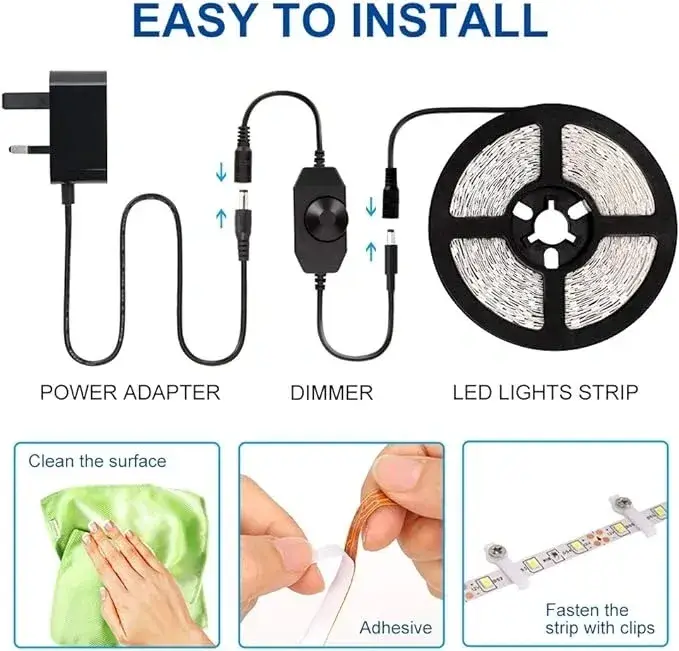
LED mushroom grow lights offer:
Low heat output (safe in humid environments)
Energy efficiency for long daily cycles
Stable, suitable spectrum for fruiting
Compact size for tents and chambers
Purpose-built mushroom lights provide just enough illumination to guide fruiting without overheating or drying the grow environment.
Do Mushrooms Need Grow Lights at All?
You may not need a grow light if:
You fruit near a window with indirect daylight
You grow casually and accept variability
Grow lights are beneficial if:
You grow inside a tent or enclosed space
You want consistent pinning and uniform growth
You grow year-round
You use controlled incubation or fruiting systems
Lighting isn’t about forcing mushrooms to grow — it’s about removing uncertainty.
How Mushrooms Actually Respond to Light
Because mushrooms do not photosynthesise, they respond to light differently than plants. Light functions as a directional and developmental cue, influencing:
Pinning initiation
Stem orientation
Cap formation
Fruiting timing
Different wavelengths have different effects, but only a narrow range is truly relevant to fungi.
Light as a Pinning Trigger (And How Inject & Forget Bags Work)
During cultivation, the transition from fully colonised substrate to visible mushroom formation is known as pinning. Pinning occurs when the mycelium receives a combination of environmental signals indicating that conditions are right to fruit.
One of the most important of these signals is light.
While mushrooms do not use light for energy, exposure to light — particularly blue or daylight-spectrum light — helps trigger the pinning response once colonisation is complete. Light works alongside fresh air exchange, humidity, and temperature changes to signal that the mycelium has reached the surface and can begin forming mushrooms.
In simple terms, light tells the mycelium where and when to fruit.
How Inject & Forget Bags Use Light to Trigger Fruiting
Inject & Forget mushroom grow bags are designed as closed, self-contained systems that simplify cultivation by controlling moisture, nutrients, and gas exchange internally.
After inoculation and full colonisation, fruiting is initiated by:
Introducing the bag to indirect light
Allowing fresh air through the filter patch
Maintaining stable internal humidity
Light exposure helps trigger pin formation near the substrate surface, guiding mushrooms to form in the correct location rather than randomly throughout the bag.
Because Inject & Forget bags already maintain suitable moisture and gas balance, light becomes one of the final external signals needed to initiate fruiting, which is why these systems work reliably with minimal intervention.
Why Light Matters in Low-Interaction Growing Systems
In grow methods designed to reduce handling and environmental adjustments, such as Inject & Forget bags, lighting plays a more noticeable role as a pinning cue.
A consistent light cycle:
Encourages even pin formation
Improves mushroom orientation
Reduces malformed or side-growing fruits
Helps synchronise flushes
This is also why low-watt LED lighting is commonly used in grow tents and incubation chambers — not to “boost” growth, but to deliver a clear, repeatable fruiting signal.
Blue and Red Light Explained (What Actually Matters)
Blue Light (Highly Relevant)
Blue light (approximately 450–480 nm) is the most biologically relevant wavelength for mushrooms.
Grower experience and research show that blue light:
Supports normal fruiting development
Encourages upright, well-oriented growth
Helps regulate cap and stem formation
Mimics the shaded daylight conditions fungi evolved under
This is why effective mushroom grow lights use cool white, daylight, or blue-weighted LED spectra.
Red Light (Mostly Neutral)
Red light (approximately 620–660 nm) is essential for plants, but mushrooms largely ignore it.
Red light:
Does not increase yields
Does not accelerate growth
Does not meaningfully influence fruiting
At low intensity, red LEDs cause no harm and are often included in lights originally designed for plants or marketed as “full spectrum.” In combined blue/red lights, the blue wavelengths do the work, while the red remains neutral.
Are Blue + Red Grow Lights Safe for Mushrooms?
Yes.
As long as light intensity is moderate, heat output is low, and humidity is unaffected, mushrooms will fruit normally. They respond to the blue wavelengths and effectively ignore the red, making combined-spectrum lights perfectly acceptable in grow tents, multi-use grow rooms, and flexible setups.
Using Grow Lights in Controlled Systems
As growers move toward enclosed and automated environments, lighting becomes part of a wider control system rather than a standalone feature.
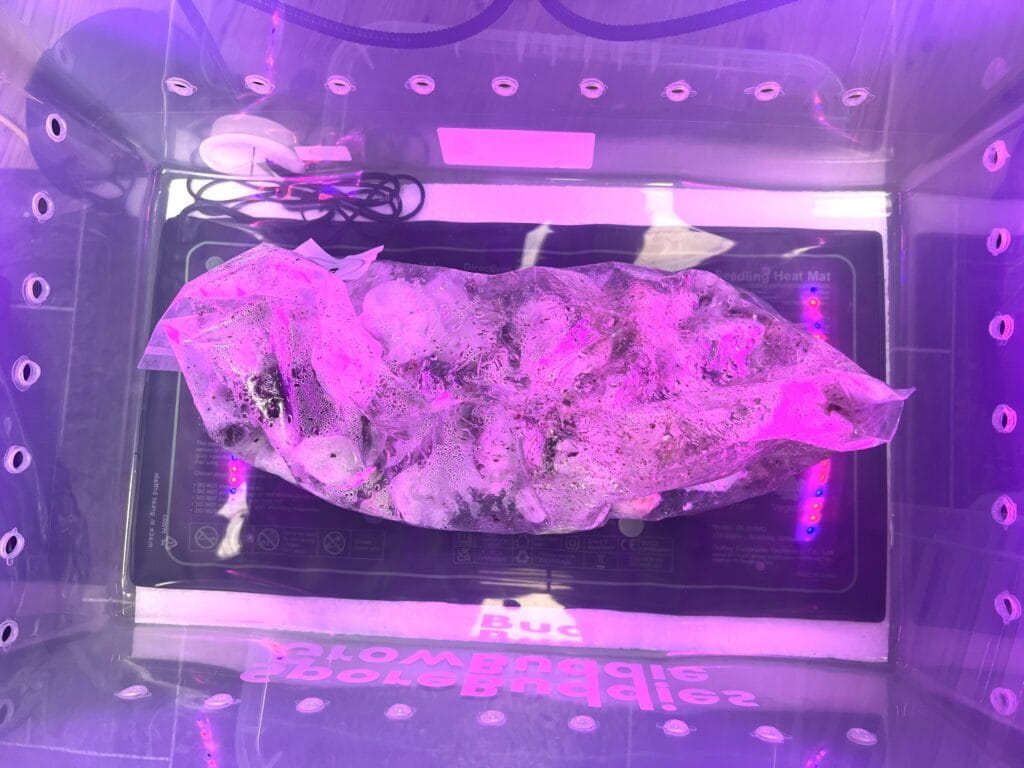
Growbuddie60 Digital Mushroom Incubation Chamber (Optional Lighting)
The Growbuddie60 is available with an optional integrated LED lighting system designed to support fruiting within a sealed, digitally controlled environment.
The lighting system includes both blue and red LEDs. In practice, the blue component provides the biological signal mushrooms respond to, while the red remains neutral and does not interfere with growth.
Integrated lighting allows growers to:
Maintain consistent light cycles regardless of room conditions
Improve mushroom orientation and form
Avoid reliance on ambient light
Seamlessly integrate lighting with humidity and temperature control
While mushrooms can fruit under indirect ambient light, integrated lighting adds consistency and reduces environmental guesswork in enclosed indoor grows.
Grow Tents and Flexible Lighting Setups
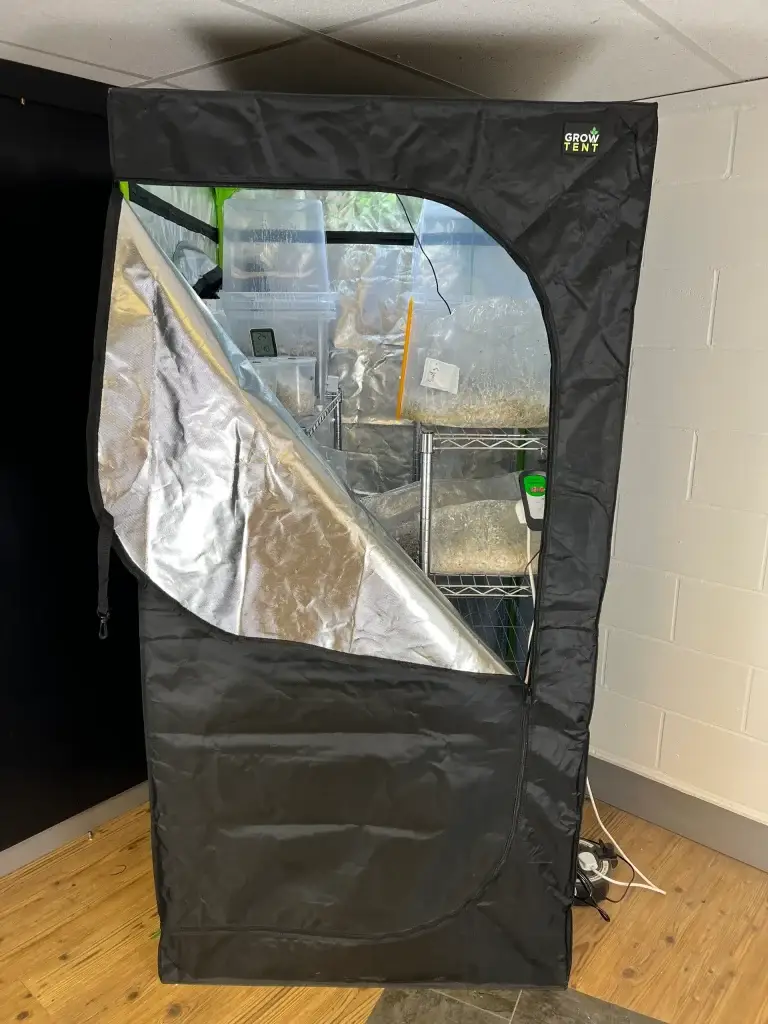
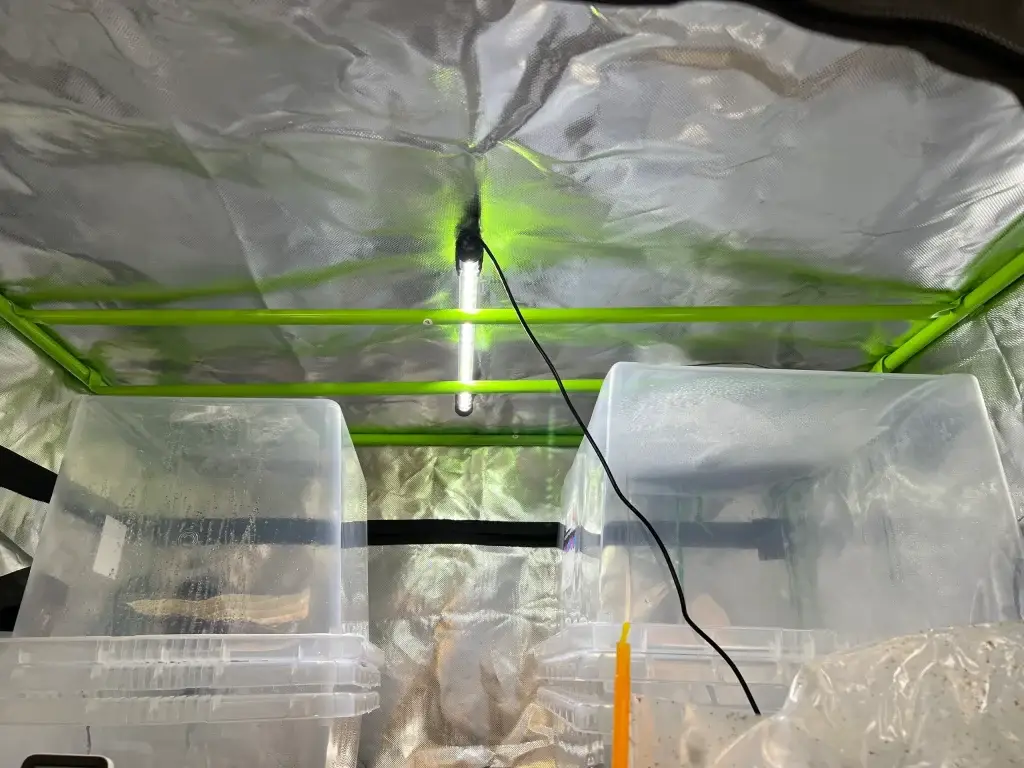
SporeBuddies grow tent kits include lighting as standard, creating a complete fruiting environment where airflow, humidity, and light work together. For larger or multi-level grows, this ensures even distribution and repeatable results.
For modular setups, adjustable dual-head LED lamps allow growers to direct light across shelves, trays, or tubs as needed.
Final Thoughts: Do Mushroom Grow Lights Matter?
Mushroom grow lights aren’t about making mushrooms grow faster — they’re about growing them better.
While mushrooms don’t rely on light for energy, the right lighting setup improves:
Fruiting consistency
Shape and orientation
Year-round reliability
Overall grow confidence
Whether you’re using a simple LED, a grow tent kit, or a fully controlled incubation chamber, lighting is one of the easiest variables to control and optimise.
Explore the SporeBuddies Shop to find mushroom grow lights, grow tents, and controlled cultivation systems designed for reliable indoor mushroom growing.