
What are mushroom spores?
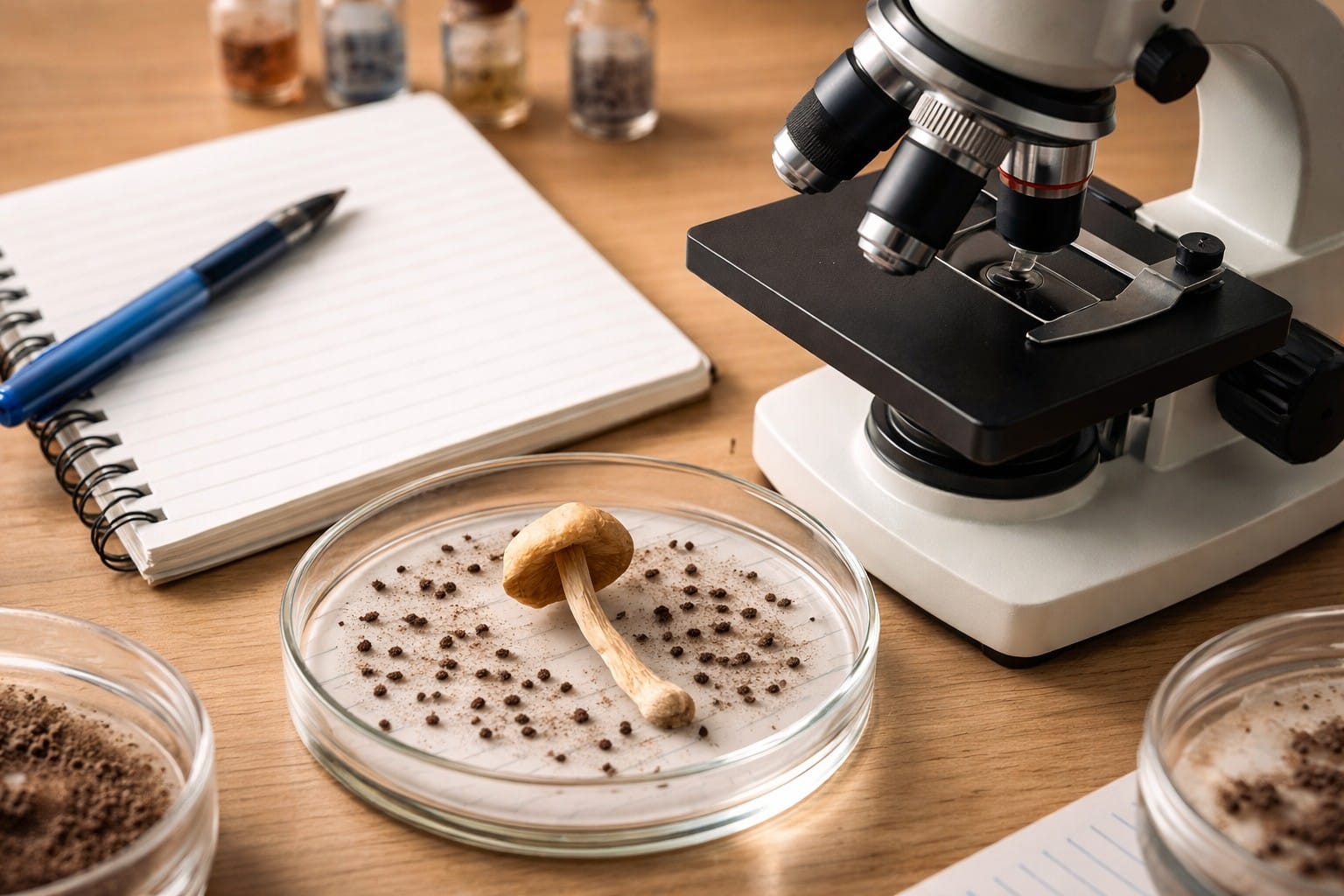
Mushroom spores are microscopic reproductive cells released by fungi. You usually can’t see individual spores with the naked eye, which is why mycologists use tools like spore prints and microscopes to study them. The British Mycological Society notes spores are too small to see without a microscope, and that a spore deposit on a slide can be viewed with high resolution. [2]
Answer-first
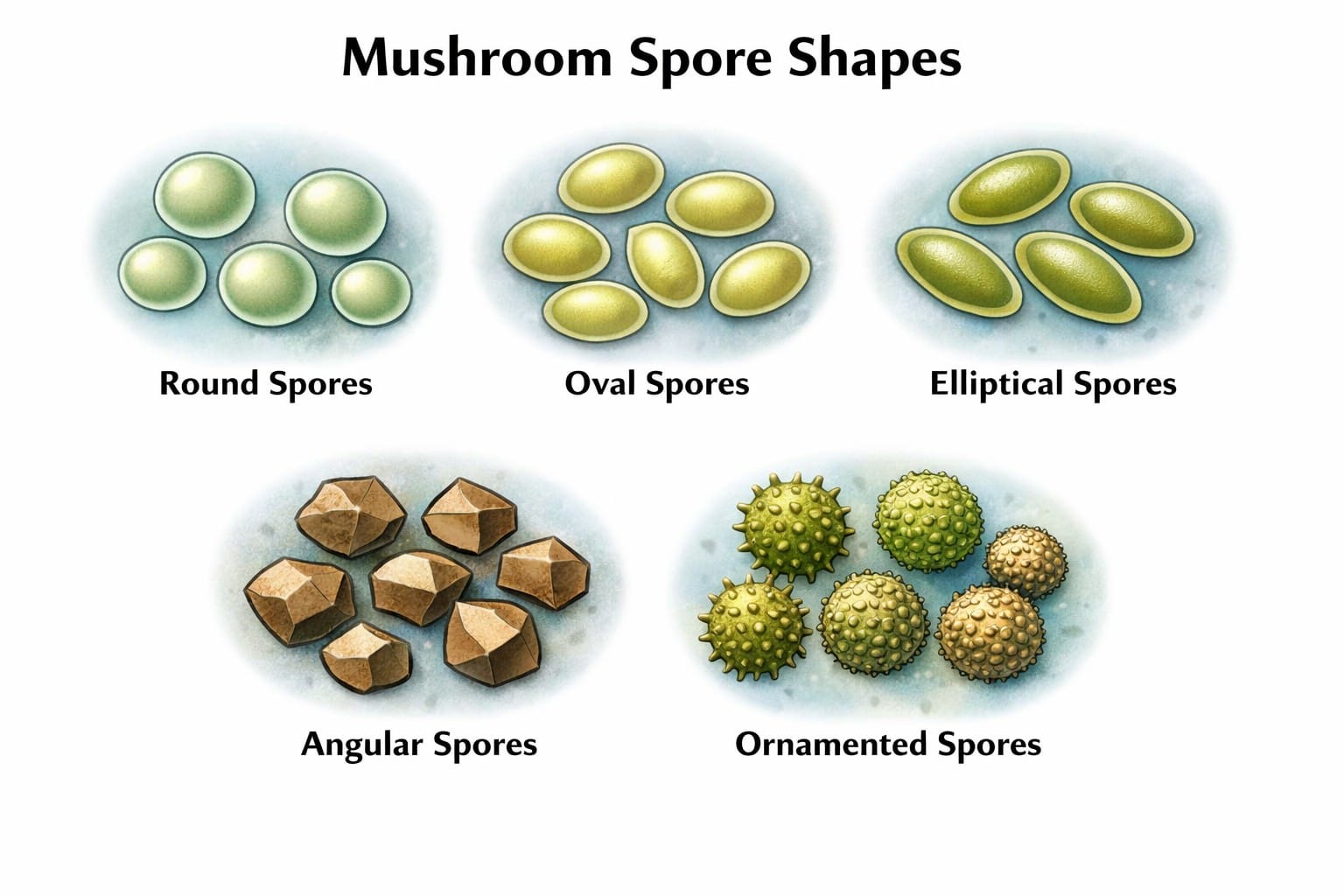
What do spores look like under a microscope? Typically: tiny oval/elliptical/round (sometimes more complex) shapes that can appear clear, pale, or coloured depending on the species and lighting. The useful part is comparing shape + size + colour in a consistent setup.
Why mycologists study spores
In the real world, many mushrooms can look similar in photos or in the field—especially small brown species. Microscopy helps because spores carry characteristics that are often more consistent than colour in changing weather.
Spore study helps with:
- Classification: spore colour and morphology can help narrow down groups.
- Comparison: spores can help distinguish visually similar specimens when used alongside other features.
- Learning: you’ll build “microscope literacy”—focus, illumination, note-taking, and basic documentation.
Safety reminder (UK)
Microscopy is a safer learning route than “guessing from photos.” If you’re worried about poisoning risk, use UK public health guidance and seek help promptly for suspected ingestion. [6][7]
What you need (simple kit checklist)
You don’t need a lab. For beginner mycology microscopy, a clean, consistent setup matters more than fancy extras.
Beginner checklist
- Compound microscope (brightfield is fine for beginners)
- Slides + cover slips
- Good lighting (built-in lamp is usually enough)
- Small spore sample (often from a spore deposit)
- Lens tissue (clean optics = clearer images)
- Notebook or phone for documenting what you see
If you’re choosing equipment from scratch, our: Beginner Guide to Mycology Microscopy walks through magnification, lighting, and what actually matters for spores.
Microscope setup (brightfield basics)
Most beginners start with brightfield microscopy, which is widely used for teaching and general observation. Intro resources explain brightfield illumination as a common, accessible method for viewing specimens, and major microscopy education hubs (including Nikon and Zeiss) provide foundational guides to optical microscopy and brightfield principles. [1][8][9]
A simple “best practice” setup routine
- Start low: begin with the lowest objective and get the specimen in view.
- Adjust brightness: avoid overexposure—too bright can wash out detail.
- Refine focus: once centred, increase magnification gradually.
- Improve contrast: small adjustments to illumination can reveal more than “more magnification.”
Answer-first
What matters more: magnification or lighting? For spores, lighting and contrast often matter just as much as magnification. Better illumination can make spore edges and shape easier to interpret. [8][9]
Make a simple spore slide (education workflow)
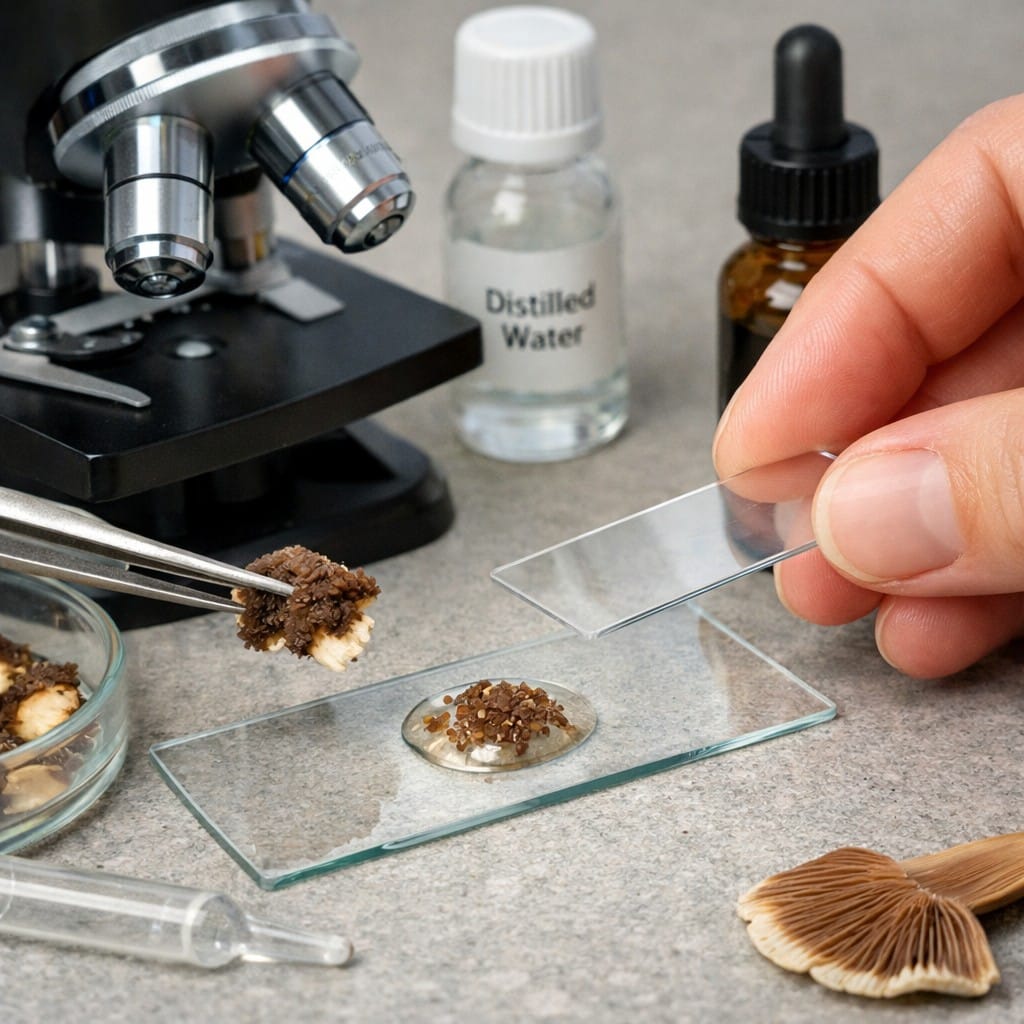
This is an educational overview of how beginners commonly prepare a slide from a small spore deposit. The British Mycological Society describes allowing spores to drop onto glass slides so they can be viewed under a microscope. [2]
What you’ll need
- Clean slide + cover slip
- A tiny spore deposit (a little goes a long way)
- A drop of mounting liquid (simple options exist in microscopy education, but your key goal is avoiding thick clumps)
Tip: If your slide looks like a dark “mud patch,” you likely used too much material.
Beginner slide workflow (high-level)
- Prepare a clean slide: wipe gently with lens tissue if needed.
- Add a tiny sample: less is more for spores.
- Place the cover slip: lower it carefully to reduce trapped bubbles.
- Start low magnification: locate the area of interest.
- Increase magnification gradually: refine focus and illumination.
If you want the full, beginner-friendly steps with troubleshooting, use: Spore Print to Slide Workflow.
What to look for under magnification
Spore observation is easiest when you know what you’re looking for. Your first goal isn’t “perfect identification”—it’s building a consistent method for observing and recording.
Beginner spore features to note
- Shape: round, oval, elliptical, angular, etc.
- Apparent colour: some spores look pale/clear; others have more obvious tone depending on spore mass and illumination.
- Clumping vs scattered: clumps can hide individual edges.
- Relative size: you can later learn measurement, but early on focus on consistent viewing and comparison.
Answer-first
Can you identify a mushroom by spores alone? Usually not. Spore characteristics help narrow down groups and support identification, but mycology typically uses multiple features together. (Spore prints are “often helpful,” but not a single “magic answer.”) [2][3]
Common beginner mistakes (and fixes)
Most “I can’t see anything” problems are easy to fix once you know the usual causes.
Top problems
- Too much sample: spores appear as a dark smear → use a smaller deposit.
- Too bright: edges disappear → reduce brightness and adjust contrast. [8][9]
- Jumping to high power too soon: you lose the specimen → always locate at low power first.
- Dirty optics/slide: haze and artefacts → gently clean with lens tissue.
- Bubbles under the cover slip: distracting circles → lower the cover slip carefully.
A simple documentation habit (huge progress)
Each session, record:
- Magnification used
- What the slide contained (spore deposit / print source)
- Lighting notes (too bright? contrast adjustments?)
- A quick phone photo through the eyepiece if possible
How spore prints connect to microscopy
A spore print is a visible spore deposit that helps you observe spore colour in mass and provides material for microscopy. The British Mycological Society provides guidance on making spore prints and notes that spores can be collected onto glass slides for microscopic viewing. [2]
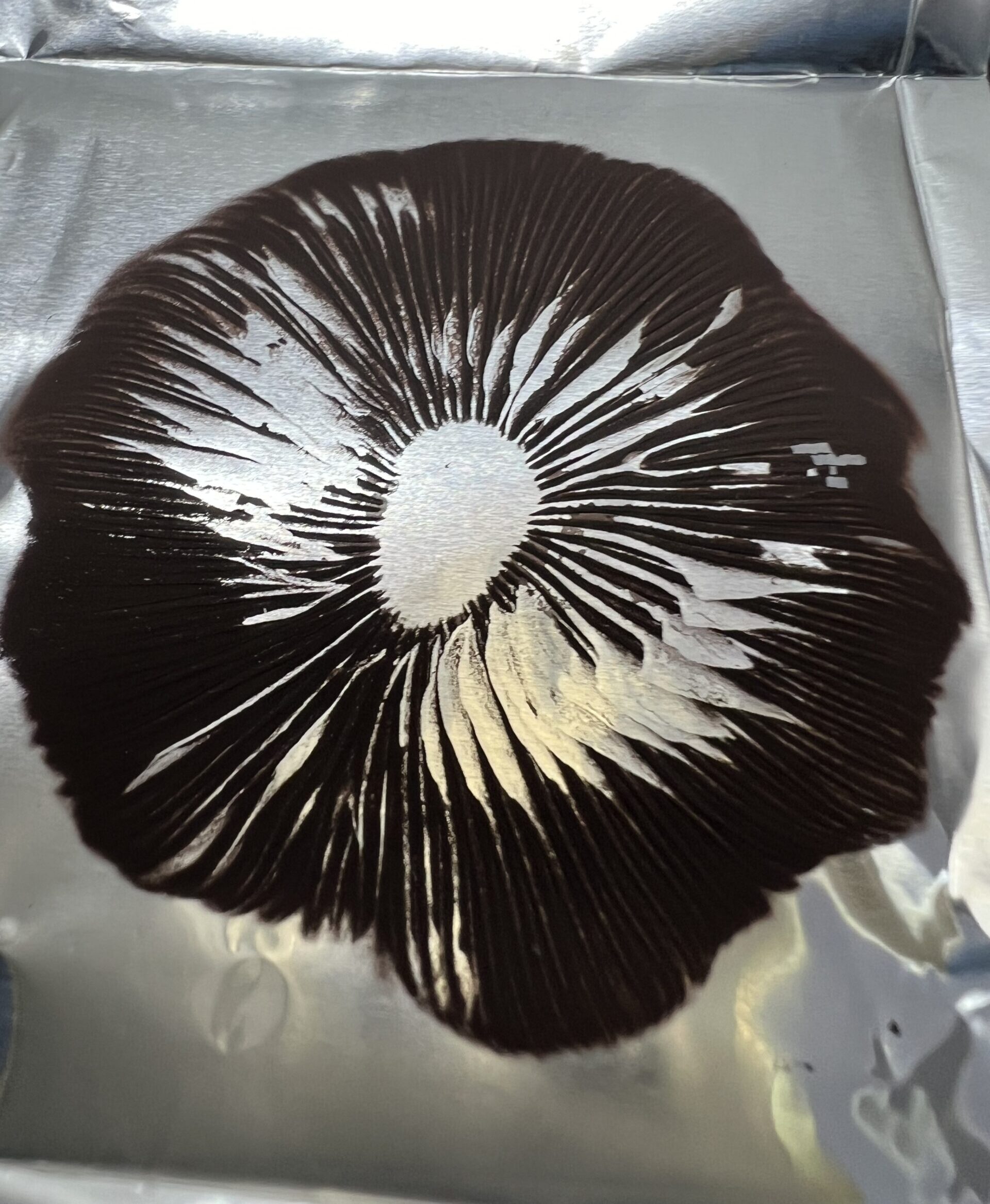
Mushroom Spores Viewed Under a Microscope
Under magnification, mushroom spores appear as tiny reproductive cells with distinctive shapes and sizes. Mycologists often study spores under a compound microscope to observe characteristics that help distinguish fungal species.
Your next best reads
- Spore Prints Explained (what they show, and what they don’t)
- Spore Print to Slide Workflow (step-by-step)
- Glossary: Spore Print (quick definition)