Introduction to Growing Mushrooms in Bags.
Mushroom grow bags have become one of the most popular and reliable ways to grow mushrooms at home and at scale. From beginners trying their first oyster mushrooms to experienced growers producing gourmet and medicinal species, grow bags offer a clean, contained, and highly adaptable growing method.
If you’ve ever searched “how to grow mushrooms in a bag” or “all in one mushroom grow bag”, you’ll know how confusing the advice can be. Forums contradict each other, Reddit threads mix good advice with bad habits, and many guides skip over the fundamentals that actually determine success.
This article cuts through the noise.
You’ll learn:
What mushroom grow bags are and why they work
How to use a mushroom grow bag correctly
The different types of grow bags (and when to use each)
How to grow oyster, lion’s mane, and shiitake mushrooms in bags
Common mistakes that ruin bag grows
How grow bags compare to monotubs and jars
Whether you’re using Inject & Forget mushroom grow bags, all-in-one grow bags, or traditional spawn bags, this guide will give you the knowledge to get consistent results.
What Are Mushroom Grow Bags?
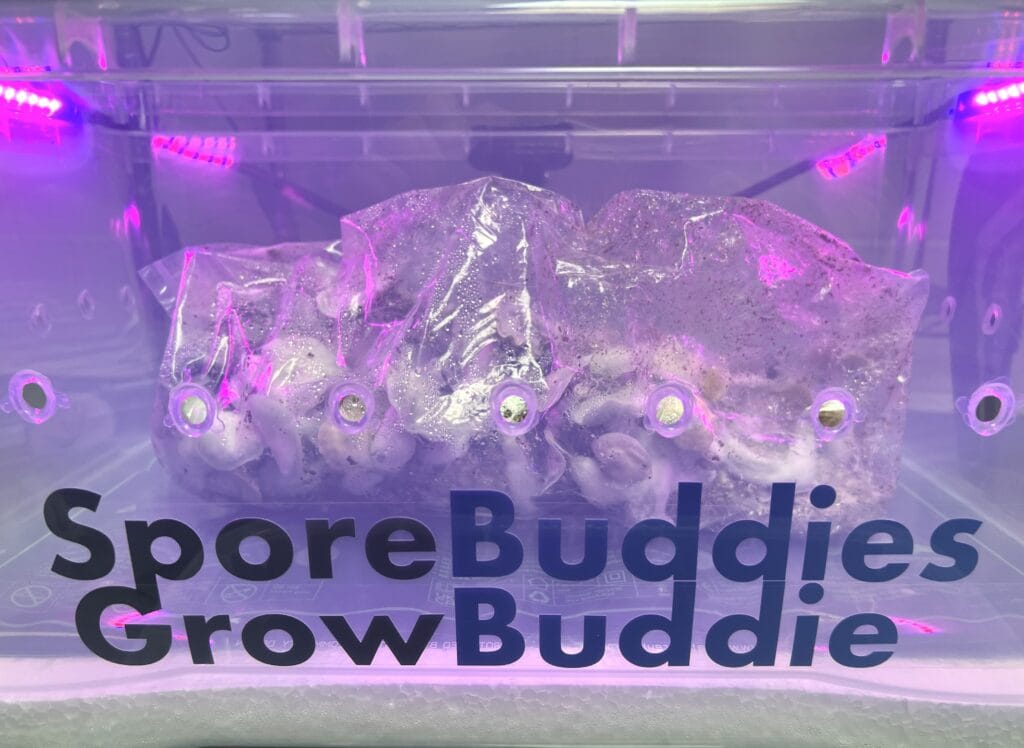
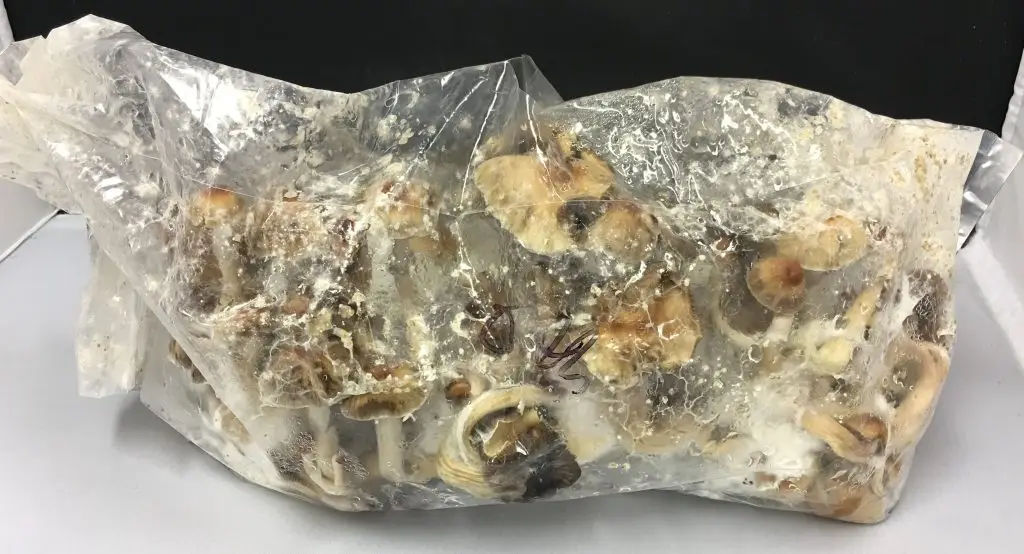
Mushroom grow bags are specialised plastic bags designed to hold mushroom substrate and support mycelial growth in a controlled environment. Most modern grow bags include a filter patch, which allows gas exchange while keeping contaminants out.
Unlike jars or open trays, grow bags create a self-contained micro-environment, making them ideal for both beginners and advanced growers.
Typical mushroom grow bags are used for:
Grain spawn production
All-in-one grows (grain + substrate in one bag)
Fruiting gourmet mushrooms directly from the bag
You’ll find different styles available in the mushroom grow bags section of the SporeBuddies shop, each suited to a specific stage of cultivation.
Why Grow Mushrooms in Bags?
Growing mushrooms in bags offers several key advantages over other methods.
1. Lower Contamination Risk
Because grow bags remain sealed for most of the process, they dramatically reduce exposure to airborne contaminants. This makes them especially useful when working without a full laboratory setup.
Many contamination issues covered in contamination in cultivation stem from open systems — something grow bags help avoid.
2. Excellent Moisture Control
Grow bags are designed to retain moisture while allowing controlled gas exchange. When paired with properly hydrated substrate (see field capacity for mushroom substrate), bags can maintain ideal conditions with minimal intervention.
3. Scalability
Grow bags scale easily:
One bag for a beginner
Ten bags for a hobby grower
Hundreds for commercial operations
This makes them more flexible than monotubs or jars.
4. Ideal for Gourmet & Medicinal Mushrooms
Species like oyster mushrooms, lion’s mane, and shiitake naturally grow on compact nutrient sources, making grow bags a near-perfect match.

How to Grow Mushrooms in a Bag (High-Level Overview)
This is a process overview, not a step-by-step cultivation manual.
At a high level, growing mushrooms in a bag involves:
Preparing or purchasing a grow bag
Introducing mushroom culture or spawn
Allowing the substrate to colonise fully
Introducing fruiting conditions
Each stage depends heavily on:
Clean handling
Proper moisture levels
Correct temperature
Grow bags simplify these variables by keeping conditions stable.
How to Use a Mushroom Grow Bag Correctly
Many failed grows come down to misuse rather than bad products.
Key principles:
Don’t rush colonisation — impatience leads to contamination
Avoid unnecessary handling — squeezing and moving bags introduces risk
Respect moisture balance — excess moisture is worse than slight dryness
Beginners often get the best results starting with Inject & Forget mushroom grow bags, which are designed to minimise handling and decision-making.
For temperature stability during colonisation, pairing grow bags with mushroom incubators can dramatically improve consistency.
Types of Mushroom Grow Bags
Understanding the different types of grow bags is essential. Each serves a different purpose.
All-in-One Mushroom Grow Bags
All-in-one mushroom grow bags contain both grain spawn and bulk substrate in a single sealed unit. This allows colonisation and fruiting to occur without transferring materials between containers.
Best for:
Beginners
Limited space
Low-maintenance grows
All-in-one options available via All-in-One Mushroom Grow Bags eliminate the need to mix or hydrate substrate yourself.
Spawn Bags
Spawn bags are used to create colonised grain, which is then transferred to bulk substrate or fruiting bags.
Best for:
Intermediate to advanced growers
Scaling production
Custom substrate recipes
Spawn bags pair naturally with sterilised grain spawn bags and bulk substrates.
Bulk Substrate Grow Bags
Bulk substrate bags are designed for fruiting directly from the bag or for feeding monotubs.
These bags rely heavily on correct hydration — a concept covered in detail in field capacity for mushroom substrate — and are commonly used for gourmet species.
You’ll find prepared options under bulk substrate if you want to avoid mixing errors.
Growing Different Mushrooms in Grow Bags
Grow bags excel with gourmet and medicinal mushrooms. Below are the most commonly searched species.
How to Grow Oyster Mushrooms in Bags
Oyster mushrooms are one of the easiest species to grow in bags.
Why they work so well:
Aggressive colonisation
Broad temperature tolerance
Excellent yields
Oysters fruit readily from slits cut into the bag once colonisation is complete. Many growers start with oyster-specific kits or cultures found under mushroom grow kits.
How to Grow Lion’s Mane Mushroom in Bags
Lion’s mane thrives in grow bags filled with supplemented sawdust or hardwood substrates.
Key considerations:
Slightly cooler fruiting temperatures
High humidity
Minimal airflow disruption
Lion’s mane bags are often fruited directly from the side of the bag, producing the characteristic cascading spines. For more depth, see growing lion’s mane mushrooms at home UK.
Growing Shiitake Mushrooms in Bags
Shiitake mushrooms are traditionally grown on logs, but modern growers commonly use sawdust grow bags.
Important notes:
Slower colonisation than oysters
Longer resting phase before fruiting
Excellent flavour and shelf life
Shiitake bags reward patience and consistency, making them popular with experienced growers.
Common Mistakes When Using Mushroom Grow Bags
Mistake 1: Overhydrated Substrate
Too much moisture leads to anaerobic conditions and bacterial growth. This issue is explained in detail in field capacity for mushroom substrate.
Mistake 2: Cutting Bags Too Early
Opening or cutting bags before full colonisation dramatically increases contamination risk. See Inject and Forget Instructions
Mistake 3: Poor Temperature Control
Temperature swings slow colonisation and stress mycelium. Stable conditions are easier to achieve with mushroom grow tents or incubators.
Mistake 4: Overhandling
Every unnecessary touch increases risk. One reason Inject & Forget grow bags perform so well is reduced handling.
| Method | Ease | Contamination Risk | Scalability |
|---|---|---|---|
| Grow Bags | High | Low | Excellent |
| Monotubs | Medium | Medium | High |
| Jars | Low | High | Limited |
Grow bags offer the best balance for most growers, especially those scaling gradually or working in limited spaces.
When to Choose Grow Bags Over Other Methods
Grow bags are ideal if you:
Want low-maintenance grows
Lack sterile lab space
Are growing gourmet species
Plan to scale gradually
Monotubs still have a place for bulk grows, but many growers combine both systems — using bags to produce substrate and tubs for final fruiting.
Key Takeaways
Mushroom grow bags are one of the most reliable growing methods
All-in-one bags are ideal for beginners
Spawn bags support scalability
Moisture control is critical
Grow bags excel with gourmet mushrooms
If you want predictable results, grow bags are hard to beat.
Frequently Asked Questions About Mushroom Grow Bags (Schema-Ready)
How to grow mushrooms in a bag?
Mushrooms are grown in bags by allowing mycelium to colonise a nutrient substrate inside a sealed grow bag, then introducing fruiting conditions once colonisation is complete.
How to use a mushroom grow bag?
Use a mushroom grow bag by keeping it sealed during colonisation, maintaining proper temperature, and only opening or cutting the bag once the substrate is fully colonised and ready to fruit.
What is an all-in-one mushroom grow bag?
An all-in-one mushroom grow bag contains both grain spawn and bulk substrate in one sealed unit, allowing colonisation and fruiting without transferring materials.
How to grow oyster mushrooms in bags?
Oyster mushrooms grow well in bags filled with hydrated bulk substrate. Once colonised, small openings allow mushrooms to fruit directly from the bag.
How to grow lion’s mane mushroom in bags?
Lion’s mane mushrooms are grown in bags using hardwood-based substrates and fruited through a small cut in the bag once colonisation is complete.
Are mushroom grow bags better than jars?
For most growers, mushroom grow bags are easier, more scalable, and less prone to contamination than jars.
✅ Shiitake Mushroom Grow Bag FAQs (On-Page)
Can you grow shiitake mushrooms in grow bags?
Yes. Shiitake mushrooms are commonly grown in sawdust-based grow bags rather than traditional logs. Grow bags provide a controlled environment that supports steady colonisation and reliable fruiting when correct moisture and temperature conditions are maintained.
How long do shiitake mushrooms take to grow in bags?
Shiitake mushrooms typically take longer to colonise than fast-growing species like oysters. Colonisation can take several weeks, followed by a resting period before fruiting begins. This slower pace is normal for shiitake and contributes to their dense texture and rich flavour.
What substrate is best for shiitake grow bags?
Shiitake mushrooms perform best in hardwood-based substrates, often made from supplemented sawdust. These substrates mimic the natural wood environments shiitake mushrooms grow on and are commonly used in commercial and home grow bag systems.
✅ Inject & Forget Grow Bag FAQs (Product-Adjacent, On-Page)
What is an Inject & Forget mushroom grow bag?
An Inject & Forget mushroom grow bag is a pre-prepared grow bag designed to minimise handling and simplify the growing process. The bag is prepared in advance so that users can keep the workflow contained, reducing the number of steps and lowering the risk of contamination caused by transfers.
Who are Inject & Forget grow bags best suited for?
Inject & Forget grow bags are especially well suited for beginners, home growers, and anyone who wants a low-maintenance approach. They are also popular with growers who prefer a cleaner workflow or have limited space or equipment.
What is the difference between Inject & Forget and all-in-one mushroom grow bags?
Both systems aim to keep the growing process contained in a single bag. All-in-one grow bags combine grain spawn and bulk substrate to support the full colonisation-to-fruiting cycle, while Inject & Forget grow bags focus on reducing handling and decision points to simplify the process for the user.
Do Inject & Forget grow bags reduce contamination risk?
They can help reduce contamination risk by limiting how often the bag is opened or handled. Fewer transfers and less exposure to open air generally mean fewer opportunities for contaminants to enter the grow environment.
Are Inject & Forget grow bags reusable?
Inject & Forget grow bags are typically designed for single use. Reusing grow bags can increase contamination risk, so most growers choose fresh bags for each new grow cycle to maintain consistency and cleanliness.
Shop now
Mushroom grow bags offer one of the most accessible, reliable, and scalable ways to grow mushrooms, whether you’re just starting out or refining a more advanced setup. By understanding how grow bags work, choosing the right type for your goals, and paying attention to fundamentals like moisture balance and handling, you can achieve consistent results with far fewer complications.
If you’re ready to put what you’ve learned into practice, you can explore our full range of mushroom grow bags, substrates, and growing equipment in the SporeBuddies Shop, where everything is prepared with reliability and ease of use in mind. Whether you’re looking for an Inject & Forget solution, an all-in-one grow bag, or supporting supplies, our shop is designed to support each stage of your growing journey.