
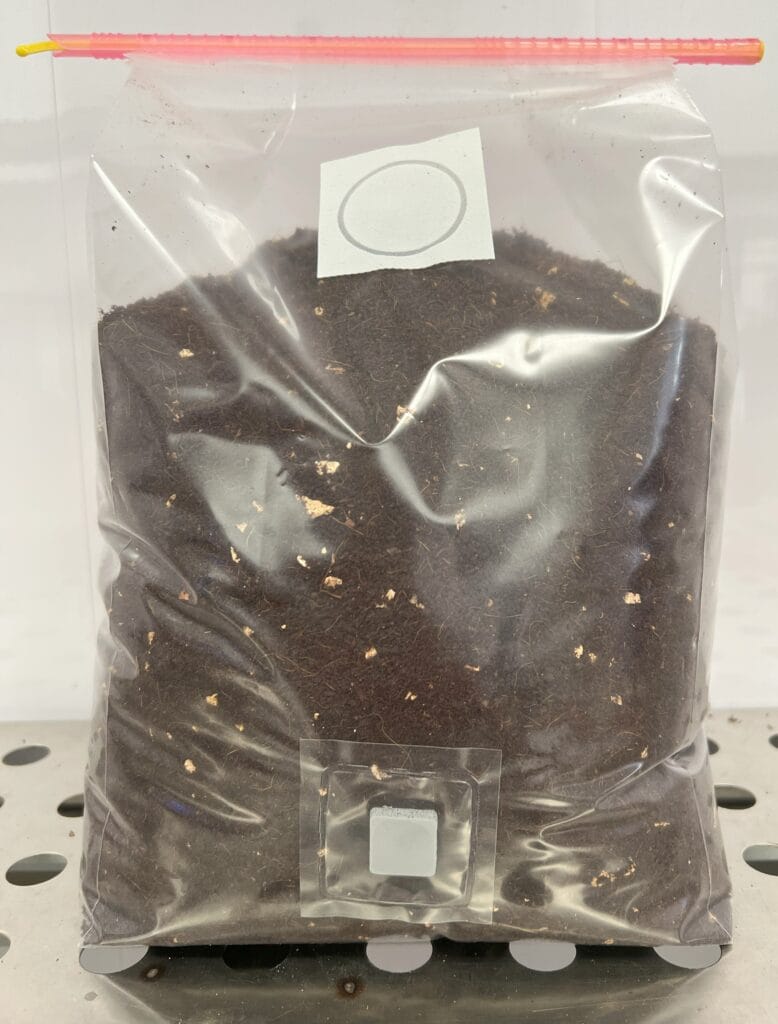
Bulk Mushroom Substrate
Bulk substrate is the foundation for healthy mushroom fruiting once your grain spawn has fully colonised. Whether you prefer DIY substrate or ready-to-use options from our shop, understanding how to mix, hydrate, and test your substrate’s moisture — known as field capacity — is critical to consistent success.
What Is Bulk Substrate?
Bulk substrate is the material that mycelium spreads through to produce mushrooms. Unlike grain spawn, which provides the initial nutrients and inoculation points, bulk substrate provides structure, moisture, and support for fruiting bodies. Monotubs, trays, and bag systems commonly use bulk substrate after colonisation.
Field capacity — the ideal moisture level where the substrate holds water without being overly wet — is the key to a good bulk recipe. Too dry and mycelium stalls; too wet and contaminants thrive.
Classic Bulk Substrate Recipe (CVG: Coco Coir, Vermiculite & Gypsum)
The most widely used mushroom substrate recipe is CVG — a simple but reliable mix of:
Coco Coir — moisture retention and aeration
Vermiculite — light texture and additional water retention
Gypsum — structure buffer and trace minerals
This blend provides excellent moisture balance when hydrated to field capacity.
Standard CVG Recipe (example batch)
This version works well for a typical monotub or bulk setup:
| Ingredient | Quantity |
|---|---|
| Coco Coir (compressed brick) | 650 g (1 brick) |
| Vermiculite | ~2 quarts (approx. 8 cups) |
| Gypsum | ~1 cup |
| Boiling Water | ~4.5 quarts (approx. 4.25 L) |
These ratios produce ~14–15 quarts of substrate when fully mixed — ideal for several quarts of grain spawn and a standard monotub volume.
How Much Water for Field Capacity
Field capacity means the substrate:
holds moisture well,
does not drip excessively,
but releases a few drops when squeezed hard.
A simple test:
Take a handful of the mixed coir, vermiculite and gypsum.
Squeeze tightly over a clean bowl or sink.
1–3 drops of water indicate correct field capacity.
If a stream pours out, it’s too wet; if no water appears, it’s too dry.
The exact amount of water needed depends on how absorbent your brand of coir and vermiculite is, but using boiling water to hydrate the coir until field capacity is reached is a reliable starting point. Many growers use about 4–4.5 litres of boiling water for a 650 g coir brick + vermiculite/Gypsum mix.
If you’re new to hydration, start here: field capacity for mushroom substrate is the single biggest factor in bulk success.
Step-by-Step CVG Preparation (Bucket Tek)
This simple method uses a 5-gallon bucket:
Add dry ingredients: Place the 650 g coco coir brick, vermiculite, and gypsum into your bucket.
Boil water: Bring ~4.5 litres of water to a rolling boil.
Pour and seal: Carefully pour the hot water over the dry ingredients, then seal the bucket with a lid to trap heat and steam.
Insulate: Wrap the bucket in a old blanket to keep the heat inside the mixture for as long as possible.
Wait: Let the mixture sit for 12-24 hours — this hydrates and helps pasteurise the mix.
Mix thoroughly: Once cooled, fluff and mix until the substrate is uniform.
Test field capacity: Squeeze a handful — only a few drops should emerge. Do not try and adjust the mixture with un-pasteurized ingredients. If the mix is a little too dry or too wet. Take notes and adjust next time around.
Ready-to-use bulk substrate
Alternative Bulk Substrates
CVG + Soy Hull Supplemented Substrate (Recipe & Method)
Traditional CVG (Coco Coir, Vermiculite, Gypsum) substrates are designed primarily to provide moisture retention and physical structure. They contain very little nutrition and rely on colonised grain spawn to fuel mushroom growth.
By contrast, soybean hulls actively feed the mycelium, supplying readily digestible carbohydrates. When used in small, controlled amounts, soy hulls can enhance performance without turning a CVG mix into a high-risk substrate.
Because of this balance, soybean hulls are best used as a light supplement, not a replacement — and in modest ratios suitable for bulk grows.
Learn how to make nutrient rich bulk substrate with our guide.
Manure-Based Substrate
For species that prefer richer environments, manure substrates (often horse manure) can be used. These require careful pasteurisation and are more prone to contamination. If you’re new to bulk substrates, start with pre-sterilised CVG mix and only advance to manure substrates after gaining experience.
Testing & Adjusting Moisture (Field Capacity 101)
Field capacity isn’t a single number; it’s a feeling you learn through practice. The squeeze test remains the most trusted method:
Too wet: Water gushes or streams out.
Just right: Only a few droplets appear.
Too dry: Substrate produces no drips when squeezed hard.
Ideal field capacity gives your mycelium enough water to metabolise without drowning the microscopic air pockets it also requires — this balance is foundational to strong colonisation and fruiting.
When to Use Bulk Substrate vs Ready-Made Bags
Making your own substrate like CVG is:
cost-effective
educational
flexible for custom mixes
But it also:
takes time
requires careful moisture control
increases contamination risk if not done correctly
For many growers, ready-made bulk substrate bags from our store offer:
consistent field capacity
reduced contamination risk
immediate use without mixing
simpler monotub setup
Troubleshooting Common Issues
Substrate too wet after pasteurization?
Add more dry vermiculite next time.
Substrate too dry?
Add boiling water only and allow to cool.
How long to pasteurise?
With Bucket Tek, allow your sealed mix to sit undisturbed while cooling — If insulated correctly cool time is roughly 24hrs to usable temps.
FAQ (Key Concepts Explained)
Q: What is field capacity?
Field capacity is the ideal moisture level where the substrate holds water but isn’t waterlogged — tested by squeezing a handful and getting 1–3 drops
Q: Why use coco coir in bulk substrate?
Coco coir retains water well, resists contamination, and provides excellent base structure for mycelium growth. Coco coir also boosts pin sets for canopy flushes
Q: Can I skip vermiculite or gypsum?
Yes — but water ratios and substrate behaviour change. Vermiculite improves water management and aeration; gypsum adds minerals and texture.
Thoughts from the Author
Understanding and mastering bulk substrate — especially field capacity — is a cornerstone of successful mushroom cultivation. With the classic CVG recipe and your newfound confidence in moisture control, you’re equipped to mix, test, and use your own substrate or choose ready-made options with assurance.